
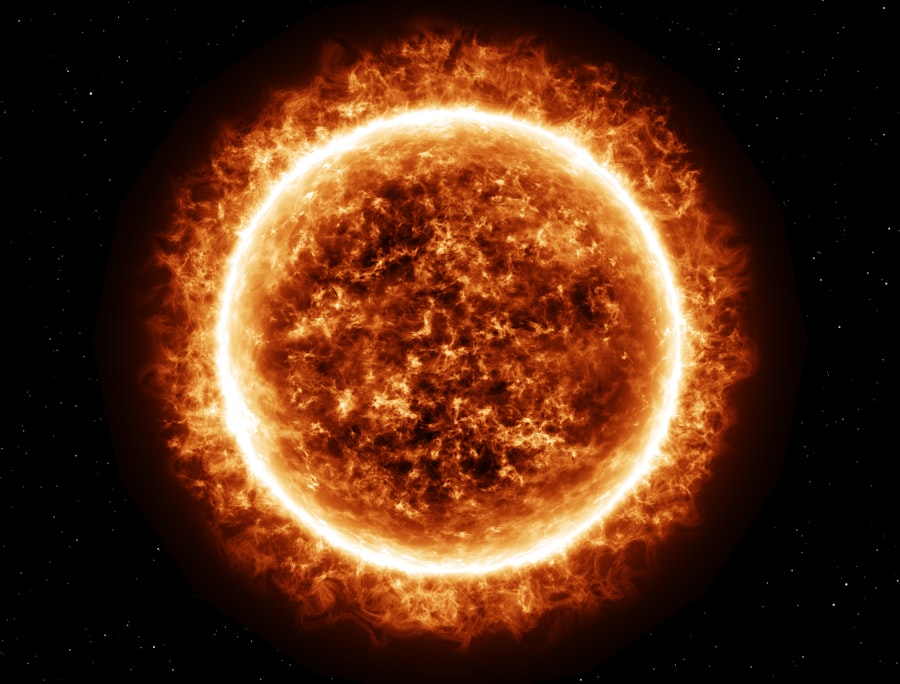
Solar flares and coronal mass ejections (CMEs) are two of the most powerful phenomena occurring on the sun, capable of unleashing vast amounts of energy into space. Solar flares are sudden bursts of radiation that occur when magnetic energy built up in the solar atmosphere is released. These flares can emit X-rays and ultraviolet radiation, which travel at the speed of light and can reach Earth in a matter of minutes.
On the other hand, coronal mass ejections are large expulsions of plasma and magnetic field from the sun’s corona. These events can take several hours to days to reach Earth, depending on their speed and trajectory. The significance of these solar events extends beyond mere astronomical curiosity; they have profound implications for life on Earth, particularly concerning technology.
As society becomes increasingly reliant on electronic devices and systems, understanding the potential impacts of solar activity is crucial. The interplay between solar phenomena and technological infrastructure poses a unique challenge, necessitating a comprehensive examination of how these cosmic events can disrupt modern life.
Key Takeaways
- Solar flares and coronal mass ejections are powerful bursts of energy from the sun that can impact Earth’s technology.
- Solar activity can disrupt power grids, satellites, and communication systems, leading to potential consequences for modern society.
- Historical examples, such as the Carrington Event of 1859, demonstrate the destructive potential of solar storms on technology.
- Power grids, satellites, and communication systems are particularly vulnerable to the effects of solar storms, posing significant risks to global infrastructure.
- Mitigation strategies, space weather forecasting, and international efforts are crucial for protecting Earth’s technology from the impact of solar flares and coronal mass ejections.
Understanding the Impact of Solar Activity on Earth’s Technology
The impact of solar activity on Earth’s technology is multifaceted and complex. Solar flares and CMEs can induce geomagnetic storms when they interact with Earth’s magnetic field. These storms can lead to fluctuations in the Earth’s magnetosphere, which can have cascading effects on various technological systems.
For instance, satellites in orbit can experience disruptions in their operations due to increased radiation levels, leading to potential data loss or communication failures. Moreover, the effects of solar activity are not limited to outer space; they can penetrate deep into Earth’s atmosphere and affect ground-based technologies as well. Power grids, for example, are particularly vulnerable to geomagnetic storms.
The induced currents from these storms can overload transformers and other critical components, leading to widespread power outages. As technology continues to evolve, understanding these impacts becomes increasingly vital for ensuring the resilience of essential services.
Historical Examples of Solar Storms and Their Effects on Technology

Throughout history, there have been notable instances where solar storms have had significant effects on technology. One of the most famous examples is the Carrington Event of 1859, which was a powerful geomagnetic storm caused by a massive CME. This event resulted in auroras visible as far south as the Caribbean and caused telegraph systems across North America and Europe to fail.
Some telegraph operators even reported receiving electric shocks, while others were able to send messages without batteries due to the induced currents from the storm. Another significant event occurred in 1989 when a geomagnetic storm caused by a CME led to a nine-hour blackout in Quebec, Canada. The Hydro-Québec power grid was severely affected, resulting in millions of dollars in damages and highlighting the vulnerability of electrical infrastructure to solar activity.
These historical examples serve as stark reminders of the potential consequences that solar storms can have on technology, emphasizing the need for preparedness and resilience in the face of such cosmic events.
Vulnerable Technologies: Power Grids, Satellites, and Communication Systems
| Technology | Vulnerability | Impact |
|---|---|---|
| Power Grids | Susceptible to cyber attacks | Potential widespread power outages |
| Satellites | Prone to jamming or hacking | Disruption of communication and navigation systems |
| Communication Systems | Vulnerable to interception or disruption | Compromised data security and communication breakdown |
As technology advances, certain systems remain particularly vulnerable to the effects of solar activity. Power grids are among the most critical infrastructures at risk. The induced geomagnetic currents from solar storms can cause transformers to overheat and fail, leading to widespread outages.
The interconnected nature of modern power systems means that a failure in one area can have a domino effect, impacting large regions and potentially causing long-lasting disruptions. Satellites also face significant risks from solar flares and CMEs. These orbiting devices are exposed to increased radiation during solar events, which can interfere with their electronics and communication systems.
In some cases, satellites may need to be temporarily shut down or repositioned to avoid damage. Communication systems on Earth are not immune either; radio signals can be disrupted during solar storms, affecting everything from aviation communications to emergency services. The vulnerabilities of these technologies underscore the importance of developing strategies to mitigate potential impacts.
Potential Consequences of a Major Solar Storm on Earth’s Technology
The potential consequences of a major solar storm on Earth’s technology could be catastrophic.
Hospitals, transportation systems, and emergency services rely heavily on electricity; thus, prolonged outages could have dire consequences for public safety and health.
In addition to power disruptions, communication systems could face significant challenges during a major solar storm. Satellite communications may be severely impacted, leading to loss of data and connectivity for businesses and individuals alike. The financial implications could be staggering, with estimates suggesting that a severe solar storm could cost economies billions of dollars in damages and lost productivity.
The interconnectedness of global technology means that the effects would not be confined to one region but could ripple across nations.
Mitigation Strategies for Protecting Technology from Solar Flares
To safeguard technology from the impacts of solar flares and CMEs, various mitigation strategies can be employed. One effective approach is enhancing the resilience of power grids through improved infrastructure design. This includes installing protective devices such as geomagnetic disturbance (GMD) monitors that can detect fluctuations in magnetic fields and help operators respond quickly to potential threats.
Additionally, satellite operators can implement shielding techniques to protect sensitive electronics from radiation exposure during solar events. This may involve using materials that absorb or deflect harmful radiation or designing satellites with redundancy systems that allow them to continue functioning even if one component fails. By investing in these protective measures, society can better prepare for the inevitable occurrence of solar storms.
The Role of Space Weather Forecasting in Protecting Earth’s Technology
Space weather forecasting plays a crucial role in protecting Earth’s technology from solar activity. By monitoring solar conditions and predicting potential storms, scientists can provide timely warnings that allow operators to take precautionary measures. Organizations such as the National Oceanic and Atmospheric Administration (NOAA) and NASA have developed sophisticated models that analyze solar data and forecast space weather events.
These forecasts enable power grid operators to adjust their systems in anticipation of geomagnetic storms, while satellite operators can implement protective protocols to minimize risks. The ability to predict solar activity not only helps mitigate immediate threats but also fosters long-term planning for infrastructure resilience against future events.
International Efforts to Address the Threat of Solar Storms to Technology
Recognizing the global nature of the threat posed by solar storms, international collaboration has become increasingly important in addressing this issue. Various countries have established partnerships to share data and research related to space weather forecasting and its impacts on technology. Initiatives such as the International Space Environment Service (ISES) facilitate information exchange among nations, enhancing collective preparedness for solar events.
Furthermore, international organizations are working towards developing standardized protocols for responding to solar storms across different sectors. By fostering cooperation among nations, it becomes possible to create a unified approach to mitigating risks associated with solar activity, ultimately enhancing global resilience against these cosmic phenomena.
Advancements in Technology to Improve Resilience to Solar Flares
Advancements in technology are paving the way for improved resilience against solar flares and CMEs. Researchers are exploring innovative materials that can better withstand radiation exposure, leading to more robust satellite designs capable of enduring harsh space weather conditions. Additionally, advancements in artificial intelligence (AI) are being utilized to enhance predictive models for space weather forecasting.
These technological innovations not only aim to protect existing systems but also focus on developing new infrastructures that are inherently more resilient to solar activity. For instance, smart grid technologies are being designed with built-in safeguards against geomagnetic disturbances, allowing for real-time monitoring and adaptive responses during solar storms.
The Importance of Space Weather Research and Monitoring
Space weather research is essential for understanding the complex interactions between solar activity and Earth’s technological systems. Ongoing studies aim to unravel the mechanisms behind solar flares and CMEs, providing insights into their frequency, intensity, and potential impacts on Earth. This research is critical for developing effective forecasting models that can predict solar events with greater accuracy.
Monitoring programs that track solar activity are equally important for maintaining situational awareness regarding space weather conditions. By continuously observing the sun’s behavior through satellites equipped with advanced sensors, scientists can gather valuable data that informs both short-term forecasts and long-term planning efforts aimed at safeguarding technology.
The Need for Continued Vigilance in Protecting Earth’s Technology from Solar Activity
In conclusion, as society becomes increasingly dependent on technology, the need for vigilance in protecting these systems from solar activity cannot be overstated. Solar flares and coronal mass ejections pose real threats that could disrupt essential services and impact daily life on a global scale. Historical examples serve as reminders of the potential consequences that such events can have on technology.
To mitigate these risks effectively, it is imperative that continued investment is made in research, monitoring, and infrastructure resilience strategies. International collaboration will play a vital role in addressing this challenge as nations work together to share knowledge and resources. By remaining proactive in understanding and preparing for solar activity, society can enhance its resilience against these cosmic phenomena and ensure that technological advancements continue to benefit humanity without interruption.
The potential for solar activity to disrupt Earth’s technology is a topic of growing concern among scientists and technologists. A related article that delves into the broader implications of solar phenomena on our planet can be found on My Cosmic Ventures. This article explores how solar flares and coronal mass ejections can impact not only our technological infrastructure but also our daily lives. For more in-depth information, you can read the article by visiting My Cosmic Ventures. This resource provides valuable insights into the measures being taken to mitigate the risks posed by solar events.
WATCH THIS ☀️The Sun as Software: Why Top Scientists Now Say a Solar Flare Could Wipe Everything
FAQs
What is the potential impact of solar flares on Earth’s technology?
Solar flares have the potential to disrupt Earth’s technology by causing geomagnetic storms that can interfere with satellite communications, power grids, and navigation systems.
How do solar flares affect satellite communications?
Solar flares can cause disruptions in satellite communications by creating charged particles that interfere with the signals sent between satellites and Earth.
Can solar flares affect power grids on Earth?
Yes, solar flares can cause geomagnetic storms that have the potential to disrupt power grids by inducing electrical currents in the Earth’s surface infrastructure.
What impact can solar flares have on navigation systems?
Solar flares can interfere with navigation systems, such as GPS, by causing disruptions in the signals used for precise location and timing.
Is there a risk of the sun destroying Earth’s technology?
While solar flares can cause disruptions to Earth’s technology, the likelihood of the sun completely destroying Earth’s technology is low. However, it is important for scientists and engineers to continue studying and developing strategies to mitigate the potential impacts of solar activity on technology.