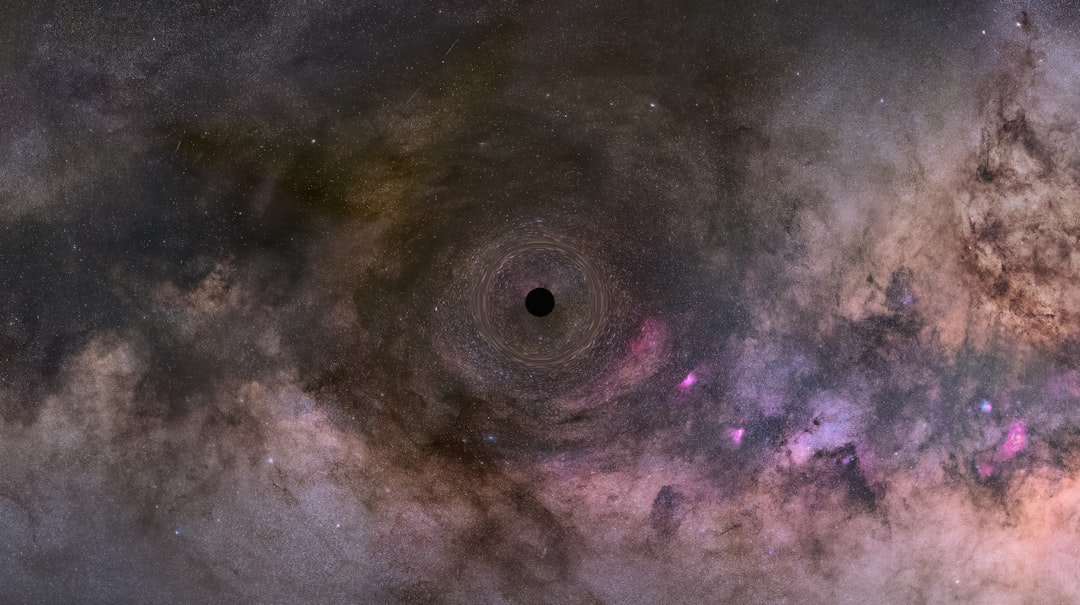
Black holes have long captivated the imagination of scientists and the general public alike.
The concept of a black hole, once relegated to the realm of theoretical physics, has evolved into a subject of intense study and fascination.
As researchers delve deeper into the mysteries surrounding these celestial phenomena, they uncover not only their nature but also their potential implications for our solar system and beyond. The allure of black holes lies not only in their mysterious properties but also in their profound implications for the cosmos. They serve as a reminder of the limits of human knowledge and the vastness of the universe.
As scientists continue to explore the intricacies of black holes, they are also compelled to consider the potential consequences of a black hole’s passage through our solar system. Such an event, while rare, could have far-reaching effects on Earth and its inhabitants, prompting a closer examination of these cosmic giants.
Key Takeaways
- Black holes are mysterious and fascinating objects in the universe that have captured the interest of scientists and the public alike.
- The rare passage of a black hole through the solar system could have significant and potentially catastrophic effects on Earth and other celestial bodies.
- A black hole is a region of space where the gravitational pull is so strong that nothing, not even light, can escape from it.
- Black holes are formed from the remnants of massive stars that have undergone gravitational collapse at the end of their life cycle.
- The potential impact of a black hole’s passage through the solar system has prompted the scientific community to conduct theoretical and observational studies to better understand and prepare for such an event.
The Rare Passage of a Black Hole through the Solar System
The likelihood of a black hole passing through the solar system is exceedingly low, yet it remains a topic of significant interest among astronomers and astrophysicists. The vastness of space means that even though black holes are relatively common in the universe, their paths are often so distant from our own solar system that any direct interaction is improbable. However, the mere possibility of such an event raises questions about the nature of black holes and their potential impact on planetary systems.
When considering the passage of a black hole through the solar system, one must take into account the gravitational forces at play. A black hole’s immense mass can exert a powerful influence on nearby celestial bodies, potentially altering their orbits or even causing catastrophic events. While the chances of a black hole coming close enough to affect Earth are slim, the implications of such an encounter are profound enough to warrant serious scientific inquiry.
What is a Black Hole?

At its core, a black hole is a region in space where gravity is so strong that nothing, not even light, can escape from it. This phenomenon occurs when a massive star exhausts its nuclear fuel and collapses under its own gravity, creating a singularity—a point of infinite density—surrounded by an event horizon. The event horizon marks the boundary beyond which no information or matter can escape, rendering black holes invisible to direct observation.
Instead, scientists infer their presence through their interactions with surrounding matter and radiation. Black holes can be classified into several categories based on their mass. Stellar black holes, formed from the remnants of massive stars, typically have masses ranging from three to several tens of solar masses.
Supermassive black holes, found at the centers of galaxies, can possess millions or even billions of times the mass of our sun. Intermediate black holes and primordial black holes are other categories that scientists continue to study, each offering unique insights into the nature of these cosmic phenomena.
How Black Holes are Formed
| Stage | Description |
|---|---|
| 1 | A massive star runs out of fuel and collapses under its own gravity |
| 2 | The core of the star collapses into a singularity, creating a black hole |
| 3 | The event horizon forms around the singularity, trapping everything within it |
| 4 | The black hole continues to grow by absorbing nearby matter and merging with other black holes |
The formation of black holes is a complex process that begins with the life cycle of massive stars. When such a star exhausts its nuclear fuel, it can no longer support itself against gravitational collapse. The outer layers may be expelled in a supernova explosion, while the core collapses into an incredibly dense state.
If the remaining mass is sufficient—typically more than three solar masses—the core will continue to collapse into a black hole. In addition to stellar black holes, supermassive black holes are believed to form through different mechanisms. One prevailing theory suggests that they grow over time by accreting gas and dust from their surroundings or merging with other black holes.
This process can lead to the formation of massive structures at the centers of galaxies, influencing their evolution and dynamics. Understanding how these colossal entities come into existence is crucial for unraveling the mysteries of galaxy formation and evolution.
The Potential Impact of a Black Hole’s Passage
Should a black hole pass through the solar system, its gravitational influence could have dramatic consequences for planetary bodies, including Earth. The gravitational pull exerted by a black hole could disrupt the orbits of planets and other celestial objects, potentially leading to collisions or ejections from the solar system altogether. Such an event could alter the delicate balance that sustains life on Earth, raising concerns about the long-term stability of our planet’s orbit.
Moreover, the passage of a black hole could also trigger significant changes in the solar system’s structure. For instance, it could lead to increased radiation levels as matter is drawn toward the black hole and heated to extreme temperatures before crossing the event horizon. This radiation could pose serious risks to any life forms in its vicinity and would necessitate careful monitoring by scientists to assess potential threats.
The Scientific Community’s Response

The scientific community has responded to the potential threat posed by black holes with a mix of curiosity and caution. Researchers are actively studying known black holes and their behaviors to better understand their properties and potential impacts on surrounding environments. This research includes monitoring gravitational waves produced by colliding black holes and observing high-energy phenomena associated with their accretion disks.
In addition to observational studies, theoretical models are being developed to predict how a black hole’s passage might affect our solar system. These models take into account various factors such as distance, mass, and velocity to simulate potential scenarios. By understanding these dynamics, scientists hope to prepare for any future encounters with black holes and mitigate potential risks.
Theoretical and Observational Studies
Theoretical studies play a crucial role in advancing knowledge about black holes and their interactions with other celestial bodies. Researchers utilize advanced mathematical models and simulations to explore various scenarios involving black holes, including their formation, growth, and potential encounters with other astronomical objects. These theoretical frameworks provide valuable insights that guide observational efforts.
Observational studies complement theoretical work by providing empirical data on known black holes and their environments. Astronomers employ powerful telescopes and instruments to detect X-rays, radio waves, and gravitational waves emitted by black holes or their accretion disks. These observations help scientists refine their models and deepen their understanding of how black holes influence their surroundings.
Past Encounters with Black Holes
While direct encounters with black holes are rare, there have been instances where their influence has been observed indirectly. For example, astronomers have detected stars orbiting around invisible objects at high speeds, suggesting the presence of supermassive black holes at the centers of galaxies. These observations provide compelling evidence for the existence of these cosmic giants and offer insights into their gravitational effects on nearby stars.
Additionally, some researchers speculate that past encounters with rogue black holes may have occurred within our galaxy or even within our solar system. While no definitive evidence exists for such events, they remain an intriguing area of study for astronomers seeking to understand the dynamics of our cosmic neighborhood.
The Future of Black Hole Research
The future of black hole research holds great promise as technology continues to advance and new observational techniques emerge. Upcoming space missions and ground-based observatories are expected to enhance our ability to detect and study black holes in unprecedented detail. These advancements will likely lead to new discoveries about their properties, formation mechanisms, and interactions with other celestial bodies.
Moreover, interdisciplinary collaboration among physicists, astronomers, and computer scientists will be essential for pushing the boundaries of knowledge in this field. By combining expertise from various disciplines, researchers can develop more sophisticated models and simulations that account for complex interactions involving black holes.
The Role of Black Holes in the Universe
Black holes play a fundamental role in shaping the universe as we know it. They influence galaxy formation and evolution by regulating star formation rates and distributing matter throughout galaxies. Supermassive black holes at galactic centers are thought to be pivotal in determining the structure and dynamics of galaxies themselves.
Furthermore, black holes serve as natural laboratories for testing theories of gravity and fundamental physics under extreme conditions. Their unique properties challenge existing paradigms and inspire new lines of inquiry that may lead to groundbreaking discoveries about the nature of space-time and the fundamental forces governing the universe.
The Significance of a Black Hole’s Passage through the Solar System
The passage of a black hole through our solar system remains an unlikely but fascinating scenario that underscores both the mysteries and dangers inherent in our universe.
As humanity continues to explore the cosmos, understanding black holes becomes increasingly important—not only for grasping their role in shaping galaxies but also for preparing for any unforeseen encounters that may arise.
In conclusion, black holes represent one of the most intriguing aspects of modern astrophysics. Their study not only enhances our understanding of cosmic phenomena but also challenges us to confront our place within an ever-expanding universe filled with wonders yet to be discovered. As research progresses, humanity stands on the brink of unlocking new secrets about these enigmatic entities that could reshape our understanding of reality itself.
Recent studies have suggested that a black hole could potentially pass through our solar system, raising intriguing questions about its effects on planetary bodies and the overall dynamics of our celestial neighborhood. For more insights on this fascinating topic, you can read the related article on cosmic phenomena at My Cosmic Ventures. This article delves into the implications of such an event and explores the science behind black holes and their interactions with other astronomical entities.
WATCH THIS! The Invisible Threat: A Rogue Black Hole Headed for Our Solar System?
FAQs
What is a black hole?
A black hole is a region in space where the gravitational pull is so strong that nothing, not even light, can escape from it. It is formed when a massive star collapses under its own gravity.
What happens when a black hole passes through a solar system?
If a black hole were to pass through our solar system, it would disrupt the orbits of the planets and other celestial bodies. The gravitational pull of the black hole would cause chaos in the solar system, potentially leading to collisions and ejections of objects.
How likely is it for a black hole to pass through our solar system?
The chances of a black hole passing through our solar system are extremely low. Black holes are typically located in distant parts of the universe and are not known to be common in our immediate cosmic neighborhood.
What would be the effects of a black hole passing through our solar system?
The effects of a black hole passing through our solar system would be catastrophic. The gravitational forces would disrupt the orbits of the planets, leading to potential collisions and disturbances in the stability of the solar system.
Can we detect a black hole approaching our solar system?
Scientists are constantly monitoring the skies for any signs of celestial objects, including black holes, that may pose a threat to our solar system. Advanced telescopes and space observatories are used to detect and track objects in space.