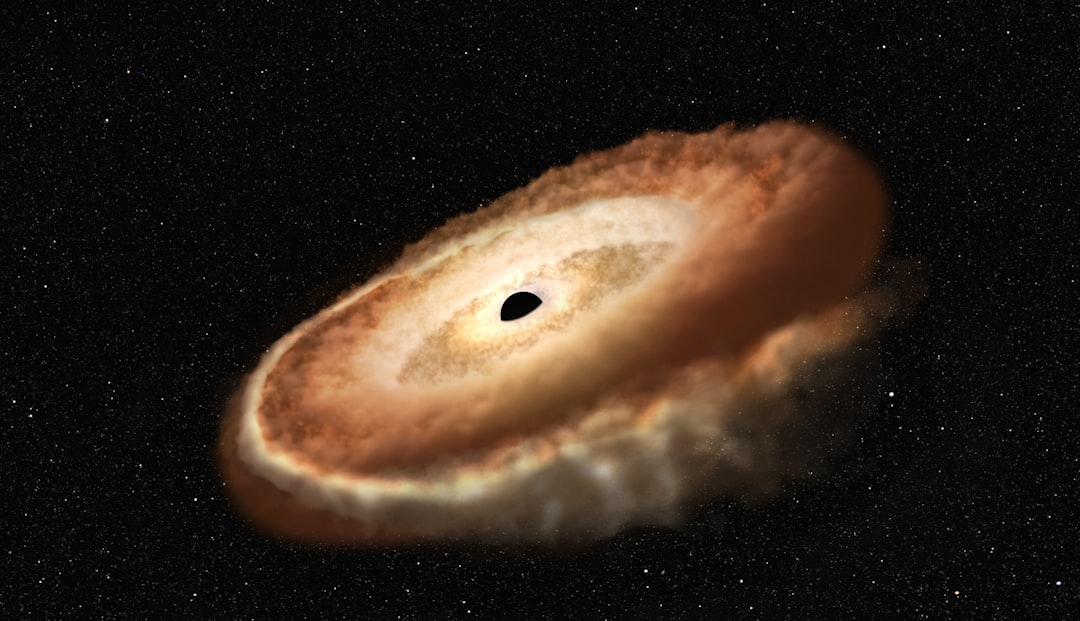
Black holes are cosmic objects formed from the gravitational collapse of massive stars. They possess gravitational fields so intense that light cannot escape from within their event horizon. The theoretical foundation for black holes was established in the early 20th century, and modern astronomical technology has enabled detailed observation and analysis of these objects.
Research into black holes has revealed fundamental properties about their structure and behavior. These objects have significant implications for understanding the broader universe, including the formation and evolution of galaxies. The study of black holes requires examination of several key physics concepts.
These include spacetime curvature, singularities at the center of black holes, and the interaction between quantum mechanics and gravitational fields. Black hole research has prompted scientists to refine existing physical theories and develop new frameworks for understanding extreme gravitational environments. As astrophysical observation techniques continue to advance, researchers gain new information about black hole characteristics and their role in cosmic structure.
This ongoing investigation contributes to a more comprehensive understanding of the universe’s fundamental nature.
Key Takeaways
- Budget black holes represent unique edge cases in black hole research with distinct characteristics.
- They form under specific conditions that differ from typical black hole formation processes.
- Observing budget black holes poses significant challenges due to their subtle and complex nature.
- Studying these black holes can impact our understanding of surrounding cosmic objects and phenomena.
- Research on budget black holes holds potential for groundbreaking discoveries in future astrophysics.
What are Budget Edge Cases?
In the realm of astrophysics, budget edge cases refer to specific scenarios or phenomena that exist at the fringes of established theories and models. These edge cases often challenge conventional wisdom and prompt researchers to reconsider existing frameworks. Budget edge cases can arise in various contexts, including the study of black holes, where they may manifest as unusual behaviors or characteristics that deviate from expected norms.
Understanding these edge cases is crucial for advancing scientific knowledge and refining theoretical models. Budget edge cases serve as a testing ground for hypotheses and theories, pushing the boundaries of what is known. They often reveal gaps in current understanding and highlight areas where further research is needed.
By examining these anomalies, scientists can gain valuable insights into the underlying principles governing black holes and other cosmic phenomena. The exploration of budget edge cases not only enhances theoretical frameworks but also fosters innovation in observational techniques and data analysis.
Understanding the Characteristics of Budget Black Holes
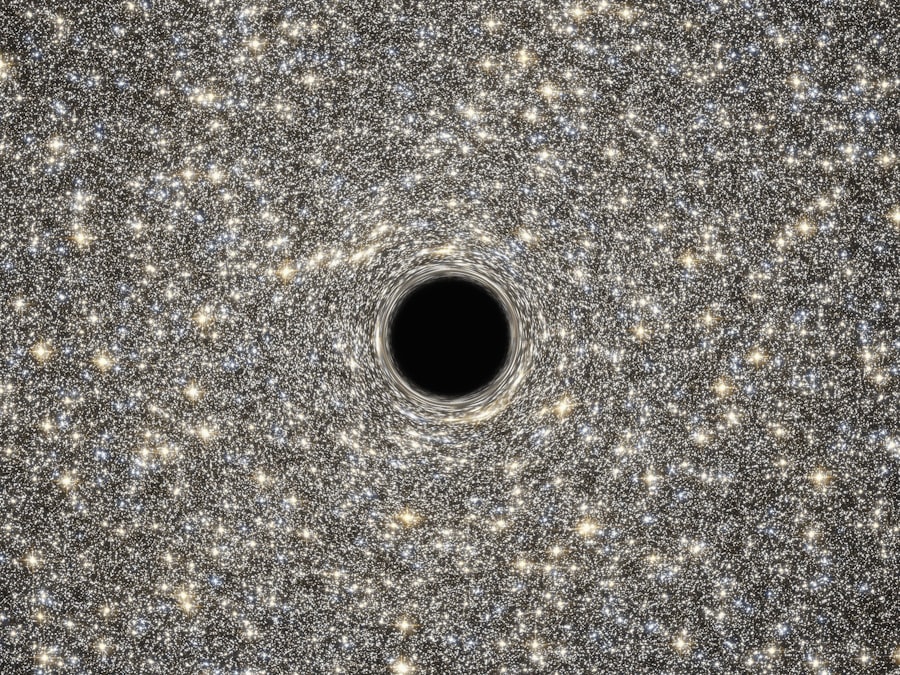
Budget black holes, a term that encapsulates those edge cases within the broader category of black holes, exhibit unique characteristics that set them apart from their more conventional counterparts. These anomalies may include variations in mass, spin, or accretion rates, leading to behaviors that defy standard models. For instance, a budget black hole might possess a mass significantly lower than what is typically expected for a black hole, raising questions about its formation and evolution.
Such deviations can provide critical insights into the processes that govern black hole formation and growth. Moreover, budget black holes may also display unusual interactions with their surroundings. Their gravitational influence can lead to unexpected dynamics in nearby celestial bodies or gas clouds, resulting in phenomena that challenge existing astrophysical models.
By studying these unique characteristics, researchers can refine their understanding of black hole physics and explore new avenues for investigation. The study of budget black holes thus represents a vital aspect of contemporary astrophysics, offering opportunities to expand knowledge and address unresolved questions.
How Budget Black Holes Form
The formation of budget black holes is a complex process that remains an area of active research. While traditional black holes typically form from the gravitational collapse of massive stars at the end of their life cycles, budget black holes may arise through alternative mechanisms or under specific conditions that deviate from standard models. For example, they could form from the merger of smaller black holes or through the collapse of less massive stellar remnants.
These alternative pathways challenge existing theories and prompt scientists to explore new scenarios for black hole formation. Additionally, environmental factors play a significant role in the formation of budget black holes. The surrounding cosmic environment can influence the conditions under which these anomalies emerge.
For instance, interactions with other celestial bodies or gas clouds may facilitate the formation of lower-mass black holes or alter their growth trajectories. Understanding these processes is essential for constructing a comprehensive picture of how budget black holes fit into the broader landscape of cosmic evolution.
Observing Budget Black Holes
| Edge Case | Description | Metric | Impact on Budget | Mitigation Strategy |
|---|---|---|---|---|
| Unexpected Data Volume | Sudden increase in data size due to black hole event anomalies | Data Growth Rate: 150% per month | High – Increased storage and processing costs | Implement scalable cloud storage and dynamic resource allocation |
| Computation Overload | Excessive CPU/GPU usage during black hole simulation edge cases | CPU Usage Spike: 95% sustained for 12 hours | Medium – Higher energy and hardware wear costs | Optimize algorithms and schedule batch processing during off-peak hours |
| Data Loss Risk | Potential loss of critical black hole event data due to system failure | Data Loss Probability: 0.02% | Critical – Loss of valuable research data | Implement redundant backups and real-time data replication |
| Unexpected Software Bugs | Errors in black hole budget calculation algorithms | Bug Incidence Rate: 3 per 1000 runs | Low – Minor delays and reprocessing costs | Regular code reviews and automated testing |
| Resource Allocation Conflicts | Competing demands for computational resources during peak black hole event analysis | Resource Contention: 40% of peak time | Medium – Delays and increased operational costs | Implement priority scheduling and resource reservation systems |
Observing budget black holes presents unique challenges due to their often subtle characteristics and behaviors. Unlike more massive black holes that can be detected through their powerful emissions or gravitational effects on nearby objects, budget black holes may not exhibit such pronounced signatures. As a result, astronomers must employ innovative observational techniques to identify and study these elusive entities.
Advanced telescopes equipped with cutting-edge technology are essential for capturing faint signals and gathering data on these edge cases. Moreover, multi-wavelength observations are crucial for gaining a comprehensive understanding of budget black holes. By analyzing data across various wavelengths—from radio waves to X-rays—scientists can piece together a more complete picture of these anomalies.
This approach allows researchers to detect potential accretion disks or outflows associated with budget black holes, providing valuable insights into their properties and behaviors. The ongoing development of observational technology will undoubtedly enhance the ability to study these intriguing cosmic phenomena.
The Impact of Budget Black Holes on Surrounding Objects
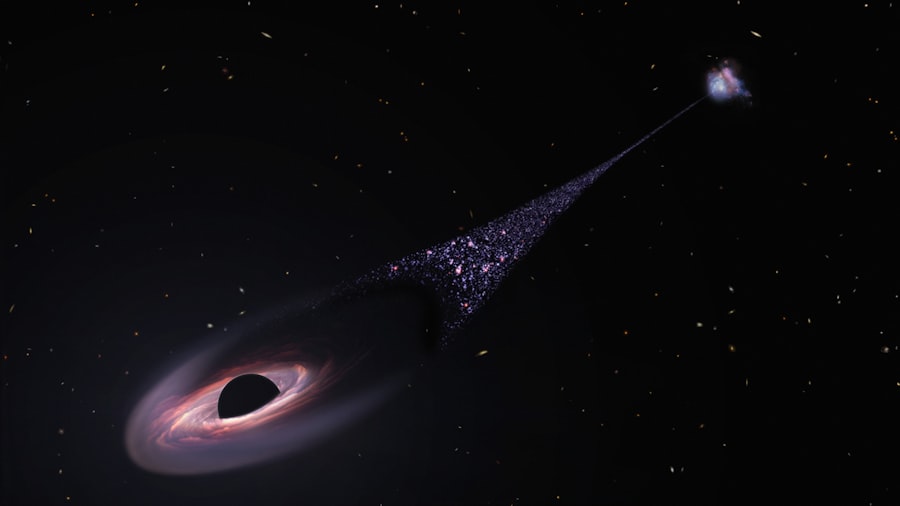
The gravitational influence of budget black holes extends beyond their immediate vicinity, affecting nearby celestial objects in profound ways. Their presence can alter the orbits of stars and gas clouds, leading to dynamic interactions that may result in observable phenomena such as star formation or accretion events.
Additionally, budget black holes may play a role in regulating the growth and evolution of galaxies. Their interactions with surrounding matter can influence star formation rates and gas dynamics within galaxies, contributing to the overall structure and behavior of these cosmic systems. By studying the impact of budget black holes on their environments, researchers can gain insights into the interconnectedness of various astronomical phenomena and enhance their understanding of galaxy formation and evolution.
Theoretical Applications of Budget Black Holes
The study of budget black holes has significant theoretical implications for astrophysics and cosmology. These anomalies challenge existing models and prompt researchers to develop new frameworks that account for their unique characteristics and behaviors. For example, understanding how budget black holes form and evolve may lead to revisions in theories related to stellar evolution or dark matter interactions.
As scientists grapple with these edge cases, they are compelled to refine their theoretical approaches and expand their conceptual horizons. Moreover, budget black holes may offer insights into fundamental questions about the nature of gravity and spacetime. Their unusual properties could provide clues about how gravity behaves under extreme conditions or how it interacts with other fundamental forces.
By exploring these theoretical applications, researchers can deepen their understanding of the universe’s underlying principles and contribute to advancements in both theoretical physics and observational astronomy.
Challenges in Studying Budget Black Holes
Studying budget black holes presents numerous challenges that researchers must navigate to advance knowledge in this field. One significant hurdle is the difficulty in detecting these anomalies due to their often subtle signatures. Unlike more massive black holes that emit strong radiation or exhibit clear gravitational effects on nearby objects, budget black holes may remain hidden within complex cosmic environments.
This necessitates innovative observational strategies and advanced data analysis techniques to uncover their presence. Additionally, the theoretical frameworks surrounding black holes are continually evolving, which can complicate efforts to understand budget edge cases. As new discoveries emerge and existing models are refined, researchers must adapt their approaches to account for these changes.
This dynamic nature of astrophysical research requires collaboration across disciplines and a willingness to embrace uncertainty as scientists work toward unraveling the mysteries surrounding budget black holes.
Budget Black Holes and the Future of Astrophysics
The exploration of budget black holes holds promise for shaping the future of astrophysics as researchers continue to push the boundaries of knowledge in this field. As observational technology advances and theoretical frameworks evolve, scientists are likely to uncover new insights into these enigmatic entities and their role in the cosmos. The study of budget black holes may lead to breakthroughs in understanding fundamental questions about gravity, spacetime, and cosmic evolution.
Furthermore, as researchers delve deeper into the complexities of budget black holes, they may uncover connections between these anomalies and other areas of astrophysics, such as dark matter or galaxy formation. This interdisciplinary approach could foster collaboration among scientists from various fields, leading to innovative solutions and fresh perspectives on longstanding questions in cosmology.
Potential Discoveries from Budget Black Holes
The investigation of budget black holes has the potential to yield groundbreaking discoveries that could reshape our understanding of the universe. By studying these edge cases, researchers may uncover new mechanisms for black hole formation or gain insights into previously unrecognized interactions between celestial bodies. Such discoveries could have far-reaching implications for theories related to cosmic evolution and the fundamental forces governing the universe.
Moreover, budget black holes may serve as a window into understanding extreme physical conditions that cannot be replicated in laboratory settings. Their unique properties could provide valuable data for testing theories related to quantum gravity or other fundamental aspects of physics. As scientists continue to explore these anomalies, they may unlock new avenues for research that extend beyond astrophysics into broader realms of scientific inquiry.
The Importance of Studying Budget Edge Cases in Black Hole Research
In conclusion, the study of budget edge cases within the realm of black hole research is essential for advancing scientific knowledge and refining theoretical frameworks in astrophysics. These anomalies challenge existing paradigms and prompt researchers to explore new avenues for investigation, ultimately leading to a deeper understanding of cosmic phenomena. By examining budget black holes—those entities that exist at the fringes of established theories—scientists can uncover valuable insights into the nature of gravity, spacetime, and cosmic evolution.
As technology continues to advance and observational techniques improve, the potential for groundbreaking discoveries related to budget black holes remains vast. The exploration of these enigmatic entities not only enriches our understanding of the universe but also fosters collaboration across disciplines, paving the way for innovative solutions to longstanding questions in science. Ultimately, studying budget edge cases is not merely an academic exercise; it is a vital pursuit that enhances humanity’s grasp of its place within the cosmos.
These edge cases often challenge our understanding of the universe and the limits of our current models. For a deeper dive into these intriguing concepts, you can read more in this related article on cosmic ventures: My Cosmic Ventures.
FAQs
What are black holes?
Black holes are regions in space where gravity is so strong that nothing, not even light, can escape from them. They form when massive stars collapse under their own gravity at the end of their life cycles.
What does the term “budget edge cases” refer to in the context of black holes?
In the context of black holes, “budget edge cases” typically refers to scenarios or conditions that test the limits of theoretical models or computational resources used to study black holes. These edge cases help scientists understand the boundaries and exceptions in black hole behavior or simulations.
Why are edge cases important in black hole research?
Edge cases are important because they challenge existing theories and models, revealing potential gaps or limitations. Studying these cases can lead to new insights about black hole physics, such as extreme gravitational effects or unusual interactions with surrounding matter.
How do scientists study black holes if they cannot be observed directly?
Scientists study black holes indirectly by observing their effects on nearby matter and light. For example, they analyze the radiation emitted by material as it falls into a black hole, gravitational waves from black hole mergers, and the motion of stars orbiting invisible massive objects.
What role do simulations play in understanding black holes and their edge cases?
Simulations allow researchers to model complex black hole phenomena under various conditions, including edge cases that are difficult or impossible to observe directly. These computational models help predict behavior, test theories, and interpret observational data.
Can black holes have different sizes or masses?
Yes, black holes vary widely in size and mass. They range from small stellar black holes, formed from collapsing stars, to supermassive black holes found at the centers of galaxies, which can be millions or billions of times more massive than the Sun.
What is the significance of studying black holes in astrophysics?
Studying black holes helps scientists understand fundamental physics, including gravity, quantum mechanics, and the behavior of matter under extreme conditions. Black holes also play a key role in galaxy formation and evolution, making them crucial to understanding the universe.