The cosmos is a vast and intricate tapestry woven from the threads of gravitational interactions, celestial bodies, and the enigmatic forces that govern their movements. Among these forces, tidal effects play a crucial role in shaping the dynamics of various astronomical structures. One of the most intriguing areas of study in this context is the Oort Cloud, a distant region of icy bodies that lies at the fringes of our solar system.
The influence of black holes, particularly their tidal forces, on the Oort Cloud presents a fascinating intersection of astrophysics and cosmology. As researchers delve deeper into the mysteries of the universe, understanding how these powerful entities interact with the Oort Cloud could unveil new insights into the formation and evolution of our solar system. Black holes, with their immense gravitational pull, exert tidal forces that can significantly affect nearby celestial objects.
The Oort Cloud, a hypothetical shell of icy bodies believed to be the source of long-period comets, is not immune to these influences. The interplay between black holes and the Oort Cloud raises questions about the stability and dynamics of this distant region. As scientists continue to explore these cosmic relationships, they uncover the potential consequences of black hole tidal effects on the Oort Cloud, shedding light on the broader implications for our understanding of the solar system’s architecture.
Key Takeaways
- The Oort Cloud is a significant part of the solar system, located at the outer edges, and is affected by tidal forces from black holes.
- Tidal forces are the result of gravitational interactions between celestial bodies, causing stretching and squeezing effects on objects like the Oort Cloud.
- Black holes exert powerful tidal forces on surrounding objects due to their immense gravitational pull, including the Oort Cloud.
- The potential effects of black hole tidal forces on the Oort Cloud include disruptions to its stability and dynamics.
- Research and exploration of black hole tidal effects on the Oort Cloud are ongoing, with implications for our understanding of the cosmic dance between these celestial bodies.
Understanding the Oort Cloud and its significance in the solar system
The Oort Cloud is a theoretical construct that represents a vast reservoir of icy bodies located at the outermost reaches of the solar system. It is thought to extend from approximately 2,000 to 100,000 astronomical units (AU) from the Sun, forming a spherical shell around the solar system. This region is believed to contain billions of cometary nuclei, remnants from the early solar system that have remained relatively unchanged for billions of years.
The existence of the Oort Cloud was first proposed by Dutch astronomer Jan Oort in 1950, who suggested that it could explain the origins of comets with highly elliptical orbits. These comets, which can take thousands or even millions of years to complete a single orbit around the Sun, are thought to originate from this distant reservoir.
The study of the Oort Cloud is essential for understanding the dynamics of our solar system and its evolution over time. As researchers investigate this enigmatic region, they uncover clues about the processes that shaped not only our own solar system but also other planetary systems throughout the galaxy.
The concept of tidal forces and their impact on celestial bodies
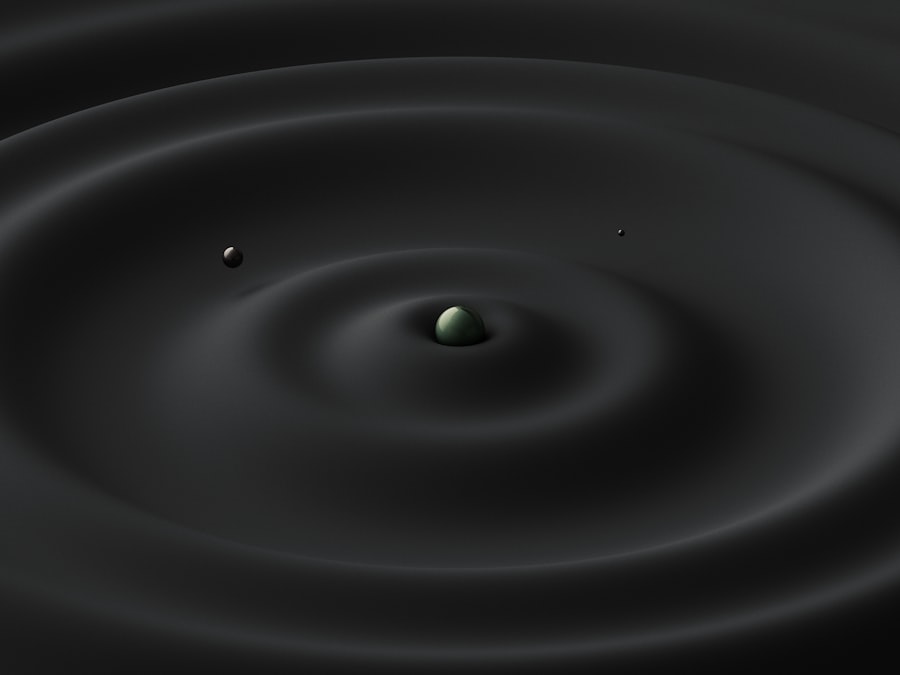
Tidal forces arise from the gravitational interaction between two celestial bodies, resulting in variations in gravitational pull experienced by different parts of an object. This phenomenon is most commonly observed in relation to Earth and its Moon, where the gravitational pull of the Moon creates ocean tides on Earth. However, tidal forces extend far beyond our planet and can have profound effects on celestial bodies throughout the universe.
When two massive objects come into proximity, their gravitational fields can distort each other, leading to stretching and compressing effects that can alter their shapes and orbits.
For instance, when a smaller body approaches a larger one, it may experience significant deformation due to tidal forces, potentially leading to fragmentation or even complete disintegration if it crosses a critical threshold known as the Roche limit.
This principle is crucial for understanding how celestial bodies interact with one another and how their orbits can be influenced by nearby massive objects. As researchers explore these tidal interactions, they gain insights into the complex dynamics that govern not only individual celestial bodies but also entire systems like galaxies and star clusters.
How black holes exert tidal forces on surrounding objects
| Object | Tidal Force | Effect |
|---|---|---|
| Star | Strong | Stretches and compresses the star |
| Planet | Moderate | Causes tidal heating and deformation |
| Spacecraft | Weak | May cause slight stretching |
Black holes are among the most extreme entities in the universe, characterized by their incredibly strong gravitational fields. When a black hole forms from the collapse of a massive star, it creates a region in space where gravity is so intense that nothing—not even light—can escape its grasp. This immense gravitational pull extends far beyond the event horizon, influencing objects that venture too close.
The tidal forces exerted by black holes can have dramatic effects on surrounding celestial bodies, particularly those that find themselves within their gravitational reach. As an object approaches a black hole, it experiences differential gravitational forces due to its varying distance from the black hole’s center. The side of the object closer to the black hole feels a stronger gravitational pull than the side facing away from it.
This difference in gravitational force can lead to stretching and elongation of the object—a phenomenon often referred to as “spaghettification.” In extreme cases, smaller celestial bodies can be torn apart by these tidal forces before they even reach the event horizon. Understanding how black holes exert these tidal forces is essential for comprehending their impact on nearby objects and their role in shaping cosmic structures.
The potential effects of black hole tidal forces on the Oort Cloud
The Oort Cloud, while situated at a considerable distance from any known black holes, is not entirely insulated from their influence. As black holes move through space—whether as solitary entities or as part of binary systems—they can exert tidal forces on surrounding regions, including the Oort Cloud. These interactions could lead to significant perturbations within this distant reservoir of icy bodies, potentially altering their orbits and trajectories.
One potential effect of black hole tidal forces on the Oort Cloud is the disruption of cometary nuclei within this region. If a black hole were to pass close enough to the Oort Cloud, its gravitational pull could disturb the delicate balance that keeps these icy bodies in their orbits. Some comets might be nudged into trajectories that bring them closer to the Sun, resulting in increased activity as they approach warmer regions of the solar system.
Conversely, other comets could be ejected from the Oort Cloud entirely, sent hurtling into interstellar space. Such events could have profound implications for our understanding of cometary activity and its relationship with black holes.
The gravitational dance between black holes and the Oort Cloud

The interaction between black holes and the Oort Cloud can be likened to a cosmic dance—a complex interplay governed by gravity and motion. As black holes traverse their environments, they can influence nearby regions through their gravitational fields. This dance is not merely a one-way interaction; rather, it involves a dynamic exchange where both entities respond to each other’s presence.
In this gravitational ballet, black holes can create ripples in spacetime that affect surrounding celestial bodies. As they move through space, they may encounter regions populated by Oort Cloud objects, leading to gravitational perturbations that alter their orbits over time. These changes can result in a variety of outcomes: some objects may be drawn closer to the Sun while others are flung into deeper space.
The intricate nature of this dance highlights how interconnected celestial systems are and underscores the importance of studying these interactions to gain a comprehensive understanding of cosmic dynamics.
Observations and evidence of black hole tidal effects on the Oort Cloud
While direct observations of black hole tidal effects on the Oort Cloud remain challenging due to its vast distance and theoretical nature, indirect evidence can be gleaned from various astronomical phenomena. For instance, researchers have identified instances where comets with unusual orbits appear to have been influenced by external gravitational forces—potentially hinting at interactions with nearby black holes or other massive objects. Additionally, advancements in observational technology have allowed astronomers to detect gravitational waves generated by merging black holes.
These waves carry information about the dynamics of such events and can provide insights into how black holes interact with their surroundings. By studying these phenomena alongside models of Oort Cloud dynamics, scientists can begin to piece together a more comprehensive picture of how black holes may exert tidal effects on this distant region.
The implications of black hole tidal effects on the stability of the Oort Cloud
The stability of the Oort Cloud is crucial for maintaining its role as a reservoir for long-period comets and other icy bodies. If black hole tidal forces were to significantly disrupt this region, it could lead to a cascade of events that alter its structure and dynamics. Such disruptions might result in increased cometary activity within our solar system or even changes in orbital patterns that could affect planetary bodies.
Understanding these implications is vital for predicting future cometary behavior and assessing potential impacts on Earth. If black holes were found to play a significant role in shaping the dynamics of the Oort Cloud, it would necessitate a reevaluation of existing models regarding cometary origins and trajectories. This knowledge could also inform future studies aimed at understanding how similar processes might occur in other planetary systems throughout our galaxy.
The role of black hole tidal effects in shaping the dynamics of the Oort Cloud
Black hole tidal effects may serve as one of many factors influencing the dynamics of the Oort Cloud over astronomical timescales. While other forces—such as interactions with passing stars or galactic tides—also play significant roles in shaping this region, black holes introduce unique gravitational influences that could lead to distinct outcomes. As researchers continue to explore these dynamics, they may uncover patterns that reveal how black holes contribute to long-term changes within the Oort Cloud.
By integrating observational data with theoretical models, scientists can develop a more nuanced understanding of how these interactions shape not only our solar system but also similar structures across different galaxies.
Future research and exploration of black hole tidal effects on the Oort Cloud
The study of black hole tidal effects on the Oort Cloud represents an exciting frontier in astrophysics that invites further exploration and research. As technology advances and observational capabilities improve, scientists are poised to gather more data about both black holes and distant regions like the Oort Cloud. Future missions aimed at studying comets and other icy bodies could provide valuable insights into how these entities interact with external gravitational influences.
Moreover, interdisciplinary collaboration between astronomers, physicists, and planetary scientists will be essential for unraveling these complex relationships. By combining expertise from various fields, researchers can develop comprehensive models that account for multiple factors influencing both black holes and celestial structures like the Oort Cloud.
The ongoing cosmic dance between black holes and the Oort Cloud
In conclusion, the relationship between black holes and the Oort Cloud exemplifies one of many intricate interactions within our universe—a cosmic dance governed by gravity and motion. As scientists continue to investigate this dynamic interplay, they uncover new insights into how tidal forces exerted by black holes can shape distant regions like the Oort Cloud. Understanding these interactions not only enhances knowledge about our own solar system but also contributes to broader discussions regarding cosmic evolution across galaxies.
As research progresses and observational capabilities expand, humanity stands poised at an exciting juncture—one where mysteries surrounding black holes and their effects on celestial structures may soon yield answers that deepen our appreciation for the complexities inherent in our universe’s grand design.
Recent studies have highlighted the intriguing tidal effects that black holes can exert on distant regions of our solar system, particularly the Oort Cloud. These gravitational influences can potentially alter the orbits of icy bodies, leading to increased comet activity and other phenomena. For a deeper understanding of these dynamics, you can explore the related article on this topic at this link.
WATCH THIS! The Invisible Threat: A Rogue Black Hole Headed for Our Solar System?
FAQs
What are black hole tidal effects on the Oort Cloud?
Black hole tidal effects on the Oort Cloud refer to the gravitational influence that a black hole can have on the icy bodies within the Oort Cloud, which is a spherical shell of comets and other objects located at the outermost edge of the solar system.
How do black holes affect the Oort Cloud?
The gravitational pull of a black hole can disrupt the orbits of objects within the Oort Cloud, potentially sending them on trajectories that bring them closer to the inner solar system or eject them from the solar system altogether.
Can black holes directly pull objects from the Oort Cloud into themselves?
While it is theoretically possible for a black hole to capture objects from the Oort Cloud through its gravitational pull, the likelihood of this occurring is extremely low due to the vast distances involved and the relatively small size of the Oort Cloud objects.
What are the potential consequences of black hole tidal effects on the Oort Cloud?
The disruption of Oort Cloud objects by a black hole could lead to an increase in the number of comets and other icy bodies entering the inner solar system, potentially posing a greater risk of impact with Earth or other planets.
Are there any observed instances of black hole tidal effects on the Oort Cloud?
As of now, there are no confirmed observations of black hole tidal effects specifically on the Oort Cloud. However, astronomers continue to study the potential influence of black holes on distant regions of the solar system.