
Black holes have long captivated the imagination of scientists and the general public alike. These enigmatic cosmic entities, formed from the remnants of massive stars that have undergone gravitational collapse, possess gravitational fields so intense that nothing, not even light, can escape their grasp. The concept of a black hole challenges the very fabric of our understanding of physics, particularly the laws of gravity and the nature of space-time.
As researchers delve deeper into the mysteries surrounding these celestial phenomena, they uncover not only their fascinating characteristics but also the potential threats they pose to the universe. The study of black holes has evolved significantly since their theoretical inception in the early 20th century. Initially dismissed as mere mathematical curiosities, black holes are now recognized as integral components of the cosmos.
They exist in various forms, including stellar black holes, supermassive black holes found at the centers of galaxies, and even primordial black holes that may have formed in the early universe. Each type presents unique challenges and opportunities for scientific exploration, prompting a growing interest in understanding their behavior and implications for the universe at large.
Key Takeaways
- Black holes are mysterious and powerful cosmic entities that have fascinated scientists and the public for decades.
- Black holes pose a potential threat to the universe due to their ability to consume everything, including light, within their event horizon.
- An early warning system for black holes is crucial in order to monitor and prepare for potential black hole events.
- Black holes are detected through various methods, including observing their effects on nearby stars and gas, as well as through gravitational wave detection.
- The development of a black hole early warning system requires advanced technology and collaboration among scientists and researchers.
- Technology plays a crucial role in the detection and monitoring of black holes, including telescopes, satellites, and gravitational wave detectors.
- Protecting the universe from black hole threats is important for the preservation of life and the understanding of the cosmos.
- Collaboration in black hole research is essential for advancing our knowledge and capabilities in detecting and monitoring black holes.
- The future of black hole detection and monitoring holds promise for further advancements in technology and understanding of these cosmic phenomena.
- Potential impacts of black hole events include disruptions to nearby celestial bodies and the potential for affecting the stability of the universe.
- Safeguarding the universe from black hole threats requires ongoing research, collaboration, and the development of advanced detection and monitoring systems.
The Threat of Black Holes to the Universe
While black holes are often viewed through a lens of wonder and intrigue, they also represent a significant threat to the universe. Their immense gravitational pull can disrupt the orbits of nearby stars and planets, leading to catastrophic consequences for any celestial bodies caught in their vicinity. For instance, if a star were to wander too close to a black hole, it could be torn apart by tidal forces in a process known as spaghettification.
Moreover, supermassive black holes, which reside at the centers of most galaxies, can influence the formation and evolution of galaxies themselves. Their gravitational influence can regulate star formation rates and affect the distribution of matter within galaxies.
As such, understanding the dynamics of black holes is crucial for comprehending the larger cosmic picture. The threat they pose is not merely theoretical; it has real implications for the stability and longevity of galaxies, including our own Milky Way.
The Need for an Early Warning System
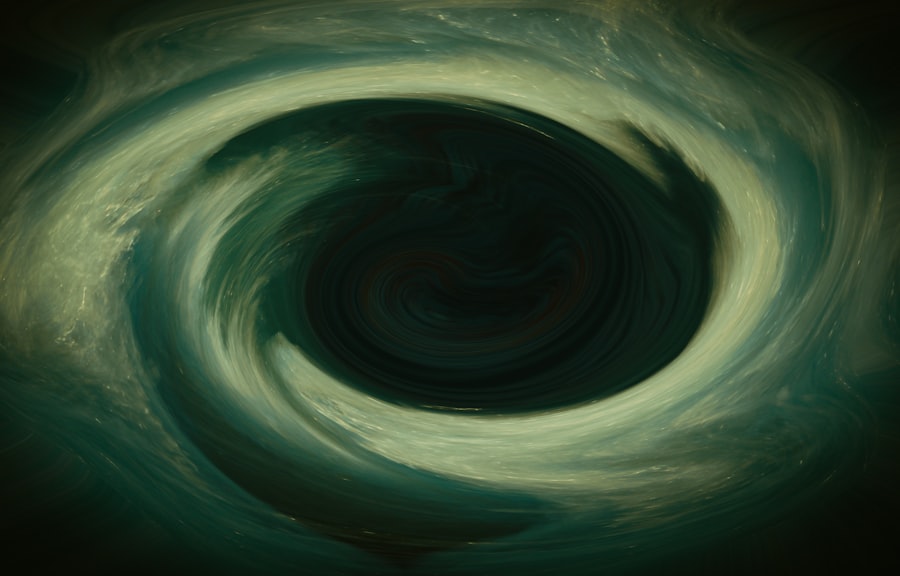
Given the potential dangers associated with black holes, there is an urgent need for an early warning system capable of detecting their movements and predicting their impacts on surrounding celestial bodies. Such a system would serve as a crucial tool for astronomers and astrophysicists, enabling them to monitor black hole activity and assess any potential threats to nearby stars and planets. The development of an effective early warning system could provide invaluable insights into the behavior of these cosmic giants and help mitigate risks associated with their gravitational influence.
An early warning system would not only enhance scientific understanding but also foster public awareness about the realities of black holes. By disseminating information about potential threats, scientists can engage with communities and promote interest in space science. This proactive approach could inspire future generations to explore the cosmos and contribute to ongoing research efforts aimed at safeguarding our universe from the unpredictable nature of black holes.
How Black Holes are Detected
| Method of Detection | Description |
|---|---|
| X-ray Detection | Black holes can be detected by the X-rays emitted from the hot gas swirling around them. |
| Gravitational Lensing | Black holes can be detected by the bending of light from background stars or galaxies as it passes near the black hole. |
| Radio Detection | Black holes can be detected by the radio waves emitted from the material falling into them. |
| Observing Stellar Orbits | Black holes can be detected by observing the orbits of stars around an invisible companion, which could be a black hole. |
Detecting black holes is a complex endeavor that relies on indirect methods, as these entities do not emit light or other forms of electromagnetic radiation that can be observed directly. Instead, astronomers utilize various techniques to infer their presence based on their interactions with surrounding matter. One common method involves observing the behavior of stars orbiting an unseen mass; by analyzing their motion, scientists can estimate the mass and location of a black hole.
Another approach involves detecting X-rays emitted by gas and dust as they are drawn into a black hole’s accretion disk. As matter spirals inward, it heats up and emits X-rays that can be captured by space-based observatories. This method has proven effective in identifying stellar black holes in binary systems, where one star orbits around a black hole companion.
Additionally, gravitational wave detection has emerged as a groundbreaking technique for identifying merging black holes, providing new avenues for understanding their properties and distribution throughout the universe.
The Development of the Black Hole Early Warning System
The development of a black hole early warning system represents a significant advancement in astrophysical research. Such a system would integrate data from various observational platforms, including ground-based telescopes and space observatories, to create a comprehensive monitoring network. By analyzing real-time data on stellar movements and X-ray emissions, scientists could identify potential threats posed by nearby black holes and issue alerts accordingly.
Collaboration among international research institutions will be essential for establishing this early warning system. By pooling resources and expertise, scientists can enhance detection capabilities and improve response times to potential threats. Furthermore, advancements in machine learning and artificial intelligence could play a pivotal role in analyzing vast amounts of astronomical data, allowing for quicker identification of anomalies that may indicate black hole activity.
The Role of Technology in Black Hole Detection

Technology plays a crucial role in advancing our understanding of black holes and enhancing detection methods. The advent of powerful telescopes equipped with advanced imaging capabilities has revolutionized astronomical observations. Instruments such as the Event Horizon Telescope have enabled scientists to capture images of black holes’ event horizons, providing unprecedented insights into their structure and behavior.
Moreover, developments in computational power have facilitated complex simulations that model black hole interactions with surrounding matter. These simulations allow researchers to predict how black holes will behave under various conditions, aiding in the interpretation of observational data. As technology continues to evolve, it will undoubtedly lead to new breakthroughs in black hole research, paving the way for more effective detection methods and early warning systems.
The Importance of Protecting Our Universe
Protecting our universe from potential threats posed by black holes is not merely an academic pursuit; it is essential for ensuring the stability and longevity of cosmic structures. Understanding how black holes interact with their surroundings can inform strategies for mitigating risks associated with their gravitational influence. By developing early warning systems and enhancing detection capabilities, scientists can better prepare for potential disruptions caused by these enigmatic entities.
Furthermore, safeguarding our universe extends beyond immediate threats posed by black holes. It encompasses a broader commitment to understanding cosmic phenomena and preserving the delicate balance that sustains life on Earth. By fostering a culture of scientific inquiry and collaboration, humanity can work together to explore the mysteries of the universe while simultaneously protecting it from unforeseen dangers.
Collaboration in Black Hole Research
Collaboration is paramount in advancing black hole research and developing effective detection systems. Scientists from diverse fields—astrophysics, computer science, engineering—must come together to share knowledge and resources. International partnerships can facilitate data sharing and enhance observational capabilities, allowing researchers to build a more comprehensive understanding of black holes.
Moreover, interdisciplinary collaboration can lead to innovative solutions for detecting and monitoring black holes. By combining expertise from various domains, researchers can develop new technologies and methodologies that improve detection accuracy and response times. This collaborative spirit is essential for addressing the complexities associated with black hole research and ensuring that humanity remains vigilant against potential cosmic threats.
The Future of Black Hole Detection and Monitoring
The future of black hole detection and monitoring holds great promise as advancements in technology continue to unfold. With ongoing developments in observational techniques and computational modeling, scientists are poised to gain deeper insights into the behavior of these cosmic giants. The integration of machine learning algorithms into data analysis processes will likely enhance detection capabilities, allowing researchers to identify anomalies more efficiently.
Additionally, as space exploration initiatives expand, new opportunities for observing black holes will arise. Future missions may deploy advanced telescopes capable of capturing high-resolution images or detecting gravitational waves with unprecedented sensitivity. These advancements will not only improve our understanding of black holes but also contribute to broader efforts aimed at safeguarding our universe from potential threats.
Potential Impacts of Black Hole Events
The impacts of black hole events can be profound and far-reaching. When a star is consumed by a black hole or when two black holes merge, the resulting energy release can produce powerful gravitational waves that ripple through space-time. These events not only provide valuable data for researchers but also have implications for nearby celestial bodies.
For instance, if a supermassive black hole were to disrupt the orbits of stars within its galaxy due to sudden changes in its mass or position, it could lead to significant alterations in galactic dynamics. Such disruptions may trigger star formation or even result in collisions between celestial bodies. Understanding these potential impacts is crucial for predicting how black holes influence their environments and for developing strategies to mitigate risks associated with their activity.
Safeguarding the Universe from Black Hole Threats
In conclusion, safeguarding the universe from potential threats posed by black holes is an imperative task that requires concerted efforts from scientists across disciplines. As researchers continue to unravel the mysteries surrounding these cosmic entities, developing effective detection methods and early warning systems becomes increasingly vital. Through collaboration and technological advancements, humanity can enhance its understanding of black holes while simultaneously protecting against their unpredictable nature.
The journey into understanding black holes is not merely an exploration of cosmic phenomena; it is a testament to humanity’s commitment to safeguarding its place in the universe. By fostering curiosity and collaboration within the scientific community, society can ensure that it remains vigilant against potential threats while continuing to explore the wonders that lie beyond our planet. The future holds great promise for unraveling the secrets of black holes, paving the way for a deeper understanding of our universe’s complexities and ensuring its protection for generations to come.
Recent advancements in astrophysics have led to the development of early warning systems for black holes, which aim to detect their presence and potential threats to surrounding celestial bodies. For a deeper understanding of these systems and their implications for space exploration, you can read more in this related article on cosmic phenomena at mycosmicventures.
com/’>My Cosmic Ventures.
WATCH THIS! The Invisible Threat: A Rogue Black Hole Headed for Our Solar System?
FAQs
What is an early warning system for black holes?
An early warning system for black holes is a system designed to detect and monitor the activities and behaviors of black holes in the universe. It aims to provide advanced notice of any potential events or phenomena related to black holes, such as gravitational waves or other emissions.
How does an early warning system for black holes work?
An early warning system for black holes typically utilizes advanced telescopes, detectors, and other observational tools to monitor the sky for any signs of black hole activity. It may also rely on data analysis and computational modeling to predict and track the behavior of black holes.
What are the potential benefits of an early warning system for black holes?
An early warning system for black holes can provide valuable insights into the behavior and evolution of black holes, as well as contribute to our understanding of the universe. It may also help in preparing for and mitigating any potential impacts of black hole events on Earth and other celestial bodies.
Are there any existing early warning systems for black holes?
As of now, there are ongoing efforts to develop and implement early warning systems for black holes, such as the network of gravitational wave detectors like LIGO and Virgo. These detectors have already made significant contributions to the detection and study of black hole mergers.
What are the challenges in developing an early warning system for black holes?
Challenges in developing an early warning system for black holes include the need for advanced technology, precise observational techniques, and the ability to differentiate black hole signals from other cosmic phenomena. Additionally, predicting the behavior of black holes accurately remains a complex task.