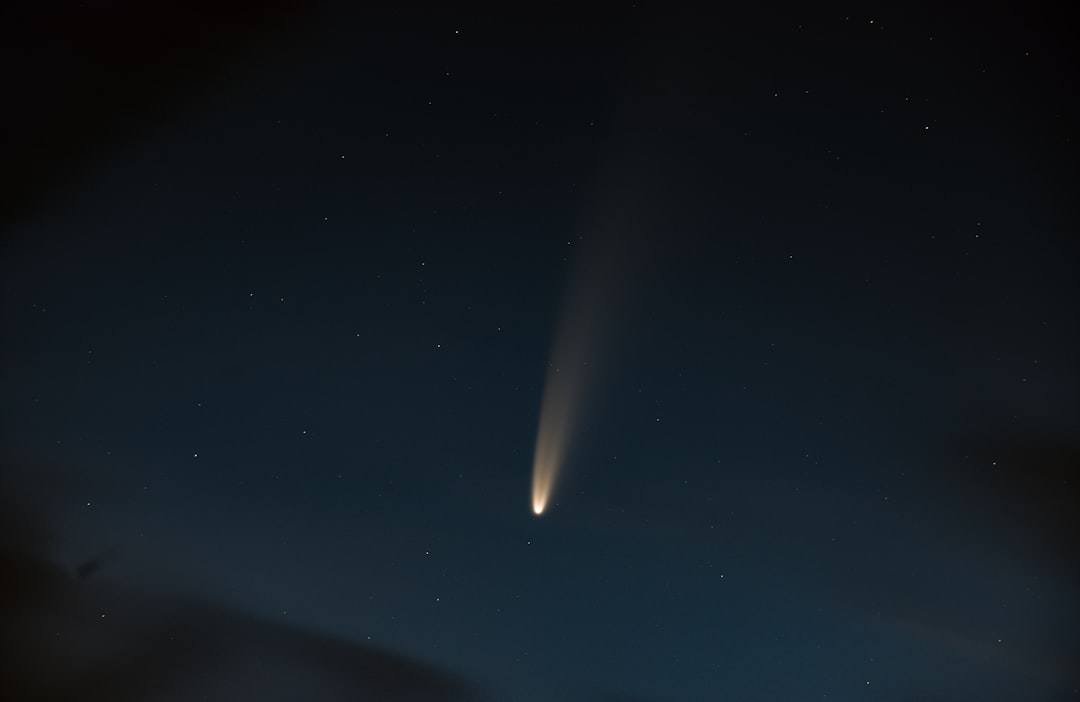
Avi Loeb, a prominent astrophysicist and professor at Harvard University, has garnered significant attention for his controversial theory regarding the interstellar object known as Oumuamua. Discovered in 2017, Oumuamua has sparked a flurry of interest and debate within the scientific community and beyond. Loeb’s hypothesis posits that this enigmatic object may not merely be a natural phenomenon but rather an artificial construct, possibly an alien probe sent to explore our solar system.
This radical idea challenges conventional wisdom and invites a reevaluation of humanity’s place in the cosmos. Loeb’s theory is not just a whimsical notion; it is grounded in scientific inquiry and a desire to expand the boundaries of human understanding. By suggesting that Oumuamua could be an extraterrestrial artifact, he encourages a broader discussion about the existence of intelligent life beyond Earth.
This perspective has ignited both excitement and skepticism, prompting scientists and enthusiasts alike to consider the implications of such a possibility. As the discourse surrounding Oumuamua continues to evolve, it raises fundamental questions about the nature of exploration, communication, and the future of humanity in an ever-expanding universe.
Key Takeaways
- Avi Loeb’s theory proposes that Oumuamua, the first known interstellar object to pass through our solar system, may be an alien probe.
- Oumuamua was discovered in 2017 by the Pan-STARRS1 telescope in Hawaii, and its unusual characteristics sparked scientific interest and debate.
- The object’s elongated shape, non-gravitational acceleration, and lack of a visible coma or tail are among the unusual features that have led to speculation about its origins.
- Avi Loeb’s hypothesis has faced criticism and controversy within the scientific community, with some arguing that natural explanations for Oumuamua’s characteristics have not been fully explored.
- Efforts to search for evidence to support the alien probe theory have included analyzing Oumuamua’s light curve and conducting radio telescope observations.
The Discovery of Oumuamua
The discovery of Oumuamua marked a significant milestone in the field of astronomy. Detected on October 19, 2017, by astronomers using the Pan-STARRS1 telescope in Hawaii, Oumuamua was initially classified as a comet. However, its trajectory and characteristics quickly set it apart from typical celestial bodies.
Unlike comets that exhibit a visible tail or halo, Oumuamua appeared to be elongated and lacked any discernible signs of outgassing. This peculiarity prompted further investigation and analysis, leading to its reclassification as an asteroid. As astronomers delved deeper into Oumuamua’s properties, they uncovered additional anomalies that fueled intrigue.
Its hyperbolic trajectory indicated that it originated from outside the solar system, making it the first known interstellar object to pass through our cosmic neighborhood. The object’s rapid speed and unusual shape raised questions about its origin and composition. While many scientists initially approached Oumuamua as a natural phenomenon, its distinctive features laid the groundwork for more speculative theories, including Loeb’s assertion that it could be an artificial construct.
Oumuamua’s Unusual Characteristics
Oumuamua’s characteristics are what truly set it apart from other celestial bodies observed in our solar system. Its elongated shape, estimated to be about 800 meters long and only 80 meters wide, defies the typical spherical forms of asteroids and comets. This unusual aspect led to various hypotheses regarding its formation and structure.
Some scientists proposed that it could be a fragment of a larger body that had been torn apart by gravitational forces, while others suggested it might be a remnant from a distant planetary system. Moreover, Oumuamua exhibited unexpected changes in brightness as it rotated, suggesting that it might be tumbling through space rather than spinning uniformly. This erratic behavior raised further questions about its composition and surface properties.
Unlike most comets that display a visible coma or tail due to sublimation of ices, Oumuamua did not show any signs of such activity, leading to speculation about its material makeup. The lack of outgassing was particularly puzzling, as it contradicted expectations for an object traveling at such high speeds through the solar system.
Avi Loeb’s Hypothesis: Oumuamua as an Alien Probe
| Data/Metric | Description |
|---|---|
| Interstellar Origin | Oumuamua is the first known interstellar object to pass through our solar system. |
| Unusual Shape | Oumuamua’s elongated and tumbling motion is unlike any natural object seen in our solar system. |
| Acceleration | Oumuamua’s unexpected acceleration away from the sun could be explained by outgassing, but no coma or tail was observed. |
| Non-gravitational Forces | Loeb suggests that non-gravitational forces, such as solar radiation pressure, could be the result of Oumuamua being a light sail or probe. |
| Lack of Cometary Activity | Oumuamua did not exhibit the typical cometary activity expected from a natural object. |
Avi Loeb’s hypothesis regarding Oumuamua posits that the object could be an alien probe sent by an advanced civilization to gather information about our solar system. He argues that the peculiar characteristics of Oumuamua—its shape, trajectory, and lack of typical cometary features—are more consistent with artificial design than natural formation. Loeb suggests that if intelligent life exists elsewhere in the universe, it is plausible that they would send probes to explore other star systems, much like humanity has sent spacecraft to study distant planets.
Loeb’s theory is bolstered by the idea that advanced civilizations might utilize technology far beyond human comprehension. He speculates that Oumuamua could be a form of light sail or a probe powered by solar radiation pressure, allowing it to travel vast distances across interstellar space. This perspective challenges traditional views of extraterrestrial exploration and encourages scientists to consider the possibility that we are not alone in the universe.
By framing Oumuamua as a potential artifact of intelligent design, Loeb invites further investigation into the nature of life beyond Earth.
Criticisms and Controversies Surrounding the Theory
Despite its intriguing premise, Loeb’s hypothesis has faced considerable criticism from various quarters within the scientific community. Many astronomers argue that attributing Oumuamua’s characteristics to artificial origins is premature and lacks sufficient evidence. Critics contend that natural explanations for its behavior and appearance are more plausible and should be prioritized over speculative theories involving extraterrestrial intelligence.
They emphasize the importance of adhering to rigorous scientific standards when evaluating extraordinary claims. Furthermore, some scientists express concern that Loeb’s theory may detract from legitimate research into natural phenomena. They argue that focusing on the possibility of alien technology could divert attention from understanding the fundamental processes governing celestial bodies.
As debates continue over Oumuamua’s origins, the discourse surrounding Loeb’s hypothesis underscores the complexities inherent in exploring the unknown.
The Search for Evidence to Support the Theory
In light of Loeb’s provocative claims, there has been a concerted effort within the scientific community to search for evidence that could support or refute his hypothesis regarding Oumuamua as an alien probe. Researchers have employed various observational techniques and theoretical models to analyze the object’s trajectory and characteristics further. Some astronomers have suggested that future missions could be designed to intercept similar interstellar objects, allowing for direct study and analysis.
Additionally, advancements in technology have enabled scientists to enhance their observational capabilities. Telescopes equipped with advanced imaging systems can capture more detailed data about distant celestial bodies, potentially revealing new insights into their composition and behavior. As researchers continue to explore the cosmos, they remain vigilant for signs of other interstellar visitors that may provide further context for understanding Oumuamua’s origins.
Implications of Oumuamua Being an Alien Probe
If Avi Loeb’s hypothesis were to be validated—that Oumuamua is indeed an alien probe—the implications would be profound and far-reaching. Such a discovery would fundamentally alter humanity’s understanding of its place in the universe and challenge long-held assumptions about extraterrestrial life. The confirmation of intelligent life beyond Earth would prompt a reevaluation of philosophical, scientific, and cultural perspectives on existence itself.
Moreover, the existence of advanced civilizations capable of sending probes across interstellar distances would raise questions about communication and interaction with these entities. How would humanity respond to contact with an alien civilization? What ethical considerations would arise in such encounters?
The potential for collaboration or conflict with extraterrestrial intelligences would necessitate careful deliberation on a global scale.
The Potential for Future Interstellar Visitors
The discovery of Oumuamua has opened up new avenues for exploring the possibility of future interstellar visitors. As astronomers continue to refine their observational techniques and expand their search for similar objects, there is growing optimism that more interstellar bodies may be detected in the coming years. These encounters could provide valuable opportunities for studying celestial phenomena beyond our solar system.
The prospect of future interstellar visitors also raises intriguing questions about their origins and purposes. If Oumuamua was indeed an artificial probe, what might other objects reveal about their creators? Understanding the motivations behind such explorations could offer insights into the nature of intelligence itself—whether human or extraterrestrial—and how civilizations evolve over time.
Ongoing Research and Observations
Ongoing research into Oumuamua and similar interstellar objects remains a priority for astronomers worldwide. Various observatories are actively monitoring the skies for new arrivals while analyzing existing data from past observations. Collaborative efforts among scientists aim to share findings and develop comprehensive models that account for both natural and artificial explanations for these enigmatic visitors.
In addition to observational studies, theoretical research continues to explore the implications of interstellar travel and communication with potential extraterrestrial civilizations. As technology advances, researchers are increasingly equipped to investigate questions surrounding propulsion methods, navigation through space, and even potential signals from intelligent life forms.
The Intersection of Science and Speculation
The discourse surrounding Avi Loeb’s theory exemplifies the delicate balance between science and speculation in contemporary research. While rigorous scientific inquiry relies on empirical evidence and established methodologies, speculative ideas can inspire new avenues of exploration and provoke critical thinking about humanity’s place in the universe. The intersection of these two realms often leads to fruitful discussions that challenge conventional wisdom and encourage innovative approaches to understanding complex phenomena.
However, this intersection also presents challenges as researchers navigate public perception and media representation of scientific ideas. The allure of sensationalism can overshadow nuanced discussions about evidence-based conclusions, leading to misunderstandings about the nature of scientific inquiry itself. As debates continue over Oumuamua’s origins, it is essential for scientists to communicate their findings clearly while remaining open to new possibilities.
The Impact of Avi Loeb’s Oumuamua Theory
Avi Loeb’s theory regarding Oumuamua as a potential alien probe has undoubtedly left an indelible mark on both scientific discourse and public imagination. By challenging conventional views on extraterrestrial life and exploration, he has sparked renewed interest in the search for intelligent civilizations beyond Earth. The ongoing debates surrounding his hypothesis highlight the complexities inherent in exploring uncharted territories within science while emphasizing the importance of maintaining rigorous standards in research.
Whether or not Oumuamua is ultimately proven to be an artificial construct remains uncertain; however, its discovery has undoubtedly opened new avenues for exploration and inquiry into the mysteries that lie beyond our solar system. In this age of discovery, one thing is clear: the search for answers will persist as long as there are questions waiting to be asked.
Avi Loeb’s theory about ‘Oumuamua, the mysterious interstellar object that passed through our solar system in 2017, has sparked significant debate and interest in the scientific community. Loeb, a Harvard astrophysicist, suggests that ‘Oumuamua might be an artificial object, possibly a piece of alien technology. This provocative idea has led to numerous discussions and further research into the nature of interstellar objects. For those interested in exploring more about the implications of Loeb’s theory and the ongoing search for extraterrestrial intelligence, a related article can be found on My Cosmic Ventures, which delves into the broader context of cosmic exploration and the quest to understand our place in the universe.
WATCH THIS! 🚀NASA’s Biggest Alien Secret Exposed
FAQs
What is Avi Loeb’s theory about Oumuamua?
Avi Loeb, a Harvard astronomer, proposed a controversial theory suggesting that the interstellar object Oumuamua could be an alien spacecraft.
What is Oumuamua?
Oumuamua is the first known interstellar object to pass through our solar system. It was discovered in 2017 and has since sparked much interest and debate among astronomers.
What evidence does Avi Loeb present to support his theory?
Avi Loeb points to the unusual characteristics of Oumuamua, such as its elongated shape and unexpected acceleration, as potential signs of artificial origin.
Has Avi Loeb’s theory been widely accepted by the scientific community?
No, Avi Loeb’s theory has been met with skepticism and criticism from many in the scientific community. Most astronomers believe that Oumuamua is a natural object, and there is no conclusive evidence to support the idea that it is of extraterrestrial origin.
What are some alternative explanations for Oumuamua’s unusual properties?
Some scientists have suggested that Oumuamua could be a fragment of a larger object, a comet, or a piece of interstellar debris with unique characteristics. Further research is needed to better understand the nature of Oumuamua.