
In the modern world, the dichotomy between atoms and bits has become increasingly significant, shaping the way individuals interact with their environment and each other. Atoms represent the tangible, physical components of the universe, while bits symbolize the intangible, digital information that permeates contemporary life. This contrast is not merely academic; it has profound implications for technology, communication, and even human behavior.
As society continues to evolve in an age dominated by digital innovation, understanding the relationship between these two fundamental elements is essential for grasping the complexities of the modern landscape. The interplay between atoms and bits is evident in various domains, from the way products are manufactured to how information is shared. As technology advances, the boundaries between the physical and digital realms blur, leading to new opportunities and challenges.
By examining these elements, one can gain a deeper appreciation for the intricate balance that exists between the physical and digital worlds.
Key Takeaways
- Atoms represent the physical, tangible elements of the world, while bits are the fundamental units of digital information.
- Atoms have physical properties like mass and volume, whereas bits exist as binary data without physical form.
- Storage and manipulation of atoms involve physical processes, while bits can be stored and altered electronically with high speed and flexibility.
- The shift from atoms to bits has transformed communication, enabling instant information exchange and digital innovation.
- Understanding the differences and interplay between atoms and bits presents both challenges and opportunities for future technological advancements.
Atoms are the fundamental building blocks of matter, constituting everything from the air we breathe to the devices we use daily. Each atom consists of a nucleus made up of protons and neutrons, surrounded by a cloud of electrons that orbit around it. The arrangement and interaction of these particles determine the chemical properties of elements and compounds.
In essence, atoms are the smallest units of an element that retain its chemical identity, making them crucial for understanding the material world. The study of atoms is central to various scientific disciplines, including chemistry, physics, and materials science. By examining how atoms bond and interact with one another, scientists can develop new materials, understand biological processes, and even explore the fundamental forces that govern the universe.
The significance of atoms extends beyond mere scientific inquiry; they are integral to industries such as pharmaceuticals, energy production, and manufacturing. As such, a comprehensive understanding of atoms is vital for addressing some of the most pressing challenges facing humanity today.
What are Bits?
In stark contrast to atoms, bits are the fundamental units of digital information. A bit can exist in one of two states: 0 or 1. This binary system forms the foundation of all digital communication and computing processes.
Bits are used to represent data in various forms, from text and images to audio and video. The ability to manipulate bits allows for the creation of complex algorithms and software applications that drive modern technology. The concept of bits extends beyond mere data representation; it encompasses the entire digital ecosystem that has emerged in recent decades.
From social media platforms to cloud computing services, bits facilitate communication and information exchange on an unprecedented scale. The rapid advancement of technology has led to an explosion of data generation, with bits serving as the currency of this digital age. Understanding bits is essential for navigating the complexities of contemporary life, as they underpin everything from personal devices to global networks.
The distinction between the physical world of atoms and the digital realm of bits is increasingly relevant in today’s society. The physical world is characterized by tangible objects that occupy space and have mass, while the digital world consists of intangible information that exists in cyberspace. This dichotomy has significant implications for how individuals perceive reality and interact with their surroundings.
As technology continues to advance, the lines between these two worlds blur. For instance, augmented reality (AR) and virtual reality (VR) technologies create immersive experiences that blend physical and digital elements. In these environments, users can interact with both atoms and bits simultaneously, leading to new forms of engagement and understanding.
This convergence raises important questions about identity, presence, and authenticity in a world where physical and digital experiences coexist.
Properties of Atoms
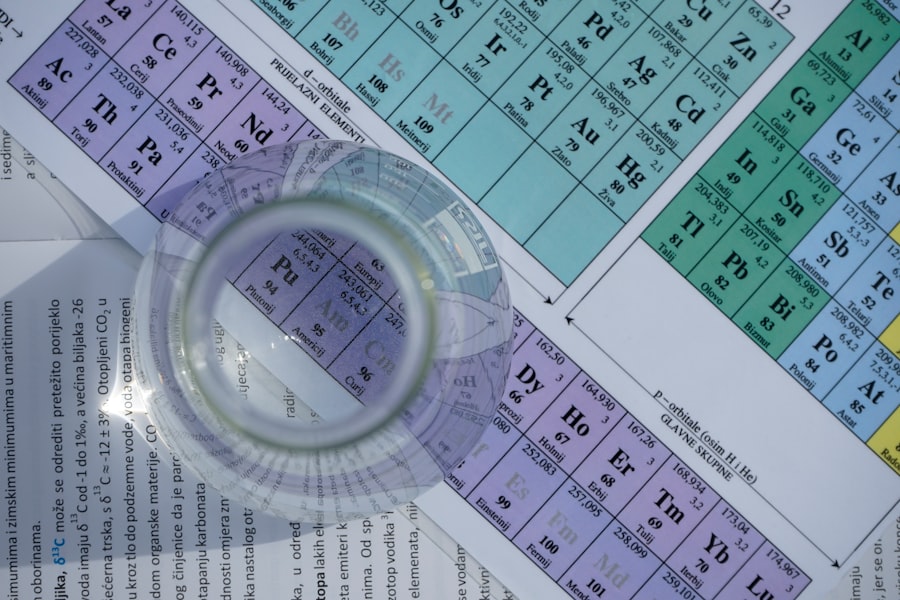
Atoms possess several unique properties that define their behavior and interactions with one another. One of the most notable characteristics is atomic mass, which varies among different elements due to differences in the number of protons and neutrons within their nuclei. This property plays a crucial role in chemical reactions and bonding processes, influencing how substances combine to form new materials.
Another important property of atoms is their electronegativity, which measures an atom’s ability to attract electrons in a chemical bond. This characteristic determines how atoms interact with one another during reactions, influencing everything from molecular structure to reactivity. Additionally, atoms exhibit various states of matter—solid, liquid, gas—depending on temperature and pressure conditions.
These properties are fundamental to understanding not only chemistry but also physics and engineering.
Properties of Bits
| Property | Description | Example |
|---|---|---|
| Bit Value | The basic unit of information in computing, representing a binary state. | 0 or 1 |
| Bit Rate | The number of bits transmitted or processed per second. | 1000 bits per second (bps) |
| Bit Depth | The number of bits used to represent each sample in digital audio or image. | 16-bit audio |
| Bit Position | The specific location of a bit within a binary number or data structure. | Least Significant Bit (LSB) |
| Bit Error Rate (BER) | The rate at which errors occur in a transmission system, expressed as a ratio of error bits to total bits sent. | 1 error per 10^6 bits |
| Bit Mask | A pattern of bits used to select or modify specific bits within a binary number. | 0x0F to mask lower 4 bits |
Bits also possess distinct properties that define their role in the digital landscape. One key characteristic is their binary nature; each bit can only exist in one of two states—0 or 1. This simplicity allows for complex data representation through combinations of bits, enabling everything from simple text files to intricate multimedia applications.
Another important property of bits is their ability to be easily manipulated and transmitted across networks. Digital information can be compressed, encrypted, and processed at incredible speeds, allowing for efficient storage and retrieval.
Furthermore, bits can be replicated without degradation, ensuring that digital information remains consistent regardless of how many times it is copied or transmitted.
Storage and Manipulation of Atoms
The storage and manipulation of atoms involve various techniques that have evolved over time. Traditional methods include physical storage in containers or structures designed to hold specific materials safely. For example, chemical compounds can be stored in sealed vials or tanks to prevent reactions with external elements.
In more advanced applications, techniques such as nanotechnology allow scientists to manipulate individual atoms or molecules for specific purposes. In recent years, researchers have explored innovative methods for atom manipulation at the quantum level. Quantum computing represents a frontier where atoms are used as qubits—quantum bits—that can exist in multiple states simultaneously.
This capability has the potential to revolutionize computing power by enabling complex calculations that are currently infeasible with classical computers. As scientists continue to unlock the secrets of atomic manipulation, new possibilities emerge for applications ranging from medicine to materials science.
Storage and Manipulation of Bits

The storage and manipulation of bits have undergone a remarkable transformation with advancements in technology. Digital storage devices such as hard drives, solid-state drives (SSDs), and cloud storage solutions have made it possible to store vast amounts of data efficiently. These devices utilize various technologies to read and write bits quickly while ensuring data integrity.
Manipulating bits involves a range of processes that enable users to create, edit, and share information seamlessly. Software applications allow individuals to perform complex operations on data—ranging from simple text editing to sophisticated data analysis—often in real-time. The rise of programming languages has further empowered users to develop custom solutions tailored to specific needs.
As a result, the ability to manipulate bits has become a fundamental skill in today’s digital economy.
Impact on Communication and Information
The impact of atoms and bits on communication and information exchange is profound. In the physical realm, atoms form the basis for traditional communication methods such as print media, postal services, and face-to-face interactions. These methods rely on tangible materials—paper, ink, or physical presence—to convey messages.
Conversely, bits have transformed communication into a rapid-fire exchange of information across vast distances through digital platforms. Email, social media, instant messaging apps—these tools enable individuals to connect instantly regardless of geographical barriers. The speed at which information travels has accelerated dramatically due to advancements in technology, leading to a more interconnected world where ideas can spread rapidly.
While the interplay between atoms and bits presents numerous opportunities for innovation and growth, it also poses significant challenges. In the physical realm, issues such as resource scarcity, environmental degradation, and waste management arise as society grapples with the consequences of material consumption. The extraction and processing of raw materials can have detrimental effects on ecosystems and communities.
In contrast, the digital realm faces challenges related to data privacy, cybersecurity threats, and misinformation. As individuals increasingly rely on digital platforms for communication and information sharing, concerns about data security become paramount. Balancing innovation with ethical considerations is essential for ensuring that advancements in technology benefit society as a whole rather than exacerbate existing inequalities.
Conclusion and Future Outlook
In conclusion, the relationship between atoms and bits is a dynamic interplay that shapes contemporary life in profound ways. Understanding both elements is crucial for navigating an increasingly complex world where physical and digital realities coexist. As technology continues to evolve at an unprecedented pace, individuals must remain vigilant about the implications of these changes on society.
Looking ahead, the future promises exciting developments in both realms. Advances in quantum computing may unlock new possibilities for manipulating both atoms and bits simultaneously, leading to breakthroughs in fields such as medicine and artificial intelligence. However, it is essential for society to approach these advancements thoughtfully—considering ethical implications while harnessing innovation for positive change.
Ultimately, recognizing the significance of both atoms and bits will empower individuals to engage meaningfully with their environment while embracing the opportunities presented by technological progress. As humanity stands at this crossroads between physicality and digitization, fostering a deeper understanding of these fundamental elements will be key to shaping a sustainable future.
In exploring the fundamental differences between atoms and bits, it’s essential to understand how these two entities shape our world and digital landscape. Atoms represent the physical matter that makes up everything around us, while bits are the basic units of information in computing and digital communications. For a deeper dive into the implications of this distinction, you can read more in the article available at this link.
WATCH THIS! Scientists Say The Universe Is A Quantum Computer (And We Are The Output)
FAQs
What are atoms?
Atoms are the basic units of matter that make up everything physical in the universe. They consist of a nucleus made of protons and neutrons, surrounded by electrons.
What are bits?
Bits are the basic units of information in computing and digital communications. A bit can have a value of either 0 or 1, representing two possible states.
How do atoms differ from bits?
Atoms are physical particles that form tangible objects, while bits are abstract units of data used in digital systems. Atoms exist in the physical world, whereas bits exist in the digital or virtual realm.
Can atoms and bits interact?
Yes, atoms and bits interact in technologies like computers and smartphones, where physical hardware (atoms) processes and stores digital information (bits).
Why is the distinction between atoms and bits important?
Understanding the difference helps clarify how physical materials and digital information relate, which is essential in fields like computing, information technology, and material science.
Are bits made of atoms?
Yes, bits are represented physically by atoms arranged in electronic components such as transistors and memory chips, but the bit itself is an abstract concept representing information.
Can bits exist without atoms?
No, bits require a physical medium made of atoms to be stored or transmitted, such as electronic circuits, optical fibers, or magnetic storage devices.
What is the significance of bits in the digital age?
Bits are fundamental to digital technology, enabling the storage, processing, and communication of information in computers, the internet, and digital media.
Do atoms have any role in digital information?
Atoms form the physical infrastructure—like semiconductors and storage devices—that enables digital information (bits) to be manipulated and preserved.
Is the concept of bits limited to computers?
While bits are primarily associated with computing and digital systems, the concept of binary information can also apply to other fields like telecommunications and data encoding.