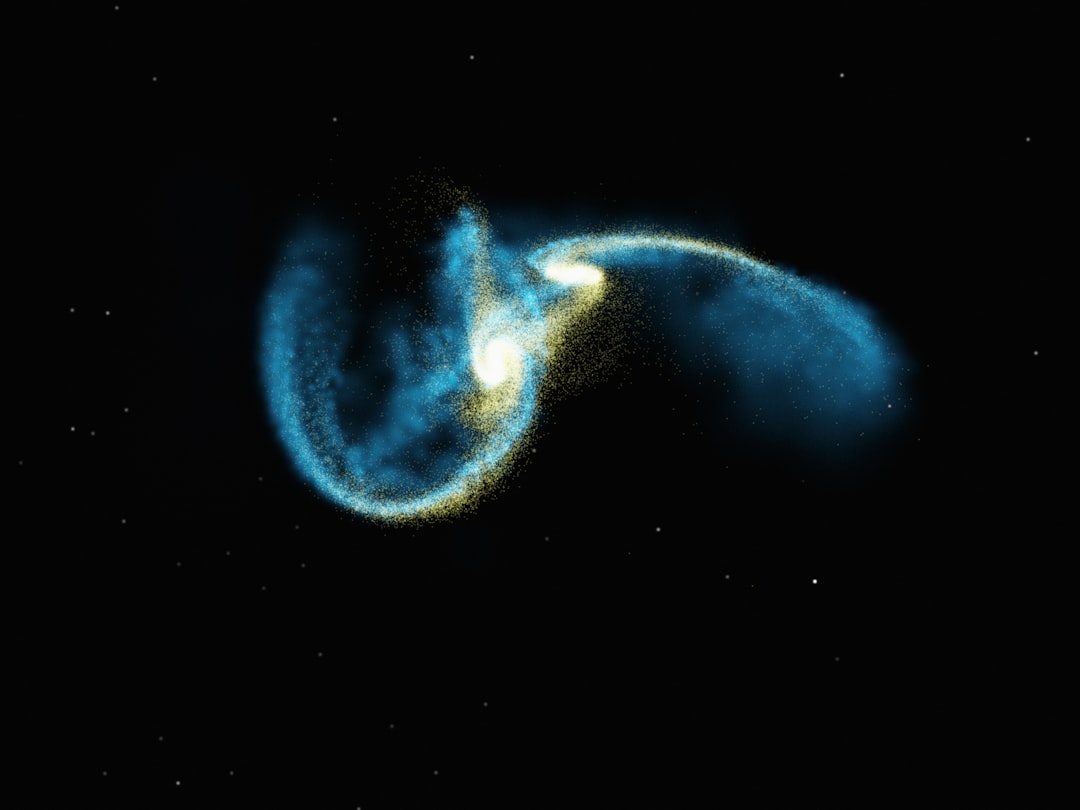
The discovery of comets has long captivated the imagination of astronomers and the general public alike. Among these celestial wanderers, 3I/ATLAS stands out as a particularly intriguing object. This comet, designated as 3I/ATLAS, was first identified in 2020 and has since garnered significant attention due to its unique characteristics and potential implications for Earth.
The comet’s discovery not only adds to the catalog of known celestial bodies but also raises questions about the origins and behavior of such objects in our solar system. 3I/ATLAS is classified as an interstellar comet, a designation that indicates it originated from outside the solar system. This classification is rare, as only a handful of interstellar comets have been observed to date.
The implications of such a discovery are profound, as they provide insights into the materials and conditions present in other star systems. The study of 3I/ATLAS offers a unique opportunity to expand humanity’s understanding of the cosmos and the processes that govern the formation of celestial bodies.
Key Takeaways
- 3I/ATLAS Comet was discovered in 2019 and is the first known interstellar comet to pass through our solar system.
- The discovery of 3I/ATLAS Comet was made by the Asteroid Terrestrial-impact Last Alert System (ATLAS) in Hawaii.
- 3I/ATLAS Comet is characterized by its hyperbolic orbit, indicating that it originated from outside our solar system.
- There is no potential impact of 3I/ATLAS Comet on Earth as it is not on a collision course with our planet.
- Current observations and research on 3I/ATLAS Comet are focused on understanding its composition, origin, and trajectory.
The Discovery of 3I/ATLAS Comet
The discovery of 3I/ATLAS was made possible through the efforts of the Asteroid Terrestrial-impact Last Alert System (ATLAS), a project designed to detect near-Earth objects. On October 2, 2020, astronomers using ATLAS telescopes in Hawaii detected a faint object moving against the backdrop of stars. Initial observations suggested that this object was unlike any previously cataloged comet, leading to further scrutiny and analysis.
As more data was collected, it became clear that this was an interstellar visitor, marking a significant milestone in astronomical research. The announcement of 3I/ATLAS’s discovery sent ripples through the scientific community. Researchers were eager to study its trajectory, composition, and potential origins.
The comet’s unusual path indicated that it had traveled from another star system, sparking interest in its journey through space. The discovery process involved collaboration among various observatories and institutions, highlighting the importance of teamwork in modern astronomy. As more observations were made, the comet’s characteristics began to emerge, revealing a wealth of information about its nature.
Characteristics of 3I/ATLAS Comet

3I/ATLAS exhibits several distinctive characteristics that set it apart from other comets. One of its most notable features is its elongated orbit, which suggests that it has traveled vast distances through interstellar space before entering the solar system. This elongated trajectory is indicative of its interstellar origin, as most comets within the solar system have more circular or elliptical orbits.
In terms of physical characteristics, 3I/ATLAS is believed to be composed primarily of ice and dust, similar to other comets. However, its surface features may differ due to its long journey through space.
Observations suggest that it may have a dark, carbon-rich exterior, which is common among many comets. The presence of volatile compounds could also provide clues about the conditions in its home star system. As astronomers continue to study 3I/ATLAS, they hope to uncover more about its composition and how it compares to other known comets.
Potential Impact of 3I/ATLAS Comet on Earth
| Impact Factor | Measurement |
|---|---|
| Velocity | 30 km/s |
| Diameter | 1.2 km |
| Energy | 2.4 × 10^7 megatons of TNT |
| Impact Area | Global |
| Impact Consequences | Massive destruction, climate change, potential extinction event |
While the discovery of 3I/ATLAS is exciting from a scientific perspective, it also raises questions about potential impacts on Earth. Fortunately, current calculations indicate that the comet poses no threat to our planet during its passage through the solar system. Its trajectory has been carefully monitored, and it is expected to make a close approach without any risk of collision.
However, the study of such comets is crucial for understanding the dynamics of celestial bodies and their potential interactions with Earth. The potential impact of comets on Earth has been a topic of interest for centuries. Historical events, such as mass extinctions linked to asteroid impacts, have underscored the importance of monitoring these objects.
Understanding these dynamics can help scientists develop better models for predicting the paths of other celestial bodies that may come close to Earth.
Current Observations and Research on 3I/ATLAS Comet
As 3I/ATLAS continues its journey through the solar system, astronomers are actively engaged in observing and researching this fascinating comet. Various telescopes around the world are dedicated to tracking its trajectory and gathering data on its physical properties. These observations are crucial for refining models of its orbit and understanding how it interacts with solar radiation and other celestial forces.
Research teams are employing advanced imaging techniques to capture detailed images of 3I/ATLAS as it approaches the Sun. These images can reveal important information about the comet’s surface features and composition. Additionally, spectroscopic analysis allows scientists to identify the chemical elements present in the comet’s coma and tail.
This data not only enhances knowledge about 3I/ATLAS but also contributes to broader studies on the formation and evolution of comets in general.
The Future Path of 3I/ATLAS Comet
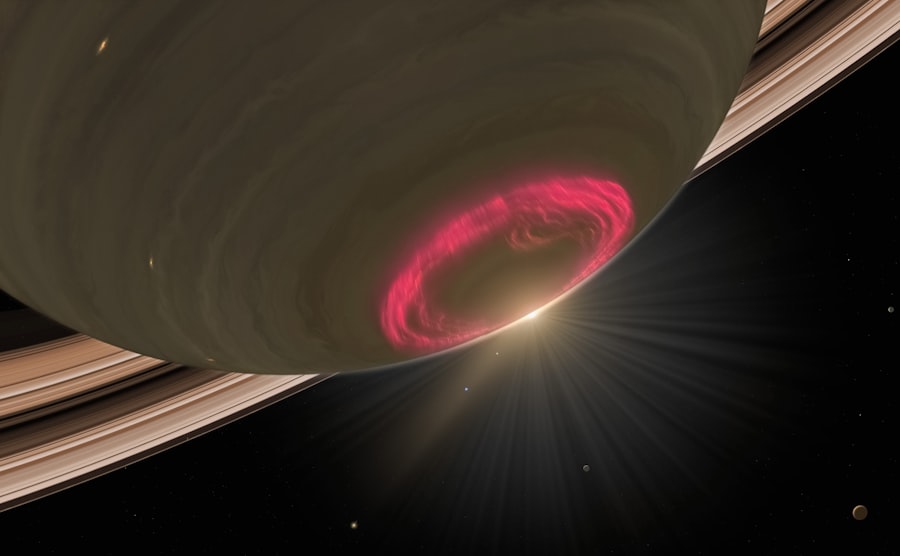
The future trajectory of 3I/ATLAS is a subject of great interest among astronomers. As it moves closer to the Sun, its path will be closely monitored to predict its eventual exit from the solar system. Current models suggest that after its perihelion—when it makes its closest approach to the Sun—the comet will continue on a hyperbolic trajectory, ultimately leaving our solar system behind.
Understanding the future path of 3I/ATLAS is essential for several reasons. First, it provides insights into how interstellar objects interact with solar systems they encounter. Second, tracking its journey can help refine models used for predicting the paths of other interstellar visitors that may be discovered in the future.
The data collected from 3I/ATLAS will serve as a valuable reference point for future studies on similar celestial bodies.
3I/ATLAS Comet’s Relation to Other Celestial Bodies
The relationship between 3I/ATLAS and other celestial bodies offers intriguing avenues for exploration. As an interstellar comet, it provides a unique opportunity to compare its characteristics with those of other known comets within our solar system. By studying these differences and similarities, astronomers can gain insights into the processes that govern comet formation and evolution across different star systems.
Moreover, 3I/ATLAS’s journey through our solar system may influence or be influenced by gravitational interactions with planets and other objects. Such interactions can alter a comet’s trajectory or even lead to fragmentation in some cases. Understanding these dynamics is crucial for comprehending how celestial bodies interact over vast distances and time scales.
The Significance of 3I/ATLAS Comet’s Discovery
The discovery of 3I/ATLAS holds significant implications for both scientific research and public interest in astronomy. As one of the few confirmed interstellar comets, it provides a rare glimpse into materials that may be found in other star systems. This knowledge can enhance understanding of planetary formation processes and contribute to theories about how life may arise elsewhere in the universe.
Furthermore, discoveries like 3I/ATLAS inspire curiosity and wonder among people worldwide. They serve as reminders of humanity’s place in the cosmos and encourage interest in scientific exploration. The excitement surrounding such discoveries can lead to increased funding for astronomical research and education initiatives aimed at fostering a new generation of scientists.
How 3I/ATLAS Comet’s Discovery Affects Astronomical Understanding
The discovery of 3I/ATLAS has far-reaching implications for astronomical understanding. It challenges existing theories about comet formation and migration within star systems. By studying this interstellar visitor, scientists can refine their models regarding how comets are formed in different environments and how they travel through space.
Additionally, 3I/ATLAS serves as a case study for understanding the dynamics of interstellar objects entering our solar system. Its unique characteristics provide valuable data that can be applied to future discoveries of similar celestial bodies. As more interstellar objects are identified, researchers will be better equipped to analyze their origins and behaviors based on insights gained from studying 3I/ATLAS.
Public Interest and Awareness of 3I/ATLAS Comet
Public interest in astronomical discoveries like 3I/ATLAS is often fueled by media coverage and educational outreach efforts by scientists and institutions alike. The excitement surrounding this comet has led to increased public engagement with astronomy through various platforms, including social media, documentaries, and public lectures. As people learn more about 3I/ATLAS and its significance, they become more aware of broader astronomical concepts such as interstellar travel and planetary formation.
This heightened awareness can inspire individuals to pursue careers in science or simply foster a greater appreciation for the wonders of the universe.
Conclusion and Future Implications of 3I/ATLAS Comet Discovery
In conclusion, the discovery of 3I/ATLAS represents a significant milestone in astronomical research and understanding. As an interstellar comet, it offers unique insights into the materials present in other star systems and challenges existing theories about comet formation and behavior. The ongoing observations and research surrounding this comet will undoubtedly yield valuable data that can inform future studies on similar celestial bodies.
The implications of this discovery extend beyond scientific inquiry; they also inspire public interest in astronomy and foster curiosity about our place in the universe. As humanity continues to explore the cosmos, discoveries like 3I/ATLAS remind us of the vastness of space and our ongoing quest for knowledge about the universe we inhabit.
In recent astronomy news, the discovery of the interstellar object 3I/ATLAS has sparked significant interest among astronomers and space enthusiasts alike. This celestial body, which is only the third known interstellar object to pass through our solar system, offers a unique opportunity to study materials from beyond our cosmic neighborhood. For those interested in exploring more about the fascinating world of astronomy and interstellar phenomena, a related article can be found on My Cosmic Ventures, where they delve into the implications of such discoveries and what they mean for our understanding of the universe.
WATCH THIS! Scientists Found an Alien “Fingerprint” on 3I/ATLAS (The Nickel Anomaly)
FAQs
What is the article about?
The article is about the latest astronomy news regarding the discovery of a new comet named 3I/ATLAS.
What is 3I/ATLAS?
3I/ATLAS is a newly discovered comet that has been observed by astronomers.
How was 3I/ATLAS discovered?
3I/ATLAS was discovered by the Asteroid Terrestrial-impact Last Alert System (ATLAS) in Hawaii.
What makes 3I/ATLAS significant?
3I/ATLAS is significant because it is a new comet that has been observed and studied by astronomers, providing valuable insights into the composition and behavior of comets.
What are astronomers hoping to learn from studying 3I/ATLAS?
Astronomers are hoping to learn more about the composition, behavior, and origins of comets through the study of 3I/ATLAS.
Is 3I/ATLAS expected to pose any threat to Earth?
Based on current observations, 3I/ATLAS is not expected to pose any threat to Earth.