Space-time dilation is a captivating phenomenon that arises from the principles of relativity, fundamentally altering the way time is perceived in different gravitational fields and at varying speeds. This concept, which has intrigued scientists and philosophers alike, suggests that time is not a constant, universal measure but rather a variable that can stretch and contract based on an observer’s relative motion and gravitational influence. The implications of space-time dilation extend far beyond theoretical physics; they touch upon the very fabric of human experience, particularly in the context of space travel.
As humanity embarks on ambitious journeys beyond Earth, understanding space-time dilation becomes increasingly crucial. The effects of this phenomenon are not merely academic; they have real-world consequences for astronauts venturing into the cosmos. As they traverse vast distances at high velocities, the passage of time for them can differ significantly from that experienced by people on Earth.
This divergence raises profound questions about aging, health, and the nature of time itself, making space-time dilation a key area of study in both physics and human biology.
Key Takeaways
- Space-time dilation is a phenomenon predicted by Einstein’s theory of general relativity, where time passes differently in different gravitational fields and at different speeds.
- General relativity explains how massive objects like planets and stars warp the fabric of space-time, causing time to slow down in their presence.
- Astronauts experience space-time dilation when they travel at high speeds or in strong gravitational fields, leading to differences in their aging process compared to people on Earth.
- Experiments such as the Hafele-Keating experiment and the Pound-Rebka experiment have provided evidence supporting the existence of space-time dilation.
- Space-time dilation has potential implications for human health and longevity, as well as practical challenges and risks for long-term space missions.
Understanding the Theory of General Relativity
The theory of general relativity, formulated by Albert Einstein in the early 20th century, serves as the foundation for understanding space-time dilation. This groundbreaking theory posits that gravity is not merely a force acting at a distance but rather a curvature of space-time caused by mass. In simpler terms, massive objects like planets and stars warp the fabric of space-time around them, influencing the motion of other objects and the flow of time itself.
According to general relativity, the stronger the gravitational field an object is in, the slower time passes relative to an observer in a weaker gravitational field. This revolutionary perspective on gravity and time has been confirmed through numerous experiments and observations. For instance, atomic clocks placed at different altitudes—one on a mountain and another at sea level—demonstrate that the clock at a higher elevation ticks slightly faster than its counterpart due to the weaker gravitational pull.
Such experiments illustrate how time is not an absolute measure but is instead affected by both velocity and gravitational strength, laying the groundwork for understanding how space-time dilation operates in various contexts.
How Space-Time Dilation Affects Astronauts
For astronauts embarking on missions beyond Earth’s atmosphere, the effects of space-time dilation become particularly pronounced. When traveling at high speeds—such as those achieved by spacecraft—time for astronauts can slow down relative to people remaining on Earth. This phenomenon is not merely theoretical; it has practical implications for astronauts who may spend extended periods in space.
As they journey through the cosmos, their biological clocks may tick at a different rate than those of their loved ones back home. The implications of this time differential can be profound. For instance, if an astronaut were to travel at a significant fraction of the speed of light, they could return to Earth having aged only a few years while decades may have passed for those who remained planet-side.
This aspect of space-time dilation raises intriguing questions about relationships, societal changes, and even the psychological effects of experiencing time differently from those left behind. The reality of such experiences underscores the need for a deeper understanding of how time operates in extreme conditions.
Experiments and Evidence Supporting Space-Time Dilation
| Experiment/Evidence | Description |
|---|---|
| Michelson-Morley Experiment | An experiment that aimed to detect the motion of the Earth through the hypothetical luminiferous aether. |
| Time Dilation in Particle Accelerators | Observations of time dilation effects in particle accelerators, where high-speed particles decay at a slower rate than their stationary counterparts. |
| Gravitational Time Dilation | Observations of time dilation near massive objects, as predicted by general relativity. |
| GPS Satellite Clocks | Adjustments made to the clocks on GPS satellites to account for both special and general relativistic effects. |
The scientific community has conducted numerous experiments to validate the principles of space-time dilation as predicted by general relativity. One notable experiment involved precise measurements using atomic clocks flown on commercial airliners. These clocks were synchronized with identical clocks on the ground before takeoff.
Upon their return, scientists found that the airborne clocks had recorded less elapsed time than their stationary counterparts, confirming that time indeed moves differently based on velocity. Another compelling piece of evidence comes from observations of particles known as muons. These subatomic particles are created when cosmic rays collide with atoms in Earth’s atmosphere.
Muons have a very short lifespan; however, when traveling at speeds close to that of light, they appear to live longer than expected due to time dilation effects. This phenomenon has been observed consistently in particle accelerators and cosmic ray experiments, providing further support for Einstein’s theories. Such experiments not only reinforce the validity of space-time dilation but also highlight its relevance in understanding fundamental aspects of physics.
The Impact of Space-Time Dilation on Human Aging
The implications of space-time dilation extend into the realm of human aging, presenting a fascinating intersection between physics and biology. As astronauts experience time differently while traveling at high speeds or in strong gravitational fields, their biological processes may also be affected. While this does not mean that astronauts will return to Earth as ageless beings, it does suggest that their aging process could be altered relative to those who remain on Earth.
This concept raises intriguing possibilities regarding human longevity and health in space environments. If astronauts can experience slower aging during long-duration missions, it opens up discussions about how future generations might approach interstellar travel or colonization efforts on distant planets. The potential for extended lifespans or altered aging processes could fundamentally change humanity’s relationship with time and existence itself.
Comparing the Aging Process of Astronauts and Earthbound Individuals
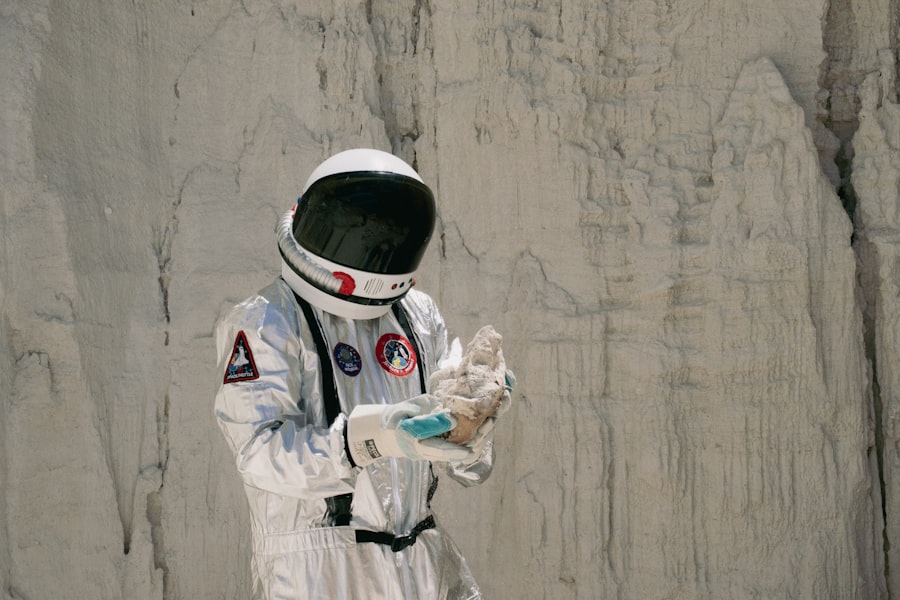
When comparing the aging process of astronauts with that of individuals on Earth, it becomes evident that various factors contribute to their differing experiences. While astronauts may benefit from time dilation during high-speed travel, they also face unique challenges that can impact their health and well-being. The microgravity environment of space can lead to muscle atrophy, bone density loss, and other physiological changes that may counteract some benefits associated with slower aging.
Moreover, psychological factors play a significant role in how astronauts perceive time and aging during their missions. The isolation and confinement experienced during long-duration spaceflights can lead to stress and anxiety, potentially affecting their mental health and overall well-being. Thus, while time dilation offers a fascinating perspective on aging, it is essential to consider the broader context of an astronaut’s experience in space and how it interacts with their physical and mental health.
Practical Implications for Space Travel and Long-Term Space Missions
The practical implications of space-time dilation for future space travel are profound. As humanity looks toward long-term missions to Mars or beyond, understanding how time affects both physical health and psychological well-being will be crucial for mission planning and execution. Space agencies must consider not only the technical aspects of propulsion and life support systems but also how to mitigate the effects of time dilation on crew members.
Additionally, as missions extend over years or even decades, addressing the social dynamics among crew members becomes increasingly important. The potential for astronauts to experience time differently from those on Earth could lead to feelings of disconnection or alienation upon their return. Therefore, developing strategies to maintain social bonds and emotional well-being during extended missions will be essential for ensuring successful outcomes.
Potential Benefits of Space-Time Dilation for Human Health and Longevity
While space-time dilation presents challenges for astronauts, it also offers intriguing possibilities for human health and longevity. If future research can harness the principles behind this phenomenon, there may be opportunities to explore new avenues for extending human life or improving health outcomes. For instance, understanding how time dilation affects cellular processes could lead to breakthroughs in aging research or regenerative medicine.
Moreover, as scientists continue to study the effects of microgravity on human physiology, they may uncover insights that could benefit individuals on Earth facing age-related health issues. By exploring how time interacts with biological processes in extreme environments, researchers could develop innovative therapies or interventions aimed at promoting healthier aging for all individuals.
Challenges and Risks Associated with Space-Time Dilation
Despite its fascinating implications, space-time dilation also presents challenges and risks that must be addressed as humanity ventures further into space. The potential for altered aging processes raises ethical questions about fairness and equity among those who travel versus those who remain on Earth. Additionally, the psychological impacts of experiencing time differently could lead to unforeseen consequences for astronauts returning from long missions.
Furthermore, as scientists explore the boundaries of space-time manipulation through advanced technologies or theoretical constructs like wormholes or warp drives, they must remain vigilant about potential risks associated with such endeavors. The pursuit of knowledge must be balanced with ethical considerations and an awareness of unintended consequences that could arise from tampering with fundamental aspects of reality.
Future Research and Exploration of Space-Time Dilation
The exploration of space-time dilation remains an exciting frontier in both physics and biology. As technology advances and humanity’s ambitions in space grow bolder, researchers are poised to uncover new insights into this complex phenomenon. Future studies may focus on refining our understanding of how time behaves under extreme conditions or investigating its implications for human health during long-duration missions.
Moreover, interdisciplinary collaboration between physicists, biologists, psychologists, and engineers will be essential for addressing the multifaceted challenges posed by space-time dilation. By fostering dialogue across disciplines, scientists can develop comprehensive strategies that account for both the physical realities of space travel and the human experience within it.
The Fascinating Relationship Between Space Travel and Time Perception
In conclusion, space-time dilation represents a captivating intersection between physics and human experience that has profound implications for our understanding of time itself. As humanity continues its quest to explore the cosmos, grappling with the effects of this phenomenon will be essential for ensuring successful missions and safeguarding astronaut well-being. The relationship between space travel and time perception invites ongoing inquiry into fundamental questions about existence, aging, and what it means to be human in an ever-expanding universe.
As researchers delve deeper into the complexities of space-time dilation, they will undoubtedly uncover new insights that challenge our perceptions and reshape our understanding of reality. The journey into the unknown promises not only to expand our horizons but also to deepen our appreciation for the intricate tapestry woven by time and space—a tapestry that continues to unfold as humanity reaches for the stars.
In the fascinating realm of space exploration, one intriguing aspect is the effect of space travel on the aging process of astronauts. According to the theory of relativity, time dilation can cause astronauts traveling at high speeds or residing in strong gravitational fields to age more slowly compared to those on Earth. This phenomenon has been a subject of extensive research and discussion. For a deeper dive into the science behind this and other cosmic phenomena, you can explore a related article on the topic by visiting My Cosmic Ventures. This resource provides insights into how the unique conditions of space can influence biological processes, offering a glimpse into the future of human space travel and its implications on aging.
FAQs
What is time dilation and how does it relate to astronauts aging slower?
Time dilation is a phenomenon predicted by Einstein’s theory of relativity, where time passes at different rates for observers who are moving relative to one another. This means that as an astronaut travels at high speeds or experiences strong gravitational fields, time for them will pass slower compared to someone on Earth.
How do astronauts experience time dilation?
Astronauts experience time dilation when they travel at high speeds, such as in orbit around the Earth or on missions to other celestial bodies. Additionally, they experience time dilation when they are in strong gravitational fields, such as near massive objects like planets or stars.
What are the effects of time dilation on astronauts?
The effects of time dilation mean that astronauts age slower compared to people on Earth. This is due to the fact that time passes at a different rate for them as they travel at high speeds or experience strong gravitational fields.
How is time dilation relevant to space travel and exploration?
Understanding time dilation is crucial for space travel and exploration as it impacts the aging of astronauts and the synchronization of clocks on spacecraft. It also has implications for the accuracy of GPS systems and the functioning of satellites in orbit.
Are there any practical applications of time dilation on Earth?
While time dilation effects are most noticeable in extreme conditions such as near the speed of light or in strong gravitational fields, they are also taken into account in everyday technologies such as GPS systems, which rely on precise timing for accurate location data.