
Albert Einstein is a name that resonates across the globe, synonymous with genius and groundbreaking scientific thought. When you think of Einstein, you might envision the iconic image of a man with wild hair, deep-set eyes, and a thoughtful expression. However, his legacy extends far beyond his appearance; it encompasses revolutionary ideas that have fundamentally altered our understanding of the universe.
His theories have not only shaped the field of physics but have also influenced various aspects of modern life, from technology to philosophy. As you delve into the life and work of this extraordinary individual, you will discover how his contributions continue to inspire curiosity and innovation. Einstein’s journey from a curious child in Germany to a celebrated physicist is a testament to the power of imagination and perseverance.
His ability to question established norms and think outside the box led him to develop theories that challenged conventional wisdom. As you explore his life, you will find that his story is not just about scientific achievements; it is also about the human spirit’s quest for knowledge and understanding. This article will take you through the various phases of Einstein’s life, highlighting his early years, groundbreaking contributions to physics, and lasting impact on both science and society.
Key Takeaways
- Albert Einstein was a renowned physicist known for his theory of relativity and contributions to modern physics.
- Einstein had a humble early life and excelled in academics, eventually earning a PhD in physics.
- His groundbreaking work in theoretical physics revolutionized the field and led to the development of the theory of relativity.
- Einstein was awarded the Nobel Prize in Physics in 1921 for his explanation of the photoelectric effect.
- Einstein’s legacy continues to impact modern science, popular culture, and future generations, solidifying his enduring impact on the world.
Early Life and Education
Born on March 14, 1879, in Ulm, Germany, Albert Einstein was raised in a secular Jewish family. His early years were marked by a sense of curiosity that would later define his scientific career. As a child, you might find it fascinating that he was not an exceptional student initially; in fact, he struggled with the rigid educational system of his time.
However, his love for mathematics and physics began to blossom when he discovered the works of great thinkers like Isaac Newton and James Clerk Maxwell. This early exposure to scientific literature ignited a passion that would drive him throughout his life. Einstein’s education took him through various schools in Germany and Switzerland, where he often felt out of place due to his unconventional thinking.
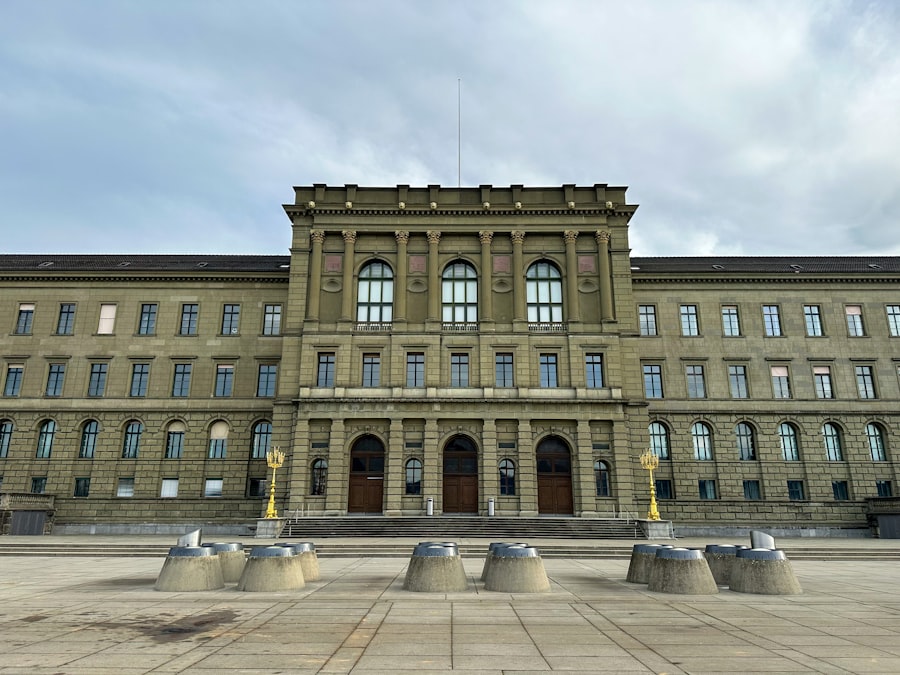
You may relate to his experiences of feeling misunderstood or constrained by traditional methods of learning. Despite these challenges, he excelled in subjects that piqued his interest, particularly mathematics. In 1896, he enrolled at the Polytechnic Institute in Zurich, where he would further hone his skills and develop a network of like-minded individuals.
It was during these formative years that Einstein began to cultivate the ideas that would later lead to his revolutionary theories.
Contributions to Physics

As you delve deeper into Einstein’s contributions to physics, you will find that they are both vast and profound. His work laid the groundwork for modern theoretical physics, influencing countless scientists who followed in his footsteps. One of his earliest contributions was the photoelectric effect, which he explained in 1905.
This phenomenon demonstrated that light could be understood as both a wave and a particle, challenging the classical view of light as merely a wave. This groundbreaking insight not only earned him recognition but also played a crucial role in the development of quantum theory. In addition to the photoelectric effect, Einstein’s work on Brownian motion provided empirical evidence for the existence of atoms and molecules.
By analyzing the random movement of particles suspended in a fluid, he offered a mathematical explanation that supported the atomic theory of matter. This was a significant leap forward in understanding the microscopic world around you. His ability to connect theoretical concepts with observable phenomena showcased his unique approach to science—one that combined imagination with rigorous mathematical reasoning.
Theory of Relativity
| Concept | Description |
|---|---|
| Special Relativity | Describes the behavior of objects moving at high speeds and the relationship between space and time. |
| General Relativity | Explains the force of gravity as the curvature of spacetime caused by mass and energy. |
| Time Dilation | The phenomenon where time passes differently for observers in different gravitational fields or moving at different speeds. |
| Length Contraction | The shortening of an object’s length in the direction of its motion as its speed approaches the speed of light. |
| Equivalence Principle | The principle that states that the effects of gravity are indistinguishable from the effects of acceleration. |
Perhaps one of Einstein’s most famous contributions is his theory of relativity, which fundamentally changed our understanding of space and time. You may be familiar with the two components of this theory: special relativity and general relativity. Special relativity, introduced in 1905, posits that the laws of physics are the same for all observers, regardless of their relative motion.
This theory led to the famous equation E=mc², which expresses the equivalence of mass and energy. The implications of this equation are staggering; it suggests that a small amount of mass can be converted into a vast amount of energy, laying the groundwork for advancements in nuclear physics. General relativity, published in 1915, took these ideas further by incorporating gravity into the framework of spacetime.
You might find it intriguing that Einstein proposed that massive objects like planets and stars warp the fabric of spacetime around them, causing other objects to follow curved paths—a concept that revolutionized our understanding of gravity. This theory not only provided explanations for phenomena such as the bending of light around massive objects but also predicted the existence of black holes and gravitational waves. The far-reaching consequences of general relativity continue to be explored by physicists today.
Nobel Prize and Later Career
In 1921, Einstein was awarded the Nobel Prize in Physics for his explanation of the photoelectric effect rather than for his more famous theories of relativity. This decision may seem surprising to you, but it reflects the scientific community’s cautious approach toward revolutionary ideas at that time. The Nobel Prize recognized not only Einstein’s brilliance but also his ability to communicate complex concepts in a way that could be understood by others.
Following this prestigious accolade, Einstein’s fame skyrocketed, making him an international celebrity. As you consider Einstein’s later career, you will see how he continued to contribute to various fields within physics while also engaging with broader societal issues. He held positions at several prestigious institutions, including the Institute for Advanced Study in Princeton, New Jersey.
During this time, he worked on unified field theories and delved into quantum mechanics—areas that would challenge even his own understanding of physics. Despite facing criticism from some quarters for his reluctance to fully embrace quantum theory, Einstein remained committed to exploring the mysteries of the universe until his death in 1955.
Impact on Modern Science
The impact of Einstein’s work on modern science cannot be overstated. His theories have paved the way for numerous advancements in technology and our understanding of the universe. For instance, GPS technology relies on principles derived from both special and general relativity; without Einstein’s insights, our navigation systems would be far less accurate.
As you navigate your daily life using these technologies, it’s worth reflecting on how deeply intertwined they are with Einstein’s groundbreaking ideas. Moreover, Einstein’s influence extends beyond physics into fields such as cosmology and astrophysics. His predictions about black holes and gravitational waves have been confirmed through various experiments and observations over the years.
The detection of gravitational waves by LIGO in 2015 marked a monumental moment in science, validating Einstein’s century-old predictions and opening new avenues for research in astrophysics. As you consider these developments, you may appreciate how Einstein’s legacy continues to shape our understanding of the cosmos.
Humanitarian and Political Activism
Einstein was not only a brilliant scientist but also a passionate advocate for humanitarian causes and political activism. Throughout his life, he used his platform to speak out against war, racism, and social injustice. You might find it inspiring that he was an outspoken critic of militarism during World War I and later became an advocate for nuclear disarmament after witnessing the devastation caused by atomic bombs during World War
His commitment to civil rights was particularly notable; he was an early supporter of the civil rights movement in the United States and maintained friendships with prominent African American leaders such as W.E.Du Bois and Paul Robeson. You may resonate with his belief that science should serve humanity rather than be used as a tool for oppression or violence. Einstein’s activism reminds us that intellectual pursuits can coexist with social responsibility—a lesson that remains relevant today.
Legacy in Popular Culture
Einstein’s influence extends far beyond academia; he has become a cultural icon whose image is instantly recognizable worldwide. You may have encountered references to him in movies, television shows, literature, and even advertising campaigns. His name has become synonymous with intelligence and creativity, often used as shorthand for genius in popular discourse.
In addition to being featured in various media forms, Einstein’s ideas have inspired countless artists and thinkers across disciplines. From musicians who draw upon his theories for inspiration to filmmakers who depict his life story on screen, his legacy continues to permeate popular culture. As you engage with these representations, consider how they reflect society’s fascination with genius and innovation—qualities embodied by Einstein himself.
Einstein’s Influence on Future Generations
As you reflect on Einstein’s life and work, it’s essential to recognize how he has influenced future generations of scientists and thinkers. His approach to problem-solving—characterized by curiosity, creativity, and critical thinking—serves as a model for aspiring scientists today. Many physicists credit Einstein as a source of inspiration for their own research endeavors; they strive to emulate his ability to challenge established norms and explore uncharted territories within their fields.
Moreover, educational initiatives around the world often incorporate Einstein’s principles into their curricula to inspire young minds. Programs aimed at fostering scientific literacy emphasize inquiry-based learning—an approach that encourages students like you to ask questions and seek answers through exploration rather than rote memorization. By instilling these values early on, educators hope to cultivate a new generation capable of tackling complex global challenges with innovative solutions.
Einstein’s Personal Life and Beliefs
While Einstein is celebrated for his scientific achievements, his personal life was marked by complexities and contradictions that make him all the more relatable as a human being.
You may find it interesting that despite his genius, he struggled with interpersonal relationships and often prioritized his work over personal connections.
Einstein’s beliefs were equally multifaceted; he identified as a pacifist yet acknowledged the necessity of self-defense during times of conflict. His views on religion were nuanced; he often expressed admiration for the moral teachings found within various faiths while rejecting traditional notions of a personal God. As you consider these aspects of his life, you may appreciate how they reflect the complexities inherent in being both an extraordinary thinker and an ordinary person navigating life’s challenges.
Einstein’s Enduring Impact
In conclusion, Albert Einstein’s enduring impact on science and society is undeniable. His revolutionary theories transformed our understanding of space, time, and energy while inspiring generations of scientists to push boundaries in their own research endeavors. Beyond academia, his commitment to humanitarian causes serves as a reminder that intellectual pursuits should align with ethical responsibilities—a lesson that resonates deeply today.
As you reflect on Einstein’s legacy, consider how his life exemplifies the power of curiosity and imagination in shaping our world. His story encourages you not only to seek knowledge but also to engage with pressing social issues actively. In doing so, you honor Einstein’s memory while contributing positively to society—a fitting tribute to one of history’s greatest minds.
Albert Einstein, one of the most influential physicists of the 20th century, revolutionized our understanding of space and time with his theory of relativity. His groundbreaking work during his lifetime, from 1879 to 1955, laid the foundation for modern physics and continues to inspire scientific exploration today. For those interested in delving deeper into the cosmic implications of Einstein’s theories and their impact on our understanding of the universe, you might find this related article insightful. It explores the broader cosmic ventures that have been inspired by Einstein’s work and how they continue to shape our quest for knowledge.
Why Time Freezes at Light Speed
FAQs
How long did Albert Einstein live?
Albert Einstein was born on March 14, 1879, and passed away on April 18, 1955. He lived for 76 years.
What were the major contributions of Albert Einstein during his lifetime?
Albert Einstein is best known for his theory of relativity, which revolutionized the understanding of space, time, and gravity. He also made significant contributions to the development of quantum theory and the theory of Brownian motion.
Did Albert Einstein receive any awards or honors during his lifetime?
Yes, Albert Einstein received numerous awards and honors during his lifetime, including the Nobel Prize in Physics in 1921 for his explanation of the photoelectric effect.
What was Albert Einstein’s profession during his lifetime?
Albert Einstein was a theoretical physicist and is considered one of the most influential scientists of the 20th century.
Did Albert Einstein have any significant impact on the world during his lifetime?
Yes, Albert Einstein’s work had a profound impact on the field of physics and our understanding of the universe. His theories continue to influence scientific research and technological advancements to this day.