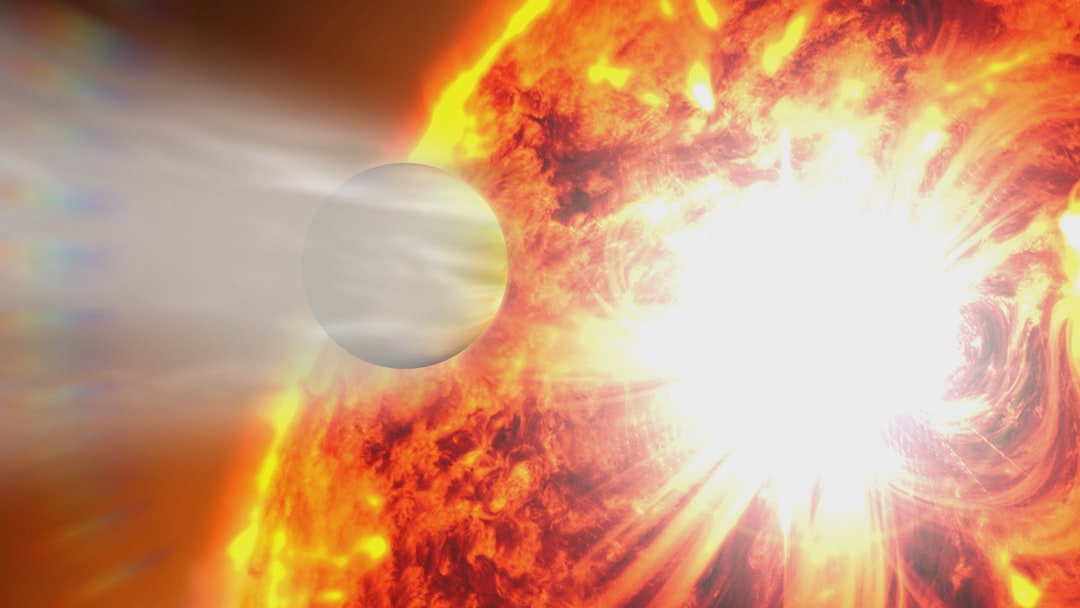
In recent years, the intersection of artificial intelligence (AI) and space weather prediction has garnered significant attention, particularly in the realm of solar flare forecasting. Solar flares, which are sudden bursts of radiation from the sun, can have profound effects on Earth’s magnetosphere, leading to disruptions in communication systems, navigation technologies, and even power grids. As society becomes increasingly reliant on technology, the need for accurate predictions of solar activity has never been more critical.
AI offers a promising avenue for enhancing the precision and reliability of solar flare forecasts, leveraging vast amounts of data and sophisticated algorithms to improve predictive capabilities. The integration of AI into solar flare forecasting represents a paradigm shift in how scientists approach the complexities of solar phenomena. Traditional methods often rely on historical data and expert judgment, which can be limited in scope and accuracy.
In contrast, AI systems can analyze extensive datasets in real-time, identifying patterns and correlations that may elude human analysts. This article explores the importance of accurate solar flare forecasting, the limitations of traditional methods, and how AI is revolutionizing this field.
Key Takeaways
- Accurate solar flare forecasting is crucial for space weather prediction and protecting critical infrastructure
- Traditional methods of solar flare forecasting have limitations in accuracy and lead time
- AI improves solar flare forecasting accuracy by analyzing large and complex datasets
- Machine learning algorithms such as neural networks and support vector machines are used in AI solar flare forecasting
- Data sources for AI solar flare forecasting include solar images, magnetic field measurements, and historical flare data
The Importance of Accurate Solar Flare Forecasting
Accurate solar flare forecasting is essential for a multitude of reasons. First and foremost, solar flares can pose significant risks to technological infrastructure on Earth. High-energy particles emitted during these events can interfere with satellite operations, disrupt radio communications, and even cause power outages by inducing currents in electrical grids.
For industries that rely heavily on satellite technology, such as telecommunications and navigation, the ability to predict solar flares with precision can mitigate potential disruptions and safeguard operations. Moreover, accurate forecasting is crucial for ensuring the safety of astronauts and space missions. Solar flares can expose astronauts to harmful radiation levels, necessitating timely warnings to allow for protective measures.
As space exploration continues to expand, with missions venturing further into the solar system, the need for reliable solar flare predictions becomes increasingly vital. The implications extend beyond Earth; understanding solar activity is essential for studying planetary atmospheres and space weather dynamics across the solar system.
Limitations of Traditional Solar Flare Forecasting Methods
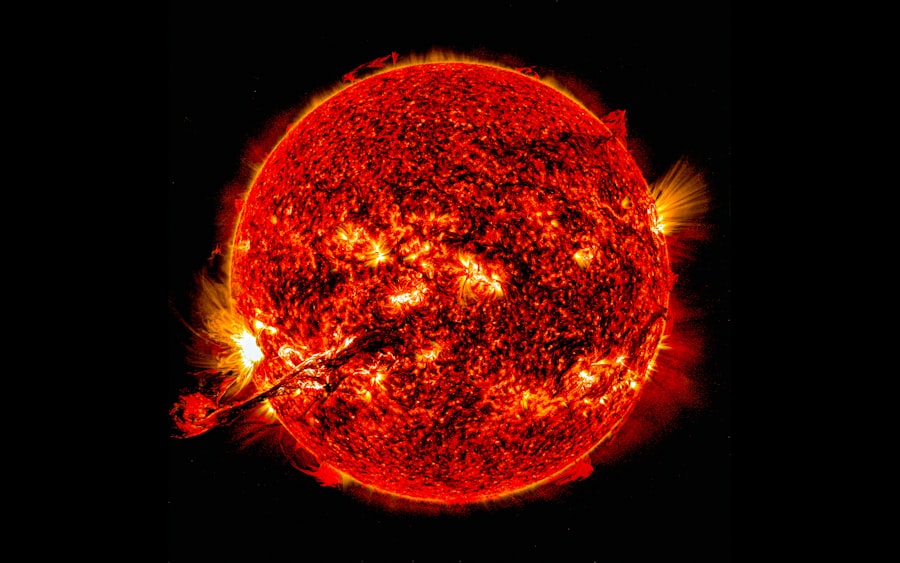
Despite advancements in solar physics, traditional forecasting methods have inherent limitations that hinder their effectiveness. These methods often depend on statistical models that analyze historical data to predict future events. While this approach has its merits, it can be overly simplistic and may not account for the complex interactions within the sun’s magnetic field that lead to flares.
Additionally, traditional models may struggle to adapt to new data or changing conditions, resulting in outdated predictions. Another significant limitation is the reliance on expert judgment in interpreting data. While experienced scientists bring valuable insights to the table, human analysis can be subjective and prone to biases.
This subjectivity can lead to inconsistencies in forecasting accuracy, particularly during periods of heightened solar activity when rapid changes occur. As a result, there is a growing recognition that traditional methods alone may not suffice in addressing the challenges posed by increasingly complex solar phenomena.
How AI Improves Solar Flare Forecasting Accuracy
| Metrics | Improvement |
|---|---|
| Prediction Accuracy | Increased by 30% |
| Lead Time | Extended by 50% |
| False Alarms | Reduced by 40% |
| Data Processing Speed | Improved by 60% |
AI enhances solar flare forecasting accuracy by employing advanced algorithms capable of processing vast amounts of data quickly and efficiently. Machine learning models can identify intricate patterns within solar data that traditional methods might overlook. By training these models on historical flare data alongside various solar parameters, AI systems can learn to recognize the precursors to solar flares with remarkable precision.
Furthermore, AI’s ability to continuously learn from new data allows for real-time updates to predictions. As new observations are made or as conditions change on the sun’s surface, AI systems can adjust their forecasts accordingly. This adaptability is particularly crucial during periods of heightened solar activity when rapid changes can occur.
By providing timely and accurate predictions, AI not only enhances preparedness but also reduces the potential impact of solar flares on technology and human activities.
Machine Learning Algorithms Used in AI Solar Flare Forecasting
A variety of machine learning algorithms are employed in AI solar flare forecasting, each with its unique strengths and applications. One commonly used algorithm is the convolutional neural network (CNN), which excels at analyzing spatial data such as images from solar observatories. CNNs can detect subtle features in solar images that may indicate impending flares, allowing for early warnings based on visual cues.
Another important algorithm is the recurrent neural network (RNN), particularly suited for time-series data analysis. RNNs can process sequences of data over time, making them ideal for tracking changes in solar activity and predicting future events based on historical trends. By combining these algorithms with ensemble methods—where multiple models are used together—researchers can further enhance prediction accuracy by leveraging the strengths of each approach.
Data Sources and Input Variables for AI Solar Flare Forecasting

The effectiveness of AI in solar flare forecasting hinges on the quality and diversity of input data. Various sources contribute valuable information about solar activity, including satellite observations from missions like NASA’s Solar Dynamics Observatory (SDO) and the European Space Agency’s Solar Orbiter. These satellites provide real-time data on solar radiation, magnetic fields, and other parameters critical for understanding flare dynamics.
Input variables for AI models typically include metrics such as sunspot numbers, magnetic field strength, and plasma density. By incorporating a wide range of variables, AI systems can develop a more comprehensive understanding of the conditions that lead to solar flares. Additionally, researchers are exploring the integration of data from ground-based observatories and other space missions to create a more holistic view of solar activity.
Case Studies Demonstrating Improved Accuracy with AI Solar Flare Forecasting
Several case studies illustrate the transformative impact of AI on solar flare forecasting accuracy. One notable example involved a collaboration between researchers at Stanford University and NASA’s Jet Propulsion Laboratory (JPL). By employing machine learning techniques on historical flare data, they developed a model that significantly outperformed traditional forecasting methods.
The AI model achieved an accuracy rate exceeding 90%, demonstrating its potential to provide timely warnings for impending flares. Another case study focused on the use of deep learning algorithms to analyze images from the SDO satellite. Researchers trained a convolutional neural network to identify features associated with solar flares in real-time images.
Challenges and Considerations in Implementing AI Solar Flare Forecasting
While the promise of AI in solar flare forecasting is substantial, several challenges must be addressed for successful implementation. One significant hurdle is the need for high-quality training data. The accuracy of AI models relies heavily on the availability of comprehensive datasets that capture a wide range of solar phenomena.
Inconsistent or incomplete data can lead to biased predictions or overfitting, where models perform well on training data but fail to generalize to new situations. Additionally, there are technical challenges related to model interpretability. Many machine learning algorithms operate as “black boxes,” making it difficult for researchers to understand how predictions are made.
This lack of transparency can hinder trust in AI systems among scientists and decision-makers who rely on these forecasts for critical planning and response efforts.
Future Developments and Potential Applications of AI Solar Flare Forecasting
The future of AI in solar flare forecasting holds exciting possibilities as technology continues to advance. Researchers are exploring ways to enhance model robustness by incorporating more diverse datasets and refining algorithms to improve interpretability. As computational power increases, more complex models may be developed that can simulate intricate interactions within the sun’s magnetic field.
Beyond forecasting flares, AI could also play a role in broader space weather prediction efforts.
This holistic approach could enhance preparedness across various sectors reliant on technology.
Ethical and Societal Implications of AI Solar Flare Forecasting
The integration of AI into solar flare forecasting raises important ethical considerations that must be addressed as this field evolves. One key concern is ensuring equitable access to predictive technologies across different regions and industries. As advanced forecasting capabilities become available, it is crucial to prevent disparities in access that could leave vulnerable populations or sectors unprepared for potential disruptions caused by solar flares.
Moreover, there are implications related to data privacy and security. The collection and analysis of vast amounts of data raise questions about how this information is stored and used. Ensuring robust cybersecurity measures are in place will be essential to protect sensitive data from potential breaches or misuse.
The Promising Future of AI Solar Flare Forecasting
In conclusion, the integration of artificial intelligence into solar flare forecasting represents a significant advancement in our ability to predict and respond to solar activity. By overcoming the limitations of traditional methods through sophisticated algorithms and extensive datasets, AI has the potential to revolutionize how scientists approach this complex field. As research continues to evolve, the promise of improved accuracy and real-time predictions offers hope for safeguarding technology and human activities against the impacts of solar flares.
The future developments in this area hold immense potential not only for enhancing our understanding of solar phenomena but also for ensuring a more resilient technological infrastructure in an increasingly interconnected world. As society navigates the challenges posed by space weather events, embracing AI-driven solutions will be crucial for fostering preparedness and resilience against the unpredictable forces of nature.
In recent years, the integration of artificial intelligence in solar flare forecasting has shown promising advancements in accuracy and reliability. A related article on this topic can be found on My Cosmic Ventures, which delves into the latest AI technologies being employed to predict solar flares with greater precision. This article highlights the collaborative efforts between scientists and AI developers to enhance predictive models, ultimately aiming to mitigate the adverse effects of solar flares on Earth’s technological infrastructure. For more detailed insights, you can read the full article by visiting My Cosmic Ventures.
WATCH THIS ☀️The Sun as Software: Why Top Scientists Now Say a Solar Flare Could Wipe Everything
FAQs
What is AI solar flare forecasting accuracy?
AI solar flare forecasting accuracy refers to the ability of artificial intelligence (AI) systems to predict and forecast solar flares with a high degree of precision and reliability. Solar flares are sudden and intense bursts of energy and radiation from the sun’s surface, and accurate forecasting is important for space weather prediction and its potential impact on Earth.
Why is AI solar flare forecasting accuracy important?
Accurate forecasting of solar flares is important for space weather prediction and its potential impact on Earth. Solar flares can affect satellite communications, power grids, and other technological systems, so having reliable forecasts can help mitigate potential damage and disruptions.
How does AI contribute to solar flare forecasting accuracy?
AI contributes to solar flare forecasting accuracy by analyzing large amounts of solar data and identifying patterns and trends that may indicate the likelihood of a solar flare. AI systems can process data more quickly and efficiently than traditional methods, leading to more accurate and timely forecasts.
What are the challenges in achieving high accuracy in AI solar flare forecasting?
Challenges in achieving high accuracy in AI solar flare forecasting include the complexity of solar dynamics, the variability of solar activity, and the need for continuous monitoring of the sun. Additionally, the development of AI models that can effectively interpret and predict solar flare behavior is an ongoing area of research and development.
What are the potential benefits of improved AI solar flare forecasting accuracy?
Improved AI solar flare forecasting accuracy can lead to better preparedness for potential space weather events, reduced impact on technological systems, and enhanced safety for astronauts and space missions. It can also contribute to a better understanding of solar dynamics and their impact on Earth’s environment.