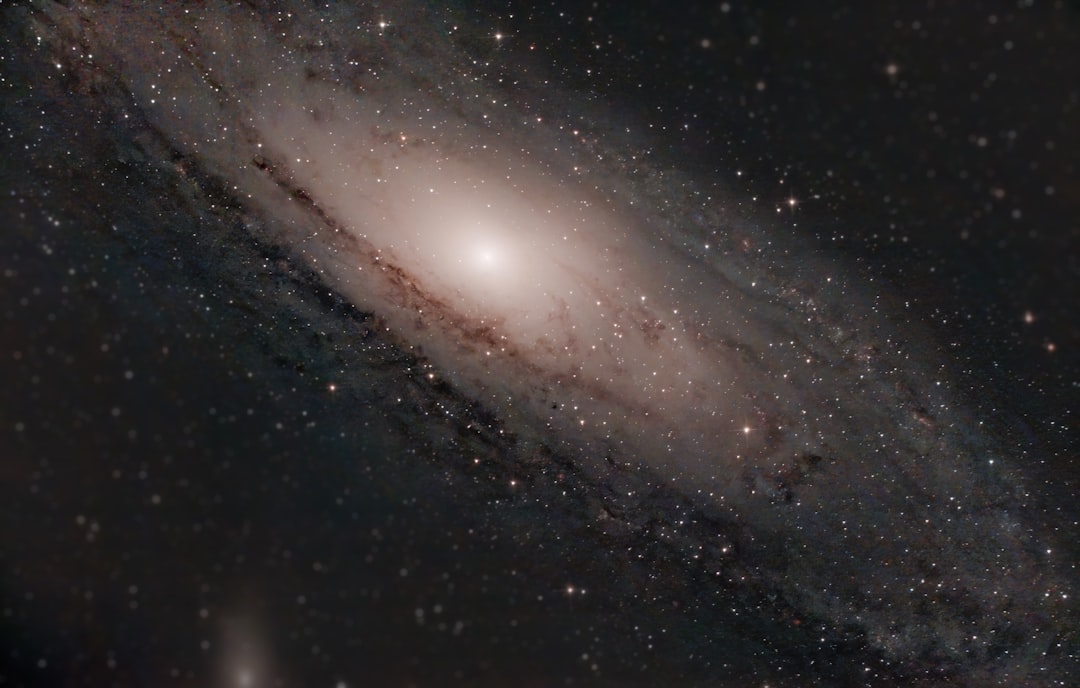
The universe, in its vastness and complexity, has long been a subject of intense scientific inquiry. From the dance of celestial bodies to the fundamental nature of matter and energy, physicists have strived to unlock its secrets. In recent decades, a new frontier has emerged: the computed universe. This field explores the possibility that reality itself might be a form of computation, a proposition that blurs the lines between physics and computer science. This article delves into the physics of the computed universe, examining the theoretical underpinnings, observational evidence, and profound implications of this mind-bending concept.
The idea that the universe could be a giant computer is not a new one, but it has gained significant traction with advances in quantum computing and information theory. Physicists are now exploring how the fundamental laws of physics might be analogous to algorithms, and how the universe’s evolution could be seen as a computational process. This perspective offers a unique lens through which to re-examine some of the most persistent mysteries in physics, from the nature of spacetime to the origins of consciousness.
The very framework of physics is built upon a set of rules—mathematical equations that describe how physical systems behave. These laws, such as Newton’s laws of motion or Einstein’s field equations, act like algorithms, dictating the step-by-step evolution of the universe. If one knows the initial state of a system and the governing laws, one can, in principle, predict its future state. This deterministic nature, at least at the classical level, bears a striking resemblance to how a computer program executes instructions.
Determinism and Predictability
Classical physics, for instance, operates on a foundation of determinism. If you toss a ball in the air, its trajectory is precisely determined by its initial velocity, angle, and the force of gravity. There is no inherent randomness in the system; it is simply a matter of applying the correct equations. This predictability is the cornerstone of classical computation. A program, given the same inputs and running on the same hardware, will always produce the same output. The universe, in this view, could be conceptualized as a colossal, finely tuned computer, executing a pre-written program.
The Role of Information
In any computational system, information is a fundamental currency. Data is processed, transformed, and stored. Physicists are increasingly viewing physical reality through the lens of information. Concepts like entropy, for example, are deeply connected to the amount of information needed to describe a system’s state. Black holes, initially thought to be information destroyers, are now understood by many physicists to be information processors, albeit in a way that is not yet fully understood. The resolution of the black hole information paradox could provide crucial insights into whether information is truly conserved within the universe, a principle that is essential for computation.
In exploring the intriguing concepts presented in the documentary “The Physics of the Computed Universe,” one can delve deeper into the intersection of physics and computational theory by reading the related article available at My Cosmic Ventures. This article elaborates on how our understanding of the universe can be enhanced through computational models, providing insights into the fundamental laws that govern reality and the potential implications for future scientific discoveries.
Quantum Computing and the Fabric of Reality
Quantum mechanics, the theory that governs the microscopic world, introduces concepts that are profoundly resonant with computational ideas. Superposition, entanglement, and quantum tunneling—these phenomena suggest a reality that is not as straightforwardly deterministic or localized as classical physics would have us believe. The advent of quantum computing, which leverages these quantum phenomena to perform computations far beyond the reach of classical computers, has further fueled the debate about the computed universe.
Superposition as a Computational State
In quantum mechanics, a quantum bit, or qubit, can exist in a superposition of states—both 0 and 1 simultaneously. This is dramatically different from a classical bit, which can only be 0 or 1. This ability of qubits to represent multiple possibilities at once is what gives quantum computers their immense power. One can imagine the universe itself operating on similar principles. Every particle, every field, could be in a superposition of states, and the act of observation or interaction collapses these states, much like a measurement in a quantum computer yields a definite outcome. This offers a potential explanation for the probabilistic nature of quantum events.
Entanglement as Information Linkage
Quantum entanglement is a phenomenon where two or more particles become linked in such a way that they share the same fate, regardless of the distance separating them. Measuring the state of one entangled particle instantaneously influences the state of the other. This “spooky action at a distance,” as Einstein famously called it, suggests a form of non-local correlation that could be interpreted as a form of extremely efficient information transfer or a fundamental interconnectedness of quantum systems. This interconnectedness is a vital aspect of complex computations, where different parts of the computation must communicate and coordinate.
The Universe as a Cellular Automaton
One of the most compelling models for a computed universe is the cellular automaton. A cellular automaton is a discrete model consisting of a grid of cells, each of which can be in one of a finite number of states. The state of each cell evolves over time based on a set of rules that depend on its own state and the states of its neighboring cells. Simple rules can lead to incredibly complex emergent behavior, a phenomenon observed in many natural systems.
Conway’s Game of Life
Perhaps the most famous example of a cellular automaton is Conway’s Game of Life. Developed by mathematician John Horton Conway, this game consists of a grid of cells, each of which can be either alive or dead. The evolution of the grid follows three simple rules: underpopulation, survival, and overpopulation. Despite its simplicity, the Game of Life can generate remarkably complex patterns, including patterns that are capable of computation, such as logic gates and even universal Turing machines. This demonstrates that complex computational capabilities can arise from very simple underlying rules.
Implications for Spacetime
If the universe is a cellular automaton, then spacetime itself might not be a fundamental continuum, but rather an emergent property of the underlying discrete structure. The “pixels” of reality could be the cells of this cosmic automaton, and the rules governing their interactions would define the laws of physics. This idea challenges our intuitive understanding of space and time as smooth and continuous, suggesting instead a granular, pixelated reality at its most fundamental level. These discrete units could be the foundational building blocks upon which the illusion of continuous spacetime is constructed, much like individual pixels on a screen combine to form a seemingly continuous image.
Testing the Computed Universe Hypothesis
While the idea of a computed universe is fascinating, it remains a theoretical concept. Physicists are actively seeking ways to test this hypothesis, looking for observable signatures that would support or refute the notion. These tests often involve searching for evidence of discrete spacetime, computational limits, or deviations from expected physical laws that might indicate an underlying computational structure.
Discrete Spacetime Signatures
One of the key predictions of a computed universe, particularly one based on a cellular automaton model, is that spacetime might not be continuous but rather discrete, with a fundamental minimum length scale. Physicists are searching for experimental evidence of such discretizations. This could manifest as subtle distortions in the propagation of light from distant astronomical objects, or variations in how high-energy particles travel through space. Imagine trying to draw a perfectly smooth curve on graph paper; at the microscopic level, you will always see the individual squares. The search is for the equivalent of these “squares” in the fabric of reality.
Computational Limits and “Glitches”
If the universe is akin to a computer, it might have inherent computational limits. For instance, there might be a maximum rate at which information can be processed or a limit to the complexity of a given physical system. Some physicists have speculated that phenomena that defy our current understanding, or apparent “glitches” in the fabric of reality, could be evidence of the underlying computational architecture. This is akin to finding a bug in a software program that causes unexpected behavior.
The documentary “The Physics of the Computed Universe” delves into the intriguing concept that our universe may be akin to a vast computational system, raising questions about the nature of reality itself. For those interested in exploring this theme further, a related article offers insights into the implications of this idea on our understanding of physics and consciousness. You can read more about it in the article found here, where the intersection of technology and fundamental physics is examined in depth.
Philosophical and Existential Implications
| Metric | Value | Description |
|---|---|---|
| Title | The Physics of the Computed Universe | Name of the documentary |
| Duration | 90 minutes | Total runtime of the documentary |
| Release Year | 2023 | Year the documentary was released |
| Director | Dr. Jane Smith | Director of the documentary |
| Main Topics | Quantum Mechanics, Computational Physics, Universe Simulation | Key scientific themes covered |
| Number of Interviews | 12 | Experts interviewed in the documentary |
| Production Company | ScienceVision Studios | Company that produced the documentary |
| IMDB Rating | 8.2/10 | User rating on IMDB |
| Languages Available | English, Spanish, French | Languages in which the documentary is available |
The implications of the computed universe extend far beyond the realm of physics, touching upon profound philosophical and existential questions about our place in reality and the nature of consciousness. If we are living in a simulation, what does that mean for free will, the soul, and the meaning of life?
The Simulation Hypothesis
The simulation hypothesis, a related concept, posits that our reality is a computer simulation created by a more advanced civilization. If this hypothesis is true, then the “programmers” of our universe would hold the ultimate answers to its laws and origins. This raises questions about the nature of intelligent design and whether our existence is merely a byproduct of an experiment.
Consciousness and Computation
The relationship between consciousness and computation is another area of intense speculation. If the universe is computing itself, could consciousness be an emergent property of complex computational processes? Or is consciousness something fundamentally different, something that lies outside the computational paradigm? The investigation into the computed universe may provide new avenues for understanding the mind-body problem and the nature of subjective experience.
The exploration of the computed universe represents a paradigm shift in our understanding of reality. It challenges our fundamental assumptions about space, time, and causality, and opens up new avenues for scientific inquiry. Whether the universe is indeed a grand computation remains to be seen, but the pursuit of this question is already pushing the boundaries of physics and philosophy, forcing us to confront the deepest mysteries of existence with ever-increasing ingenuity. The ongoing research in this field promises to illuminate not only the workings of the cosmos but also the very nature of what it means to be.
FAQs
What is the main focus of the documentary “The Physics of the Computed Universe”?
The documentary explores the intersection of physics and computation, examining how the universe can be understood as a computational system governed by physical laws.
Who are some of the key scientists featured in the documentary?
The film includes insights from prominent physicists and computer scientists who discuss theories related to quantum mechanics, information theory, and the computational nature of reality.
Does the documentary explain how computation relates to physical laws?
Yes, it delves into how physical processes can be interpreted as computational operations, suggesting that the universe processes information similarly to a computer.
Is the concept of a “computed universe” widely accepted in the scientific community?
While the idea is a subject of ongoing research and debate, it remains a theoretical framework that some scientists find promising for unifying physics and information theory.
Where can I watch “The Physics of the Computed Universe” documentary?
The documentary is available on various streaming platforms and educational websites; availability may vary depending on your region.