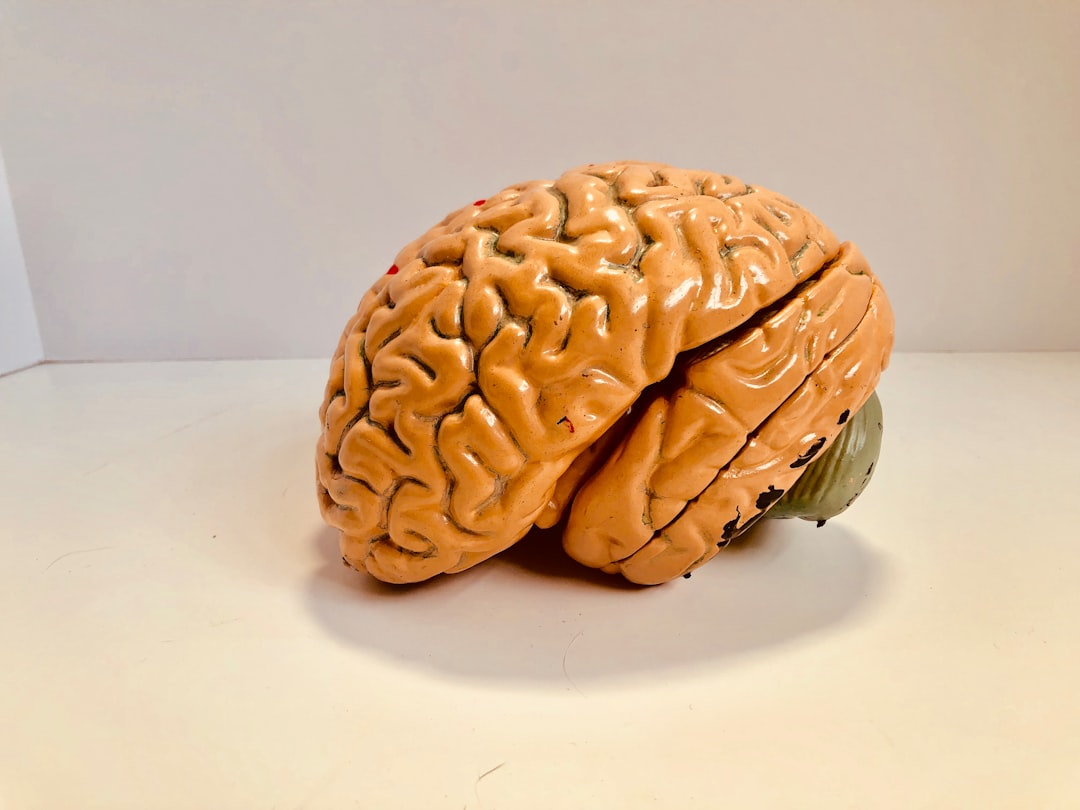
The Boltzmann Brain paradox, a thought experiment rooted in cosmology and statistical mechanics, presents a confounding challenge to humanity’s understanding of the universe, particularly regarding its origins and long-term evolution. It questions the likelihood of our existence as complex observers within a universe that is asymptotically approaching thermal equilibrium. This paradox suggests that in a universe dominated by random fluctuations, a solitary, self-aware entity, a “Boltzmann Brain,” might be statistically more probable than the entire universe and the intricate observers it contains.
Thermal equilibrium is a state in which a system’s macroscopic properties, such as temperature, pressure, and density, no longer change with time. It represents a state of maximum entropy, where energy is evenly distributed, leading to a uniform, featureless environment.
The Second Law of Thermodynamics
The concept of thermal equilibrium is intrinsically linked to the Second Law of Thermodynamics, which states that the total entropy of an isolated system can only increase over time or remain constant in ideal processes; it never decreases. This law dictates the arrow of time and implies that the universe, as an isolated system, will eventually reach a state of maximum entropy – thermal equilibrium.
The Heat Death of the Universe
The eventual fate of the universe, according to current cosmological models combined with the Second Law of Thermodynamics, is the “heat death.” In this scenario, all available energy will have been uniformly distributed, stars will have burned out, black holes will have evaporated, and the universe will become a cold, dark, and utterly featureless expanse. No processes will be able to occur, and no complex structures, including life, will be able to form or persist.
Quantum Fluctuations and Vacuum Energy
Even in a state of apparent emptiness and thermal equilibrium, the universe is not entirely inert. Quantum mechanics dictates that even a vacuum is not truly empty but is teeming with virtual particles constantly popping into and out of existence due to quantum fluctuations. These fluctuations represent temporary deviations from the lowest energy state, driven by the uncertainty principle. These fleeting manifestations of energy are central to the Boltzmann Brain paradox.
The Boltzmann brain paradox raises intriguing questions about the nature of consciousness and the universe, particularly in the context of thermal equilibrium. A related article that delves deeper into these concepts can be found at My Cosmic Ventures, where the implications of entropy and the likelihood of spontaneous brain formation are explored. This discussion not only highlights the philosophical ramifications of the paradox but also examines its relevance in modern cosmology and thermodynamics.
The Genesis of the Boltzmann Brain
The concept of a Boltzmann Brain emerged from the work of Ludwig Boltzmann, who, in the 19th century, proposed that the observed low-entropy state of our universe might be a temporary fluctuation within a much larger, eternally equilibrating universe. While Boltzmann himself did not explicitly formulate the “Boltzmann Brain” concept, his ideas laid the groundwork for its development.
Boltzmann’s Fluctuation Hypothesis
Boltzmann’s fluctuation hypothesis, posited to explain the apparent low entropy of our observable universe in an otherwise increasing-entropy cosmos, suggested that our universe is merely a large, rare statistical fluctuation from an equilibrium state. In this framework, the vast majority of time is spent in a state of maximum entropy, with occasional, short-lived decreases in entropy, corresponding to regions resembling our universe.
The Observer Selection Effect
The Boltzmann Brain paradox heavily relies on the observer selection effect, also known as anthropic bias. This principle states that any observations we make about the universe are necessarily filtered by the requirement that intelligent observers must exist. Consequently, if complex observers like ourselves are vastly more probable as fleeting fluctuations than as products of a grand, evolving universe, then our existence becomes statistically questionable.
The Probability Argument
Consider the sheer scale and complexity of our universe, capable of sustaining life and conscious observers. Now, imagine the minimum viable structure required to constitute a conscious observer – a brain, perhaps, capable of processing information and having subjective experiences. From a statistical mechanics perspective, forming such a brain in a vacuum, purely through random quantum fluctuations, is astronomically improbable. However, the probability of an entire universe, with its intricate structures, stars, galaxies, and life, spontaneously forming is even more astronomically improbable. Therefore, over an infinite amount of time, in an infinite and eternally equilibrating universe, a single Boltzmann Brain fluctuating into existence in an otherwise featureless void becomes vastly more probable than an entire universe, and we, as observers, should statistically expect to be such brains.
The Paradox Unveiled: Why It’s a Problem
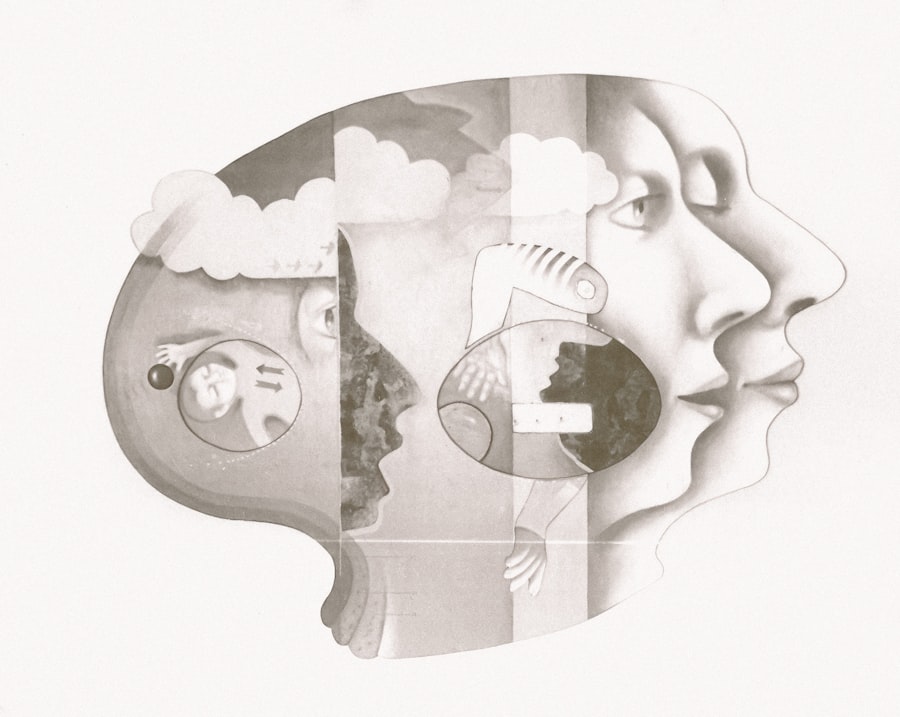
The Boltzmann Brain paradox poses a profound challenge to our understanding of reality and the nature of consciousness. If it were true, our perceptions and memories could be entirely illusory.
The Problem of Solipsism
If we are more likely to be Boltzmann Brains, then our perceived universe, with its history, its vastness, and its interactions, might be nothing more than a fleeting illusion within our own fluctuating mind. This leads to a form of cosmic solipsism, where the external reality we experience has no objective existence beyond our own temporary consciousness. The question then arises: what is real?
Undermining Scientific Evidence
The paradox undermines the foundations of scientific inquiry. All scientific endeavors are predicated on the assumption of a consistent, observable, and objectively real universe. If our existence is more likely to be a result of a random fluctuation in a thermalized vacuum, then our scientific observations, our memories of the past, and our predictions for the future could all be false, products of a transient brain state. This would render scientific understanding meaningless.
The “Past Hypothesis” and Its Implications
To circumvent the Boltzmann Brain paradox, many cosmologists appeal to what is known as the “Past Hypothesis.” This hypothesis postulates that the initial state of the universe began in a state of extremely low entropy, which then gradually increased over time. This low-entropy initial condition provides a starting point for the observed evolution of the universe and the formation of complex structures, making it far more likely that we are “normal” observers within an evolving universe rather than fleeting Boltzmann Brains. However, the Past Hypothesis itself lacks a universally accepted fundamental explanation; it is essentially an assumed initial condition, a cosmic boundary condition.
Potential Resolutions and Counterarguments
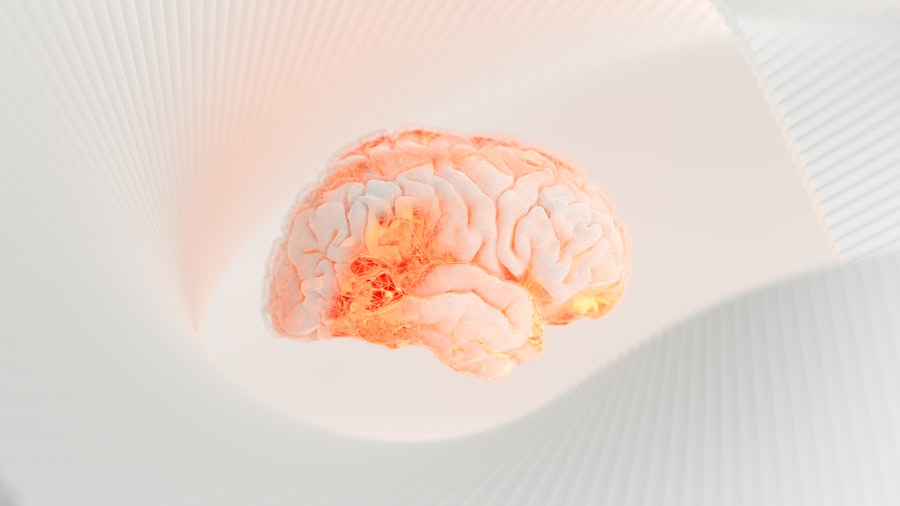
Several approaches have been proposed to address the Boltzmann Brain paradox, ranging from modifications to cosmological models to philosophical interpretations of consciousness.
Infinite Volume vs. Finite Volume Universes
The prevalence of Boltzmann Brains is highly dependent on the nature of the universe’s long-term evolution. In an infinitely expanding universe that eventually reaches thermal equilibrium, the problem becomes most acute. However, in scenarios where the universe undergoes a “Big Crunch” or a cyclic cosmology, the time available for Boltzmann Brains to spontaneously appear might be limited, potentially mitigating the paradox.
The Measure Problem in Cosmology
The “measure problem” in cosmology, which deals with how probabilities are assigned to different outcomes in an infinite multiverse or infinitely evolving universe, is intimately connected to the Boltzmann Brain paradox. Different “measures” (ways of weighting probable outcomes) can drastically alter the likelihood of Boltzmann Brains. For example, some measures intentionally downplay future vacuum-dominated eras where Boltzmann Brains are most prevalent.
Modifying the Concept of Consciousness
Some argue that the definition of a “conscious observer” used in the Boltzmann Brain argument is too simplistic. It implicitly assumes that a temporarily fluctuating brain, devoid of sensory input and a consistent environment, could genuinely possess the richness of conscious experience that we associate with ourselves. Perhaps consciousness requires persistent interaction with a stable, complex environment, which would make isolated Boltzmann Brains less likely to be truly conscious.
The Anthropic Principle Revisited
While the anthropic principle is central to the paradox, it can also be used as a counterargument. Various forms of the anthropic principle suggest that the universe’s parameters must be finely tuned for the existence of observers. This could imply that universes that naturally produce stable, complex observers like us are simply the ones we find ourselves in, rather than those teeming with ephemeral Boltzmann Brains. However, this argument tends to lean on a rather tautological interpretation.
The Boltzmann brain paradox raises intriguing questions about the nature of consciousness and the universe, particularly in the context of thermal equilibrium. This paradox suggests that, given enough time, random fluctuations in a thermodynamic system could lead to the spontaneous formation of a fully formed brain, complete with false memories and experiences. For those interested in exploring this topic further, a related article can provide deeper insights into the implications of this paradox in the realm of cosmology and thermodynamics. You can read more about it in this fascinating article.
The Enduring Mystery
| Metric | Description | Value / Estimate | Unit | Notes |
|---|---|---|---|---|
| Probability of Boltzmann Brain Formation | Estimated likelihood of spontaneous brain formation in thermal equilibrium | ~e^(-10^50) | Dimensionless | Extremely low, depends on entropy and system size |
| Entropy of Thermal Equilibrium | Maximum entropy state of the system | ~10^123 | Boltzmann constant units | Example value for de Sitter horizon entropy |
| Time Scale for Fluctuation | Estimated time for a Boltzmann brain to spontaneously appear | ~10^(10^50) | Years | Far exceeds the current age of the universe |
| Thermal Equilibrium Temperature | Temperature of the system in thermal equilibrium | 2.7 | K (Kelvin) | Cosmic Microwave Background temperature as a reference |
| System Volume | Volume considered for fluctuation calculations | ~10^80 | m^3 | Approximate volume of the observable universe |
The Boltzmann Brain paradox remains a profound and unresolved enigma in cosmology and the philosophy of mind. It forces us to confront the deepest questions about our existence, the nature of reality, and the very fabric of the cosmos.
Implications for Future Theories
The persistent challenge posed by Boltzmann Brains serves as a critical test for any comprehensive theory of the universe. Any model that predicts a vast overabundance of such brains compared to “normal” observers like us will likely be deemed problematic, as it undermines the validity of our observations and scientific understanding. Therefore, cosmologists strive to develop models that naturally suppress the formation of Boltzmann Brains.
The Boundary Between Physics and Philosophy
The Boltzmann Brain paradox blurs the line between physics and philosophy. While its origins lie in statistical mechanics and cosmology, its implications extend to the nature of consciousness, reality, and the very meaning of our existence. It prompts us to consider the limitations of our scientific frameworks when confronted with truly vast scales of time and possibility.
A Reminder of Our Place
Ultimately, the Boltzmann Brain paradox serves as a humbling reminder of the immense scale and strangeness of the universe. It encourages us to continually scrutinize our assumptions and to remain open to the possibility that our understanding of reality, while advancing, may still be incomplete, harboring mysteries that challenge even our most fundamental intuitions. The thought experiment reminds us that in the grand cosmic scheme, our existence may be both profoundly improbable and yet undeniably real – a fascinating contradiction at the heart of thermal equilibrium’s mystery.
FAQs
What is the Boltzmann Brain paradox?
The Boltzmann Brain paradox is a thought experiment in cosmology and philosophy that questions the likelihood of self-aware entities, or “Boltzmann Brains,” spontaneously forming due to random fluctuations in a state of thermal equilibrium, rather than through conventional evolutionary processes.
How does thermal equilibrium relate to the Boltzmann Brain paradox?
Thermal equilibrium is a state where a system’s properties are uniform and unchanging over time. In this state, random fluctuations can theoretically produce complex structures, such as Boltzmann Brains, which challenges our understanding of typical observers and the nature of reality.
Why is the Boltzmann Brain paradox considered a problem in cosmology?
The paradox raises questions about the typicality of observers in the universe. If Boltzmann Brains are more likely to form than evolved brains, it implies that we might be such random fluctuations, which contradicts our consistent and coherent experiences, thus challenging assumptions about the universe’s history and structure.
What are some proposed resolutions to the Boltzmann Brain paradox?
Proposed resolutions include theories that the universe is not in true thermal equilibrium, that the cosmological model needs adjustment to prevent Boltzmann Brain dominance, or that certain physical laws or initial conditions suppress the formation of Boltzmann Brains.
Does the Boltzmann Brain paradox have implications beyond physics?
Yes, it has philosophical implications concerning consciousness, the nature of reality, and the reliability of our observations. It also influences discussions in epistemology about how we can trust our knowledge of the universe if we might be random fluctuations rather than evolved beings.