The cosmos presents a grand stage where fundamental limits and dynamic processes constantly interact. Among the most intriguing of these interactions is the apparent paradox of light speed, the universe’s ultimate speed limit, contending with the relentless expansion of space itself. This article explores the nature of these phenomena and their implications for our understanding of the universe.
The speed of light in a vacuum, denoted as c, is a fundamental physical constant. Its value is approximately 299,792,458 meters per second (186,282 miles per second). This constant is not merely a rapid velocity, but a cornerstone of modern physics, particularly Albert Einstein’s theories of special and general relativity.
Definition and Derivation
The speed of light is defined as the speed at which all massless particles and field perturbations travel in a vacuum. This definition arises from Maxwell’s equations, which describe the behavior of electromagnetic fields. These equations predict that electromagnetic waves, including light, propagate through a vacuum at a specific speed, which was later determined to be c.
Implications of Relativity
In special relativity, the speed of light is postulated to be the same for all inertial observers, regardless of their relative motion or the motion of the light source. This principle leads to several counterintuitive consequences, such as time dilation and length contraction. For you, the reader, this means that if you were to travel near the speed of light, time would effectively slow down relative to an observer at rest, and distances in your direction of travel would appear compressed.
General relativity extends these concepts by incorporating gravity. It describes gravity not as a force, but as a curvature of spacetime caused by mass and energy. In this framework, light still travels along the “straightest possible path” (geodesics) within this curved spacetime. While locally light always travels at c, its path can be bent by gravitational fields, leading to phenomena like gravitational lensing.
The Light Cone
A powerful conceptual tool in special relativity is the “light cone.” Every event in spacetime has an associated light cone, which defines the region of spacetime that can be influenced by, or can influence, that event. The surface of the light cone represents the paths that light rays would take originating from or converging to that event. For any observer, you are always at the apex of your personal light cone. Events inside your past light cone are within your causal past, meaning light from them has had time to reach you. Events inside your future light cone constitute your causal future. Events outside your light cone are causally disconnected from you; no information can travel between you and them.
The intriguing relationship between the speed of light and the expansion of the universe has been a topic of extensive research and debate in the field of cosmology. For those interested in exploring this subject further, a related article can be found at My Cosmic Ventures, which delves into how the finite speed of light influences our understanding of cosmic distances and the observable universe. This article provides valuable insights into the implications of light speed on our perception of the expanding cosmos.
The Expanding Universe: A Dynamic Spacetime
In stark contrast to the static nature of the speed of light, the universe itself is not static. Astronomical observations, particularly those based on the redshift of distant galaxies, unequivocally indicate that the universe is expanding. This expansion is not the movement of galaxies through space, but rather the expansion of space itself, carrying galaxies along for the ride.
Hubble’s Law
The foundational evidence for the expanding universe comes from Edwin Hubble’s observations in the late 1920s. Hubble discovered a linear relationship between the distance to a galaxy and its recessional velocity – the faster a galaxy is moving away from us, the farther away it is. This relationship, known as Hubble’s Law, can be expressed as $v = H_0 d$, where $v$ is the recessional velocity, $d$ is the proper distance, and $H_0$ is the Hubble Constant.
Analogy of the Expanding Balloon
A common and helpful analogy to visualize the expansion of space is to imagine the surface of an inflating balloon. If you draw dots on the surface of the balloon to represent galaxies, as the balloon inflates, the dots move farther apart from each other. Crucially, the dots themselves are not moving on the surface; rather, the surface itself is expanding. Similarly, galaxies are not rushing through pre-existing space; space is expanding between them. For you, the reader, considering this analogy helps to dissolve the common misconception that there is a center to the universe’s expansion. Every point on the balloon’s surface sees all other points moving away from it, and no single point is the “center.”
The Cosmological Principle
The expansion of the universe is largely consistent with the Cosmological Principle, which states that on large scales, the universe is homogeneous and isotropic. Homogeneity implies that the universe looks the same at every location, while isotropy suggests it looks the same in every direction. This principle supports the idea that the expansion is uniform throughout the cosmos, rather than being concentrated in particular regions.
The Cosmic Race: Light vs. Expansion
The core of the “Cosmic Race” lies in the interaction between the finite speed of light and the ongoing expansion of space. While light travels at a constant speed through space, space itself is stretching, effectively increasing the distance that light must cover.
Redshift and Distant Objects
As light travels through expanding space, its wavelength is stretched, causing it to shift towards the red end of the electromagnetic spectrum. This phenomenon, known as cosmological redshift, is distinct from the Doppler effect caused by an object’s motion through space. Cosmological redshift is a direct consequence of the expansion of space itself. The further away an object is, the longer its light has traveled through expanding space, and therefore the greater its redshift.
The Observable Universe
Because the universe has a finite age (approximately 13.8 billion years), and light travels at a finite speed, there is a limit to how far we can see. The observable universe is the spherical region of spacetime containing all matter that can be observed from Earth at the present time. Its radius is not simply 13.8 billion light-years because the expansion of space has stretched the distances that light has traveled. The current estimate for the comoving radius of the observable universe is around 46.5 billion light-years. This means that a galaxy whose light we see today, indicating it was ~13.8 billion light-years away when the light departed, is now ~46.5 billion light-years away due to the expansion that occurred during the light’s journey.
Beyond the Reach of Light: The Particle Horizon
The particle horizon defines the maximum distance from which particles could have traveled to the observer in the age of the universe. It represents the boundary of the observable universe. For you, the reader, everything within your particle horizon is, in principle, causally connected to you, meaning light from those regions could have reached you. However, due to the accelerating expansion of the universe, there are objects currently within our particle horizon whose light will never reach us.
Accelerated Expansion and the Future of the Race
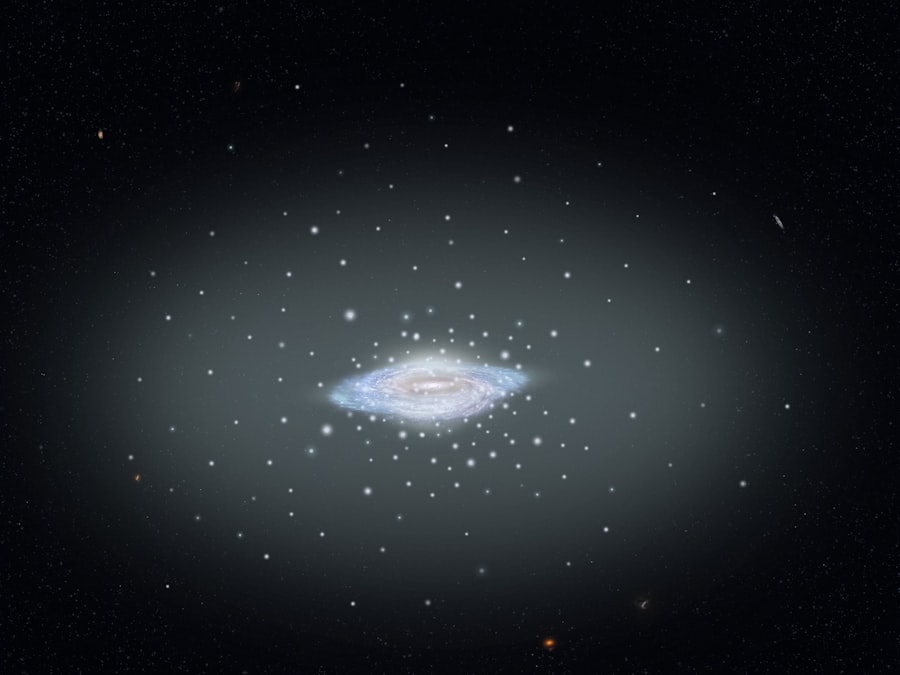
Observations of distant supernovae in the late 1990s revealed a startling discovery: the expansion of the universe is not slowing down as expected due to gravity, but is instead accelerating. This acceleration has profound implications for the cosmic race.
Dark Energy
The cause of this accelerated expansion is attributed to a mysterious component known as dark energy. Dark energy is hypothesized to be a form of energy inherent to space itself, or a new type of dynamic energy field, that exerts a negative pressure, pushing space apart. Its nature remains one of the most significant unsolved mysteries in cosmology. For you, the reader, understanding dark energy is akin to trying to understand the invisible force that is making your balloon analogy expand ever faster.
The Cosmic Event Horizon
The accelerating expansion introduces the concept of the cosmic event horizon. This is a boundary beyond which events can never affect the observer, even if the universe continues to exist forever. Unlike the particle horizon, which grows with time, the event horizon can shrink or remain constant depending on the nature of dark energy. If the acceleration continues indefinitely at its current rate, galaxies beyond our event horizon will eventually become forever undetectable, as the light they emit will never be able to “catch up” to us against the relentless expansion of space.
The Ultimate Fate
The interplay between light speed and the accelerating expansion dictates the ultimate fate of the universe. In a scenario dominated by dark energy, the universe will continue to expand at an accelerating rate, leading to a “Big Rip” (if dark energy strengthens over time), or a “Big Freeze” (if dark energy remains constant). In the Big Freeze scenario, galaxies would eventually become so far apart that each galaxy would effectively exist in its own isolated mini-universe, unable to see or interact with any other galaxy. The light from distant stars would be stretched to such extreme wavelengths that they would become undetectable, and the night sky would become increasingly dark.
The intriguing relationship between the speed of light and the expansion of the universe has been a topic of much debate among physicists. Recent discussions highlight how the finite speed of light can affect our observations of distant galaxies, leading to fascinating implications for our understanding of cosmic expansion. For a deeper exploration of this topic, you can read more in this insightful article on the subject at My Cosmic Ventures, which delves into the complexities of these fundamental concepts in astrophysics.
Implications for Future Exploration and Communication
| Metric | Speed of Light (c) | Expansion of the Universe (Hubble’s Law) |
|---|---|---|
| Value | 299,792,458 meters per second (m/s) | Approximately 70 kilometers per second per megaparsec (km/s/Mpc) |
| Definition | Constant speed at which light travels in vacuum | Rate at which the universe expands, causing galaxies to recede from each other |
| Units | m/s | km/s/Mpc |
| Implication | Sets the universal speed limit for information and matter | Determines the velocity at which distant galaxies move away due to cosmic expansion |
| Relation | Speed of light is constant and does not change with universe expansion | Expansion velocity can exceed speed of light at very large distances due to metric expansion of space |
| Example | Light takes about 8 minutes to travel from the Sun to Earth | Galaxies beyond ~14 billion light years recede faster than light due to expansion |
The cosmic race has significant implications for our ability to explore and communicate across vast cosmic distances.
The Limits of Interstellar Travel
Even if we could achieve speeds close to the speed of light, the vast distances involved, coupled with the expansion of space, pose immense challenges for interstellar and intergalactic travel. Reaching even the nearest stars would require journeys spanning many human lifetimes, and reaching other galaxies would be effectively impossible within a reasonable timeframe due to the expansion. For you, the reader, this means that even with hypothetical faster-than-light travel, the expanding universe could still render many distant galaxies forever beyond our reach.
The Great Silence and SETI
The accelerating expansion might also contribute to the “Great Silence” – the apparent lack of observable intelligent extraterrestrial life. If other civilizations exist in distant galaxies, their signals might be redshifted to the point of being undetectable, or the expansion of space might simply carry their signals away faster than they can reach us. The cosmic race could be, in part, responsible for obscuring potentially detectable forms of life. Programs like SETI (Search for Extraterrestrial Intelligence) face increasing challenges as the universe expands and distances grow.
In conclusion, the seemingly simple concept of the speed of light exists in a dynamic tension with the universe’s inherent expansion. This cosmic race shapes what we can observe, what we can reach, and ultimately, our understanding of the universe’s past, present, and future. It underscores the profound and often counterintuitive consequences of fundamental physical laws operating on the grandest scales.
FAQs
What is the speed of light?
The speed of light in a vacuum is approximately 299,792 kilometers per second (about 186,282 miles per second). It is considered the universal speed limit for the transmission of information and matter.
How does the expansion of the universe relate to the speed of light?
The expansion of the universe refers to the increase in distance between galaxies over time. While objects cannot move through space faster than the speed of light, space itself can expand at any speed, causing galaxies to appear to recede from each other faster than light without violating physical laws.
Can galaxies move away from us faster than the speed of light?
Yes, due to the expansion of space, distant galaxies can recede from us at speeds greater than the speed of light. This is not because they are moving through space that fast, but because the space between us and them is expanding.
Does the speed of light limit the observable universe?
Yes, the speed of light limits how far we can see into the universe. Since light takes time to travel, we can only observe objects whose light has had enough time to reach us since the beginning of the universe, defining the observable universe’s boundary.
Why doesn’t the expansion of the universe violate Einstein’s theory of relativity?
Einstein’s theory of relativity prohibits objects from moving through space faster than light, but it does not limit the expansion of space itself. The metric expansion of space can cause distances between objects to increase faster than the speed of light without violating relativity.