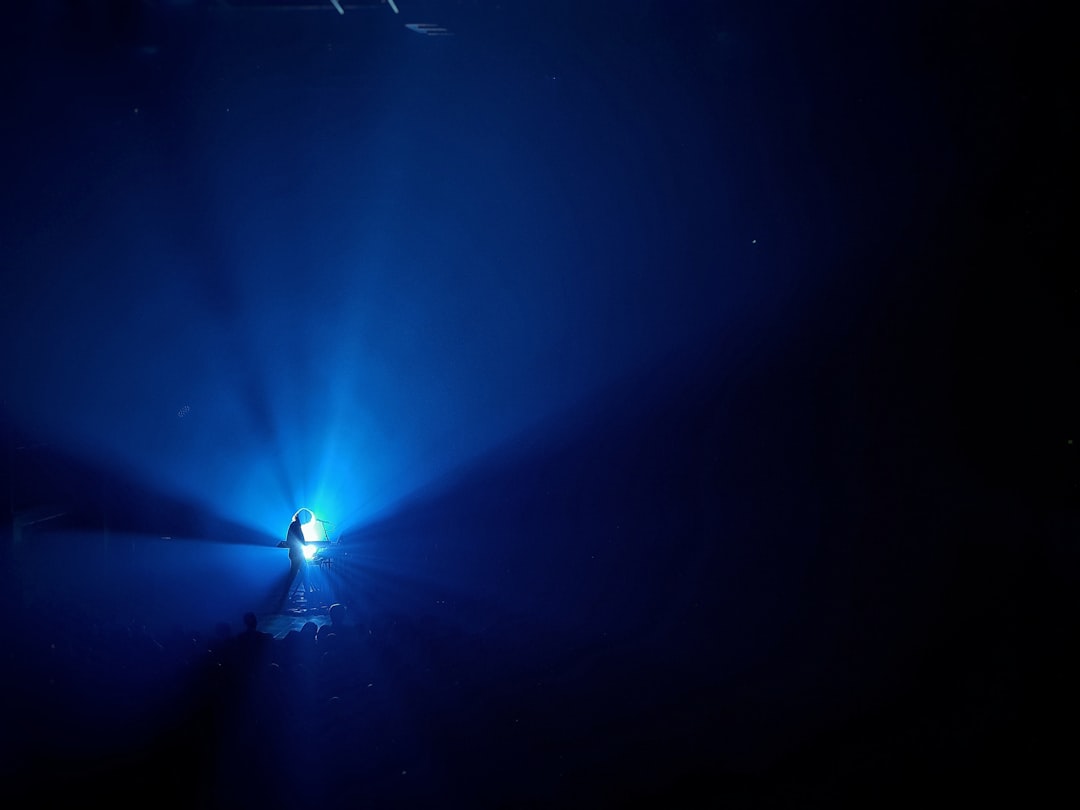
The concept of time has long captivated philosophers and physicists, giving rise to myriad theories attempting to explain its fundamental nature. Among these, the “Moving Spotlight Theory” stands as a compelling and intuitive, yet ultimately problematic, contender within the philosophy of time. This theory posits that while all moments in time objectively exist, only the present moment possesses genuine actuality or “being.” It’s as if time is a continuous film reel, and our consciousness is a spotlight moving along it, illuminating one frame at a time. The past and future, according to this view, are merely unilluminated frames, waiting their turn or having already had it.
The A-Theory of Time and its Foundations
The Moving Spotlight Theory is intrinsically linked to the “A-theory” of time, a metaphysical perspective that champions the reality of temporal passage. Unlike the B-theory, which views all moments as equally real and ordered by “earlier than” and “later than” relations, the A-theory asserts that presentness is a unique and fundamental property of events. You can learn more about managing your schedule effectively by watching this video on block time.
Presentism vs. Eternalism
To fully appreciate the Moving Spotlight Theory, one must understand its position within the broader A-theory framework, specifically its deviation from pure presentism.
- Presentism: This is the most radical form of A-theory, arguing that only the present moment exists. The past no longer exists, and the future does not yet exist. Think of it as a single, ever-changing frame, with no film reel to speak of. While simple, presentism faces significant challenges in accounting for our experience of memory and our ability to refer to past events. How can one remember something that no longer exists?
- Eternalism: In stark contrast, eternalism, often associated with the B-theory, posits that all moments in time, past, present, and future, exist equally and simultaneously. This view is often compared to a “block universe,” where time is a static, four-dimensional manifold. This eliminates the problem of non-existent pasts and futures but struggles to explain our subjective experience of temporal flow and the apparent uniqueness of the present.
The Moving Spotlight Theory attempts to occupy a middle ground, a philosophical tightrope walk between these two extremes. It acknowledges the eternalist’s assertion that all moments exist, but crucially incorporates the presentist’s conviction that the present is uniquely real and distinguished.
The Intuition of Passage
One of the most powerful arguments for the A-theory, and consequently for the Moving Spotlight Theory, is our deeply ingrained intuition of temporal passage. We feel time flowing, we perceive events as “coming into being” and “passing away.” This subjective experience is difficult to reconcile with a static, block universe model. The Moving Spotlight Theory offers a compelling metaphor for this experience – the spotlight’s forward motion directly corresponds to our perception of time’s ceaseless advance.
However, it is crucial to recognize that intuition alone is not sufficient for sound philosophical or scientific theory. While potent, it can also be misleading. Consider optical illusions: our intuition tells us the lines are different lengths, but measurement proves otherwise. Similarly, our intuition of passage may be a feature of our consciousness rather than an objective property of reality.
Mechanics of the Moving Spotlight: How it Works
The Moving Spotlight Theory, at its core, describes a universe where all times exist, but only one is “lit up” with the special property of presentness. Imagine a vast library of books, each book representing a moment in time. All the books are there, sitting on their shelves (existence), but only the one currently being read (presentness) has its contents actively informing consciousness and shaping reality.
The Nature of “Presentness”
The inherent challenge for the Moving Spotlight Theory lies in defining this “presentness” – what exactly is the spotlight, and what does it do?
- Primitive Property: Many proponents of the Moving Spotlight Theory argue that presentness is a primitive, unanalyzable property. It’s simply a fundamental feature of the universe, much like mass or charge. We cannot break it down into simpler components; it just is. This can be unsatisfying for those seeking a more mechanistic explanation, but not all fundamental properties lend themselves to further reduction.
- Metaphysical Boost: Alternatively, some suggest that presentness confers a kind of “metaphysical boost” on the moment it illuminates. This boost might involve heightened causal efficacy, a unique existential status, or even a different type of reality altogether. This approach faces the significant hurdle of explaining what this “boost” entails and how it interacts with the otherwise existing past and future moments. Does the past lose this boost once the spotlight has moved on, and if so, how does that happen?
The Motion of the Spotlight
Equally perplexing is the “moving” aspect of the spotlight. If all moments exist, what motivates the spotlight to move from t to t+1?
- External Force: One possibility is an external, unexplained force driving the spotlight forward. This introduces a “deus ex machina” element, a solution that comes from outside the established system, which philosophers generally view with skepticism. Postulating an external mover simply shifts the explanatory burden.
- Self-Propagation: Another idea is that the spotlight somehow self-propagates, perhaps driven by the inherent nature of time itself. This moves towards re-ifying time as an active agent, a concept fraught with its own philosophical difficulties. Does time have intentions? Does it possess agency?
- No Motion in a Deeper Sense: Some interpretations argue that there is no literal motion of the spotlight in a deeper, objective sense. Instead, the “motion” is an illusion generated by our subjective experience as our consciousness moves through the existing timeline, experiencing presentness at each point it encounters. This interpretation, while seemingly resolving the problem of motion, risks collapsing back into a form of eternalism where our experience is merely an illusion over a static reality, thus undermining the core A-theory commitment.
Advantages of the Moving Spotlight Theory
Despite its complexities, the Moving Spotlight Theory presents several compelling advantages over its philosophical rivals, offering intuitive explanations for aspects of our temporal experience.
Reconciling Past, Present, and Future
One of its most appealing features is its ability to account for both the reality of the past and future events (contra presentism) while preserving the special status of the present (contra eternalism). This aligns with our common-sense understanding: we acknowledge that Caesar existed and the sun will rise tomorrow, yet we perceive an immediate urgency and reality to this very moment. The spotlight offers a nuanced way to hold these beliefs simultaneously.
Explaining Temporal Passage
As previously discussed, the Moving Spotlight Theory provides a powerful metaphor for our subjective experience of temporal passage. The movement of the spotlight directly corresponds to the feeling of time flowing, of moments continually becoming present and then receding into the past. This makes it intuitively more satisfying than the static “block universe” of eternalism for many.
Addressing Memory and Anticipation
The theory offers a straightforward explanation for memory and anticipation. Since past and future moments exist, remembering past events is simply accessing aspects of the unilluminated past. Similarly, anticipating future events involves contemplating aspects of the unilluminated future. This avoids the presentist’s challenge of explaining how one can remember something that no longer exists or anticipate something that does not yet exist. The information is there, it’s just not currently “on stage.”
Criticisms and Challenges
Despite its strengths, the Moving Spotlight Theory faces significant philosophical and scientific challenges, prompting many to question its ultimate viability.
Identifying the “Moving Spotlight”
Perhaps the most potent criticism revolves around the elusive nature of the “spotlight” itself. If presentness is a real, objective property, what is its physical basis? Where does it reside? How does it interact with spacetime? Without a clear, testable mechanism or definition, the spotlight can feel like a metaphorical placeholder for an unsolved problem rather than a genuine explanation. Philosophers and scientists alike crave concrete mechanisms, and the Moving Spotlight Theory often falls short in this regard.
The Rate of Passage
If the spotlight moves, at what speed does it move? To say “one second per second” is tautological and uninformative. To measure its speed, one would need an independent “super-time” against which to measure the passage of our own time, leading to an infinite regress of ever-faster times. This problem, known as McTaggart’s Paradox of Passage, applies broadly to A-theories of time but is particularly stark in the Moving Spotlight Theory due to its explicit notion of motion. If time truly flows, how do we quantify that flow without resorting to circular definitions?
Compatibility with Modern Physics
Modern physics, particularly Einstein’s theories of relativity, poses a significant hurdle for the Moving Spotlight Theory. Relativity theory casts doubt on the notion of a single, universally “present” moment.
- Relativity of Simultaneity: Special Relativity demonstrates that simultaneity is relative to an observer’s frame of reference. Two events that are simultaneous for one observer may not be simultaneous for another observer moving at a different velocity. If there is no absolute simultaneity, then there can be no single, objective “present moment” that the spotlight could illuminate for everyone in the universe. This directly contradicts the idea of a universal moving spotlight.
- Spacetime as a Block: General Relativity, by treating spacetime as a unified, four-dimensional manifold, tends to favor an eternalist “block universe” interpretation. In this view, past, present, and future are all equally real components of this manifold, much like different points in space. There is no preferred “now” that physically distinguishes itself from others. While interpretations of relativity are still debated, the mainstream scientific understanding leans away from a privileged present.
For the Moving Spotlight Theory to be viable, it would either need to profoundly revise its core tenets to accommodate relativistic physics or present a compelling argument for why physics is fundamentally mistaken about time. Neither path is easily traversed.
The Problem of “Becoming”
What does it mean for a moment to “become” present? If all moments already exist (as the theory posits), then in what sense does a new moment become anything? It simply shifts from being an unilluminated part of existence to an illuminated one. This distinction struggles to capture the robust sense of “coming into being” that many A-theorists want to preserve. If the future already exists, does anything truly “happen” when the spotlight reaches it, or is it merely acknowledged? This can erode the very temporal dynamism the theory seeks to protect.
Ethical and Existential Implications
Beyond the purely metaphysical and scientific discussions, the Moving Spotlight Theory, like all theories of time, carries profound implications for our understanding of ethical responsibility, human agency, and the meaning of existence.
Free Will and Determinism
If the future already exists, albeit unilluminated, does this imply a pre-determined future? If all moments are already “written” and the spotlight merely reads them out, does this leave room for genuine free will? This is a classical problem that plagues many non-presentist A-theories. The Moving Spotlight Theory aims to grant special status to the present where choices are made, but if the outcome of those choices already exists in the unilluminated future, the concept of genuine choice remains problematic. It’s like watching a movie where the ending is already filmed; your choices in the present scene are just playing out a pre-scripted storyline.
The Value of Temporal Experience
Our perception of time as dynamic and flowing is intrinsically linked to our sense of purpose, regret, hope, and mortality. If the past truly recedes and the future truly approaches, it imbues our actions with a weight that might be diminished if all moments merely are. The Moving Spotlight Theory attempts to salvage this sense of temporal flow and its associated values by highlighting the unique actuality of the present. It suggests that while all moments exist, this moment, the one under the spotlight, is the crucible of experience, where decisions are made and consequences unfold.
Meaning and Mortality
The Moving Spotlight Theory, by preserving the dynamic flow of time, offers a framework where life’s journey from birth to death is a true progression rather than a static existence viewed from different points. This resonates with our existential concerns. The “now” is the point of action, memory (of past spotlighted moments), and anticipation (of future spotlighted moments). This perspective can give a special significance to the present moment, encouraging us to live fully within its illuminated confines, as it is the only true point of interaction with reality.
In conclusion, the Moving Spotlight Theory presents an elegant and intuitively appealing solution to some of the enduring puzzles surrounding time. It attempts to thread the needle between presentism and eternalism, offering a universe where all moments are real but only one is actual. However, its struggles with consistency, particularly concerning the nature of presentness, the mechanics of the spotlight’s motion, and its compatibility with modern physics, mean it remains a fascinating, if ultimately contested, player in the ongoing philosophical debate about the fundamental nature of time. It forces us to confront not only how we think about time, but also how our cherished intuitions align with, or diverge from, a deeper understanding of the cosmos. As you, the reader, reflect on these ideas, consider which facets of time truly resonate with your own experience and understanding, and which theories best serve as a lamp unto that understanding.
WATCH THIS 🔥 YOUR PAST STILL EXISTS — Physics Reveals the Shocking Truth About Time
FAQs
What is the moving spotlight theory?
The moving spotlight theory is a philosophical concept about the nature of time. It suggests that the present moment is like a spotlight that moves along the timeline, illuminating one moment at a time while past and future events exist but are not currently “lit” by the spotlight.
How does the moving spotlight theory differ from other theories of time?
Unlike the block universe theory, which holds that past, present, and future all equally exist simultaneously, the moving spotlight theory emphasizes a dynamic present that moves forward. It combines elements of both eternalism (all times exist) and presentism (only the present is real) by proposing that all times exist but only the present is highlighted.
Who originally proposed the moving spotlight theory?
The moving spotlight theory has roots in the work of philosophers such as C.D. Broad and William James. It has been developed and discussed in various forms within the philosophy of time literature.
What are some criticisms of the moving spotlight theory?
Critics argue that the moving spotlight theory struggles to explain how the “spotlight” moves or what causes the present to be special. Some also find it metaphysically complex or question its compatibility with modern physics, particularly relativity.
Is the moving spotlight theory supported by scientific evidence?
The moving spotlight theory is primarily a philosophical interpretation of time and is not directly supported or refuted by scientific evidence. Modern physics, especially relativity, tends to support a block universe view, but the moving spotlight remains a topic of philosophical debate.