The concept of the universe’s temporal structure has long been a subject of intense philosophical and scientific debate. Among the various models proposed, the Growing Block Universe (GBU) stands as a compelling and increasingly discussed alternative to both eternalism and presentism. This article delves into the tenets of the GBU, examining its implications for time, existence, and the very fabric of reality, offering a perspective akin to a time-traveler observing its expansion.
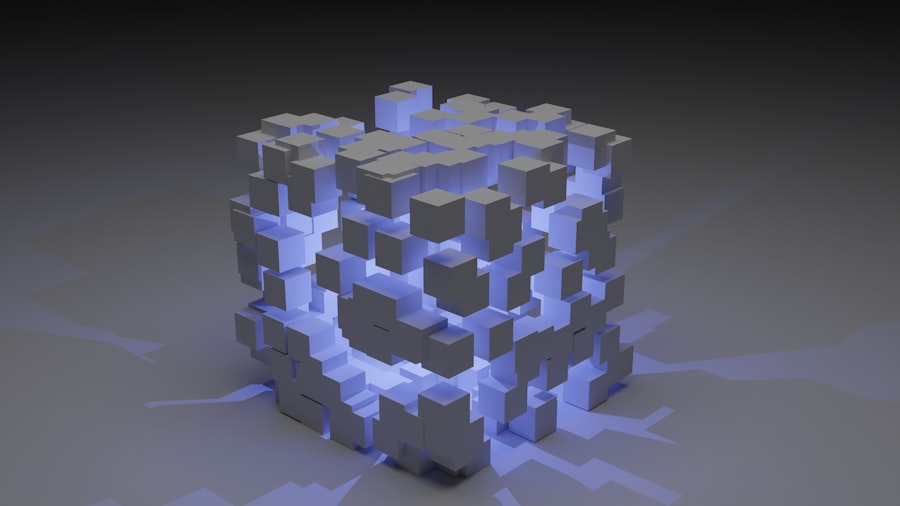
The GBU posits a universe where the past and present are real, but the future is not yet determined and therefore does not exist. Imagine building a wall, brick by brick. Each laid brick represents a moment in time becoming real, fixing itself into the structure of spacetime. The existing wall is the past and present, while the unbuilt portion is the future, a realm of possibilities rather than actualities. This model fundamentally challenges our intuitive understanding of time as a solely linear progression where only the ‘now’ exists. You can learn more about managing your schedule effectively by watching this block time tutorial.
Contrasting with Presentism
Presentism, perhaps the most intuitively appealing view, asserts that only the present moment exists. The past is gone, and the future is yet to come. It operates like a single spotlight moving across a stage; only what is illuminated is truly there. In this view, historical events, though impactful, are no longer existent entities. The Roman Empire, for instance, is not a present reality but a collection of past ‘nows’ that have ceased to be.
Contrasting with Eternalism
Eternalism, in contrast, posits that all moments in time – past, present, and future – exist co-equally. It views spacetime as a four-dimensional block, a static tapestry where all events are already woven. This perspective is often likened to a film reel: every frame exists simultaneously, and our experience of time is merely our perception moving through these static frames. The future is as real as the past, making the concept of free will a complex problem for eternalists. The GBU offers a middle ground, acknowledging the reality of the past without predetermining the future.
Key Philosophical Tenets
The GBU addresses a critical philosophical tension between these two extremes. It offers a solution to the “problem of persistence” – how objects endure through time – by allowing past stages of an object to remain real. Furthermore, it preserves a robust notion of free will, as the future remains open to influence and decision-making. The universe, in the GBU, is not a predetermined novel but an unfolding story.
The concept of the growing block universe offers a fascinating perspective on the nature of time and reality, suggesting that the past and present are fixed while the future is still being created. For those interested in exploring this idea further, a related article can be found at My Cosmic Ventures, which delves into the implications of this theory and its impact on our understanding of existence.
The Mechanics of Temporal Growth
The central tenet of the GBU is the idea that new moments of time are continually “added” to existence. This isn’t a passive process; it’s an active, ongoing creation of reality. The universe isn’t just getting older; it’s getting bigger in a temporal sense.
The “Becoming” of New Moments
How does a future moment “become” a present moment and then a past one? This is the crux of the GBU. Imagine a single pixel glowing into existence on an ever-expanding screen. This pixel isn’t just appearing; it’s being integrated into the fabric of the existing image, becoming a permanent part of it. The GBU postulates a fundamental, irreducible process of “becoming” that brings new events into existence. This process is not causally explicable by prior events; rather, it’s a fundamental aspect of reality.
The Asymmetry of Time
One of the most striking features of the GBU is its inherent asymmetry. The past is fixed and real, a solidified block of existence. The future, however, is amorphous and unreal. This asymmetry aligns with our everyday experience: we remember the past, we experience the present, and we anticipate the future, but we do not “experience” a future that already definitively exists. This aligns with the arrow of time, a concept deeply ingrained in physics, where entropy always increases in one direction.
The Role of Observation
While not claiming observation creates reality in a solipsistic sense, the GBU acknowledges that the “present moment” from our perspective is the leading edge of this temporal growth. Our consciousness, therefore, effectively surfs this wave of becoming, integrating new realities into our experience. This does not mean the universe waits for an observer to exist, but rather that our subjective experience of time is intimately tied to this objective expansion.
Implications for Physics and Cosmology
The GBU, while primarily a philosophical model, carries significant implications for our understanding of the physical universe, particularly regarding time and causality.
Reconciling with Relativity
One of the major challenges for any theory of time is its compatibility with Einstein’s theory of special relativity. Special relativity states that there is no absolute simultaneity; observers in different frames of reference will disagree on which events are happening “now.” This poses a problem for presentism, which requires a universally present “now.” Eternalism, by treating all spacetime as equally real, fares better. The GBU attempts to navigate this by suggesting that while there is no universal “now” in terms of measurement, there might be a fundamental, objective ordering of events as they integrate into the block. This requires a nuanced interpretation where the “growing edge” of the block might not be a single hyperplane but rather a more complex, relativistic boundary.
The Problem of Simultaneity
The objective “now” in the GBU must be understood not as a specific cosmic time coordinate, but as the boundary between existing and non-existing events. This boundary, while absolute, would still be relative to an observer’s frame of reference when measured. Imagine a painter adding to a canvas; the act of adding is happening, but the precise moment of completion from different viewing angles might appear shifted.
The Nature of Causality
In the GBU, causality operates strictly from past to future. Events in the present cause events in the future, which then become part of the fixed past. The future, being non-existent, cannot causally affect the past or present. This preserves the intuitive understanding of cause and effect, where events propagate forward in time. This provides a robust framework for understanding scientific determinism within the existing block, while leaving the future open.
Backward Causation: A Closed Chapter?
The GBU inherently rejects the possibility of backward causation, where future events could influence the past. Since the future does not exist, it cannot exert a causal influence. This contrasts with certain interpretations of quantum mechanics or some more speculative theories that entertain the possibility of retrocausality. The GBU firmly aligns with the unidirectional flow of cause and effect.
Cosmological Interpretations
From a cosmological perspective, the GBU offers a framework for conceptualizing the universe’s evolution. As the universe expands physically, it also expands temporally, with new moments and events continually coming into being. This aligns with our observation of an evolving, dynamic cosmos, constantly forging new realities. The Big Bang, in this view, is not just the beginning of space, but the initial moment of temporal growth, a singular point from which the block began to form.
Investigating the Evidence and Objections
While compelling, the GBU is not without its critics and challenges. Understanding these objections is crucial for a comprehensive appreciation of the model.
The Elusive “Becoming”
Perhaps the most significant objection revolves around the very concept of “becoming.” Critics argue that the GBU introduces a mysterious, ill-defined process of events coming into existence. How does a non-existent future moment transition into an existent present moment? What mechanism governs this “poofing” into reality? This process, they argue, lacks a clear scientific or philosophical explanation, making it an ad hoc addition to the model.
No Mechanistic Explanation?
Proponents of the GBU often respond by stating that “becoming” is a fundamental, irreducible feature of reality, much like gravity or the speed of light. It may not have an underlying mechanistic explanation because it is itself a fundamental aspect of reality’s unfolding. Just as we don’t ask what causes a particle to have mass, we shouldn’t necessarily demand a prior cause for the emergence of new temporal moments.
The Problem of Privileged Present
Another objection points to the GBU’s seemingly privileged “present moment” where new reality is added. If time is relative, as special relativity suggests, then how can there be a single, objective “leading edge” of existence? This reintroduces the problem of absolute simultaneity that Einstein’s theories seemed to eliminate.
Relativistic Interpretation of “Now”
As mentioned previously, GBU proponents attempt to address this by distinguishing between an objective “becoming” and its subjective measurement. The “present” from an objective GBU perspective might be the boundary layer of existence, which, when observed from different relativistic frames, appears to have shifted spatial coordinates for concurrent events. It’s not a specific slice of time, but the dynamic process of becoming integrated.
Empirical Verifiability
A major challenge for any philosophical theory of time is its empirical verifiability. How can we test whether the future is genuinely non-existent and the past is truly fixed? The GBU, like other metaphysical theories of time, faces this hurdle. Our subjective experience of time aligns with the GBU, but this is not considered scientific proof.
Indirect Evidence and Theoretical Fit
While direct empirical evidence for the “growing” aspect is elusive, proponents argue that the GBU offers a more coherent and intuitive framework for understanding our experience of time and free will than eternalism. It also aligns with the observed irreversibility of macroscopic physical processes and the arrow of time, lending it indirect support through its consilience with various scientific observations.
The concept of a growing block universe presents a fascinating perspective on the nature of time and reality, suggesting that the past and present coexist while the future is yet to be determined. This idea challenges traditional views of time and has sparked numerous discussions in the philosophical and scientific communities. For those interested in exploring this topic further, a related article can be found at My Cosmic Ventures, which delves into the implications of this theory and its potential impact on our understanding of existence.
The Enduring Allure of the GBU
| Metric | Description | Value / Range | Unit | Notes |
|---|---|---|---|---|
| Temporal Growth Rate | Rate at which the present moment ‘grows’ into the future | Undefined / Theoretical | Time units per time unit | Conceptual, no empirical measurement |
| Block Size | Extent of spacetime included in the ‘block’ at a given moment | Expands continuously | Spacetime volume | Depends on cosmological model |
| Present Moment Thickness | Duration of the ‘now’ slice in the growing block | Infinitesimal to finite (varies by interpretation) | Time units | Philosophical debate on ‘thickness’ of present |
| Ontological Status of Past | Existence status of past events in the block | Fixed and real | N/A | Past events are ontologically real |
| Ontological Status of Future | Existence status of future events in the block | Non-existent / Potential | N/A | Future is open and not yet real |
| Compatibility with Relativity | Degree to which the model aligns with special/general relativity | Contested | N/A | Challenges due to preferred present moment |
| Philosophical Implications | Impact on concepts of time, causality, and determinism | Varies | N/A | Supports objective passage of time |
Despite these challenges, the Growing Block Universe continues to attract significant attention from philosophers and physicists alike. Its appeal lies in its ability to reconcile several deeply held intuitions about time, existence, and agency.
Preserving Free Will
For many, the preservation of free will is a significant draw. Unlike eternalism, where all future events are already determined within the static block, the GBU allows for genuine choice and agency. The future is an open canvas, ready to be painted by our decisions and actions. This aligns with our subjective experience of making choices and influencing outcomes.
The Reality of the Past
The GBU provides a robust foundation for the reality of past events. Unlike presentism, where historical figures and events cease to exist once their ‘now’ has passed, the GBU assures that these events remain permanently etched into the fabric of reality. This gives a deeper significance to history and memory, as they refer to genuinely existent, albeit past, entities.
A Dynamic and Evolving Universe
Finally, the GBU paints a picture of a dynamic and evolving universe, not just physically but temporally. It’s a universe that is constantly expanding and creating new realities, a grand cosmic narrative unfolding in real-time. This sense of ongoing creation can be profoundly attractive, offering a metaphor of life itself – constantly emerging, always becoming.
In conclusion, the Growing Block Universe presents a captivating and sophisticated model of time and existence. It offers a unique synthesis of our intuitive understanding of the past’s persistence and the future’s openness, while attempting to engage with the complexities of modern physics. As a time-traveler observing its intricate processes, we witness a universe where tomorrow is not merely unseen but genuinely unmade, awaiting the relentless march of “becoming” to bring it into being. The debate surrounding its validity will undoubtedly continue, reminding us that the nature of time remains one of the universe’s most profound and enduring mysteries.
WATCH THIS 🔥 YOUR PAST STILL EXISTS — Physics Reveals the Shocking Truth About Time
FAQs
What is the growing block universe theory?
The growing block universe theory is a philosophical and physical concept of time in which the past and present exist, but the future does not yet exist. According to this view, the “block” of reality grows as new moments of time come into being, adding to the fixed past.
How does the growing block universe differ from the block universe theory?
The block universe theory posits that past, present, and future all equally exist in a four-dimensional spacetime block. In contrast, the growing block universe holds that only the past and present are real, while the future is open and not yet determined.
Who are some key proponents of the growing block universe idea?
Philosophers such as C.D. Broad and Michael D. Tooley have been notable proponents of the growing block universe theory. They argue for a dynamic view of time where reality expands as new events occur.
What implications does the growing block universe have for the nature of time?
The growing block universe suggests that time is an objective process of becoming, where the present is real and the past is fixed, but the future is undetermined. This contrasts with views that treat time as an illusion or as a static dimension.
Is the growing block universe theory supported by modern physics?
While the growing block universe is primarily a philosophical interpretation of time, it is compatible with some interpretations of relativity and quantum mechanics. However, it remains a debated and not universally accepted model within the physics community.