The universe, in its grand design, presents an intricate tapestry of physical phenomena. Among these, the force of gravity stands as one of the most fundamental yet persistently enigmatic. For centuries, humanity grappled with its nature, moving from mystical explanations to the rigorous mathematical framework of Isaac Newton. However, Newton’s classical description, while remarkably accurate for many terrestrial and astronomical observations, exhibited limitations when confronted with extreme conditions or the subtle nuances of cosmic ballet. It was Albert Einstein, in a triumph of theoretical physics, who introduced a revolutionary perspective on gravity with his General Theory of Relativity in 1915. This theory transcended the Newtonian view, proposing that gravity is not merely a force, but a manifestation of the curvature of spacetime itself, a concept as profound as it was initially counterintuitive.
The journey toward understanding gravity has been a progressive refinement of ideas, each building upon the insights of its predecessors. Readers will find it illuminating to trace this intellectual lineage. You can learn more about managing your schedule effectively by watching this video on block time.
Newton’s Universal Gravitation: A Precursor
Isaac Newton’s Principia Mathematica, published in 1687, laid the cornerstone of classical mechanics and introduced the concept of universal gravitation. Newton posited that every particle of matter in the universe attracts every other particle with a force proportional to the product of their masses and inversely proportional to the square of the distance between their centers. This elegant mathematical formulation successfully explained planetary orbits, the tides, and the falling of objects on Earth. For over two centuries, Newton’s law remained unchallenged, a testament to its predictive power and explanatory scope.
- Action at a Distance: A key philosophical challenge with Newton’s theory was the idea of “action at a distance” – how forces could propagate instantaneously across vast, empty space without any mediating medium. Newton himself acknowledged this as a mystery.
- Mercury’s Precession: While highly accurate, subtle discrepancies began to emerge. The anomalous precession of Mercury’s perihelion – a slight shift in its elliptical orbit around the Sun – could not be fully accounted for by Newtonian mechanics, even when considering the gravitational influence of other planets. This persistent anomaly hinted at a deeper, unrevealed aspect of gravity.
Einstein’s Leap: Spacetime as a Dynamic Entity
Einstein’s breakthroughs, first with Special Relativity in 1905 and then General Relativity a decade later, fundamentally altered our understanding of space, time, and gravity. Special Relativity established the interconnectedness of space and time into a single entity called spacetime and introduced the constancy of the speed of light for all inertial observers. General Relativity took this a step further, proposing that massive objects warp this fabric of spacetime.
- The Equivalence Principle: A cornerstone of General Relativity is the equivalence principle, which states that gravitational and inertial forces are locally indistinguishable. Imagine, if you will, being in a windowless elevator accelerated upwards in empty space; the sensations felt would be indistinguishable from being at rest on Earth in a gravitational field. This principle allowed Einstein to connect inertial frames to gravitational effects.
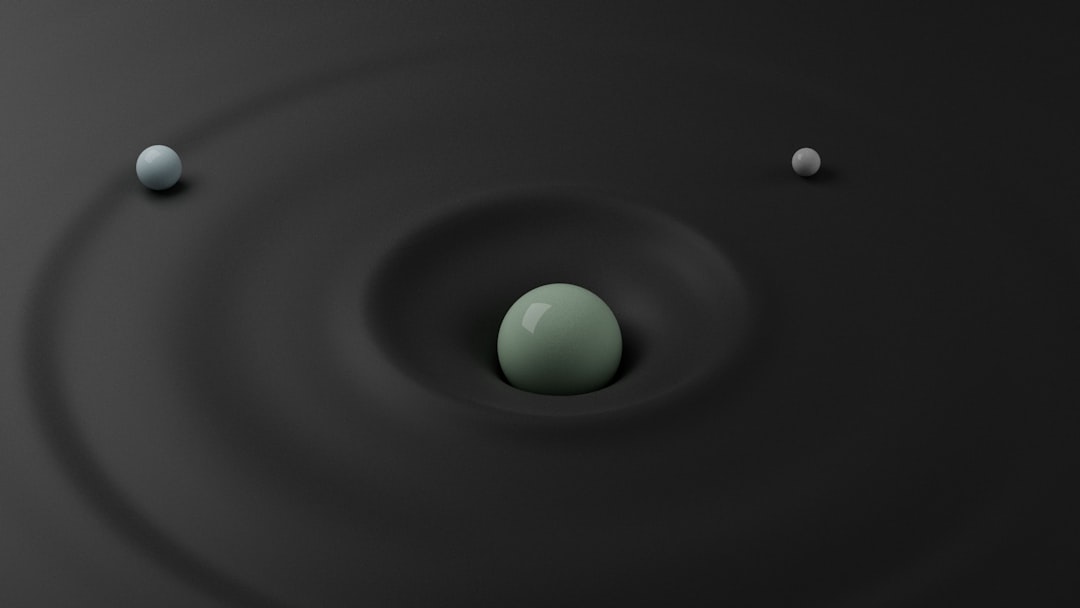
- Gravity as Spacetime Curvature: Instead of a force pulling objects together, General Relativity posits that mass and energy create “dips” and “curves” in the fabric of spacetime. Objects, including light, then follow the shortest path (geodesics) through this curved spacetime. Picture a bowling ball placed on a stretched rubber sheet; it creates a depression. Now, roll a marble nearby, and it will curve towards the bowling ball, not because the bowling ball is pulling it, but because the marble is simply following the curvature of the sheet. This metaphor, though imperfect, encapsulates the essence of spacetime curvature.
For those interested in exploring the intricate relationship between general relativity and gravity, a fascinating article can be found at My Cosmic Ventures. This article delves into the fundamental principles of general relativity, explaining how it revolutionized our understanding of gravity and the curvature of spacetime. It also discusses the implications of these concepts for modern astrophysics and cosmology, making it a must-read for anyone curious about the universe’s workings.
Key Concepts and Predictions of General Relativity
General Relativity is not merely a philosophical reinterpretation; it is a rigorously mathematical theory with profound and testable predictions that have been repeatedly confirmed by observation.
Gravitational Time Dilation
One of the most striking predictions of General Relativity is that clocks run slower in stronger gravitational fields. The “tic-toc” of time itself is not absolute but relative to the gravitational potential.
- Experimental Verification: This effect has been precisely measured. For example, atomic clocks on satellites in orbit run slightly faster than identical clocks on Earth’s surface due to the weaker gravitational field they experience. To ensure the accuracy of GPS systems, these relativistic effects must be meticulously accounted for. Without these corrections, GPS would rapidly become useless as navigation errors would accumulate quickly.
- Implications for Black Holes: Near incredibly dense objects like black holes, the gravitational time dilation becomes extreme. For an outside observer, time appears to slow down almost to a standstill for objects approaching the event horizon of a black hole.
Gravitational Lensing
Just as optical lenses bend light to form images, massive objects can bend the path of light from distant sources, a phenomenon known as gravitational lensing.
- Observational Evidence: This prediction was famously confirmed by Arthur Eddington’s 1919 expedition during a solar eclipse, which observed the bending of starlight around the Sun. Since then, numerous examples of gravitational lensing have been observed, ranging from individual galaxies acting as lenses to vast clusters of galaxies magnifying and distorting the light from even more distant galaxies.
- Cosmological Tool: Gravitational lensing serves as a powerful cosmological tool. By studying the distorted images of background galaxies, astronomers can map the distribution of both visible and dark matter in the universe, providing insights into the large-scale structure of the cosmos.
Black Holes: Regions of Extreme Spacetime Curvature
Perhaps the most dramatic and conceptually challenging prediction of General Relativity is the existence of black holes – regions of spacetime where gravity is so intense that nothing, not even light, can escape.
- Event Horizon: The boundary beyond which escape is impossible is called the event horizon. This is not a physical surface but a point of no return.
- Singularity: At the heart of a black hole lies a singularity, a point of infinite density and curvature where the laws of physics as we currently understand them break down.
- Observational Confirmation: While direct observation of a singularity is impossible by definition, the indirect evidence for black holes is overwhelming. This includes the dynamics of stars orbiting unseen massive objects, the powerful X-ray emissions from accretion disks around supermassive black holes in galactic centers, and the recent detection of gravitational waves produced by merging black holes.
Gravitational Waves: Ripples in Spacetime
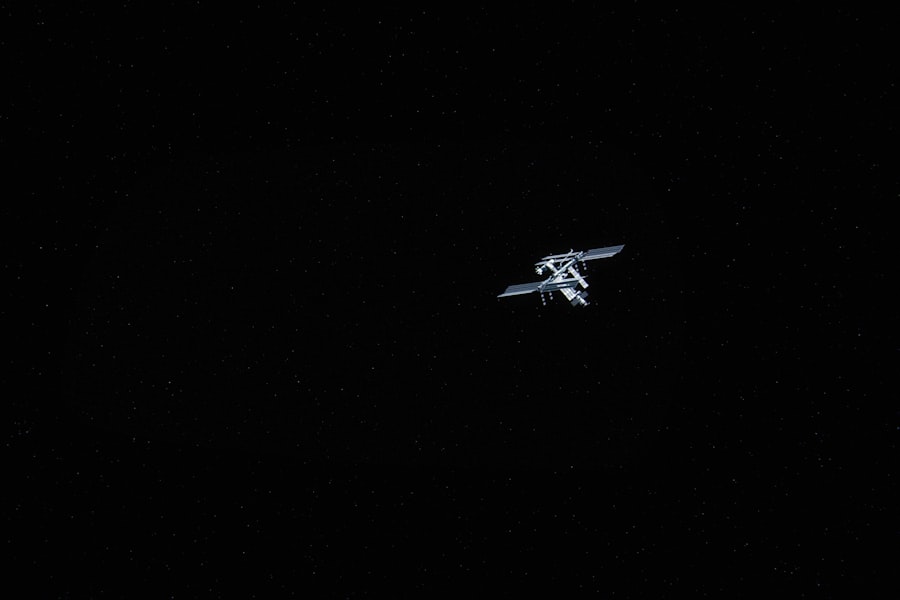
One of the most profound and recently confirmed predictions of General Relativity is the existence of gravitational waves – ripples in the fabric of spacetime generated by accelerating massive objects. These waves propagate at the speed of light, carrying energy away from their source.
The Source of Gravitational Waves
Just as accelerating charged particles produce electromagnetic waves, accelerating masses produce gravitational waves. However, the gravitational force is vastly weaker than the electromagnetic force, requiring incredibly energetic and massive cosmic events to produce detectable waves.
- Binary Systems: The most potent sources of gravitational waves are highly energetic cosmic events involving the rapid acceleration of massive objects, such as the inspiral and merger of binary black holes, binary neutron stars, or a black hole and a neutron star.
- Supernovae and Early Universe: Other potential sources include supernovae (exploding stars) and even processes from the very early universe, though these are more challenging to detect.
The Detection of Gravitational Waves
For a century after Einstein’s prediction, gravitational waves remained elusive, a testament to their incredibly subtle nature. However, advancements in technology finally made their detection possible.
- LIGO and Virgo: The Laser Interferometer Gravitational-Wave Observatory (LIGO) and its European counterpart, Virgo, are ground-based detectors designed to sense these minuscule distortions in spacetime. These observatories utilize enormous interferometers, bouncing laser beams between mirrors separated by several kilometers. A passing gravitational wave causes a minute change in the relative lengths of the arms, which can then be detected by the interference pattern of the recombined laser beams.
- First Detection (GW150914): In 2015, LIGO made history with the first direct detection of gravitational waves (GW150914), originating from the merger of two black holes approximately 1.3 billion light-years away. This seminal event not only confirmed a long-standing prediction of General Relativity but also ushered in a new era of “gravitational wave astronomy,” providing an entirely new window into the universe.
The Future of General Relativity and Unanswered Questions

While General Relativity has been remarkably successful in describing gravity on large scales and under extreme conditions, it is not considered the final word. There remain perplexing mysteries and challenges that compel physicists to seek a more complete understanding.
Reconciliation with Quantum Mechanics
One of the most significant challenges in modern physics is to unify General Relativity with quantum mechanics, the theory that describes the universe at its smallest scales. These two pillar theories, while individually highly successful, are fundamentally incompatible.
- The Problem of Quantum Gravity: General Relativity describes gravity as a smooth curvature of spacetime, while quantum mechanics describes all forces as mediated by discrete particles (quanta). Efforts to quantize gravity, to describe gravity itself as being mediated by a hypothetical particle called a “graviton,” have proven exceedingly difficult.
- Theoretical Approaches: Leading contenders for a theory of quantum gravity include string theory and loop quantum gravity, each offering different frameworks to reconcile these two giants of physics. A unified theory of quantum gravity is crucial for understanding phenomena like the very early universe (the Big Bang singularity) and the interior of black holes, where both gravitational and quantum effects are extreme.
Dark Matter and Dark Energy
General Relativity, in conjunction with our observations of the universe, has revealed the existence of mysterious components that dominate the cosmic energy budget: dark matter and dark energy.
- Dark Matter: Observational evidence, such as the rotation curves of galaxies and the dynamics of galaxy clusters, indicates that there is far more mass in the universe than can be accounted for by visible matter. This unseen, non-interacting substance is dubbed “dark matter.” While its gravitational effects are clearly observed, its fundamental nature remains a profound mystery.
- Dark Energy: Furthermore, observations of distant supernovae have shown that the expansion of the universe is accelerating, rather than slowing down as one might expect from gravity. This acceleration is attributed to a mysterious force or energy, termed “dark energy,” which acts as a repulsive gravitational force on cosmological scales. Whether dark matter and dark energy represent new particles, modifications to General Relativity, or entirely new physical phenomena is a subject of intense research.
Beyond Einstein: Modified Gravity Theories
The mysteries of dark matter and dark energy, coupled with the difficulty of quantizing gravity, have led some physicists to explore modifications to General Relativity itself.
- Alternative Theories: These “modified gravity” theories propose that General Relativity might be an approximation of a more fundamental theory that becomes apparent on very large (cosmological) scales or at very small (quantum) scales. Examples include f(R) gravity, scalar-tensor theories, and others, which introduce additional fields or alter the gravitational equations at different scales.
- Experimental Constraints: While intriguing, these modified gravity theories face stringent experimental constraints from precision tests of General Relativity within the solar system and from gravitational wave observations. Any viable alternative theory must reproduce the remarkable successes of General Relativity in these well-tested regimes.
In conclusion, General Relativity stands as an unparalleled intellectual achievement, fundamentally reshaping our understanding of gravity, space, and time. From the subtle bending of starlight to the cataclysmic mergers of black holes detected by gravitational waves, its predictions have been consistently validated. However, like a grand cathedral still under construction, the edifice of our understanding remains incomplete. The quest to unify General Relativity with quantum mechanics and to unravel the enigmas of dark matter and dark energy stands as the frontier of theoretical physics, promising further revolutionary insights into the universe’s ultimate nature. For readers eager to delve deeper, the journey into the mysteries of gravity continues, guided by the profound legacy of Einstein and spurred on by the relentless curiosity of humanity.
WATCH THIS 🔥 YOUR PAST STILL EXISTS — Physics Reveals the Shocking Truth About Time
FAQs
What is general relativity?
General relativity is a theory of gravitation developed by Albert Einstein, which describes gravity as the curvature of spacetime caused by mass and energy.
How does general relativity differ from Newtonian gravity?
Unlike Newtonian gravity, which views gravity as a force between masses, general relativity explains gravity as the effect of curved spacetime geometry influencing the motion of objects.
What are some key predictions of general relativity?
Key predictions include the bending of light by gravity (gravitational lensing), time dilation near massive objects, the existence of black holes, and gravitational waves.
How has general relativity been experimentally confirmed?
General relativity has been confirmed through observations such as the perihelion precession of Mercury, gravitational lensing during solar eclipses, time dilation measured by atomic clocks, and the detection of gravitational waves.
Why is general relativity important in modern physics?
General relativity is essential for understanding large-scale phenomena in the universe, such as black holes, cosmology, and the behavior of GPS satellites, where Newtonian gravity is insufficient.