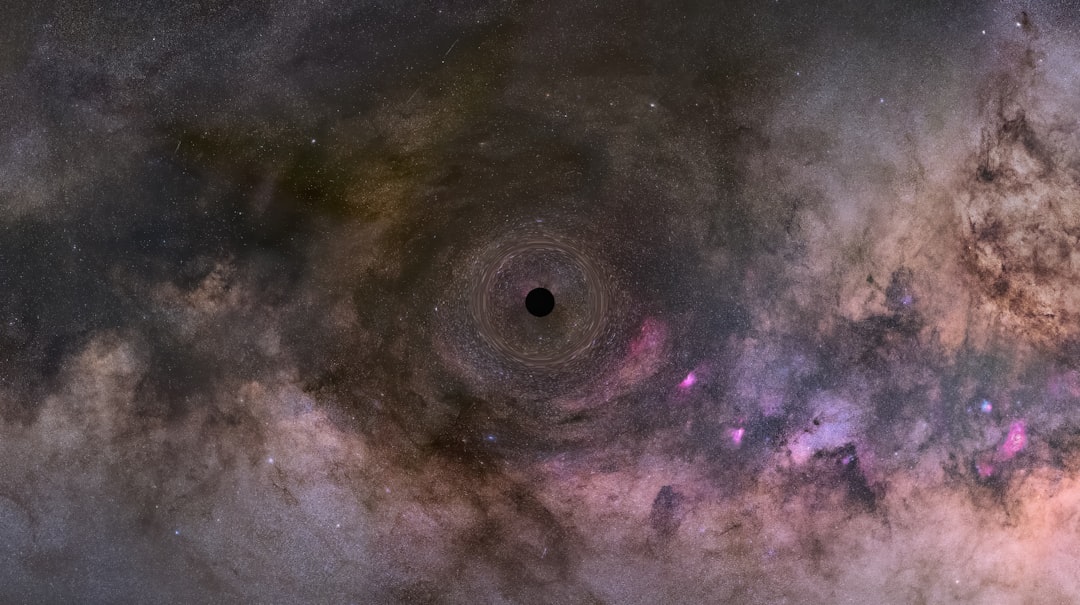
The cosmos, a canvas of unimaginable scale, harbors some of its most profound mysteries within the enigmatic depths of black holes. These cosmic titans, born from the spectacular demise of massive stars, warp spacetime to an extraordinary degree, drawing in everything that ventures too close, including light itself. However, their very existence has presented physicists with a formidable intellectual puzzle, a knot so intricate that its unraveling has become a central quest in modern theoretical physics: the Black Hole Information Paradox.
For decades, this paradox has stood as a looming monument to our incomplete understanding of the universe, particularly concerning the seemingly irreconcilable principles of quantum mechanics and general relativity. Imagine a meticulously crafted book, its pages filled with the unique story of a star, its life, its death, and the intricate dance of particles that constituted its being. When this star collapses into a black hole, it is as if this book is fed into a cosmic shredder. General relativity tells us that the black hole, once formed, is characterized by only three properties: mass, electric charge, and angular momentum. All other details, the specific composition of the star, the sequences of nuclear reactions, the very narrative contained within those pages, are lost to the outside universe. This is where the paradox truly begins to bite. You can learn more about managing your schedule effectively by watching this block time tutorial.
The seeds of the Black Hole Information Paradox were sown by the groundbreaking work of Stephen Hawking in the 1970s. While applying quantum field theory to the curved spacetime around a black hole, Hawking made a startling discovery: black holes are not entirely black. They emit a faint thermal radiation, now known as Hawking radiation. This radiation, a consequence of quantum fluctuations near the event horizon, carries energy away from the black hole, causing it to slowly evaporate over immense timescales.
Quantum Fluctuations and Particle Creation
Hawking’s insight into Hawking radiation stemmed from a deep dive into the quantum realm. He considered the quantum vacuum, not as empty space, but as a sea of constantly fluctuating virtual particle-antiparticle pairs. Normally, these pairs annihilate each other almost instantaneously, leaving no lasting trace. However, near the immense gravitational pull of a black hole’s event horizon, a crucial event can occur.
The Event Horizon’s Crucial Role
The event horizon acts as a point of no return. If a virtual particle pair is created such that one particle falls into the black hole while the other escapes, the pair cannot annihilate. The escaping particle becomes a real particle, contributing to Hawking radiation. The infalling particle, on the other hand, disappears beyond the event horizon. From the perspective of an outside observer, it’s as if the black hole has emitted a particle, carrying away a tiny amount of its mass-energy.
The Thermal Nature of Hawking Radiation
A critical aspect of Hawking radiation is its thermal nature. This means it’s characterized by a temperature and a spectrum that depends only on the black hole’s mass, charge, and spin. It’s akin to a perfectly heated object that glows with a characteristic color and intensity, regardless of what it was made of before it was heated. This thermal property is the crux of the information loss problem.
The Clash with Quantum Mechanics
Quantum mechanics, in stark contrast, is built upon the principle of unitarity. This principle dictates that the evolution of a quantum system is always reversible. Information about the initial state of a system is never truly lost; it is merely transformed and encoded in the correlations between particles. If you know the current state of a closed quantum system and the laws of physics, you can, in principle, rewind the clock and determine its past state.
Unitarity as a Corner stone of Quantum Theory
Unitarity is not just a technical detail; it’s a fundamental tenet that guarantees the consistency and predictability of quantum mechanics. Without it, the deterministic nature of quantum evolution would be compromised, and the very foundations of the theory would crumble. Imagine a jigsaw puzzle. Unitarity means that even after you’ve disassembled the puzzle and mixed all the pieces, if you have all the pieces, you can always reconstruct the original picture.
The Information Paradox Crystallizes
When a black hole evaporates entirely through Hawking radiation, the question arises: what happens to the information about the matter that fell into it? The infalling matter’s quantum states, its unique properties, seem to vanish into the singularity at the black hole’s core, leaving behind only thermal radiation that carries no such specific details. This is the heart of the paradox: the apparent loss of information, which violates the principle of unitarity in quantum mechanics. It’s like throwing a uniquely marked dart into a black hole and expecting – or rather, not expecting – any record of that specific dart to ever emerge.
The black hole information paradox has sparked intense debate among physicists regarding the fate of information that falls into a black hole. A related article that delves deeper into this intriguing topic can be found at My Cosmic Ventures, where various theories and perspectives are explored, shedding light on the implications of quantum mechanics and general relativity in understanding the mysteries of black holes.
Candidates for Resolution: A Spectrum of Possibilities
The Black Hole Information Paradox is not a static problem; it has spurred a rich and diverse landscape of theoretical exploration, with physicists proposing various solutions that challenge our current understanding of gravity and quantum mechanics. These proposed resolutions range from subtle modifications of existing theories to entirely new conceptual frameworks.
Modifications to Black Hole Evaporation
One avenue of research focuses on altering the picture of black hole evaporation itself. Perhaps Hawking radiation is not purely thermal, or perhaps there’s a mechanism by which information can be subtly imprinted onto the outgoing radiation.
The “Soft Hair” Hypothesis
One prominent idea, championed by Leonard Susskind and others, is the “soft hair” hypothesis. This proposes that black holes possess a significant amount of “soft hair” – very low-energy quantum excitations just outside the event horizon that are nonetheless capable of storing information. This “hair” would be a remnant of the matter that fell in, and the Hawking radiation would carry this information away, albeit in a highly scrambled form. Think of it as a faint whisper carried on the wind, a whisper that, with enough effort and sensitivity, might be deciphered.
Information Encoding in Gravitational Waves
Another possibility is that information is encoded in subtle patterns within the gravitational waves emitted during the final stages of black hole evaporation. These waves, while extremely weak, could carry the imprint of the infalling matter in their intricate waveforms. However, detecting such subtle patterns would be an immense technological challenge.
Rethinking the Event Horizon
Another significant approach involves re-examining the nature of the event horizon itself. Is it truly a sharp, impenetrable boundary as described by classical general relativity, or is there a more complex structure that allows for information to escape?
The Firewall Paradox
This line of thought led to the formulation of the firewall paradox, which questions the consistency of having a smooth event horizon while also preserving unitarity. If information is truly encoded in Hawking radiation, then to extract that information, the outgoing radiation must be entangled with the infalling matter. However, according to quantum field theory in curved spacetime, the Hawking radiation is also entangled with the vacuum behind it. This leads to a violation of entanglement monogamy, a fundamental principle in quantum information theory, suggesting that something has to break: either the smooth horizon, or the laws of quantum mechanics.
The Fuzzball Proposal
The fuzzball proposal, stemming from string theory, suggests that black holes are not singular points but rather complex, fuzzy quantum objects. In this picture, the event horizon is not a sharp boundary but a more diffuse region where the quantum gravitational effects are dominant. This “fuzziness” could allow information to be stored and eventually re-emitted. Imagine a black hole not as a perfectly smooth sphere, but as a lumpy, porous sponge, where matter can get entangled within its structure.
The Role of Quantum Gravity
Ultimately, a complete resolution to the information paradox likely lies in a theory of quantum gravity, a framework that successfully unifies quantum mechanics and general relativity. Such a theory could provide a deeper understanding of the extreme conditions at the black hole singularity and the event horizon.
String Theory and the AdS/CFT Correspondence
String theory, a leading candidate for a quantum theory of gravity, has offered significant insights. The anti-de Sitter/conformal field theory (AdS/CFT) correspondence, a profound duality proposed by Juan Maldacena, suggests that a theory of gravity in a certain spacetime (anti-de Sitter space) is equivalent to a quantum field theory without gravity on its boundary. This correspondence has provided a concrete example where black hole formation and evaporation within the AdS space can be described by a unitary quantum field theory on its boundary, thus resolving the paradox in this specific context. This is akin to finding two different languages that perfectly describe the same phenomenon, allowing insights from one to illuminate the other.
Loop Quantum Gravity
Another approach, loop quantum gravity, aims to quantize spacetime itself. While still under development, it offers alternative perspectives on the nature of spacetime at the Planck scale, which could shed light on the behavior of black holes and the fate of information.
The Palatable Consequences: What It Means for Our Understanding of the Universe
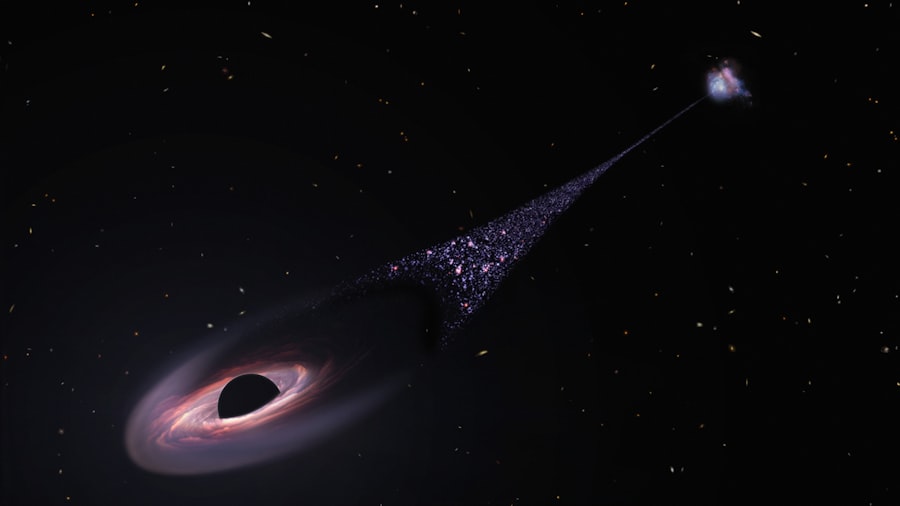
The Black Hole Information Paradox is more than just an abstract theoretical puzzle; its resolution has profound implications for our understanding of the fundamental laws of physics and the very nature of reality. The way we resolve this paradox will shape our worldview.
The Universality of Information Conservation
If information is indeed conserved during black hole evaporation, it would reinforce the universality of quantum mechanics and its principles. It would mean that no matter how extreme the gravitational environment, the fundamental laws of information processing remain intact. This would be a resounding victory for the elegance and consistency of quantum theory.
The Nature of Spacetime and Gravity
Conversely, if information is truly lost, it would necessitate a radical revision of either quantum mechanics or general relativity, or both. This could lead to a fundamentally different understanding of spacetime, gravity, and the ultimate fate of matter in the universe. It might imply that at the deepest level, the universe is not as deterministic or predictable as we currently believe.
The Search for a Unified Theory
The paradox acts as a powerful litmus test for any proposed theory of quantum gravity. A successful theory must be able to coherently explain what happens to information falling into a black hole. Therefore, the ongoing efforts to resolve the paradox are intrinsically linked to the pursuit of a grand unified theory of everything.
The Ongoing Quest: A Journey of Discovery

The Black Hole Information Paradox remains one of the most active and vibrant areas of research in theoretical physics. Physicists continue to explore new theoretical avenues, conduct thought experiments, and await potential observational data that could shed light on this cosmic enigma.
Experimental Signatures and Observational Clues
While directly observing the evaporation of a black hole is currently beyond our technological capabilities due to the immense timescales involved, indirect experimental signatures are being sought. Subtle gravitational waves, or the detection of exotic particles from the early universe, could potentially offer clues.
Gravitational Wave Observatories
Future generations of gravitational wave detectors, with their increased sensitivity, might be able to detect the faint whispers of evaporating black holes, providing crucial data to test theoretical models.
Cosmic Microwave Background Radiation
Studies of the cosmic microwave background radiation could reveal subtle imprints from the early universe, potentially related to the evaporation of primordial black holes.
Theoretical Developments and New Paradigms
The theoretical landscape is constantly evolving, with new ideas and refinements emerging regularly. The interplay between different theoretical frameworks, such as string theory and quantum information theory, is proving particularly fruitful.
Quantum Information Theory’s Role
Quantum information theory, which studies the principles of information processing in quantum systems, has become an indispensable tool in analyzing the information paradox. Its concepts, such as entanglement and quantum channels, provide a precise language to frame and address the problem.
Holography and Entanglement
The holographic principle and the AdS/CFT correspondence have underscored the profound connection between gravity and quantum entanglement. Understanding this relationship is proving crucial for unraveling the paradox.
The black hole information paradox has sparked intense debate among physicists, as it challenges our understanding of quantum mechanics and general relativity. A fascinating article that delves deeper into this topic can be found at My Cosmic Ventures, where the implications of this paradox are explored in relation to recent theories and discoveries. Understanding how information behaves in extreme gravitational fields could reshape our fundamental concepts of reality and the universe itself.
The Future of Understanding: Towards a Complete Picture
| Metric | Description | Value / Status |
|---|---|---|
| Black Hole Entropy | Measure of information content related to the event horizon area | Proportional to horizon area (Bekenstein-Hawking formula) |
| Hawking Radiation Temperature | Temperature of black hole radiation due to quantum effects | Inverse proportional to black hole mass |
| Information Loss Paradox | Conflict between quantum mechanics and general relativity about information preservation | Unresolved, subject of ongoing research |
| Page Time | Time at which half of the black hole’s entropy has been radiated away | Depends on black hole mass, typically very long for stellar mass black holes |
| Firewall Hypothesis | Proposed solution suggesting a high-energy zone at the event horizon | Controversial, no experimental evidence |
| AdS/CFT Correspondence | Theoretical framework suggesting information is preserved in a dual quantum field theory | Widely accepted in theoretical physics |
The resolution of the Black Hole Information Paradox promises to be a watershed moment in physics, akin to the discoveries that led to the development of relativity or quantum mechanics. It will undoubtedly deepen our understanding of the fundamental fabric of reality.
A New Window into Quantum Gravity
Unraveling this paradox will provide us with a clearer, more robust picture of quantum gravity, offering insights into phenomena that occur at the most extreme scales of energy and density. It will be like finally seeing the elaborate blueprint behind the universe’s grand architecture.
Reconciling Fundamental Theories
The ultimate goal is to reconcile the seemingly disparate realms of quantum mechanics and general relativity into a single, coherent framework. The information paradox serves as a crucial stepping stone on this path, pushing the boundaries of our intellectual reach.
The Enduring Mystery and the Human Drive for Knowledge
Even as we approach potential solutions, the black hole information paradox highlights the enduring mystery of the cosmos and the relentless human drive to understand it. It reminds us that the universe holds secrets far grander than we can currently imagine, and that the quest for knowledge is an endless, and ultimately rewarding, journey.
WATCH THIS 🔥 YOUR PAST STILL EXISTS — Physics Reveals the Shocking Truth About Time
FAQs
What is the black hole information paradox?
The black hole information paradox is a puzzle resulting from the conflict between quantum mechanics and general relativity. It questions whether information that falls into a black hole is permanently lost, which would violate the principle of quantum theory that information must be conserved.
Why does the black hole information paradox matter in physics?
The paradox is important because it challenges our understanding of fundamental physical laws. Resolving it could lead to a better theory that unifies quantum mechanics and gravity, potentially advancing our knowledge of the universe.
What role does Hawking radiation play in the paradox?
Hawking radiation is theoretical radiation emitted by black holes due to quantum effects near the event horizon. It suggests black holes can evaporate over time, raising the question of what happens to the information contained in the matter that formed the black hole.
Have scientists proposed any solutions to the black hole information paradox?
Yes, several solutions have been proposed, including the idea that information is encoded in Hawking radiation, the holographic principle suggesting information is stored on the black hole’s surface, and the concept of black hole complementarity. However, no consensus has been reached.
Is the black hole information paradox experimentally tested?
Currently, the paradox remains a theoretical problem because black holes are difficult to observe directly, and Hawking radiation has not yet been detected. Advances in observational technology and theoretical physics may provide more insights in the future.