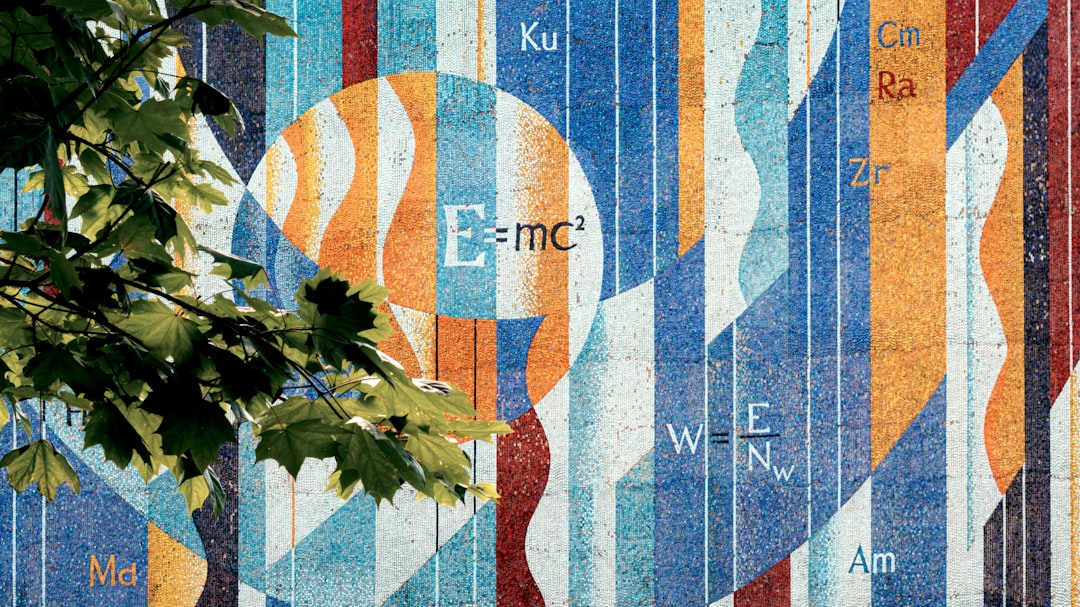
Albert Einstein’s theories of relativity, particularly special relativity and general relativity, fundamentally altered humanity’s understanding of space, time, gravity, and the universe itself. Prior to Einstein’s work, the Newtonian view of an absolute, unchanging time pervaded scientific thought. However, Einstein demonstrated that time is not a universal constant but an aspect of a unified spacetime fabric, susceptible to the influence of motion and gravity.
You can learn more about the block universe theory in this insightful video.
Before delving into Einstein’s revolutionary concepts, it is crucial to understand the prevailing scientific paradigm concerning time. For centuries, Isaac Newton’s mechanics provided the bedrock of physical understanding.
Newton’s Absolute Time
Newton conceived of time as flowing uniformly and independently of any external influences. He posited an “absolute, true, and mathematical time, of itself, and from its own nature flowing equably without relation to anything external.” This implied a universal cosmic clock, ticking at the same rate for everyone, everywhere.
The Role of Galilean Relativity
Galilean relativity, a precursor to Einstein’s work, established that the laws of mechanics are the same for all observers moving at a constant velocity relative to one another. While this concept dealt with frames of reference, it still operated under the assumption of absolute time. You, as the reader, might imagine two ships moving at different speeds on a calm sea; their internal physics would appear identical to observers on board, even though they are moving relative to each other. However, the ticking of a clock on one ship was presumed to be identical to the ticking of a clock on the other, and to a stationary observer on shore.
Einstein’s theory of relativity has profoundly changed our understanding of time and space, leading to fascinating discussions about the nature of time itself. For those interested in exploring this topic further, a related article can be found at My Cosmic Ventures, where the implications of relativity on our perception of time are examined in depth. This article delves into how time dilation and the curvature of spacetime affect our everyday experiences, making it a compelling read for anyone curious about the intersection of physics and the nature of reality.
Special Relativity and the Relativistic Nature of Time
Einstein’s special theory of relativity, published in 1905, challenged these deeply ingrained notions. It arose from two postulates: the principle of relativity (which extended Galilean relativity to all laws of physics, not just mechanics) and the constancy of the speed of light in vacuum for all inertial observers.
Time Dilation
One of the most counterintuitive and profound consequences of special relativity is time dilation. This phenomenon dictates that time passes more slowly for an object moving relative to an observer than for an object at rest relative to that observer.
The Light Clock Thought Experiment
To illustrate time dilation, consider the “light clock.” Imagine a clock consisting of two mirrors placed parallel to each other, with a pulse of light bouncing between them. Each bounce represents one “tick” of the clock.
- Stationary Observer: For an observer at rest relative to the light clock, the light pulse travels a vertical path directly between the mirrors.
- Moving Observer: For an observer watching a light clock moving horizontally, the light pulse must travel a longer, diagonal path to hit the mirrors. Since the speed of light is constant for all inertial observers, the light pulse in the moving clock takes longer to complete one bounce. Consequently, the moving clock ticks more slowly.
Therefore, for the observer watching the moving clock, time itself is passing more slowly for the moving frame of reference. This is not a trick of perception or a malfunction of the clock, but a fundamental characteristic of spacetime. You, the reader, should understand that this effect is reciprocal: from the perspective of an observer on the moving clock, the stationary observer’s clock would appear to run slow.
Length Contraction
Closely related to time dilation is length contraction. An object moving at a high velocity relative to an observer will appear shorter in the direction of its motion, as observed by that stationary observer. This interconnectedness of space and time is a cornerstone of special relativity. As you might envision, if time slows down, and light still needs to travel a certain “distance” within that slowed time, then the perceived distance must also change.
Simultaneity Is Relative
Special relativity also dismantled the concept of absolute simultaneity. Two events that appear simultaneous to one observer may not appear simultaneous to another observer moving at a different velocity.
The Train and Lightning Bolt Thought Experiment
Consider a long train moving at high speed. Lightning strikes the front and back of the train simultaneously from the perspective of an observer standing on the ground equidistant from the strike points. However, for an observer in the middle of the moving train, the light from the lightning strike at the front of the train will reach them slightly before the light from the strike at the back, because they are moving towards the front strike and away from the back strike. Thus, the events are not simultaneous for the train observer. This highlights that there is no universal “now” that applies to everyone equally.
General Relativity and the Curvature of Spacetime

Einstein’s general theory of relativity, introduced in 1915, extended the principles of special relativity to include gravity. It posited that gravity is not a force, as Newton had described, but a manifestation of the curvature of spacetime caused by mass and energy.
Gravitational Time Dilation
One of the profound implications of general relativity is gravitational time dilation. Time passes more slowly in stronger gravitational fields.
Clocks in a Gravitational Well
Imagine two clocks: one at sea level and another on top of a tall mountain. According to general relativity, the clock at sea level, being in a stronger gravitational field, will tick slightly slower than the clock on the mountain. While infinitesimally small for everyday scales, this effect is measurable and crucial for technologies like GPS. If you, the reader, consider the Earth to be a massive object, it creates a “dent” in spacetime. Clocks closer to the center of that dent experience time more slowly.
The Warping of Time Itself
General relativity paints a picture where mass and energy warp the fabric of spacetime, much like a bowling ball placed on a stretched rubber sheet creates a depression. This warping affects not only the paths of objects (which we perceive as gravity) but also the flow of time. Closer to a massive object, the “flow” of time is impeded.
Experimental Verification and Real-World Applications
The predictions of Einstein’s theories, particularly concerning time, have been rigorously tested and consistently confirmed by numerous experiments and observations.
Muon Decay
Muons are subatomic particles with a very short lifespan. When cosmic rays strike the Earth’s upper atmosphere, they produce muons that travel at relativistic speeds. If time dilation did not occur, very few muons would reach the Earth’s surface before decaying. However, a significantly larger number of muons are detected at the surface than would be expected by their proper lifetime, a direct consequence of their “clocks” running slower due to their high velocity.
Global Positioning System (GPS)
Perhaps the most ubiquitous practical application of relativistic time effects is the Global Positioning System (GPS). GPS satellites orbit the Earth at high altitudes (weaker gravitational field) and move at high speeds. Both special relativistic time dilation (due to velocity) and general relativistic time dilation (due to gravity) affect the clocks on these satellites.
- Special Relativity: The satellites’ high velocity causes their clocks to run slower.
- General Relativity: The satellites’ higher altitude places them in a weaker gravitational field, causing their clocks to run faster.
Without accounting for these relativistic effects, GPS systems would accumulate errors of several kilometers per day, rendering them useless for precise navigation. The engineers designing GPS had to integrate Einstein’s equations into their calculations, ensuring synchronization and accuracy. For you, the smartphone user, every time you pinpoint your location, you are implicitly relying on the validity of Einstein’s relativity.
Einstein’s theory of relativity has profoundly changed our understanding of time and space, revealing that time is not a constant but rather a variable that can be affected by speed and gravity. For those interested in exploring this concept further, a fascinating article can be found at this link, which delves into the implications of relativity on our perception of time and the universe. This exploration not only highlights the scientific principles behind Einstein’s theories but also invites readers to ponder the philosophical questions that arise from such groundbreaking ideas.
The Philosophical Implications of Relativistic Time
| Concept | Description | Key Metric/Formula | Units |
|---|---|---|---|
| Time Dilation (Special Relativity) | Time runs slower for an object moving at high velocity relative to a stationary observer. | Δt’ = Δt / √(1 – v²/c²) | Seconds (s) |
| Speed of Light (c) | Constant speed at which light travels in vacuum, fundamental to relativity. | c = 299,792,458 | meters per second (m/s) |
| Gravitational Time Dilation (General Relativity) | Time runs slower in stronger gravitational fields. | Δt’ = Δt √(1 – 2GM/rc²) | Seconds (s) |
| Mass-Energy Equivalence | Energy and mass are interchangeable, affecting time and space. | E = mc² | Joules (J) |
| Proper Time (τ) | Time interval measured by a clock moving with the object. | τ = ∫√(1 – v²/c²) dt | Seconds (s) |
Einstein’s theories not only reshaped physics but also sparked profound philosophical debates about the nature of reality, causality, and free will.
The Block Universe
One compelling philosophical interpretation arising from relativity is the “block universe” or “eternalism” concept. If all points in spacetime (past, present, and future) are equally real and merely “exist” within this four-dimensional block, then the common intuition of a flowing “now” that constantly moves from past to future is an illusion.
Implications for Causality
In a block universe, events are not truly “becoming” or “passing away” but are already etched into the fabric of spacetime. This raises questions about whether the future is predetermined and the nature of free will. If time is a dimension like space, then all moments simply are, and our perception of time passing is merely our journey through this fixed landscape. You, as an individual, might feel as if you are moving through time, but from the perspective of the block universe, your entire timeline is already laid out.
The End of Absolute Time
The most direct philosophical impact is the complete dismantling of Newton’s absolute time. The idea of a universal clock that governs all events throughout the cosmos is replaced by individual “proper times” specific to each observer’s frame of reference. This paradigm shift profoundly altered how scientists and philosophers conceptualized the very fabric of existence.
In conclusion, Albert Einstein’s theories of relativity irrevocably transformed the scientific understanding of time. From the counterintuitive effects of time dilation and length contraction in special relativity to the profound curvature of spacetime and gravitational time dilation in general relativity, his work revealed time not as an independent, absolute entity, but as an integral component of a dynamic, interconnected spacetime continuum. These concepts, initially challenging to intuition, have been repeatedly confirmed by empirical evidence and form the bedrock of modern physics and critical technologies. The reader should appreciate that our experience of time is not a universal constant but a relative journey through a flexible and interconnected universe.
FAQs
What is Einstein’s theory of relativity?
Einstein’s theory of relativity consists of two main parts: special relativity and general relativity. Special relativity, introduced in 1905, deals with the physics of objects moving at constant speeds close to the speed of light. General relativity, published in 1915, is a theory of gravitation that describes gravity as the curvature of spacetime caused by mass and energy.
How does Einstein’s relativity affect our understanding of time?
Einstein’s relativity shows that time is not absolute and can vary depending on the relative speed of observers (special relativity) and the presence of gravitational fields (general relativity). This means that time can pass at different rates for different observers, a phenomenon known as time dilation.
What is time dilation?
Time dilation is the effect predicted by Einstein’s relativity where time appears to pass slower for an object moving at high speeds relative to an observer or in a strong gravitational field compared to a stationary observer. This has been confirmed by experiments involving fast-moving particles and precise atomic clocks.
Can time travel be explained by Einstein’s theory of relativity?
While Einstein’s relativity allows for scenarios where time can pass differently for different observers, it does not provide a practical method for time travel into the past. Certain solutions to the equations of general relativity, like wormholes, suggest theoretical possibilities, but these remain speculative and unproven.
How does gravity influence time according to general relativity?
According to general relativity, gravity affects time by warping spacetime. Clocks closer to a massive object (stronger gravitational field) run slower compared to clocks farther away. This effect, called gravitational time dilation, has been experimentally verified, for example, by comparing clocks on Earth’s surface and in satellites.
Why is Einstein’s relativity important for modern technology?
Einstein’s relativity is crucial for technologies like the Global Positioning System (GPS). GPS satellites experience both special and general relativistic effects, and their onboard clocks must be adjusted to account for time dilation to provide accurate positioning data.
What experiments have confirmed Einstein’s theories about time?
Several experiments have confirmed Einstein’s predictions about time, including observations of time dilation in particles moving at high speeds in accelerators, precise atomic clock comparisons on airplanes and satellites, and measurements of gravitational time dilation near massive bodies like Earth.
Does Einstein’s relativity contradict classical physics?
Einstein’s relativity extends and refines classical physics rather than outright contradicting it. At everyday speeds and weak gravitational fields, relativistic effects are negligible, and classical Newtonian physics provides accurate descriptions. Relativity becomes essential when dealing with high speeds close to light or strong gravitational fields.