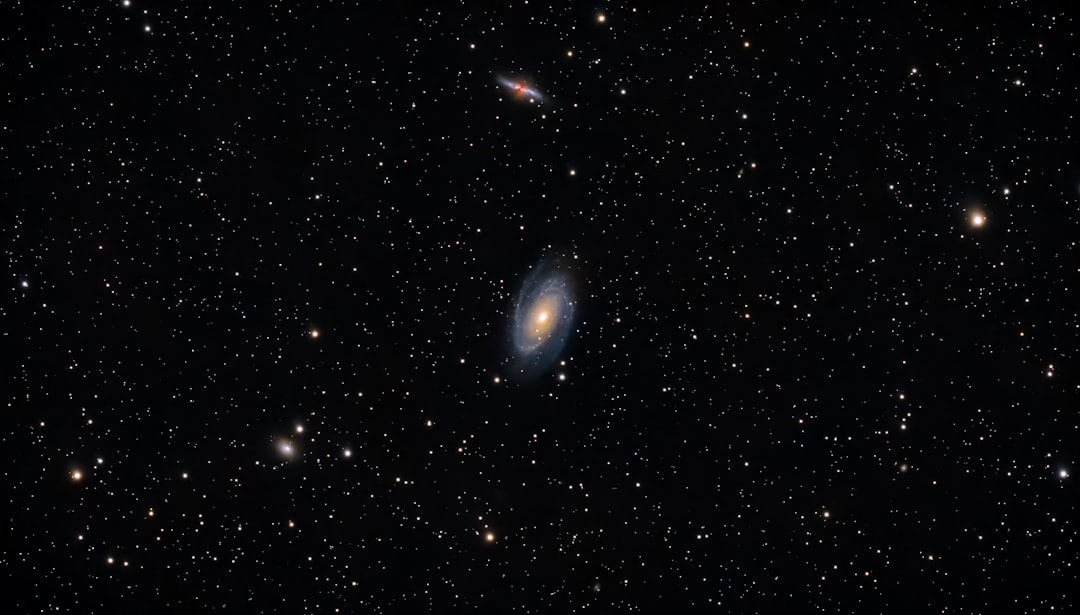
Cosmology, the study of the universe’s origin, evolution, and large-scale structure, has long captivated the human intellect. From ancient mythologies attempting to explain the cosmos to modern scientific inquiries leveraging advanced observational techniques, the pursuit of understanding our cosmic abode remains a cornerstone of scientific endeavor. This article delves into the current frontiers of cosmological research, examining the persistent enigmas and the ambitious undertakings designed to unravel them.
At the heart of modern cosmology lies the Lambda-cold dark matter ($\Lambda$CDM) model. This framework posits a universe composed of ordinary matter (baryons), cold dark matter, and a mysterious energy component known as dark energy, all operating within the confines of Einstein’s theory of general relativity. The $\Lambda$CDM model has been remarkably successful in explaining a wide array of cosmological observations, from the cosmic microwave background (CMB) radiation to the large-scale distribution of galaxies. You can learn more about the block universe theory by watching this insightful video.
Pillars of the $\Lambda$CDM Model
The $\Lambda$CDM model rests upon several key observational tenets, each providing crucial validation for its foundational assumptions.
Cosmic Microwave Background (CMB) Radiation
The CMB represents the earliest light detectable in the universe, emitted approximately 380,000 years after the Big Bang. Its uniform thermal spectrum and minute anisotropies provide a snapshot of the early universe, confirming its hot, dense state and offering precise measurements of cosmological parameters such as the age of the universe, its spatial curvature, and the initial distribution of matter fluctuations. The Planck satellite, among others, has meticulously mapped these tiny temperature variations, revealing a universe that is impressively flat and consistent with the $\Lambda$CDM paradigm.
Large-Scale Structure (LSS) Formation
The universe on vast scales is not a smooth, homogenous entity. Instead, it exhibits a hierarchical structure of galaxies clustered into groups, which are further organized into superclusters and filaments, interspersed with immense cosmic voids. The gravitational instability mechanism, where initial tiny density fluctuations are amplified over cosmic time, provides a robust explanation for this observed LSS. Dark matter, forming gravitational scaffolds, plays a crucial role in facilitating the growth of these structures, acting as the invisible architect of the cosmic web.
Type Ia Supernovae and Cosmic Expansion
Observations of distant Type Ia supernovae, which serve as “standard candles” due to their consistent intrinsic brightness, revealed in the late 1990s that the universe’s expansion is accelerating. This groundbreaking discovery necessitated the introduction of dark energy into the $\Lambda$CDM model, a repulsive force countering gravity’s attractive pull on cosmic scales. While its nature remains enigmatic, dark energy constitutes approximately 68% of the universe’s total energy density, fundamentally shaping its future evolution.
In the fascinating field of boundary conditions in cosmology, researchers explore how the initial conditions of the universe can influence its evolution and structure. A related article that delves deeper into this topic is available at My Cosmic Ventures, where various boundary conditions are discussed in the context of modern cosmological models. This resource provides valuable insights into how these conditions shape our understanding of the universe’s past and future.
Persistent Enigmas: Cracks in the Cosmic Foundation
Despite its impressive successes, the $\Lambda$CDM model is not without its challenges. Several observational puzzles and theoretical inconsistencies suggest that our understanding of the universe, while extensive, is incomplete. These persistent enigmas represent fertile ground for future cosmological research.
The Hubble Tension: A Tale of Two Universes
Perhaps one of the most pressing issues in cosmology today is the “Hubble tension.” This refers to the significant discrepancy between measurements of the Hubble constant ($H_0$), which quantifies the current rate of the universe’s expansion, derived from early universe observations (like the CMB) and those obtained from local universe measurements (like Type Ia supernovae).
Early Universe Measurements
CMB data, when extrapolated through the $\Lambda$CDM model, predict a lower value for $H_0$ (around 67 km/s/Mpc). This method relies on the cosmic sound horizon, a well-understood physical scale imprinted in the CMB, and the assumption that the $\Lambda$CDM model accurately describes the universe’s evolution from the Big Bang to the present.
Local Universe Measurements
On the other hand, direct measurements using the cosmic distance ladder, built upon Cepheid variable stars and Type Ia supernovae in the local universe, consistently yield a higher value for $H_0$ (around 73 km/s/Mpc). This method involves calibrating distances to progressively further objects, culminating in measurements of the expansion rate from distant supernovae.
The significant statistical difference between these two sets of measurements, now reaching 5-sigma significance, implies either a systematic error in one or both measurement techniques or, more profoundly, the need for new physics beyond the $\Lambda$CDM model. This tension, therefore, acts as a cosmic surveyor’s tape, highlighting inconsistencies in our current map of the universe.
The Nature of Dark Matter and Dark Energy
These two components, constituting approximately 95% of the universe’s energy density, remain largely unknown. Their existence is inferred from their gravitational effects, but their fundamental nature is yet to be elucidated.
The Search for Dark Matter Particles
Numerous experiments worldwide are dedicated to directly detecting dark matter particles, often hypothesized as Weakly Interacting Massive Particles (WIMPs). Underground laboratories shield detectors from cosmic rays, searching for faint signals from hypothetical dark matter interactions. Other approaches include indirect detection through the products of dark matter annihilation in space and collider searches for new particles produced in high-energy collisions. The elusive nature of dark matter continues to challenge physicists, hinting at a profound gap in the Standard Model of particle physics.
Unveiling the Essence of Dark Energy
Dark energy is even more mysterious than dark matter. The simplest explanation for dark energy is a cosmological constant (vacuum energy), as proposed by Einstein. However, theoretical calculations of vacuum energy from quantum field theory produce values vastly larger than what is observed, leading to the “cosmological constant problem.” Alternative models, such as quintessence or modified gravity theories, propose dynamical fields or alterations to general relativity to explain the accelerating expansion. Understanding dark energy is akin to understanding the ultimate fate of the universe, the grand conclusion of the cosmic narrative.
Frontiers of Observation: Peering Deeper into the Cosmos
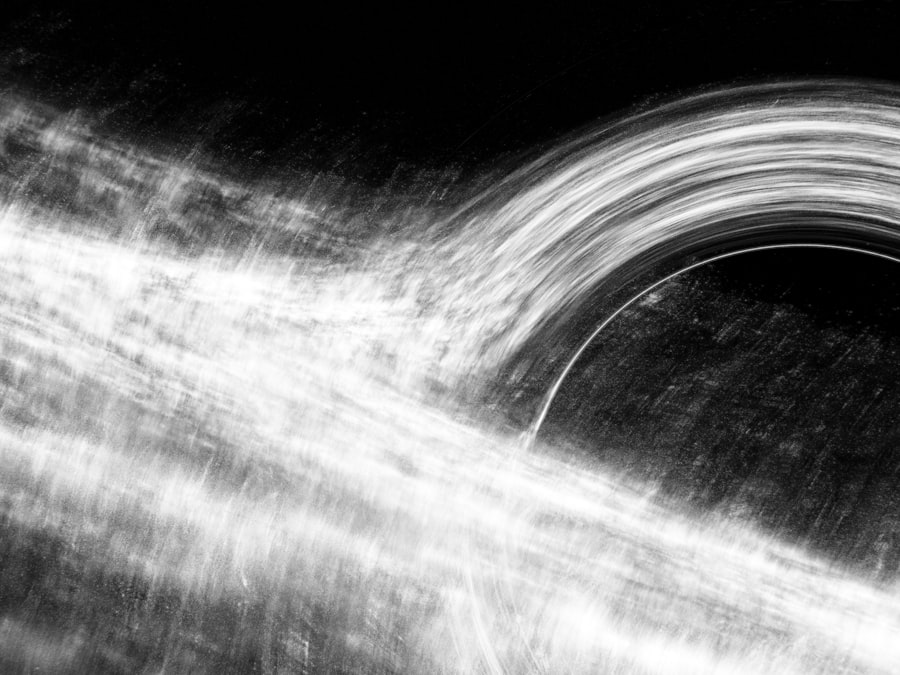
Technological advancements continue to push the boundaries of what is observable, allowing cosmologists to gather unprecedented amounts of data and probe the universe with increasing precision.
Gravitational Wave Astronomy: A New Cosmic Messenger
The detection of gravitational waves by the LIGO and Virgo collaborations has opened a new window onto the universe. These ripples in spacetime, generated by cataclysmic events like the merger of black holes and neutron stars, offer a unique perspective on cosmic phenomena that are invisible to electromagnetic telescopes.
Multi-messenger Astronomy
Gravitational wave detections, when combined with electromagnetic observations from events like neutron star mergers, inaugurate the era of multi-messenger astronomy. This synchronized approach allows for a more complete understanding of extreme astrophysical events and provides independent measurements of cosmological parameters, potentially offering new insights into the Hubble tension. Exploring the universe with gravitational waves is like adding a new sense to our observational toolkit, allowing us to “hear” the thunder of cosmic collisions.
Gravitational Wave Background
Future gravitational wave observatories, such as the Laser Interferometer Space Antenna (LISA), aim to detect a stochastic gravitational wave background, a relic from the very early universe, similar to the CMB. This fossil radiation could reveal information about the inflationary epoch, phase transitions in the early universe, or even the existence of cosmic strings, offering a probe into physics at energy scales far beyond what terrestrial accelerators can achieve.
High-Resolution Galaxy Surveys: Mapping the Cosmic Web
Dedicated galaxy surveys are charting the distribution of matter in the universe with unprecedented detail, providing crucial data for constraining cosmological parameters and testing theoretical models.
Baryon Acoustic Oscillations (BAO)
Galaxy surveys enable cosmologists to precisely measure the characteristic scale of Baryon Acoustic Oscillations (BAO). These are relic imprints of sound waves that propagated through the early universe, providing a “standard ruler” for measuring cosmic distances. By comparing the observed scale of BAO in different epochs to theoretical predictions, researchers can trace the expansion history of the universe and constrain models of dark energy. Instruments like the Dark Energy Spectroscopic Instrument (DESI) are mapping millions of galaxies and quasars to unlock these secrets.
Weak Lensing
Weak gravitational lensing, the subtle distortion of distant galaxy shapes by intervening matter, provides a direct probe of the distribution of dark matter. By statistically analyzing the coherent distortions of background galaxies, cosmologists can reconstruct maps of the dark matter halos that surround galaxies and clusters, offering insights into the growth of structure and the properties of dark matter. The Euclid mission, for example, is specifically designed to conduct extensive weak lensing surveys.
Theoretical Horizons: Beyond $\Lambda$CDM
While $\Lambda$CDM remains the cornerstone, theoretical physicists continue to explore alternative or extended models that could address the current challenges and provide a more complete picture of the cosmos.
Modified Gravity Theories: Rewriting Einstein’s Legacy
Instead of introducing new dark components, some theories propose modifications to Einstein’s theory of general relativity on cosmic scales. These “modified gravity” models aim to reproduce cosmological observations without invoking dark energy or, in some cases, even dark matter.
f(R) Gravity and Beyond
One class of modified gravity theories involves replacing the Ricci scalar $R$ in the Einstein-Hilbert action with a more general function $f(R)$. These theories can mimic the effects of dark energy and, under certain conditions, even influence structure formation. However, they face stringent observational constraints from laboratory experiments and solar system tests of gravity. Exploring such modifications is like challenging the very rules of the cosmic game, seeking a simpler underlying logic.
Emergent Gravity and Other Paradigms
More radical proposals include emergent gravity, which views gravity not as a fundamental force but as an emergent phenomenon arising from the microscopic degrees of freedom of spacetime. Other theories explore extra dimensions, holographic principles, or discrete spacetime structures. While currently highly speculative, these theoretical ventures represent the leading edge of conceptual cosmological thought, pushing the boundaries of what is conceivable.
The Multiverse Hypothesis: A Landscape of Possibilities
The idea of a multiverse, an ensemble of multiple universes, has gained traction in certain cosmological circles, particularly in the context of inflationary cosmology and string theory.
Eternal Inflation
Eternal inflation, a scenario arising from certain inflationary models, suggests that inflation, once it begins, continues indefinitely in some regions, spawning an infinite number of “pocket universes,” each potentially with different physical laws and cosmological parameters. In this grand tapestry, our observable universe would be just one thread.
String Theory and the Landscape
Within string theory, the “landscape” refers to the vast number of possible vacuum states, each corresponding to a different set of physical laws and fundamental constants. If these vacua are realized in different regions of a multiverse, then the observed values of our universe’s parameters, such as the cosmological constant, might be explained by anthropic selection – that is, we observe these particular values because they are conducive to the existence of life. The multiverse hypothesis, though untestable in a direct sense, offers a conceptual framework for addressing seemingly fine-tuned parameters in our universe, like a vast cosmic lottery.
In the fascinating realm of boundary conditions in cosmology, researchers are continually exploring how these conditions influence the evolution of the universe. A related article that delves deeper into this topic can be found on My Cosmic Ventures, where it discusses the implications of various boundary conditions on cosmic inflation and structure formation. For those interested in expanding their understanding of this complex subject, you can read more about it in this insightful piece here.
Conclusion
| Boundary Condition | Description | Cosmological Model | Implications | Key References |
|---|---|---|---|---|
| Hartle-Hawking No-Boundary Proposal | Universe has no initial boundary in time; smooth, finite geometry | Quantum Cosmology, Inflationary Models | Predicts a finite, self-contained universe; initial conditions for inflation | Hartle & Hawking (1983) |
| Tunneling Boundary Condition | Universe nucleates via quantum tunneling from “nothing” | Quantum Cosmology | Provides initial conditions favoring inflationary expansion | Vilenkin (1984) |
| Dirichlet Boundary Condition | Fixes the metric or fields at the boundary | Classical and Quantum Gravity | Used in path integral formulations and holography | York (1972), Gibbons & Hawking (1977) |
| Neumann Boundary Condition | Fixes the derivative of the metric or fields at the boundary | Quantum Gravity, AdS/CFT Correspondence | Alternative to Dirichlet; affects holographic dual theories | Compère & Marolf (2008) |
| Asymptotic Boundary Conditions | Conditions imposed at spatial or null infinity | Inflationary Cosmology, de Sitter Space | Determines vacuum states and perturbation spectra | Bunch & Davies (1978) |
The exploration of cosmological boundaries is an ongoing journey of discovery, punctuated by both astounding successes and persistent mysteries. The $\Lambda$CDM model provides a robust framework, yet the Hubble tension and the elusive nature of dark matter and dark energy demand further scrutiny and potentially new physics. As observational technologies continue to advance, opening new windows like gravitational wave astronomy and high-resolution galaxy surveys, and as theoretical models dare to venture beyond established paradigms, our understanding of the universe will undoubtedly deepen. The cosmos remains a boundless frontier, inviting humanity’s insatiable curiosity to continue navigating its vast and enigmatic expanse.
FAQs
What are boundary conditions in cosmology?
Boundary conditions in cosmology refer to the constraints or initial settings applied to the equations that describe the universe’s structure and evolution. They help determine the behavior of cosmological models at the edges or limits of the system being studied, such as the early universe or spatial boundaries.
Why are boundary conditions important in cosmological models?
Boundary conditions are crucial because they influence the solutions to Einstein’s field equations and other fundamental equations in cosmology. They help define the initial state of the universe, affect predictions about its evolution, and ensure that models are physically meaningful and mathematically consistent.
What types of boundary conditions are commonly used in cosmology?
Common types include initial conditions (specifying the state of the universe at the Big Bang), spatial boundary conditions (such as assuming the universe is infinite or has a closed geometry), and conditions at infinity (used in models considering asymptotic behavior). Examples include the Hartle-Hawking no-boundary proposal and the tunneling proposal.
What is the Hartle-Hawking no-boundary proposal?
The Hartle-Hawking no-boundary proposal is a hypothesis suggesting that the universe has no initial boundary in time or space. Instead, the universe is finite but unbounded, similar to the surface of a sphere, which removes the need for specifying initial conditions at a singular point.
How do boundary conditions affect the predictions of the Big Bang theory?
Boundary conditions determine the initial density, temperature, and expansion rate of the universe, which influence the formation of cosmic structures, the cosmic microwave background radiation, and the overall dynamics of cosmic expansion. Different boundary conditions can lead to varying scenarios for the universe’s origin and fate.
Can boundary conditions in cosmology be tested or observed?
While boundary conditions themselves are theoretical constructs, their implications can be tested indirectly through observations such as the cosmic microwave background radiation, large-scale structure surveys, and measurements of cosmic expansion. These observations help constrain viable boundary conditions and cosmological models.
Do boundary conditions relate to the concept of the multiverse?
Yes, some cosmological theories involving boundary conditions suggest the existence of multiple universes or a multiverse. Different boundary conditions could lead to different universes with varying physical laws and constants, as proposed in some inflationary and quantum cosmology models.
How do quantum cosmology and boundary conditions interact?
In quantum cosmology, boundary conditions are applied to the wave function of the universe, which describes its quantum state. These conditions influence the probability amplitudes for different possible universes and their properties, playing a key role in understanding the universe’s origin from a quantum perspective.