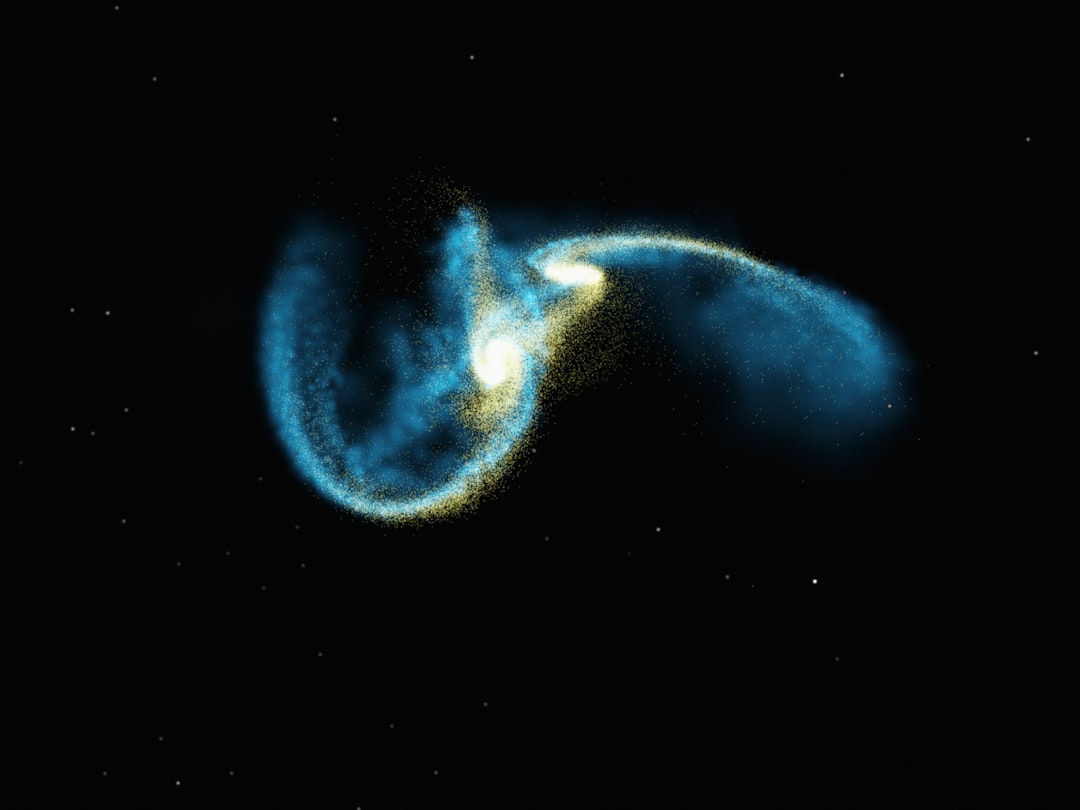
The accelerating expansion of the universe is a significant astronomical phenomenon in which the universe’s expansion rate increases over time. Observations made in the late 1990s, primarily through studies of distant supernovae, provided evidence that the universe’s expansion is accelerating rather than decelerating as previously expected. This discovery contradicts classical gravitational theory and has led scientists to propose the existence of dark energy, a hypothetical form of energy that comprises approximately 68% of the universe’s total mass-energy content.
The implications of cosmic acceleration are substantial for cosmology and physics. It suggests that the universe will continue expanding indefinitely, eventually reaching a state of extreme dilution. This finding has prompted extensive research into the nature of dark energy and its role in cosmic evolution.
Scientists continue to investigate whether dark energy is a fundamental property of spacetime, as proposed by Einstein’s cosmological constant, or whether it represents an entirely new form of matter or force. Understanding cosmic acceleration requires examination of the observational evidence, theoretical models, and historical development of this field. Key evidence includes measurements from Type Ia supernovae, cosmic microwave background radiation data, and large-scale structure observations.
These multiple lines of evidence have established cosmic acceleration as a well-supported aspect of modern cosmology, fundamentally altering our comprehension of the universe’s composition, structure, and ultimate fate.
Key Takeaways
- Cosmic acceleration refers to the increasing rate at which the universe is expanding, driven largely by dark energy.
- Observational evidence, such as supernova measurements, supports the existence of cosmic acceleration.
- Dark energy is the leading explanation for cosmic acceleration, though alternative theories also exist.
- Measuring the expansion rate precisely is crucial for understanding the universe’s fate and its connection to the Big Bang.
- Current research focuses on resolving theoretical challenges and exploring practical applications in astrophysics and cosmology.
Historical Background of Cosmic Expansion Theories
To fully grasp the significance of cosmic acceleration, it is essential to explore the historical background of cosmic expansion theories. The journey begins in the early 20th century when Albert Einstein introduced his theory of general relativity, which fundamentally changed our understanding of gravity. Initially, Einstein believed in a static universe and introduced a cosmological constant to maintain this view.
However, his perspective shifted dramatically when Edwin Hubble’s observations in 1929 revealed that galaxies were moving away from us, leading to the formulation of Hubble’s Law.
As you trace the evolution of these ideas, you will find that the concept of an expanding universe gained traction throughout the mid-20th century.
The Big Bang theory emerged as a leading explanation for the origin of the universe, positing that it began as a singularity and has been expanding ever since. However, it wasn’t until the late 1990s that scientists discovered evidence for cosmic acceleration through observations of distant supernovae. This groundbreaking finding led to a paradigm shift in cosmology, as researchers began to grapple with the implications of an accelerating universe and what it meant for our understanding of fundamental forces. The holographic principle is a fascinating concept in theoretical physics that suggests our universe can be described as a two-dimensional information structure.
Observational Evidence for Cosmic Acceleration
The observational evidence supporting cosmic acceleration is both compelling and multifaceted. One of the most significant pieces of evidence comes from Type Ia supernovae, which serve as standard candles for measuring astronomical distances. In 1998, two independent research teams—the Supernova Cosmology Project and the High-Z Supernova Search Team—analyzed light from these supernovae and found that they were dimmer than expected based on a decelerating universe model.
This unexpected dimness indicated that these supernovae were farther away than previously thought, suggesting that the expansion of the universe was accelerating. In addition to supernovae observations, you will find that measurements of cosmic microwave background radiation (CMB) provide further support for cosmic acceleration. The CMB is a remnant from the early universe, and its uniformity and slight fluctuations offer insights into the universe’s composition and evolution.
Data from missions like NASA’s Wilkinson Microwave Anisotropy Probe (WMAP) and the European Space Agency’s Planck satellite have confirmed that a significant portion of the universe’s energy density is attributed to dark energy, which plays a crucial role in driving cosmic acceleration.
The Role of Dark Energy in Cosmic Acceleration
Dark energy is a mysterious force that has emerged as a central player in our understanding of cosmic acceleration. Comprising approximately 68% of the universe’s total energy density, dark energy acts as a repulsive force counteracting gravity on cosmic scales. While its exact nature remains elusive, its effects are evident in the accelerated expansion of the universe.
As you explore this concept further, you will discover that dark energy is often associated with Einstein’s cosmological constant, which he initially introduced to maintain a static universe. However, dark energy is not limited to this interpretation alone. Some theories propose that it could be a dynamic field that evolves over time, while others suggest modifications to general relativity itself.
Regardless of its nature, dark energy poses significant challenges for physicists and cosmologists alike. Understanding its properties and behavior is crucial for unraveling the mysteries surrounding cosmic acceleration and its implications for the fate of the universe.
Alternative Theories to Explain Cosmic Acceleration
| Metric | Value | Units | Description | Source/Method |
|---|---|---|---|---|
| Hubble Constant (H₀) | 67.4 ± 0.5 | km/s/Mpc | Current expansion rate of the universe | Planck Satellite (CMB measurements) |
| Hubble Constant (H₀) | 73.2 ± 1.3 | km/s/Mpc | Current expansion rate of the universe | Type Ia Supernovae and Cepheid variables |
| Deceleration Parameter (q₀) | -0.55 ± 0.05 | Dimensionless | Indicates acceleration (negative value means acceleration) | Supernovae Type Ia observations |
| Dark Energy Density (Ω_Λ) | 0.69 ± 0.02 | Fraction of critical density | Energy density driving cosmic acceleration | Planck Satellite + BAO + Supernovae |
| Age of the Universe | 13.8 ± 0.02 | billion years | Time since the Big Bang | Planck Satellite (CMB data) |
While dark energy remains the leading explanation for cosmic acceleration, alternative theories have emerged that seek to explain this phenomenon without invoking this enigmatic force. One such theory is modified gravity, which suggests that our understanding of gravity may need revision on cosmological scales. These modifications could account for the observed acceleration without requiring dark energy as an explanation.
Another alternative involves considering additional dimensions beyond our familiar three-dimensional space. Some theories propose that our universe may exist within a higher-dimensional framework where gravitational effects can differ from those predicted by general relativity. These ideas challenge conventional thinking and open up new avenues for exploration in theoretical physics.
As you engage with these alternative theories, you will appreciate how they reflect humanity’s relentless quest for knowledge and understanding in an ever-expanding universe.
Measuring the Cosmic Expansion Rate
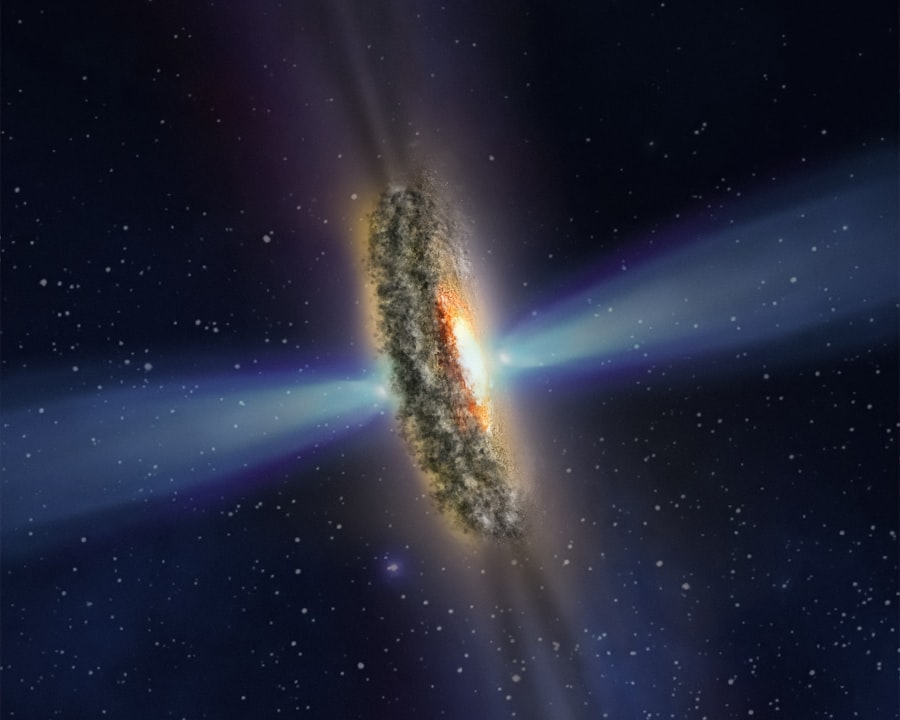
Measuring the cosmic expansion rate is a complex endeavor that requires sophisticated techniques and instruments. One primary method involves observing distant galaxies and their redshifts—an effect caused by their motion away from us due to the expansion of space. By analyzing these redshifts in conjunction with distance measurements from standard candles like supernovae, astronomers can calculate the rate at which the universe is expanding.
Another approach involves studying baryon acoustic oscillations (BAO), which are regular patterns in the distribution of galaxies resulting from sound waves in the early universe. By measuring these oscillations, researchers can gain insights into cosmic expansion over time. As you consider these methods, you will recognize that advancements in technology and observational techniques continue to refine our measurements and enhance our understanding of cosmic expansion.
Implications of Cosmic Acceleration for the Fate of the Universe
The implications of cosmic acceleration extend far beyond mere curiosity; they fundamentally shape our understanding of the universe’s fate. If cosmic acceleration continues indefinitely, it suggests a future where galaxies drift apart at an ever-increasing rate, leading to a “Big Freeze” scenario where stars exhaust their nuclear fuel and galaxies become isolated in an increasingly dark cosmos. This vision contrasts sharply with earlier models predicting a potential “Big Crunch,” where gravitational forces would eventually halt expansion and reverse it.
As you contemplate these possibilities, you will find that cosmic acceleration raises profound philosophical questions about existence itself. What does it mean for humanity if we are destined to live in an isolated universe? How does this knowledge influence our understanding of time and space?
These questions invite reflection on our place within an ever-expanding cosmos and challenge us to consider what lies beyond our current understanding.
Current Research and Future Directions in Understanding Cosmic Acceleration
Current research into cosmic acceleration is vibrant and multifaceted, with scientists employing various approaches to deepen their understanding of this phenomenon. Ongoing observational programs aim to refine measurements of cosmic expansion through advanced telescopes and satellite missions. Projects like the Vera Rubin Observatory are set to revolutionize our ability to map galaxies and measure their distances with unprecedented precision.
In addition to observational efforts, theoretical research continues to explore alternative models and frameworks that could explain cosmic acceleration without relying solely on dark energy. As you engage with this evolving landscape, you will appreciate how interdisciplinary collaboration among physicists, astronomers, and cosmologists is essential for unraveling one of science’s most profound mysteries.
The Connection between Cosmic Acceleration and the Big Bang Theory
The connection between cosmic acceleration and the Big Bang theory is both intricate and significant. The Big Bang theory posits that our universe began as an incredibly hot and dense state approximately 13.8 billion years ago before expanding rapidly—a process known as inflation. This initial expansion laid the groundwork for subsequent cosmic evolution.
As you explore this relationship further, you will find that cosmic acceleration serves as a bridge between early universe conditions and present-day observations. The accelerated expansion we observe today can be traced back to events occurring shortly after the Big Bang, highlighting how interconnected these concepts are within cosmology. Understanding this connection not only enriches your knowledge but also emphasizes how scientific inquiry often leads to new insights across seemingly disparate domains.
Theoretical Challenges in Explaining Cosmic Acceleration
Despite significant progress in understanding cosmic acceleration, numerous theoretical challenges remain unresolved. One major hurdle lies in reconciling dark energy with quantum mechanics—a task that has proven elusive for physicists seeking a unified theory of fundamental forces. The nature of dark energy itself raises questions about its origin and behavior over time.
Moreover, alternative theories often face scrutiny regarding their compatibility with existing observational data. As you engage with these challenges, you will recognize that they reflect broader issues within theoretical physics—issues that require innovative thinking and collaboration across disciplines to address effectively.
Practical Applications of Understanding Cosmic Acceleration for Astrophysics and Cosmology
Understanding cosmic acceleration has practical applications beyond theoretical exploration; it informs various fields within astrophysics and cosmology. For instance, insights gained from studying cosmic expansion can enhance our knowledge of galaxy formation and evolution, shedding light on how structures in the universe develop over time. Additionally, advancements in measuring cosmic expansion rates can improve our understanding of fundamental physical constants—parameters critical for various scientific endeavors ranging from particle physics to cosmological simulations.
As you consider these applications, you will appreciate how unraveling one mystery often leads to new questions and discoveries across multiple domains within science. In conclusion, your journey through cosmic acceleration reveals a tapestry woven from historical insights, observational evidence, theoretical explorations, and practical applications. As humanity continues its quest for knowledge about the cosmos, each discovery brings us closer to understanding not only our place within it but also the very fabric of reality itself.
Recent studies on cosmic acceleration have sparked significant interest in understanding the expansion rate of the universe.