Chemical propulsion systems have long served as the foundation of space exploration. However, these systems present notable constraints. Chemical rockets are limited in the velocities they can achieve, restrict the amount of payload that can be transported, and extend the duration of missions.
The energy requirements for launching spacecraft into orbit are substantial, resulting in considerable costs and lengthy mission timelines. Current rocket technology can only reach a fraction of the speeds required to travel to distant celestial bodies in practical timeframes. Traditional space exploration also demands extensive supporting infrastructure.
Launch facilities, ground control centers, and the logistics of transporting materials to and from space significantly increase mission complexity and expense. As exploration objectives extend beyond our solar system, these limitations become increasingly problematic for advancing human knowledge and scientific discovery. Developing innovative propulsion and operational methods is essential to overcome these constraints and expand the scope of space exploration.
Explore the future of space travel with
Understanding how laser propulsion works is key to appreciating the potential of laser-driven micro-spacecraft. At its core, laser propulsion involves directing powerful beams of light toward a spacecraft equipped with a specialized sail or reflective surface. When the laser light strikes this surface, it transfers momentum to the spacecraft, effectively pushing it forward.
This method allows for continuous acceleration over long distances, enabling spacecraft to reach speeds that traditional chemical rockets could only dream of achieving. You might find it fascinating that this technology is not entirely new; researchers have been exploring laser propulsion concepts for decades. However, advancements in laser technology and materials science have made it possible to develop practical applications for space exploration.
By utilizing ground-based or orbital laser arrays, we can generate the immense energy needed to propel these micro-spacecraft at extraordinary velocities. As you consider the implications of this technology, it becomes clear that laser propulsion could redefine our understanding of space travel.
Advantages of Laser-Driven Micro-Spacecraft
The advantages of laser-driven micro-spacecraft are manifold and compelling. One of the most significant benefits is their ability to achieve high speeds with minimal fuel consumption. Unlike traditional spacecraft that rely on finite fuel supplies, laser-driven micro-spacecraft can be propelled continuously as long as they remain within the reach of a laser beam.
This capability not only extends mission durations but also allows for more ambitious exploration targets, such as distant exoplanets or even neighboring star systems. Additionally, the reduced size and weight of these micro-spacecraft translate into lower launch costs and simplified logistics. You may appreciate that launching a fleet of small probes is far more economical than sending a single large spacecraft into orbit.
This cost-effectiveness opens up opportunities for more frequent missions and broader scientific inquiries. Furthermore, the potential for swarm technology—where multiple micro-spacecraft work collaboratively—could enhance data collection and provide a more comprehensive understanding of celestial phenomena.
Potential Applications for Laser-Driven Micro-Spacecraft
| Metric | Value | Unit | Description |
|---|---|---|---|
| Spacecraft Mass | 10 | grams | Typical mass of a laser-driven micro-spacecraft (e.g., wafer-scale spacecraft) |
| Laser Power | 100 | GW (gigawatts) | Peak power of ground-based laser array used for propulsion |
| Acceleration | 10,000 | m/s² | Typical acceleration achieved by laser-driven micro-spacecraft |
| Velocity after acceleration phase | 0.2 | c (speed of light fraction) | Final velocity reached by the spacecraft after laser propulsion |
| Distance of acceleration | 100,000 | km | Distance over which the laser beam accelerates the spacecraft |
| Mission Duration to Alpha Centauri | 20 | years | Estimated travel time to the nearest star system at 0.2c |
| Payload Size | cm-scale | centimeters | Typical size of instruments and sensors onboard |
| Laser Beam Diameter | 10 | meters | Diameter of the laser beam used for propulsion |
| Reflector Diameter | 4 | meters | Diameter of the light sail or reflector on the spacecraft |
The potential applications for laser-driven micro-spacecraft are as diverse as they are exciting. One prominent application lies in planetary exploration. Imagine deploying a swarm of micro-spacecraft to Mars or Venus, each equipped with sensors to gather atmospheric data or analyze surface compositions.
The ability to cover vast areas quickly would yield invaluable insights into these planets’ geology and climate. Beyond our solar system, you might envision these micro-spacecraft venturing toward nearby stars to study exoplanets in their habitable zones. With their high-speed capabilities, they could reach these distant worlds within a human lifetime, providing data that could inform our understanding of potential life beyond Earth.
Additionally, laser-driven micro-spacecraft could play a crucial role in monitoring space debris or conducting surveys of asteroids for resource extraction—an endeavor that could reshape our approach to resource utilization in space.
Overcoming Challenges in Laser-Driven Space Exploration
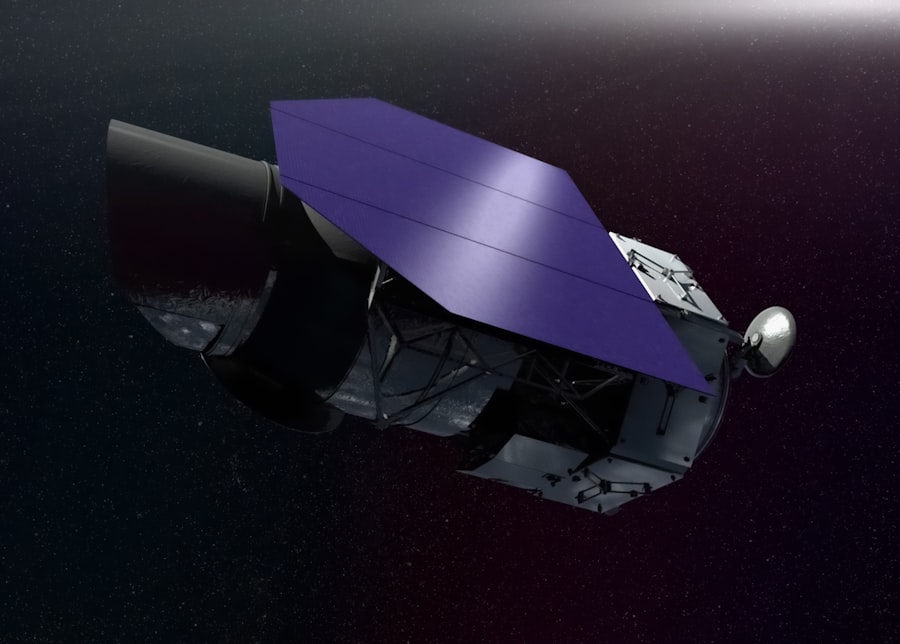
While the promise of laser-driven micro-spacecraft is enticing, several challenges must be addressed before this technology can be fully realized. One significant hurdle is the development of powerful and precise laser systems capable of maintaining focus over vast distances. As you consider the vastness of space, it becomes clear that even minor deviations in laser alignment could result in missed targets or inefficient propulsion.
Another challenge lies in ensuring that these micro-spacecraft can withstand the harsh conditions of space travel. You may wonder how engineers will design materials that can endure extreme temperatures, radiation exposure, and micrometeoroid impacts while remaining lightweight and efficient. Addressing these engineering challenges will be crucial in making laser-driven micro-spacecraft a practical reality.
The Future of Laser-Driven Micro-Spacecraft
Looking ahead, the future of laser-driven micro-spacecraft appears promising yet requires continued research and development. As advancements in laser technology progress, you can expect to see prototypes being tested in various environments—both on Earth and in space. These tests will provide valuable data on performance and durability, paving the way for more ambitious missions.
Moreover, as you consider the collaborative nature of modern science, it’s likely that partnerships between universities, private companies, and government agencies will play a pivotal role in advancing this technology. By pooling resources and expertise, stakeholders can accelerate innovation and bring laser-driven micro-spacecraft closer to operational status.
Collaborations and Partnerships in Laser-Driven Space Exploration
The journey toward realizing laser-driven micro-spacecraft will undoubtedly benefit from collaborations across various sectors. You may find it inspiring that universities are already engaging in research initiatives focused on laser propulsion technologies. These academic institutions often partner with private aerospace companies to develop cutting-edge solutions that can be applied to real-world challenges.
Government agencies also play a crucial role in fostering innovation through funding and support for research projects related to laser propulsion. As you reflect on these partnerships, consider how they can create a synergistic environment where ideas flourish and breakthroughs occur more rapidly than they would in isolation.
Ethical and Environmental Considerations
As with any emerging technology, ethical and environmental considerations must be at the forefront of discussions surrounding laser-driven micro-spacecraft. You may ponder the implications of deploying swarms of tiny spacecraft into space—what happens if they malfunction or collide with other objects? The potential for creating additional space debris is a concern that cannot be overlooked.
Furthermore, as humanity ventures deeper into space exploration, ethical questions arise regarding our responsibilities toward other celestial bodies and potential extraterrestrial life forms. You might consider how we can ensure that our exploration efforts do not disrupt existing ecosystems or contaminate pristine environments. Engaging in thoughtful dialogue about these issues will be essential as we navigate the complexities of expanding our presence beyond Earth.
The Role of Governments and Space Agencies in Laser-Driven Space Exploration
Governments and space agencies will play a pivotal role in shaping the future of laser-driven space exploration. As you contemplate their involvement, consider how funding initiatives can drive research and development efforts forward. By allocating resources toward innovative technologies like laser propulsion, governments can help pave the way for groundbreaking discoveries that benefit humanity as a whole.
Additionally, international collaboration will be crucial in establishing guidelines and regulations governing the use of laser-driven micro-spacecraft. You may envision a future where countries work together to share knowledge and expertise while addressing common challenges related to space exploration. This cooperative approach will foster an environment where innovation thrives while ensuring responsible stewardship of our shared cosmic heritage.
The Impact of Laser-Driven Micro-Spacecraft on the Future of Space Exploration
In conclusion, the advent of laser-driven micro-spacecraft has the potential to revolutionize space exploration as we know it. As you reflect on this transformative technology, consider how it could expand our reach into the cosmos while providing new insights into our universe’s mysteries. The ability to deploy fleets of tiny probes capable of high-speed travel opens up possibilities previously confined to science fiction.
As we stand on the brink of this new era in space exploration, your imagination may run wild with visions of what lies ahead—missions to distant worlds, discoveries beyond our wildest dreams, and perhaps even encounters with extraterrestrial life forms. The journey toward realizing these possibilities will require collaboration, innovation, and ethical considerations as we navigate uncharted territories together. Ultimately, laser-driven micro-spacecraft could redefine humanity’s relationship with space and inspire generations to come in their quest for knowledge and discovery beyond our home planet.
Recent advancements in laser-driven micro-spacecraft technology have opened new frontiers in space exploration. For a deeper understanding of this innovative approach, you can read more about it in the article available at My Cosmic Ventures. This resource provides insights into the potential applications and future developments of micro-spacecraft powered by laser propulsion systems.
WATCH THIS! 🚀✨ Can Laser Sails Take Us to Alpha Centauri in 20 Years?
FAQs
What is a laser-driven micro-spacecraft?
A laser-driven micro-spacecraft is a small, lightweight spacecraft propelled by the pressure of laser light. Instead of traditional chemical rockets, it uses powerful ground-based lasers to push a reflective sail attached to the spacecraft, enabling high-speed travel through space.
How does laser propulsion work for micro-spacecraft?
Laser propulsion works by directing a high-intensity laser beam at a light sail on the micro-spacecraft. The photons from the laser exert radiation pressure on the sail, generating thrust without the need for onboard fuel. This method allows the spacecraft to accelerate to significant fractions of the speed of light.
What are the advantages of laser-driven micro-spacecraft?
Advantages include extremely high acceleration, reduced spacecraft mass since no onboard propellant is needed, and the potential for rapid interstellar travel. Additionally, laser propulsion can enable missions that are otherwise impossible with conventional propulsion methods.
What are the main challenges in developing laser-driven micro-spacecraft?
Key challenges include developing powerful and precise laser systems, creating durable and lightweight sails that can withstand intense laser radiation, maintaining beam focus over vast distances, and ensuring communication and navigation for the tiny spacecraft.
What materials are used for the sails in laser-driven micro-spacecraft?
Sails are typically made from ultra-thin, lightweight, and highly reflective materials such as graphene, metamaterials, or specialized polymers coated with reflective metals like aluminum or silver to maximize reflectivity and minimize absorption.
What potential missions could laser-driven micro-spacecraft undertake?
Potential missions include interstellar exploration, such as sending probes to nearby star systems like Alpha Centauri, rapid reconnaissance of distant solar system objects, and scientific experiments in deep space that require high-speed travel.
How fast can laser-driven micro-spacecraft travel?
Theoretically, laser-driven micro-spacecraft can reach speeds up to 20% of the speed of light or more, depending on laser power and sail design. This speed would allow travel to nearby stars within decades rather than millennia.
Are there any current projects or experiments involving laser-driven micro-spacecraft?
Yes, projects like Breakthrough Starshot aim to develop and test laser-driven micro-spacecraft technology to send probes to the Alpha Centauri star system. Various research institutions and space agencies are also exploring related technologies.
What is the role of ground-based lasers in this technology?
Ground-based lasers provide the energy needed to propel the micro-spacecraft by emitting focused, high-power laser beams directed at the spacecraft’s sail. These lasers must be extremely powerful and precisely aimed to maintain acceleration over long distances.
How is communication maintained with such small and fast spacecraft?
Communication is a significant challenge due to the spacecraft’s small size and high speed. Solutions include using miniaturized onboard transmitters, laser communication systems, and relay stations, but this remains an active area of research.