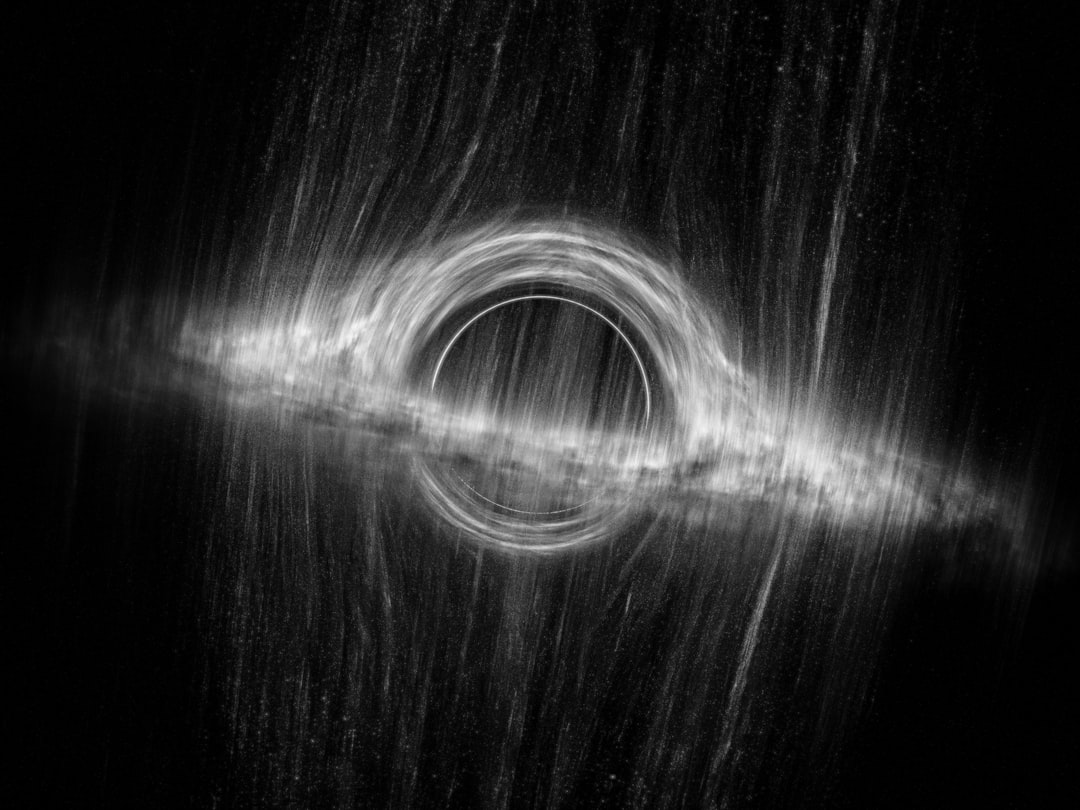
The Big Bang Theory is a fundamental scientific explanation for the origin of the universe. According to this theory, all matter, energy, space, and time were initially concentrated in an extremely dense point called a singularity. Approximately 13.8 billion years ago, this singularity underwent rapid expansion, initiating the formation of the universe.
Following this initial expansion, the universe cooled and evolved into the cosmos observed today. The Big Bang Theory provides a comprehensive framework for understanding cosmic origins and explains numerous phenomena studied in cosmology. Several lines of evidence support the Big Bang Theory.
The cosmic microwave background radiation, discovered in the 1960s, represents thermal radiation left over from the early universe. This radiation fills all of space and provides observational data about the universe’s initial conditions and subsequent development. Another key piece of evidence is the redshift observed in distant galaxies, which indicates that galaxies are moving away from Earth.
This observation demonstrates that the universe continues to expand, consistent with the prediction that all matter and energy originated from a single expansion event billions of years ago.
Key Takeaways
- The Big Bang Theory explains the universe’s origin from a singular explosive event.
- Quantum Mechanics reveals the behavior of particles at the smallest scales.
- The Theory of Relativity redefines our understanding of space, time, and gravity.
- Dark Matter and Dark Energy constitute most of the universe’s mass-energy but remain largely mysterious.
- The search for a Unified Theory aims to connect all fundamental forces into one comprehensive framework.
Quantum Mechanics: Exploring the Subatomic World
Quantum mechanics introduces you to a realm where the rules of classical physics no longer apply. In this subatomic world, particles behave in ways that defy your everyday experiences. For instance, you might find it astonishing that particles can exist in multiple states simultaneously, a phenomenon known as superposition.
This principle challenges your understanding of reality and compels you to reconsider what it means for something to exist. As you delve deeper into quantum mechanics, you encounter concepts like entanglement, where particles become interconnected in such a way that the state of one instantly influences another, regardless of distance. The implications of quantum mechanics extend far beyond theoretical musings; they have practical applications that shape modern technology.
Quantum computing, for example, harnesses these principles to perform calculations at speeds unimaginable with classical computers. As you explore this field, you realize that quantum mechanics not only revolutionizes our understanding of the universe but also opens doors to innovations that could transform society. The more you learn about this intricate tapestry of particles and forces, the more you appreciate the delicate balance that governs the fabric of reality. Explore the future of space travel with laser sails technology.
The Theory of Relativity: Unraveling the Nature of Space and Time

Albert Einstein’s Theory of Relativity fundamentally altered your perception of space and time. Before this groundbreaking theory emerged, you might have viewed these concepts as absolute and unchanging. However, relativity introduces a more nuanced understanding: space and time are interwoven into a single continuum known as spacetime.
This revelation invites you to consider how gravity affects this fabric, bending it in response to mass. As a result, time can flow differently depending on your proximity to massive objects—a phenomenon known as time dilation. As you contemplate these ideas, you begin to grasp their profound implications for our understanding of the universe.
For instance, the theory predicts that light travels at a constant speed regardless of the observer’s motion, leading to fascinating consequences for how we perceive events in space and time. You might find it intriguing that astronauts aboard the International Space Station experience time slightly differently than those on Earth due to their high velocity and reduced gravitational influence. This realization not only deepens your appreciation for Einstein’s genius but also highlights how interconnected our universe truly is.
Dark Matter and Dark Energy: Shedding Light on the Mysteries of the Universe
As you venture further into cosmology, you encounter two enigmatic components: dark matter and dark energy.
Dark matter is thought to be responsible for the gravitational effects observed in galaxies and galaxy clusters, influencing their rotation and formation without emitting light or radiation detectable by current instruments.
You may find it fascinating that while dark matter cannot be seen directly, its presence is inferred through its gravitational interactions with visible matter. On the other hand, dark energy presents an even more perplexing mystery. It is believed to be driving the accelerated expansion of the universe, counteracting gravitational forces on cosmic scales.
As you ponder these concepts, you realize that they challenge your understanding of fundamental physics and push scientists to explore new theories and models. The quest to uncover the nature of dark matter and dark energy not only fuels scientific inquiry but also invites philosophical questions about the very fabric of reality and our place within it.
The Multiverse Theory: Investigating the Possibility of Parallel Universes
| Secret of the Universe | Scientific Discovery | Key Metric/Data | Year Discovered | Significance |
|---|---|---|---|---|
| Expansion of the Universe | Hubble’s Law | Hubble Constant ≈ 70 km/s/Mpc | 1929 | Universe is expanding, leading to Big Bang theory |
| Cosmic Microwave Background Radiation | Discovery by Penzias and Wilson | Temperature ≈ 2.725 K | 1965 | Evidence of Big Bang, early universe conditions |
| Dark Matter | Galaxy Rotation Curves | Dark Matter ≈ 27% of Universe’s mass-energy | 1970s | Explains gravitational effects not caused by visible matter |
| Dark Energy | Accelerating Universe Expansion | Dark Energy ≈ 68% of Universe’s mass-energy | 1998 | Causes acceleration in universe expansion |
| Quantum Mechanics | Wave-Particle Duality | Planck’s Constant h = 6.626×10⁻³⁴ Js | 1900-1927 | Fundamental framework for atomic and subatomic processes |
| General Relativity | Einstein’s Field Equations | Speed of Light c = 299,792,458 m/s | 1915 | Describes gravity as curvature of spacetime |
| Higgs Boson | Particle Physics Discovery at LHC | Mass ≈ 125 GeV/c² | 2012 | Confirms mechanism for particle mass generation |
The Multiverse Theory tantalizes your imagination with the possibility that our universe is just one of many existing simultaneously. This concept suggests that there could be countless parallel universes, each with its own unique set of physical laws and constants. As you explore this idea, you may find yourself contemplating alternate realities where different choices lead to divergent outcomes or where fundamental constants differ from those in our own universe.
The implications of the multiverse theory extend beyond mere speculation; they challenge your understanding of existence itself. If multiple universes exist, what does that mean for concepts like fate and free will? You might find it intriguing to consider how these parallel realities could interact or influence one another, raising questions about causality and interconnectedness on a cosmic scale.
While still largely theoretical, the multiverse theory invites you to think beyond conventional boundaries and explore the vast possibilities that lie beyond our observable universe.
Black Holes: Examining the Phenomenon of Gravitational Collapse

Black holes represent one of the most captivating phenomena in astrophysics, embodying the extremes of gravitational collapse. When massive stars exhaust their nuclear fuel, they can no longer support themselves against gravitational forces and collapse under their own weight. As you delve into this process, you may find it awe-inspiring to consider how such immense objects can warp spacetime so dramatically that not even light can escape their grasp.
The study of black holes raises profound questions about the nature of reality and our understanding of physics. You might be intrigued by concepts like event horizons—the boundary beyond which nothing can return—and singularities—the points at which density becomes infinite. These ideas challenge your comprehension of space and time, pushing scientists to reconcile general relativity with quantum mechanics in an effort to understand what happens at these extremes.
As researchers continue to probe black holes through observations and theoretical models, you become part of a grand quest to unlock some of the universe’s deepest secrets.
The Higgs Boson: Uncovering the “God Particle” and its Role in Particle Physics
The Higgs boson has garnered significant attention as a fundamental particle responsible for giving mass to other particles through its interaction with the Higgs field. Often referred to as the “God particle,” this elusive entity was confirmed through experiments at CERN’s Large Hadron Collider in 2012. As you explore its significance, you come to appreciate how it plays a crucial role in our understanding of particle physics and the Standard Model—the framework that describes fundamental particles and their interactions.
The discovery of the Higgs boson not only validated decades of theoretical predictions but also opened new avenues for research in particle physics. You may find it fascinating that this particle helps explain why some particles have mass while others do not, shedding light on why matter exists in its current form. As scientists continue to investigate its properties and implications, you become aware that understanding the Higgs boson could lead to breakthroughs in our comprehension of fundamental forces and potentially unveil new physics beyond what we currently know.
The Cosmic Microwave Background: Tracing the Echoes of the Big Bang
The Cosmic Microwave Background (CMB) serves as a remarkable relic from the early universe, providing a snapshot of its state just 380,000 years after the Big Bang. As you delve into this phenomenon, you discover that it consists of faint radiation permeating all corners of space—a remnant from when protons and electrons combined to form neutral hydrogen atoms, allowing light to travel freely for the first time.
By analyzing fluctuations in temperature within the CMB, researchers can infer critical information about cosmic structures and conditions during its infancy. You may find it captivating that these tiny variations correspond to regions where matter eventually coalesced into galaxies and clusters we observe today. The CMB not only provides evidence supporting the Big Bang Theory but also serves as a powerful tool for cosmologists seeking to understand fundamental questions about our universe’s origin, composition, and fate.
The Search for Extraterrestrial Life: Exploring the Potential for Life Beyond Earth
The quest for extraterrestrial life captivates your imagination as humanity seeks answers to one of its most profound questions: Are we alone in the universe? With billions of stars in our galaxy alone—many hosting planets within their habitable zones—the potential for life beyond Earth seems increasingly plausible. As you explore this topic, you may find yourself pondering what forms life might take on distant worlds and how we might detect signs of its existence.
Astrobiology combines elements from various scientific disciplines to investigate life’s potential beyond Earth. You might be intrigued by missions aimed at exploring Mars or icy moons like Europa and Enceladus—places where conditions may harbor microbial life or even more complex organisms. Additionally, initiatives like SETI (Search for Extraterrestrial Intelligence) employ advanced technology to scan for signals from intelligent civilizations elsewhere in the cosmos.
As humanity continues its search for extraterrestrial life, you become part of an ongoing journey that challenges our understanding of biology, evolution, and our place within an expansive universe.
The Evolution of Stars: Understanding the Life Cycle of Celestial Bodies
Stars are born from vast clouds of gas and dust in space, undergoing a complex life cycle that spans millions or even billions of years. As you explore stellar evolution, you learn about processes such as nuclear fusion—the mechanism by which stars generate energy by fusing lighter elements into heavier ones at their cores. This process not only sustains stars throughout their lifetimes but also produces elements essential for life as we know it.
As stars age, they undergo dramatic transformations depending on their mass. Massive stars may end their lives in spectacular supernova explosions, scattering heavy elements across space and seeding new generations of stars and planets. In contrast, smaller stars like our Sun will eventually shed their outer layers to form planetary nebulae while leaving behind white dwarfs as remnants.
Understanding these processes allows you to appreciate how stars contribute to cosmic recycling—creating new materials essential for forming planets and potentially supporting life.
The Unified Theory: Pursuing the Quest for a Grand Unified Theory of Everything
The pursuit of a Grand Unified Theory (GUT) represents one of science’s most ambitious endeavors: unifying all fundamental forces and particles into a single framework that explains every aspect of our universe. As you engage with this concept, you may find yourself captivated by its implications—if successful, such a theory could provide answers to questions about gravity’s relationship with electromagnetism and nuclear forces while revealing deeper connections between seemingly disparate phenomena. Various approaches have emerged in this quest for unification—string theory being one prominent candidate positing that fundamental particles are not point-like but rather tiny vibrating strings existing in higher dimensions.
While still largely theoretical, these ideas challenge your understanding of reality itself and invite exploration into realms beyond current scientific knowledge. As researchers continue their pursuit for a GUT through experimentation and theoretical development, you become part of an ongoing journey toward unraveling some of nature’s most profound mysteries—an endeavor that could reshape humanity’s understanding of existence itself. In conclusion, your exploration through these various facets of modern physics reveals not only intricate details about our universe but also profound questions about existence itself.
Each concept—from the Big Bang Theory to black holes—invites contemplation about your place within this vast cosmos while highlighting humanity’s relentless pursuit for knowledge and understanding amidst an ever-expanding frontier.
In exploring the profound mysteries of the cosmos, one can gain deeper insights by reading the article on the secrets of the universe revealed in science. This article delves into groundbreaking discoveries and theories that challenge our understanding of reality. For more information, you can check out the article [here](https://www.mycosmicventures.com/sample-page/).
WATCH THIS! 🚀✨ Can Laser Sails Take Us to Alpha Centauri in 20 Years?
FAQs
What are the “secrets of the universe” that science has revealed?
Science has uncovered many fundamental truths about the universe, including the Big Bang theory explaining its origin, the laws of physics governing matter and energy, the nature of black holes, the expansion of the universe, and the composition of dark matter and dark energy.
How does science study the universe?
Scientists use a combination of observational astronomy, theoretical physics, and experimental methods. Tools like telescopes, particle accelerators, and space probes help gather data, while mathematical models and simulations help interpret and predict cosmic phenomena.
What is the Big Bang theory?
The Big Bang theory is the prevailing cosmological model explaining the universe’s origin. It posits that the universe began approximately 13.8 billion years ago from an extremely hot and dense singularity and has been expanding ever since.
What role do black holes play in understanding the universe?
Black holes are regions of spacetime with gravitational fields so strong that nothing, not even light, can escape. Studying black holes helps scientists understand gravity, quantum mechanics, and the behavior of matter under extreme conditions.
What is dark matter and why is it important?
Dark matter is a form of matter that does not emit, absorb, or reflect light, making it invisible to current instruments. It is important because it constitutes about 27% of the universe’s mass-energy content and influences the formation and behavior of galaxies.
What is dark energy?
Dark energy is a mysterious form of energy that makes up about 68% of the universe and is responsible for its accelerated expansion. Its exact nature remains one of the biggest questions in cosmology.
How has technology advanced our understanding of the universe?
Technological advancements such as space telescopes (e.g., Hubble), particle detectors, and supercomputers have allowed scientists to observe distant cosmic events, detect fundamental particles, and simulate complex cosmic phenomena, greatly expanding our knowledge.
Can science explain everything about the universe?
While science has explained many aspects of the universe, there remain unanswered questions about the nature of dark matter, dark energy, the unification of gravity with quantum mechanics, and the ultimate fate of the universe. Research continues to address these mysteries.