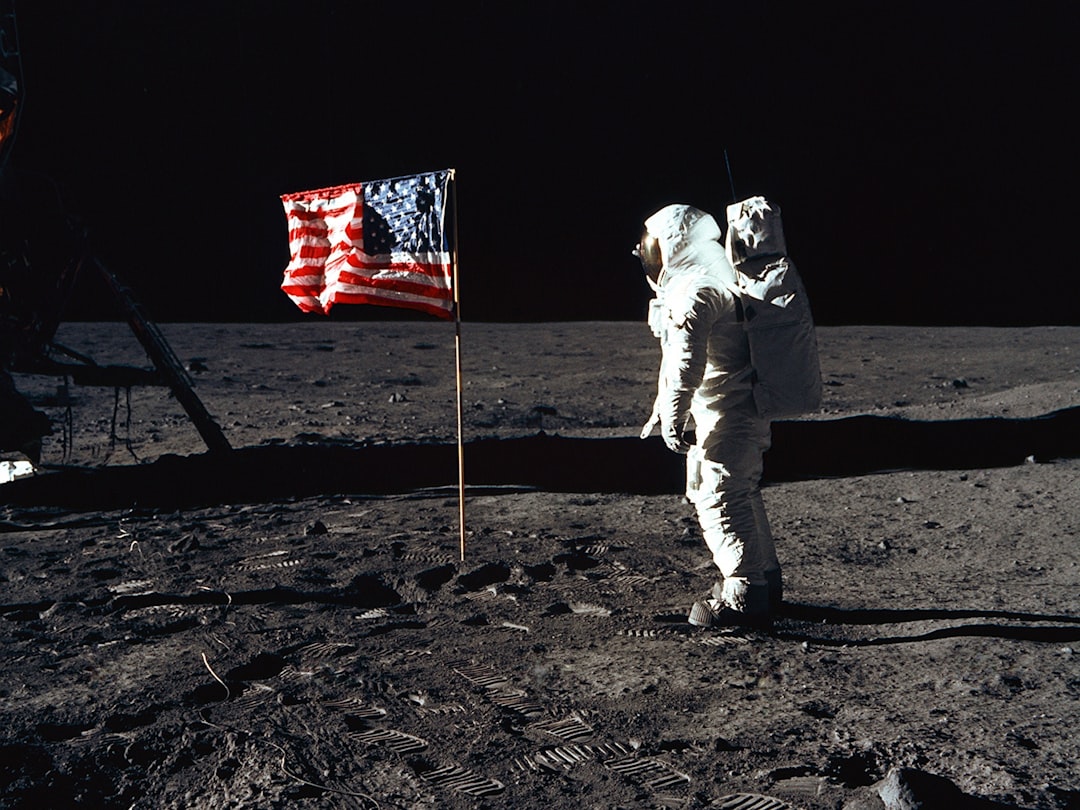
Space travel involves complex scientific principles that extend far beyond popular science fiction depictions. The foundation of space travel rests on physics, particularly Einstein’s theory of relativity, which fundamentally changed how scientists understand time and space. According to this theory, time is not constant but varies based on speed and gravitational forces.
Understanding these concepts reveals the intricate relationship between time and space that operates throughout the universe. Space travel encompasses more than simply reaching other celestial bodies. It involves understanding the universe’s fundamental nature, including spacetime and its potential manipulation.
Theoretical physicists have developed various models that challenge conventional understanding of movement and distance. One significant concept is spacetime warping, which could theoretically create shortcuts through the universe and potentially enable interstellar travel in the future. Exploring these theoretical frameworks demonstrates that space exploration represents both a physical undertaking and an intellectual investigation into the nature of the cosmos.
Explore the future of space travel with laser sails technology.
Key Takeaways
- Space travel theories explore concepts like wormholes, warp drives, and quantum phenomena to overcome vast cosmic distances.
- Faster-than-light travel remains speculative but is theoretically approached through ideas like the Alcubierre drive and space-time manipulation.
- The multiverse and parallel universes introduce possibilities for alternate realities and new dimensions in space exploration.
- Quantum entanglement offers potential for instantaneous communication and teleportation, challenging classical physics limits.
- Ethical and philosophical questions arise as advanced space travel technologies could profoundly impact humanity’s future and identity.
Wormholes and Time Warps
Wormholes are among the most captivating theoretical constructs in the realm of space travel. Imagine a tunnel connecting two separate points in spacetime, allowing for instantaneous travel between them. This concept, often referred to as a “bridge” through the universe, has been popularized in literature and film, but it is grounded in serious scientific inquiry.
If such structures exist, they could revolutionize our understanding of distance and time, enabling you to traverse vast cosmic expanses in mere moments. However, the existence of wormholes remains purely theoretical, with no empirical evidence to support their reality.
If you were to travel through a wormhole, you might not only reach your destination faster but also experience time differently. This raises intriguing questions about causality and the nature of time travel. Would you be able to alter events in the past?
What implications would that have for your present? As you ponder these questions, you begin to grasp the profound philosophical implications of manipulating time and space, which could redefine your understanding of existence itself.
The Possibility of Faster-Than-Light Travel
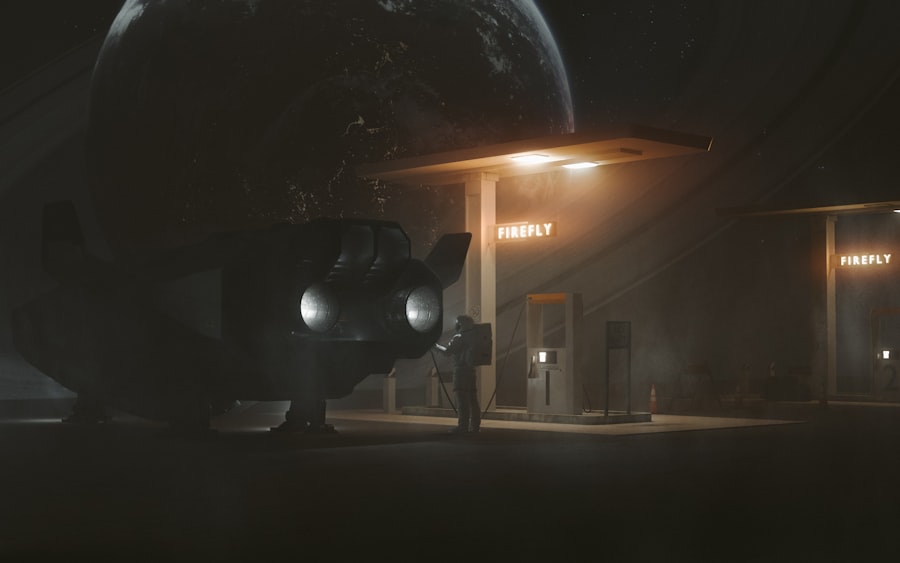
The concept of faster-than-light (FTL) travel has long captured the imagination of scientists and dreamers alike. The idea suggests that it might be possible to exceed the speed of light, which is currently considered the ultimate speed limit in the universe according to Einstein’s theory of relativity. If you could somehow achieve FTL travel, entire star systems would become accessible within your lifetime, transforming humanity’s relationship with the cosmos.
However, this notion is fraught with challenges and paradoxes that make it a tantalizing yet elusive goal. One proposed method for achieving FTL travel involves manipulating spacetime itself, as theorized in concepts like the Alcubierre Drive. This theoretical framework suggests that by contracting space in front of a spacecraft and expanding it behind, you could create a “warp bubble” that allows for faster-than-light movement without violating the laws of physics.
While this idea is still firmly in the realm of speculation, it highlights the innovative thinking required to push the boundaries of what is possible. As you explore these possibilities, you can’t help but wonder what breakthroughs might lie ahead in our quest for interstellar exploration.
The Multiverse and Parallel Universes
The multiverse theory posits that our universe is just one of many, each with its own unique set of physical laws and constants. This concept challenges your understanding of reality itself, suggesting that there may be countless parallel universes coexisting alongside your own. Each decision you make could potentially create a branching path into a different universe where alternate outcomes unfold.
As you contemplate this idea, it opens up a realm of possibilities for exploration beyond your own reality. The implications of parallel universes extend far beyond mere speculation; they invite profound philosophical questions about identity, choice, and existence. If every possible outcome exists somewhere in the multiverse, what does that mean for your sense of self?
Are you merely a product of chance, or do your choices hold greater significance? As you navigate these complex ideas, you begin to appreciate how the multiverse theory not only expands our understanding of space travel but also challenges your perceptions of reality itself.
Quantum Entanglement and Teleportation
| Theory | Description | Key Concept | Potential Impact on Space Travel | Current Status |
|---|---|---|---|---|
| Warp Drive | Hypothetical faster-than-light propulsion by warping spacetime around a ship. | Alcubierre Metric | Could enable interstellar travel within human lifetimes by contracting space ahead and expanding behind. | Theoretical; requires exotic matter with negative energy density. |
| Wormholes | Bridges or shortcuts through spacetime connecting distant points. | Einstein-Rosen Bridges | Potential for instantaneous travel across vast cosmic distances. | Speculative; stability and traversability remain unresolved. |
| Time Dilation | Effect of traveling near light speed causing time to pass slower for travelers. | Special Relativity | Allows astronauts to travel far distances while less time passes for them. | Experimentally confirmed; practical limits due to energy requirements. |
| Quantum Teleportation | Transfer of quantum states between particles over distance. | Quantum Entanglement | Could revolutionize communication and information transfer in space. | Demonstrated on small scales; not applicable for matter transport yet. |
| Multiverse Travel | Hypothesis of traveling between parallel universes or alternate dimensions. | Many-Worlds Interpretation | Could open new realms for exploration beyond our universe. | Highly speculative; no experimental evidence. |
Quantum entanglement is one of the most perplexing phenomena in modern physics, where particles become interconnected in such a way that the state of one instantly influences the state of another, regardless of distance. This concept has led to discussions about quantum teleportation—the idea that information or even matter could be transmitted instantaneously across vast distances. While this may sound like science fiction, researchers are actively exploring its potential applications in communication and computing.
As you delve into quantum entanglement and teleportation, you begin to see how these principles could revolutionize space travel. Imagine being able to send information or even human consciousness across light-years in an instant. While we are still far from achieving such feats, the implications are staggering.
You might envision a future where interstellar communication becomes seamless, allowing humanity to connect with distant civilizations or explore new worlds without the constraints of time and distance.
Alcubierre Drive and Warp Field Theory

The Alcubierre Drive represents one of the most intriguing theoretical models for achieving faster-than-light travel. Proposed by physicist Miguel Alcubierre in 1994, this concept suggests that by creating a warp bubble around a spacecraft, it could move through spacetime without violating the speed limit set by light. Instead of moving through space in a traditional sense, the spacecraft would ride a wave of warped spacetime, effectively allowing it to traverse vast distances in a fraction of the time.
While this idea is captivating, it also presents significant challenges. The energy requirements for creating such a warp bubble are currently beyond our technological capabilities and may even require exotic matter with negative energy density—something that has yet to be discovered. As you consider these hurdles, you realize that while the Alcubierre Drive offers a tantalizing glimpse into potential future technologies, it also underscores the complexities involved in turning theoretical concepts into practical applications.
Black Holes and Gravitational Slingshots
Black holes are among the most enigmatic objects in the universe, characterized by their immense gravitational pull that nothing can escape once it crosses their event horizon.
By carefully navigating around black holes or other massive objects, you could gain significant speed and alter your trajectory toward distant destinations.
The concept of using gravitational slingshots has already been employed in various space missions within our solar system. For instance, spacecraft like Voyager have utilized this technique to gain momentum as they pass by planets on their way to more distant targets. As you explore these methods further, you begin to appreciate how understanding black holes and their gravitational effects can enhance our capabilities for interstellar exploration.
Theoretical Challenges of Space Travel
Despite the exciting possibilities surrounding space travel, numerous theoretical challenges remain unresolved. One significant hurdle is the vast distances involved; even with advanced propulsion systems or theoretical constructs like wormholes or warp drives, reaching other star systems would still require overcoming immense spatial barriers. The sheer scale of the universe can be daunting, making it difficult to envision how humanity could ever become an interstellar species.
Additionally, there are concerns about human survival during long-duration space missions. The effects of microgravity on human physiology are still being studied, as are the psychological impacts of isolation during extended journeys through space. As you consider these challenges, it becomes clear that successful space travel will require not only technological advancements but also a deep understanding of human biology and psychology.
Interstellar Travel and Exoplanet Exploration
Interstellar travel represents one of humanity’s most ambitious goals—venturing beyond our solar system to explore distant stars and their planets. With thousands of exoplanets already discovered in our galaxy alone, many scientists believe that some may harbor conditions suitable for life. As you contemplate this possibility, you realize that interstellar missions could unlock profound insights into our place in the universe and whether we are alone.
However, embarking on such journeys poses significant logistical challenges. Current propulsion technologies would take thousands of years to reach even the nearest star systems. Therefore, innovative solutions must be developed to make interstellar exploration feasible within human lifetimes.
Concepts like generation ships—self-sustaining spacecraft designed for long-term habitation—are being explored as potential solutions for transporting future generations across vast distances.
Ethical and Philosophical Implications of Mind-Bending Space Travel
As you delve deeper into the theoretical aspects of space travel, ethical and philosophical questions inevitably arise. If humanity were to achieve interstellar travel or manipulate time and space through wormholes or warp drives, what responsibilities would come with such power? The potential for altering timelines or encountering other intelligent civilizations raises profound ethical dilemmas about intervention and coexistence.
Moreover, as we explore new worlds and potentially encounter extraterrestrial life forms, questions about stewardship and respect for other ecosystems become paramount. How should we approach these encounters? What rights do other sentient beings possess?
As you grapple with these questions, it becomes evident that any advancements in space travel must be accompanied by thoughtful consideration of their broader implications on humanity’s moral compass.
The Future of Space Travel: From Theory to Reality
The future of space travel holds immense promise as we continue to push the boundaries of scientific understanding and technological innovation. While many theoretical concepts remain untested or speculative today, ongoing research in fields like astrophysics and engineering is gradually bringing us closer to realizing these dreams. As you look ahead, it’s clear that collaboration among scientists, engineers, and policymakers will be essential in transforming these theories into practical applications.
In conclusion, as humanity stands on the brink of a new era in space exploration, your imagination can soar alongside our aspirations for interstellar travel. The journey from theory to reality may be fraught with challenges and uncertainties; however, it is also filled with boundless potential for discovery and growth. Embracing this journey will not only expand our understanding of the universe but also redefine what it means to be human in an ever-expanding cosmos.
For those intrigued by mind-bending theories of space travel, a fascinating article can be found on My Cosmic Ventures. It delves into the complexities of wormholes and their potential as shortcuts through the universe, challenging our conventional understanding of time and space. You can read more about these captivating concepts in the article [here](https://www.mycosmicventures.com/).
WATCH THIS! 🚀✨ Can Laser Sails Take Us to Alpha Centauri in 20 Years?
FAQs
What are mind-bending theories related to space travel?
Mind-bending theories about space travel include concepts that challenge our current understanding of physics and the universe. Examples include wormholes as shortcuts through spacetime, time dilation effects from traveling near the speed of light, and the possibility of faster-than-light travel through hypothetical constructs like warp drives.
Is faster-than-light travel possible according to current science?
According to Einstein’s theory of relativity, faster-than-light travel is not possible for objects with mass because it would require infinite energy. However, theoretical models like the Alcubierre warp drive propose mechanisms to “bend” spacetime itself, potentially allowing faster-than-light travel without violating relativity, though these remain speculative and unproven.
What is a wormhole and how could it aid space travel?
A wormhole is a hypothetical tunnel-like structure connecting two separate points in spacetime. If they exist and could be stabilized, wormholes might allow instantaneous travel between distant parts of the universe, effectively bypassing the vast distances of space. Currently, wormholes remain theoretical and have not been observed.
How does time dilation affect astronauts during space travel?
Time dilation is a relativistic effect where time passes slower for an object moving at speeds close to the speed of light compared to a stationary observer. For astronauts traveling at such high speeds, less time would pass for them relative to people on Earth, meaning they could potentially travel far into the future.
Are there any practical applications of these theories in current space missions?
Currently, these mind-bending theories are primarily theoretical and have not been applied in practical space missions. Space travel today relies on conventional rocket technology and propulsion methods. Research continues into advanced propulsion concepts, but practical applications of theories like wormholes or warp drives remain in the realm of future possibilities.
What challenges exist in realizing these space travel theories?
Challenges include the need for exotic matter or energy with negative mass to stabilize wormholes or create warp bubbles, enormous energy requirements, and the lack of experimental evidence supporting these phenomena. Additionally, our current technology and understanding of physics are insufficient to build devices based on these theories.
Can mind-bending space travel theories change our understanding of the universe?
Yes, if proven or realized, these theories could revolutionize physics, cosmology, and space exploration by providing new ways to travel vast distances, understand spacetime, and explore the universe. They challenge conventional limits and open possibilities for future scientific breakthroughs.