
# Interstellar Travel at Relativistic Speeds
A spacecraft traveling at 20% the speed of light—approximately 60,000 kilometers per second—would significantly reduce travel times to nearby star systems compared to current propulsion technology. Proxima Centauri, located 4.24 light-years from Earth, could be reached in approximately 21 years at this velocity, compared to the estimated 73,000 years required by existing spacecraft. Achieving such speeds would enable more practical exploration of distant stellar regions.
Scientists have proposed advanced propulsion systems, including nuclear fusion and antimatter engines, as potential methods to approach relativistic velocities. Current theoretical physics suggests that speeds of 20% light speed may be feasible within the next century, though significant technological and engineering challenges remain. Interstellar travel at these velocities would facilitate the discovery of exoplanets and potentially habitable worlds.
Such exploration could yield scientific data about planetary systems, atmospheric compositions, and the prevalence of conditions suitable for life. Additionally, distant celestial bodies may contain resources relevant to long-term human survival and expansion beyond Earth’s orbit. The development of relativistic propulsion technology represents a substantial advancement in space exploration capability and would expand humanity’s understanding of the universe and its structure.
Explore the future of space travel with laser sails technology.
Key Takeaways
- Traveling at 20% the speed of light is theoretically possible but faces significant technological and physical challenges.
- Time dilation effects become noticeable, impacting the perception of time for travelers versus observers on Earth.
- Advanced propulsion systems and safety measures are essential to achieve and sustain such high velocities.
- The high costs and ethical considerations pose barriers to widespread accessibility and environmental impact.
- Despite challenges, traveling at 20% light speed could revolutionize human exploration and open new frontiers in space travel.
Challenges and Limitations of Traveling at 20% Light Speed
While the theoretical possibilities of traveling at 20% light speed are exhilarating, numerous challenges and limitations stand in the way of making this dream a reality.
Current propulsion systems are far from efficient enough to achieve this speed, necessitating breakthroughs in energy generation and storage.
You would need to consider not only the energy required for acceleration but also for maintaining life support systems over extended periods in space. Moreover, the physical effects of traveling at such speeds pose additional challenges. As you approach 20% light speed, the risk of collisions with interstellar particles becomes a critical concern.
Even tiny specks of dust could cause catastrophic damage to a spacecraft traveling at such high velocities. Additionally, the structural integrity of the spacecraft must be engineered to withstand the stresses associated with high-speed travel. These challenges highlight the need for innovative engineering solutions and rigorous testing before embarking on any journey at such extraordinary speeds.
Potential Destinations for Traveling at 20% Light Speed
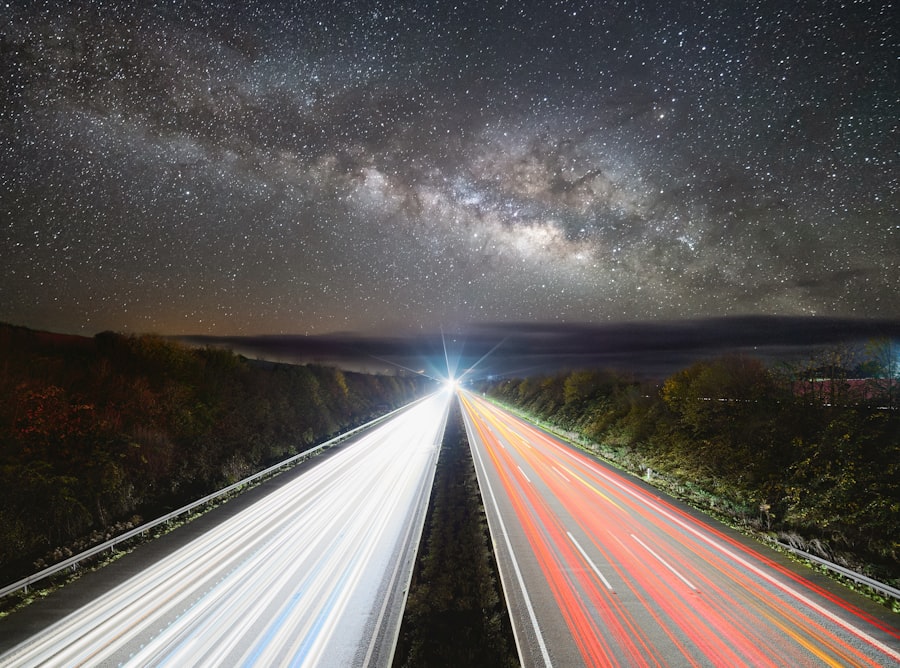
If humanity were to achieve the capability of traveling at 20% light speed, a plethora of potential destinations would become accessible. Beyond Proxima Centauri, other nearby star systems like Alpha Centauri A and B, as well as Barnard’s Star, would be within reach. Each of these stars hosts planets that could be candidates for exploration, offering opportunities to study their atmospheres, geology, and potential for life.
The prospect of visiting these celestial bodies ignites your imagination about what discoveries await. In addition to nearby stars, traveling at such speeds could enable you to explore more distant regions of our galaxy. The Milky Way is home to billions of stars and countless planets, many of which remain unexplored.
With 20% light speed travel, you could venture into regions previously thought unreachable within a human lifetime. This capability would not only expand our understanding of the universe but also provide insights into the formation and evolution of planetary systems, potentially revealing new worlds that could support life.
Impact of Time Dilation on Traveling at 20% Light Speed
One of the most fascinating aspects of traveling at relativistic speeds is the phenomenon known as time dilation. According to Einstein’s theory of relativity, as you approach the speed of light, time for you would pass more slowly compared to those remaining on Earth. At 20% light speed, this effect becomes noticeable but not extreme; however, it still raises intriguing questions about the nature of time and human experience during long-duration space travel.
For instance, if you were to embark on a journey to a distant star system at 20% light speed and spend several years in transit, you might return to find that significantly more time has passed on Earth. This discrepancy could lead to profound emotional and social implications for travelers and their families. The concept of aging differently than those left behind adds a layer of complexity to interstellar exploration that must be carefully considered as humanity ventures into the cosmos.
Technology Required for Traveling at 20% Light Speed
| Metric | Value | Unit | Notes |
|---|---|---|---|
| Speed | 59,958 | km/s | 20% of the speed of light (299,792 km/s) |
| Time Dilation Factor (γ) | 1.0206 | Dimensionless | Relativistic time dilation at 0.2c |
| Distance traveled in 1 year (ship frame) | 18.9 | light years | Distance covered in one Earth year at 0.2c |
| Energy required (kinetic) | 1.02 × 10^17 | Joules per kg | Kinetic energy per kilogram of mass |
| Travel time to Alpha Centauri (4.37 ly) | 21.85 | years (Earth frame) | Time to reach nearest star at 0.2c |
| Length contraction factor | 0.98 | Dimensionless | Observed contraction of distances in ship frame |
Achieving travel at 20% light speed necessitates groundbreaking advancements in technology across multiple domains. First and foremost is propulsion technology; conventional chemical rockets are insufficient for such high-speed travel. You would need to explore alternatives like nuclear thermal propulsion or even theoretical concepts like ion drives or warp drives that could provide the necessary thrust without requiring prohibitive amounts of fuel.
In addition to propulsion systems, life support technologies must be developed to sustain human life during extended journeys through space. This includes advanced recycling systems for air and water, as well as food production methods that can function in microgravity environments. Furthermore, shielding against cosmic radiation and micrometeoroids becomes paramount as you venture into regions where traditional protective measures may fall short.
The integration of these technologies will require collaboration across various scientific disciplines and industries.
Safety Considerations for Traveling at 20% Light Speed

Safety is paramount when considering travel at 20% light speed. The risks associated with high-speed space travel are multifaceted and require comprehensive planning and engineering solutions. One major concern is the potential for collisions with space debris or interstellar particles.
At such high velocities, even small objects can cause catastrophic damage to a spacecraft. You would need advanced detection systems capable of identifying potential hazards well in advance and maneuvering around them. Moreover, the psychological effects on crew members during long-duration missions must not be overlooked.
Isolation and confinement in a spacecraft can lead to mental health challenges that need addressing through careful mission planning and support systems. Ensuring that crew members have access to recreational activities and social interaction can help mitigate these risks. Ultimately, a robust safety framework will be essential for ensuring successful missions at such extraordinary speeds.
Cost and Accessibility of Traveling at 20% Light Speed
The financial implications of developing technology capable of supporting travel at 20% light speed are significant. The initial investment required for research and development would be astronomical, likely necessitating collaboration between governments, private companies, and international organizations. As you consider the costs associated with building spacecraft capable of such speeds, it becomes clear that funding will be a critical factor in making this dream a reality.
Accessibility is another important consideration; if interstellar travel becomes feasible, who will have access to it? Will it be limited to government-sponsored missions or available for private exploration? The potential for commercial space travel raises questions about equity and inclusivity in accessing these new frontiers.
Striking a balance between innovation and accessibility will be crucial as humanity embarks on this new chapter in exploration.
Potential Benefits of Traveling at 20% Light Speed
The benefits of achieving travel at 20% light speed extend far beyond mere exploration; they encompass scientific discovery, technological advancement, and even societal evolution. By venturing into distant star systems, you could uncover new knowledge about planetary formation, astrobiology, and the fundamental laws governing our universe. Each mission could yield insights that reshape our understanding of existence itself.
Moreover, the technological advancements required for such travel could have far-reaching applications on Earth. Innovations in propulsion systems, life support technologies, and materials science could lead to breakthroughs that enhance everyday life. As humanity pushes the boundaries of what is possible in space exploration, you may find that these advancements contribute to solving pressing challenges on our home planet.
Ethical and Environmental Implications of Traveling at 20% Light Speed
As with any significant technological advancement, ethical considerations must accompany the pursuit of traveling at 20% light speed. The potential for colonizing other planets raises questions about our responsibilities toward extraterrestrial ecosystems and any existing life forms we may encounter. You must grapple with the moral implications of altering environments beyond Earth and consider how humanity’s actions may impact these new worlds.
Additionally, environmental concerns related to space travel cannot be ignored. The production and launch of spacecraft capable of such speeds may contribute to pollution and resource depletion on Earth. Striking a balance between exploration and environmental stewardship will be essential as humanity seeks to expand its reach into the cosmos while preserving its home planet.
Alternative Methods of Space Exploration Compared to Traveling at 20% Light Speed
While traveling at 20% light speed presents exciting possibilities, alternative methods of space exploration also warrant consideration. Current technologies like robotic probes have proven effective in exploring our solar system without the need for human presence. These unmanned missions can gather data from distant planets and moons while minimizing risks associated with human spaceflight.
Additionally, concepts like solar sails or gravitational assists offer alternative approaches to propulsion that may not require reaching relativistic speeds but can still enable significant exploration within our solar system and beyond. As you weigh these alternatives against high-speed travel, it becomes clear that a multifaceted approach to space exploration may yield the best results in expanding our understanding of the universe.
The Future of Traveling at 20% Light Speed and Its Role in Human Exploration of the Universe
Looking ahead, the future of traveling at 20% light speed holds immense promise for human exploration of the universe. As technology continues to advance and our understanding of physics deepens, you may find that interstellar travel becomes an achievable goal within your lifetime. This capability could redefine humanity’s relationship with space and inspire generations to dream bigger than ever before.
Ultimately, traveling at 20% light speed represents not just a technological milestone but a profound leap in human ambition and curiosity. It embodies our desire to explore the unknown and seek answers to fundamental questions about existence beyond our planet. As you contemplate this future, consider how your role in this journey may shape not only your own destiny but also that of humanity as we venture into the vast expanse of the cosmos.
Traveling at 20 percent the speed of light opens up fascinating possibilities for interstellar exploration, as discussed in a related article on the implications of near-light-speed travel. For more insights on this topic, you can read the article here: Exploring the Cosmos at Light Speed. This exploration not only delves into the technological advancements required but also the potential effects on time and space for travelers.
WATCH THIS! 🚀✨ Can Laser Sails Take Us to Alpha Centauri in 20 Years?
FAQs
What does traveling at 20 percent the speed of light mean?
Traveling at 20 percent the speed of light means moving at approximately 59,958 kilometers per second (about 37,282 miles per second), which is one-fifth the speed at which light travels in a vacuum (approximately 299,792 kilometers per second).
Is it currently possible for humans or spacecraft to travel at 20 percent the speed of light?
No, current technology does not allow humans or spacecraft to travel at 20 percent the speed of light. The fastest human-made objects, such as certain spacecraft, travel at speeds much slower than this, and achieving such velocities would require significant advances in propulsion technology and energy sources.
What are the main challenges of traveling at such high speeds?
Challenges include the enormous energy requirements, the effects of relativistic physics (such as time dilation), potential damage from interstellar particles, and the need for advanced propulsion systems capable of sustaining such speeds safely.
How long would it take to travel to nearby stars at 20 percent the speed of light?
At 20 percent the speed of light, it would take about 20 years to travel one light-year. For example, the nearest star system, Alpha Centauri, is approximately 4.37 light-years away, so the journey would take roughly 22 years at this speed, not accounting for acceleration and deceleration phases.
What scientific principles affect travel at relativistic speeds?
Relativistic effects such as time dilation (time slowing down for the traveler relative to an outside observer), length contraction (shortening of distances in the direction of travel), and increased mass-energy requirements come into play when traveling at significant fractions of the speed of light.
What propulsion methods are theorized for achieving 20 percent the speed of light?
Proposed methods include nuclear pulse propulsion, antimatter engines, laser-driven light sails, and fusion-based propulsion systems. These concepts remain largely theoretical or experimental and require breakthroughs in engineering and energy generation.
Would traveling at 20 percent the speed of light pose risks to the spacecraft?
Yes, at such high speeds, even tiny particles in space could cause significant damage due to high kinetic energy impacts. Shielding and protective measures would be necessary to mitigate these risks.
How does traveling at 20 percent the speed of light affect time experienced by travelers?
Due to time dilation, travelers moving at 20 percent the speed of light would experience time passing more slowly relative to observers at rest. However, at 20 percent, this effect is moderate compared to speeds closer to the speed of light.
Are there any current missions or projects aiming to reach such speeds?
Currently, no missions are planned to reach 20 percent the speed of light. However, projects like Breakthrough Starshot aim to develop technology for small probes to travel at a fraction of light speed, potentially up to 20 percent, using laser propulsion.
Why is traveling at a significant fraction of the speed of light important for space exploration?
Achieving high speeds close to the speed of light would drastically reduce travel times to distant stars and galaxies, making interstellar exploration feasible within human lifespans and expanding our understanding of the universe.