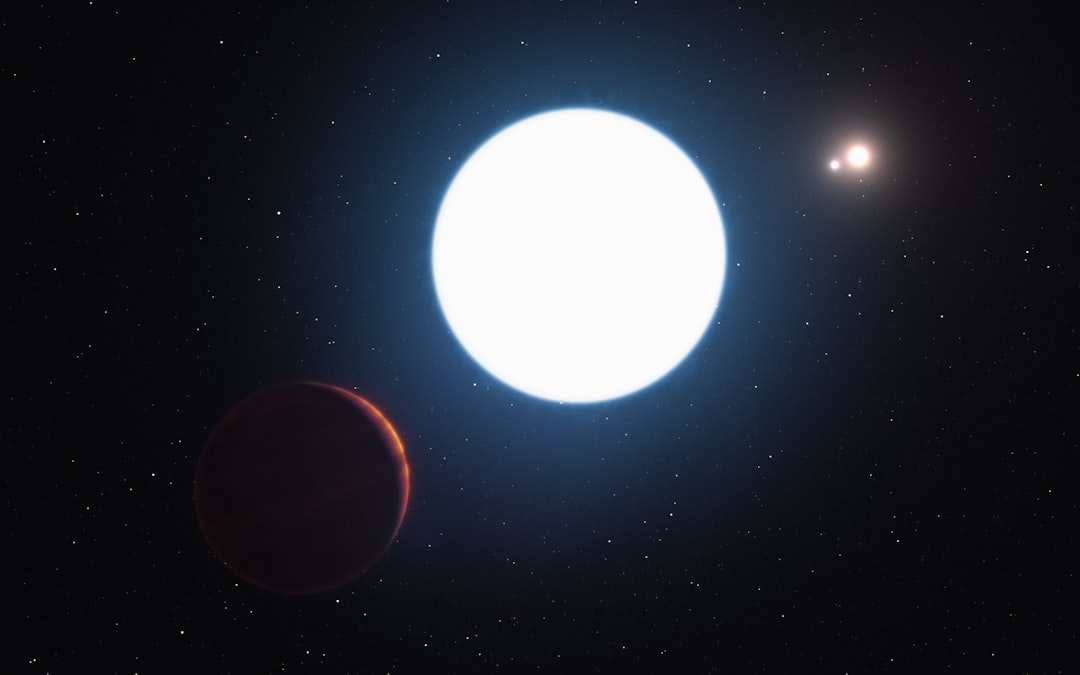
Alpha Centauri is the closest star system to Earth, located approximately 4.37 light-years away. It consists of three stars: Alpha Centauri A, Alpha Centauri B, and Proxima Centauri. Proxima Centauri is notable for hosting at least one confirmed exoplanet, Proxima Centauri b, which orbits within the star’s habitable zone.
Due to its relative proximity, Alpha Centauri represents a significant target for future interstellar exploration and has become central to discussions about potential human space travel beyond our solar system. Reaching Alpha Centauri presents substantial scientific and technical challenges. The vast distance requires consideration of advanced propulsion systems, life support mechanisms, and the extended duration any journey would require.
Current spacecraft technology would take tens of thousands of years to reach the system using conventional means. Researchers are exploring theoretical concepts such as solar sails, antimatter propulsion, and other innovative technologies that might reduce travel time. The discovery of Proxima Centauri b has intensified scientific interest in the system, as the exoplanet’s location in the habitable zone suggests conditions that could potentially support life.
However, significant technological breakthroughs remain necessary before interstellar travel to Alpha Centauri becomes feasible.
Key Takeaways
- Alpha Centauri is the closest star system to Earth, making it a prime target for interstellar exploration.
- The vast distance to Alpha Centauri presents significant challenges for current space travel technologies.
- Advances in propulsion and understanding of time dilation are critical for making the journey feasible.
- Human factors, including life support and psychological well-being, are essential considerations for long-duration space travel.
- Artificial intelligence will play a key role in navigation and managing risks during interstellar missions.
Understanding the Distance to Alpha Centauri
To truly grasp the significance of Alpha Centauri, it is essential to comprehend the vast distances involved in interstellar travel. At 4.37 light-years away, this distance translates to approximately 25 trillion miles or 40 trillion kilometers. To put this into perspective, if you were to travel at the speed of light, it would take you just over four years to reach Alpha Centauri.
However, current spacecraft technology operates at a fraction of that speed, making the journey seem almost insurmountable. As you contemplate this staggering distance, you might wonder how long it would take using conventional propulsion methods. For instance, the Voyager 1 spacecraft, which is currently the fastest human-made object, travels at about 38,000 miles per hour.
At this speed, reaching Alpha Centauri would take over 70,000 years! This stark reality highlights the need for innovative approaches to interstellar travel if humanity is ever to set foot on another star system. Explore the future of space travel with laser sails technology.
Exploring the Potential Routes to Alpha Centauri

When considering a journey to Alpha Centauri, you must explore potential routes that could facilitate such an ambitious endeavor. The most direct path would involve a straight line from Earth to the star system; however, this approach may not always be feasible due to gravitational influences from other celestial bodies and the need for efficient fuel usage. Instead, you might consider utilizing gravitational assists from planets or moons along the way to gain speed and conserve resources.
Another intriguing possibility involves the concept of a “sling-shot” maneuver around massive celestial bodies. By carefully plotting your trajectory around planets like Jupiter or Saturn, you could harness their gravitational pull to accelerate your spacecraft toward Alpha Centauri. This method not only saves fuel but also allows for a more dynamic journey through our solar system before venturing into interstellar space.
The Challenge of Interstellar Travel
The challenges associated with interstellar travel are numerous and complex. As you think about embarking on such a journey, you must confront issues related to time, resources, and human endurance. One of the most significant hurdles is the sheer duration of the trip.
Even with advanced propulsion systems, reaching Alpha Centauri could take decades or even centuries. This raises questions about how to sustain life aboard a spacecraft for extended periods. Moreover, you must consider the psychological effects of long-term space travel on crew members.
Isolation from Earth and loved ones can lead to mental health challenges that need to be addressed through careful planning and support systems. Creating a comfortable living environment and fostering social interactions among crew members will be crucial in maintaining morale during the journey.
Advancements in Propulsion Technology
| Method | Estimated Speed (km/s) | Travel Time to Alpha Centauri (years) | Key Technology | Feasibility | Notes |
|---|---|---|---|---|---|
| Chemical Rockets | ~50 | ~80,000 | Chemical propulsion | Currently available | Too slow for interstellar travel |
| Nuclear Thermal Rockets | ~100 | ~40,000 | Nuclear fission propulsion | Experimental | Improved speed but still very slow |
| Ion Thrusters | ~100 | ~40,000 | Electric propulsion | In use for deep space probes | Low thrust, long acceleration time |
| Solar Sail | ~150 | ~27,000 | Light pressure propulsion | Conceptual and experimental | Requires large sails and time to accelerate |
| Laser-Pushed Light Sail | ~60,000 | ~20 | Ground-based lasers pushing sails | Theoretical / Experimental | Breakthrough Starshot concept |
| Fusion Rocket | ~10,000 | ~120 | Fusion propulsion | Theoretical | Requires controlled fusion technology |
| Antimatter Rocket | ~100,000 | ~12 | Antimatter propulsion | Theoretical | Extremely challenging to produce/store antimatter |
| Warp Drive (Alcubierre Drive) | >c (faster than light) | Days to weeks (theoretical) | Exotic matter and spacetime manipulation | Highly speculative | Currently purely theoretical physics |
To overcome the challenges of interstellar travel, significant advancements in propulsion technology are essential. As you explore this field, you may encounter concepts like nuclear propulsion, ion drives, and even theoretical ideas such as warp drives or antimatter engines. Each of these technologies offers unique advantages and challenges that could shape the future of space exploration.
Nuclear propulsion systems, for instance, have garnered attention for their potential to provide sustained thrust over long distances. By harnessing nuclear reactions to generate energy, these systems could significantly reduce travel time compared to conventional chemical rockets. On the other hand, ion drives offer high efficiency and long operational lifetimes but produce relatively low thrust levels, making them suitable for gradual acceleration over extended periods.
The Importance of Time Dilation in Interstellar Travel
As you delve deeper into the physics of interstellar travel, you will encounter the concept of time dilation—a phenomenon predicted by Einstein’s theory of relativity. Time dilation occurs when an object approaches the speed of light; time appears to pass more slowly for that object compared to an observer at rest. This effect has profound implications for interstellar journeys.
If you were to travel at a significant fraction of the speed of light toward Alpha Centauri, you would experience time differently than those remaining on Earth. While decades might pass for you aboard your spacecraft, centuries could elapse on our home planet. This disparity raises intriguing questions about communication with Earth and the potential for societal changes during your absence.
Considerations for Human Occupancy on the Journey
When planning a mission to Alpha Centauri, human occupancy becomes a critical consideration. You must think about how to create a sustainable environment aboard your spacecraft that can support life for an extended period. This includes providing adequate food, water, and air while also ensuring that crew members have access to recreational activities and social interactions.
Additionally, you will need to address health concerns that may arise during long-duration space travel. Microgravity can lead to muscle atrophy and bone density loss, necessitating exercise regimens and medical support systems onboard. Furthermore, psychological well-being must be prioritized through regular communication with loved ones back on Earth and opportunities for crew bonding.
Planning the Journey: Necessary Resources and Supplies
As you embark on planning your journey to Alpha Centauri, resource management becomes paramount. You will need to carefully calculate how much food, water, and fuel are required for the trip while considering contingencies for unforeseen circumstances. Developing efficient life support systems that recycle air and water will be essential in minimizing resource consumption.
Moreover, you should consider incorporating advanced agricultural systems onboard to grow fresh food during the journey. Hydroponics or aeroponics could provide sustainable food sources while also improving air quality through plant respiration. By prioritizing resource efficiency and sustainability, you can enhance the feasibility of long-term human occupancy in space.
Potential Risks and Challenges Along the Way
The journey to Alpha Centauri is fraught with potential risks and challenges that must be addressed before embarking on such an ambitious mission. Space debris poses a significant threat; even small particles traveling at high speeds can cause catastrophic damage to a spacecraft.
Additionally, cosmic radiation presents another formidable challenge during interstellar travel. Outside Earth’s protective atmosphere and magnetic field, astronauts would be exposed to higher levels of radiation that could increase their risk of cancer and other health issues. Implementing effective shielding measures within your spacecraft will be crucial in safeguarding crew members from these harmful effects.
The Role of Artificial Intelligence in Interstellar Navigation
As you consider the complexities of navigating through interstellar space, artificial intelligence (AI) emerges as a vital tool in ensuring a successful journey to Alpha Centauri. AI can assist in real-time navigation by analyzing vast amounts of data from sensors and making quick decisions based on changing conditions in space. Moreover, AI can play a crucial role in monitoring crew health and well-being throughout the journey.
By analyzing physiological data and providing personalized recommendations for exercise or nutrition, AI can help maintain optimal conditions for human occupants during their extended stay in space.
The Future of Interstellar Travel: Possibilities and Limitations
Looking ahead, the future of interstellar travel holds both exciting possibilities and inherent limitations. As technology continues to advance at an unprecedented pace, you may find yourself witnessing breakthroughs that make journeys to distant star systems more feasible than ever before. Concepts like warp drives or generation ships could transform our understanding of space travel and open new frontiers for exploration.
However, it is essential to remain grounded in reality as well. The challenges associated with interstellar travel—such as resource management, human health concerns, and technological limitations—will require ongoing research and innovation. While humanity’s dreams of reaching Alpha Centauri may one day become a reality, it is crucial to approach this endeavor with caution and respect for the complexities involved in venturing beyond our solar system.
In conclusion, as you reflect on the journey to Alpha Centauri, you are reminded that while the stars may seem distant and unattainable today, they represent humanity’s enduring quest for knowledge and exploration. With determination and ingenuity, you can contribute to shaping a future where interstellar travel becomes not just a dream but a reality within reach.
If you’re curious about the latest advancements in space travel and how we might reach Alpha Centauri in the shortest time possible, you might find this article on cosmic ventures particularly insightful. It explores innovative propulsion technologies and theoretical frameworks that could revolutionize interstellar travel. For more information, check out the article here.
WATCH THIS! 🚀✨ Can Laser Sails Take Us to Alpha Centauri in 20 Years?
FAQs
What is Alpha Centauri?
Alpha Centauri is the closest star system to the Solar System, located about 4.37 light-years away. It consists of three stars: Alpha Centauri A, Alpha Centauri B, and Proxima Centauri, the latter being the closest individual star to Earth.
Why is reaching Alpha Centauri important?
Reaching Alpha Centauri is significant because it is the nearest star system that could potentially host habitable planets. Exploring it could provide insights into exoplanets, the possibility of life beyond Earth, and the future of interstellar travel.
What are the main challenges in reaching Alpha Centauri?
The primary challenges include the vast distance (over 4 light-years), the limitations of current propulsion technology, the need for sustainable life support systems for long-duration missions, and the immense energy requirements for such a journey.
What propulsion methods are considered for reaching Alpha Centauri fastest?
Proposed propulsion methods include nuclear pulse propulsion, ion drives, laser-driven light sails, and theoretical concepts like antimatter engines or fusion drives. Currently, laser-driven light sails, such as those proposed by the Breakthrough Starshot initiative, offer the fastest potential travel times.
How long would it take to reach Alpha Centauri with current technology?
With current spacecraft technology, such as chemical rockets, it would take tens of thousands of years to reach Alpha Centauri. For example, the Voyager 1 spacecraft would take over 70,000 years to reach the system.
What is the Breakthrough Starshot project?
Breakthrough Starshot is a research initiative aiming to develop a fleet of tiny, light sail-powered spacecraft propelled by ground-based lasers. These probes could potentially reach up to 20% the speed of light, allowing them to reach Alpha Centauri in about 20 years.
Are there any planned missions to Alpha Centauri?
Currently, there are no fully funded or launched missions to Alpha Centauri. However, projects like Breakthrough Starshot are in the research and development phase, aiming to demonstrate the feasibility of interstellar travel within the next few decades.
What factors affect the speed of a spacecraft traveling to Alpha Centauri?
Factors include the propulsion technology used, the spacecraft’s mass, the energy source, resistance from interstellar medium, and the ability to maintain acceleration over long periods.
Can humans travel to Alpha Centauri with current technology?
No, current technology does not support human travel to Alpha Centauri within a human lifetime. Interstellar travel for humans would require significant advancements in propulsion, life support, and shielding from cosmic radiation.
What scientific benefits could come from reaching Alpha Centauri?
Exploring Alpha Centauri could provide valuable data on exoplanet atmospheres, potential biosignatures, stellar physics, and the conditions of nearby star systems, advancing our understanding of the universe and the potential for life beyond Earth.