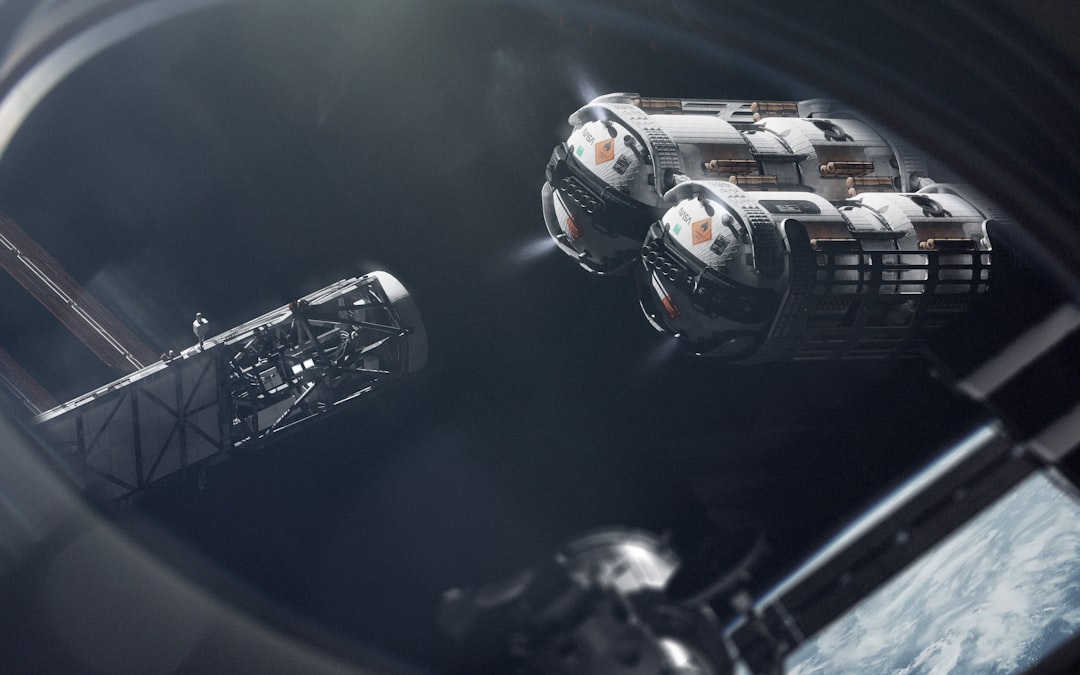
Interstellar travel refers to space exploration beyond our solar system to investigate distant regions of the universe. This concept has generated significant scientific and public interest. Traveling to other star systems would involve visiting distant stars and planets, and potentially discovering extraterrestrial life.
Beyond its portrayal in science fiction, interstellar travel represents a legitimate scientific endeavor aimed at expanding human knowledge and understanding humanity’s position in the cosmos. Recent technological advances and increased investment in space exploration have made interstellar travel a more realistic prospect than previously considered. The feasibility of interstellar travel presents substantial scientific challenges.
The distances involved are enormous; for example, Proxima Centauri, the nearest star system to Earth, is located approximately 4.24 light-years away. Traveling such distances requires overcoming significant technical obstacles related to propulsion, life support, and navigation. However, the potential scientific benefits are considerable.
As space exploration enters a new phase of development, understanding interstellar travel has become important for advancing scientific knowledge and ensuring long-term human survival and adaptation to cosmic changes.
Key Takeaways
- Interstellar travel faces significant challenges including propulsion, energy, and long-duration spaceflight.
- Recent breakthroughs in propulsion and spacecraft design are making interstellar missions more feasible.
- Artificial intelligence plays a crucial role in navigation, decision-making, and mission management.
- Ethical, legal, and international collaboration considerations are essential for responsible interstellar exploration.
- While ambitious, achieving human interstellar travel within 20 years remains uncertain but increasingly plausible.
Current Challenges in Interstellar Travel
As you consider the prospect of interstellar travel, it is crucial to acknowledge the myriad challenges that currently hinder our progress. One of the most significant obstacles is the sheer distance involved. The vastness of space means that even traveling at the speed of light, it would take over four years to reach Proxima Centauri.
This reality poses a fundamental question: how can we develop faster means of travel that can significantly reduce these timeframes? Another challenge lies in the physical and psychological effects of long-duration space travel on human beings.
You may be aware that extended periods in confined spaces can lead to various health issues, including muscle atrophy, bone density loss, and psychological stress. The isolation and confinement experienced during a multi-year journey could have profound effects on crew dynamics and mental well-being. Addressing these challenges requires innovative solutions, such as advanced life support systems and strategies for maintaining crew morale over long periods. Explore the future of space travel with laser sails technology.
Breakthroughs in Propulsion Technology

In recent years, there have been exciting breakthroughs in propulsion technology that could revolutionize interstellar travel. You might be intrigued by concepts like nuclear propulsion, which harnesses the power of nuclear reactions to generate thrust. This technology has the potential to provide much higher speeds than conventional chemical rockets, significantly reducing travel time to other star systems.
Projects like NASA’s Project Orion and the more recent Breakthrough Starshot initiative are exploring these possibilities, aiming to propel tiny spacecraft at a fraction of the speed of light. Another promising avenue is the development of ion propulsion systems. These engines use electric fields to accelerate ions, producing thrust with remarkable efficiency.
While current ion drives are primarily used for short missions within our solar system, advancements could enable them to be scaled up for interstellar missions. As you explore these technologies further, you will find that they represent just a fraction of the innovative ideas being considered to make interstellar travel a reality.
Advancements in Spacecraft Design
The design of spacecraft intended for interstellar travel must address unique challenges that differ from those faced by vehicles operating within our solar system. You may find it fascinating that engineers and scientists are reimagining spacecraft architecture to accommodate long-duration missions. For instance, concepts like generation ships—self-sustaining vessels capable of supporting human life for generations—are being explored.
These ships would need to incorporate advanced life support systems, agricultural modules, and recreational spaces to ensure crew members can thrive during their journey. Moreover, shielding against cosmic radiation is a critical consideration in spacecraft design.
Innovative materials and designs are being researched to create effective radiation shields that protect crew members while minimizing weight and maximizing efficiency. The integration of these advancements into spacecraft design will be essential for ensuring the safety and well-being of future interstellar travelers.
Potential Energy Sources for Interstellar Travel
| Metric | Current Status | Projected Status in 20 Years | Notes |
|---|---|---|---|
| Propulsion Technology | Ion thrusters, chemical rockets | Advanced nuclear fusion or antimatter propulsion prototypes | Significant advancements needed for practical interstellar speeds |
| Travel Speed | Up to 0.0001c (speed of light) | Potentially 0.01c to 0.1c | Requires breakthroughs in energy generation and propulsion |
| Energy Requirements | Extremely high, currently unfeasible for interstellar distances | More efficient energy sources like fusion reactors | Energy storage and generation remain major challenges |
| Travel Time to Nearest Star (Proxima Centauri) | ~40,000 years (current tech) | ~40 to 400 years | Still long, but potentially within multi-generational mission scope |
| Life Support Systems | Limited to months or years (ISS level) | Closed-loop, regenerative life support for decades | Essential for long-duration missions |
| Communication Delay | Minutes to hours for solar system distances | Years for interstellar distances | Real-time communication impossible, autonomy required |
| Mission Type | Robotic probes, short crewed missions | Potential robotic interstellar probes; crewed missions unlikely | Robotic missions more feasible in 20 years timeframe |
| Technological Readiness Level (TRL) | TRL 3-5 for advanced propulsion concepts | TRL 6-7 for experimental propulsion and life support | Requires sustained investment and research |
Energy is a fundamental requirement for any form of space travel, and interstellar missions present unique challenges in this regard. You might be intrigued by the potential energy sources that could power spacecraft on their journeys across the cosmos. One promising option is harnessing fusion energy—the process that powers stars like our sun.
If scientists can develop practical fusion reactors, they could provide an almost limitless source of energy for propulsion systems, enabling faster travel across vast distances. Another avenue worth exploring is antimatter propulsion. Antimatter is composed of particles that have opposite charges compared to regular matter, and when they collide, they release an enormous amount of energy.
While producing antimatter is currently an expensive and complex process, advancements in this field could lead to breakthroughs that make antimatter a viable energy source for interstellar travel. As you consider these possibilities, it becomes clear that finding sustainable energy solutions will be crucial for humanity’s journey into the stars.
The Search for Habitable Exoplanets
As you contemplate interstellar travel, you cannot overlook the importance of identifying habitable exoplanets—worlds beyond our solar system that could potentially support life. The discovery of thousands of exoplanets in recent years has opened up exciting possibilities for future exploration. You may find it fascinating that astronomers are using advanced telescopes and observational techniques to identify planets within their star’s habitable zone—regions where conditions might be just right for liquid water and life as we know it.
The search for habitable exoplanets is not just about finding new homes for humanity; it also provides valuable insights into the potential for life elsewhere in the universe. As you delve deeper into this topic, you will discover that missions like NASA’s Kepler Space Telescope and the upcoming James Webb Space Telescope are at the forefront of this research, helping scientists gather data on exoplanet atmospheres and compositions. Understanding these worlds will be essential as we prepare for future interstellar missions aimed at exploring them.
The Role of Artificial Intelligence in Interstellar Travel
Artificial intelligence (AI) is poised to play a transformative role in interstellar travel, enhancing both mission planning and execution. You may be intrigued by how AI can assist in navigating vast distances and making real-time decisions during long-duration missions. With limited communication capabilities between Earth and distant spacecraft, AI systems could analyze data from onboard sensors and make autonomous adjustments to optimize performance and ensure crew safety.
Moreover, AI can facilitate research and development efforts by simulating various scenarios related to interstellar travel. You might find it fascinating that machine learning algorithms can analyze vast datasets from previous space missions to identify patterns and predict outcomes, ultimately guiding engineers in designing more efficient spacecraft and propulsion systems. As AI continues to evolve, its integration into interstellar exploration will likely become increasingly vital.
Ethical and Legal Considerations of Interstellar Exploration
As humanity embarks on the journey toward interstellar travel, ethical and legal considerations must be addressed. You may find yourself pondering questions about our responsibilities as explorers in uncharted territories. For instance, what rights do we have when encountering extraterrestrial life forms?
How do we ensure that our actions do not harm potential ecosystems on other planets? These questions highlight the need for a robust ethical framework guiding interstellar exploration. Additionally, legal frameworks governing space exploration are still evolving.
You might be aware that existing treaties, such as the Outer Space Treaty of 1967, provide guidelines for activities in outer space but may not adequately address the complexities of interstellar missions. As you explore this topic further, you will discover that international collaboration will be essential in establishing regulations that promote responsible exploration while safeguarding both human interests and potential extraterrestrial environments.
International Collaboration in Interstellar Missions
The challenges associated with interstellar travel are so immense that no single nation can tackle them alone. You may find it inspiring that international collaboration is becoming increasingly vital in advancing our understanding of space exploration. Countries around the world are pooling resources, expertise, and technology to work together on ambitious projects aimed at reaching other star systems.
Collaborative efforts can take many forms, from joint research initiatives to shared funding for large-scale missions. You might be interested to learn about organizations like the International Space Exploration Coordination Group (ISECG), which fosters cooperation among space agencies worldwide. By working together, nations can leverage their strengths and accelerate progress toward achieving interstellar travel goals.
The Future of Human Colonization in Interstellar Space
As you envision a future where interstellar travel becomes a reality, thoughts inevitably turn to human colonization beyond our solar system. The prospect of establishing permanent settlements on distant exoplanets raises both excitement and challenges. You may wonder what it would take to create self-sustaining colonies capable of supporting human life over generations.
Colonization efforts would require advanced technologies for terraforming planets or creating habitable environments within spacecraft or domes on alien worlds. You might find it fascinating that scientists are already researching methods for modifying planetary atmospheres or utilizing local resources to support human life. As humanity takes its first steps into interstellar colonization, careful planning and innovative solutions will be essential for ensuring long-term success.
The Feasibility of Interstellar Travel within 20 Years
As you reflect on the various aspects of interstellar travel discussed throughout this article, you may feel a sense of optimism about its feasibility within the next two decades. While significant challenges remain—ranging from propulsion technology to ethical considerations—the rapid pace of scientific advancement suggests that we are closer than ever to making this dream a reality. The convergence of breakthroughs in propulsion systems, spacecraft design, energy sources, and international collaboration paints an encouraging picture for the future of interstellar exploration.
As humanity continues its quest for knowledge beyond our solar system, you may find yourself inspired by the possibilities that lie ahead—an era where interstellar travel becomes not just a dream but an achievable goal within your lifetime.
As we look towards the future of space exploration, the concept of interstellar travel is becoming increasingly plausible. A recent article discusses the advancements in technology and theoretical physics that could make interstellar journeys a reality within the next 20 years. For more insights on this exciting topic, you can read the full article [here](https://www.mycosmicventures.com/sample-page/).
WATCH THIS! 🚀✨ Can Laser Sails Take Us to Alpha Centauri in 20 Years?
FAQs
Is interstellar travel possible within the next 20 years?
Currently, interstellar travel within 20 years remains highly speculative. While advancements in propulsion technology and space exploration are ongoing, the vast distances between stars present significant challenges that are unlikely to be overcome in such a short timeframe.
What are the main challenges of interstellar travel?
The primary challenges include the immense distances between stars, requiring travel times of decades or centuries with current technology, the need for advanced propulsion systems, life support for long-duration missions, and protection from cosmic radiation.
What propulsion technologies are being considered for interstellar travel?
Potential propulsion methods include nuclear fusion, antimatter engines, light sails propelled by lasers, and theoretical concepts like the Alcubierre warp drive. However, none are currently ready for practical interstellar missions.
Are there any ongoing projects aimed at interstellar travel?
Yes, projects like Breakthrough Starshot aim to develop light sail technology to send tiny probes to nearby stars within a few decades. These are preliminary steps toward interstellar exploration but do not involve crewed missions.
Can humans survive the journey to another star system?
Long-duration space travel poses significant challenges for human survival, including psychological effects, radiation exposure, and life support sustainability. Solutions such as cryogenic sleep or generation ships have been proposed but remain theoretical.
What is the nearest star system to Earth?
The nearest star system is Alpha Centauri, approximately 4.37 light-years away. It is the most likely initial target for interstellar missions.
How fast would a spacecraft need to travel to reach another star in 20 years?
To reach Alpha Centauri in 20 years, a spacecraft would need to travel at about 20% of the speed of light, which is far beyond current propulsion capabilities.
Are there any scientific benefits to pursuing interstellar travel?
Yes, interstellar travel could provide insights into planetary formation, the potential for extraterrestrial life, and fundamental physics. It also drives technological innovation in propulsion, materials science, and life support systems.
What role does international cooperation play in interstellar travel?
Given the complexity and cost, international collaboration is essential for pooling resources, expertise, and funding to develop the technologies required for interstellar missions.
Is interstellar travel more feasible for unmanned probes than for humans?
Yes, unmanned probes are more feasible in the near term because they require less life support and can be smaller and lighter, allowing for higher speeds and longer mission durations without the need to sustain human life.