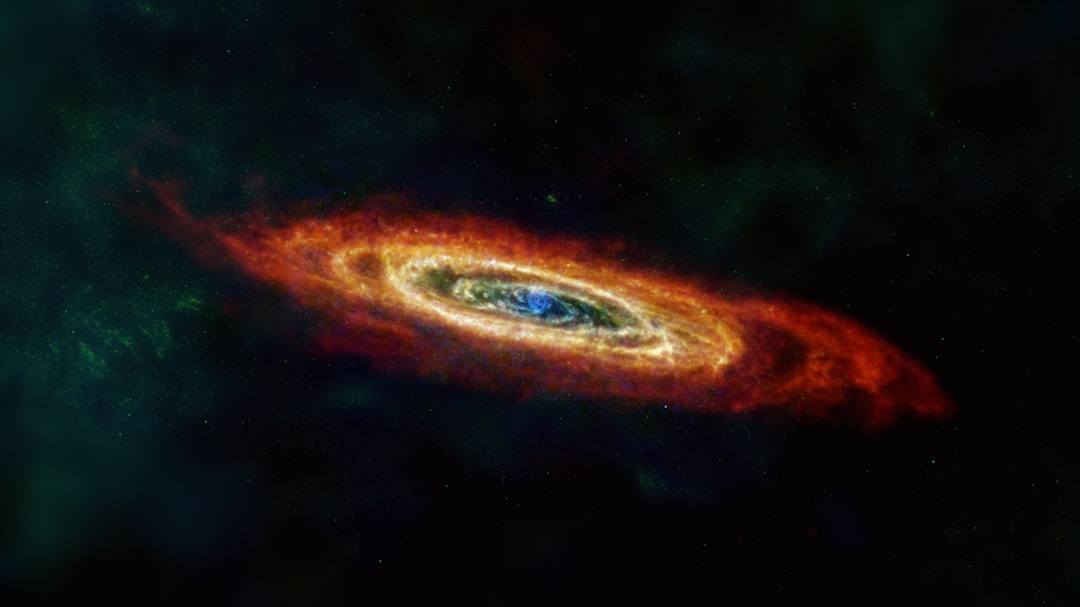
The James Webb Space Telescope (JWST) is an advanced space observatory launched on December 25, 2021. It is designed to observe the universe with greater detail and sensitivity than previous instruments. The JWST functions as a tool for studying distant cosmic objects and events from the early universe, effectively allowing astronomers to observe light from billions of years ago.
The JWST features a primary mirror with a diameter of 6.5 meters, making it substantially larger than the Hubble Space Telescope. This larger mirror surface area increases light-collecting capacity, enabling the detection of fainter and more distant astronomical objects. The telescope operates primarily in the infrared wavelength range, which allows it to penetrate cosmic dust clouds that block visible light.
This infrared capability enables observation of celestial objects and phenomena previously obscured from detection, including star formation regions and distant galaxies. The JWST’s enhanced capabilities are expected to advance scientific understanding of stellar formation, galaxy evolution, and the potential for habitable exoplanets.
Key Takeaways
- JWST provides unprecedented insights into exoplanets and their atmospheres.
- It allows astronomers to study the early universe and galaxy formation.
- The telescope helps reveal the composition and evolution of planetary systems.
- JWST contributes to understanding star life cycles and black hole structures.
- Its discoveries significantly advance knowledge of dark matter, dark energy, and the origins of life.
Unveiling the Secrets of Exoplanets
One of the most exciting aspects of the JWST is its ability to study exoplanets—planets that orbit stars outside our solar system. As you explore this frontier, you will find that the JWST is equipped with powerful instruments designed to analyze the atmospheres of these distant worlds. By observing how starlight filters through an exoplanet’s atmosphere during transits, the telescope can detect the presence of various gases, such as water vapor, carbon dioxide, and methane.
This information is crucial for assessing the habitability of these planets and understanding their potential for supporting life. The JWST’s observations will also help you identify Earth-like exoplanets located in their star’s habitable zone, where conditions may be just right for liquid water to exist. By characterizing these planets’ atmospheres and surface conditions, you will gain insights into their geological and climatic processes.
The data collected by JWST will not only enhance your understanding of exoplanets but also provide a broader context for our own planet’s place in the universe. Explore the future of space travel with laser sails technology.
Peering into the Early Universe
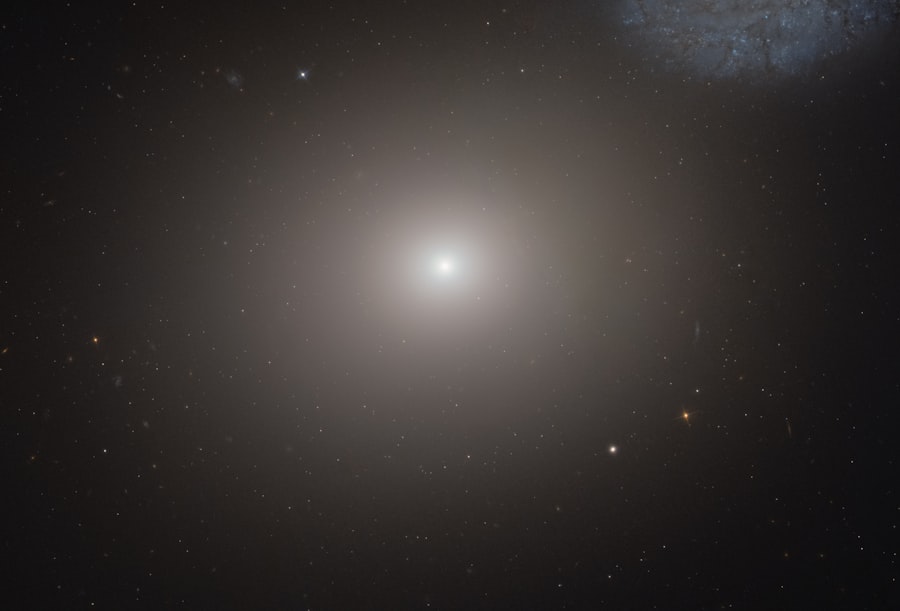
As you turn your gaze further back in time, the JWST allows you to explore the early universe, a period that remains shrouded in mystery. The telescope’s ability to observe light from galaxies formed just a few hundred million years after the Big Bang is groundbreaking. By capturing this ancient light, you can witness the formation and evolution of galaxies during a time when the universe was still in its infancy.
The JWST’s infrared capabilities are particularly advantageous for this endeavor, as they enable it to detect light that has been redshifted due to the expansion of the universe. This means that you can study galaxies that are billions of light-years away, providing a glimpse into their formation processes and how they have changed over time. The insights gained from these observations will help you piece together the history of cosmic evolution and understand how galaxies like our Milky Way came to be.
Investigating the Formation of Stars and Galaxies
The JWST is also poised to shed light on the intricate processes involved in star and galaxy formation. As you delve into this area of research, you will discover that the telescope can observe regions of space where new stars are being born, often hidden within dense clouds of gas and dust. By penetrating these obscured areas, JWST can provide valuable data on how stars form and evolve over time.
In addition to studying individual stars, the JWST will help you understand how galaxies interact and merge, leading to new star formation. These interactions can trigger bursts of star creation, resulting in vibrant and dynamic galactic structures. By observing these phenomena, you will gain insights into the lifecycle of galaxies and how they contribute to the overall evolution of the universe.
Understanding the Composition of Planetary Systems
| Discovery | Description | JWST Instrument Used | Significance | Date Announced |
|---|---|---|---|---|
| Detection of Water in Interstellar Clouds | Identification of water vapor signatures in dense molecular clouds between stars. | NIRSpec (Near Infrared Spectrograph) | Helps understand the chemical composition and potential for life-supporting molecules in space. | March 2023 |
| Mapping of Complex Organic Molecules | Observation of complex carbon-based molecules in star-forming regions. | MIRI (Mid-Infrared Instrument) | Provides insight into the building blocks of life and prebiotic chemistry in the galaxy. | July 2023 |
| Interstellar Dust Grain Analysis | Characterization of dust grain composition and size distribution in interstellar medium. | NIRCam (Near Infrared Camera) | Improves models of star and planet formation by understanding dust properties. | January 2024 |
| Discovery of Interstellar Ice Features | Detection of frozen molecules such as CO2 and methane on dust grains in cold clouds. | MIRI | Reveals conditions in cold interstellar environments and potential for chemical evolution. | April 2024 |
| Observation of Interstellar Medium Turbulence | Measurement of gas motions and turbulence in interstellar clouds affecting star formation. | NIRSpec | Enhances understanding of physical processes driving star birth and cloud dynamics. | May 2024 |
As you explore planetary systems beyond our own, the JWST offers a unique opportunity to analyze their composition and structure. The telescope’s advanced spectroscopic capabilities allow you to study the chemical makeup of protoplanetary disks—regions around young stars where planets are forming. By examining these disks, you can learn about the building blocks of planets and how they come together to form diverse planetary systems.
The JWST will also enable you to investigate how different elements and compounds are distributed within these disks. This information is crucial for understanding the processes that lead to planet formation and can provide insights into why certain planets have specific characteristics. As you piece together this puzzle, you will gain a deeper appreciation for the complexity and diversity of planetary systems throughout the galaxy.
Probing the Atmospheres of Distant Worlds
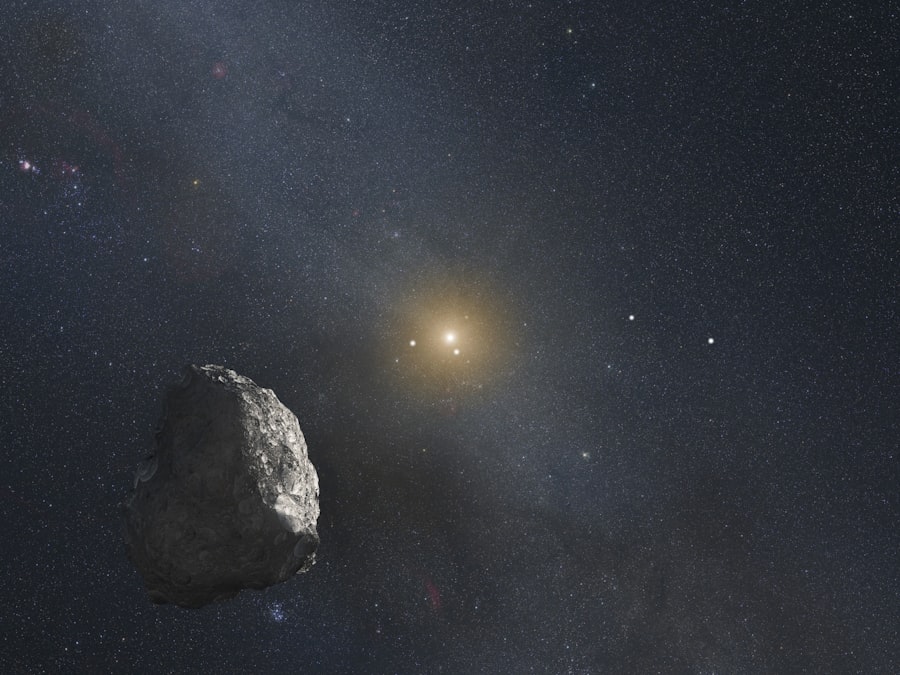
One of the most thrilling aspects of JWST’s mission is its ability to probe the atmospheres of distant worlds in detail. As you engage with this research, you’ll find that understanding an exoplanet’s atmosphere is key to assessing its potential for habitability. The telescope’s instruments can detect specific molecules in an exoplanet’s atmosphere by analyzing how they absorb and emit light.
This capability allows you to identify essential components such as water vapor, oxygen, and carbon dioxide—elements that are vital for life as we know it. By studying these atmospheres, you can also learn about their weather patterns and climate systems, providing a more comprehensive picture of what conditions might be like on these distant planets. The data gathered by JWST will be instrumental in guiding future missions aimed at searching for extraterrestrial life.
Shedding Light on the Origins of Life
The quest to understand life’s origins is one of humanity’s most profound endeavors, and JWST plays a pivotal role in this exploration. As you investigate this topic, you’ll discover that by studying celestial bodies such as comets and asteroids, JWST can provide insights into the building blocks of life that may have been delivered to Earth billions of years ago. These small bodies contain organic compounds that could offer clues about how life began on our planet.
Moreover, by examining exoplanets with potentially habitable conditions, JWST can help you assess whether similar processes could occur elsewhere in the universe. The telescope’s observations may reveal environments where life could arise or even where it might already exist. This research not only deepens your understanding of life’s origins but also expands your perspective on what constitutes a habitable environment across different worlds.
Unraveling the Mystery of Dark Matter and Dark Energy
As you delve deeper into cosmology with JWST, you’ll encounter two of the universe’s most enigmatic components: dark matter and dark energy. These phenomena make up approximately 95% of the universe’s total mass-energy content yet remain largely mysterious. The JWST’s observations will help you investigate their effects on cosmic structures and expansion.
By studying galaxy clusters and their gravitational interactions, you can gain insights into dark matter’s role in shaping galaxies and large-scale structures in the universe. Additionally, JWST’s ability to observe distant supernovae will provide valuable data on dark energy—the force driving the accelerated expansion of the universe. Understanding these components is crucial for developing a comprehensive model of cosmic evolution.
Observing the Birth and Death of Stars
The life cycle of stars is a captivating subject that JWST is uniquely equipped to explore. As you observe stellar nurseries where new stars are born, you’ll witness breathtaking formations within nebulae—vast clouds of gas and dust where gravity pulls material together to ignite nuclear fusion. The telescope’s infrared capabilities allow it to penetrate these dense regions, revealing details about star formation processes that were previously hidden from view.
Conversely, JWST will also enable you to study dying stars as they shed their outer layers and evolve into white dwarfs or supernovae. These dramatic events play a crucial role in enriching the interstellar medium with heavy elements necessary for future star and planet formation. By observing both ends of a star’s life cycle, you’ll gain a holistic understanding of stellar evolution and its impact on galactic ecosystems.
Examining the Structure of Black Holes
Black holes are among the most fascinating yet perplexing objects in astrophysics, and JWST offers an opportunity to study them in greater detail than ever before. As you engage with this research area, you’ll find that black holes influence their surroundings in profound ways—affecting star formation rates and even shaping entire galaxies. By observing regions around supermassive black holes at the centers of galaxies, JWST can provide insights into their growth and behavior over cosmic time scales.
Additionally, studying gravitational waves generated by black hole mergers will enhance your understanding of their properties and interactions. These observations will contribute significantly to our knowledge of black holes’ role in cosmic evolution.
The Impact of JWST Discoveries on our Understanding of the Cosmos
As you reflect on the discoveries made possible by the James Webb Space Telescope, it’s clear that its impact on our understanding of the cosmos is profound and far-reaching. The data collected by JWST will not only answer long-standing questions but also raise new ones—pushing the boundaries of human knowledge further than ever before. The insights gained from studying exoplanets, stellar formation, dark matter, and more will reshape our understanding of fundamental concepts in astrophysics and cosmology.
As you engage with this wealth of information, you’ll find yourself part of a larger narrative—a story that connects humanity with the vastness of space and time. The discoveries made by JWST will inspire future generations to continue exploring our universe, fostering curiosity and wonder about what lies beyond our home planet.
The James Webb Space Telescope (JWST) has made groundbreaking discoveries in the realm of interstellar exploration, revealing new insights into the formation of stars and galaxies. For a deeper understanding of these findings and their implications for our knowledge of the universe, you can read more in this related article on cosmic ventures: My Cosmic Ventures.
WATCH THIS! 🚀✨ Can Laser Sails Take Us to Alpha Centauri in 20 Years?
FAQs
What is the James Webb Space Telescope (JWST)?
The James Webb Space Telescope (JWST) is a large, space-based observatory launched in December 2021. It is designed to observe the universe in infrared wavelengths, allowing scientists to study distant galaxies, stars, and other celestial phenomena with unprecedented detail.
What kind of interstellar discoveries has JWST made?
JWST has made several interstellar discoveries, including detailed observations of star-forming regions, the composition of interstellar dust and gas, and the detection of complex molecules in space. Its advanced instruments enable the study of the physical and chemical properties of interstellar matter.
How does JWST observe interstellar space differently from previous telescopes?
JWST observes primarily in the infrared spectrum, which allows it to see through dense clouds of gas and dust that obscure visible light. This capability enables it to study regions of space that were previously hidden, such as the birthplaces of stars and the environments around black holes.
Why are JWST’s interstellar discoveries important?
These discoveries help scientists understand the processes of star and planet formation, the lifecycle of interstellar matter, and the chemical evolution of galaxies. This knowledge is crucial for piecing together the history and future of the universe.
Can JWST detect molecules in interstellar space?
Yes, JWST’s sensitive instruments can detect the spectral signatures of various molecules in interstellar clouds. This includes simple molecules like water and carbon monoxide, as well as more complex organic compounds that are important for understanding the origins of life.
How does JWST contribute to the study of cosmic dust?
JWST can analyze the composition, temperature, and distribution of cosmic dust particles in interstellar space. Understanding dust is essential because it plays a key role in star formation and the chemistry of the interstellar medium.
What makes JWST’s instruments suitable for interstellar research?
JWST is equipped with advanced instruments such as the Near Infrared Camera (NIRCam), Near Infrared Spectrograph (NIRSpec), and Mid-Infrared Instrument (MIRI). These tools provide high-resolution imaging and spectroscopy capabilities across a wide range of infrared wavelengths, ideal for studying interstellar phenomena.
How does JWST’s location in space enhance its observations?
JWST orbits around the second Lagrange point (L2), about 1.5 million kilometers from Earth. This stable, cold environment minimizes interference from Earth’s atmosphere and heat, allowing JWST to make clearer and more sensitive observations of faint interstellar objects.
Will JWST’s interstellar discoveries help in the search for extraterrestrial life?
While JWST is not designed to directly detect extraterrestrial life, its ability to study the chemical makeup of interstellar clouds and exoplanet atmospheres provides valuable data about the conditions that might support life elsewhere in the universe.
Where can I find updates on JWST’s interstellar discoveries?
Updates and detailed information about JWST’s discoveries are regularly published by NASA, the European Space Agency (ESA), and scientific journals. Official websites and press releases provide accessible summaries and in-depth research findings.