
# Interstellar Travel: Scientific Prospects and Implications
The night sky contains countless stars that represent potential destinations for human exploration. Interstellar travel—the concept of traveling between star systems—has transitioned from purely theoretical science fiction to an active area of scientific research and development. Current technological advances suggest that humanity may eventually develop the capability to traverse the enormous distances separating stars, potentially discovering new planetary systems and evidence of extraterrestrial life.
This objective builds upon centuries of accumulated scientific knowledge and technological progress. The scientific and practical motivations for interstellar travel are substantial. Establishing human settlements on exoplanets and moons beyond our solar system could distribute humanity’s population and reduce pressure on Earth’s finite resources.
Such expansion would create opportunities for scientific discovery and resource utilization. Additionally, pursuing interstellar travel technology drives innovation across multiple scientific disciplines and can motivate educational advancement in science, technology, engineering, and mathematics globally. The development of interstellar capabilities would fundamentally expand human knowledge of the universe and our position within it, while addressing long-term sustainability concerns for human civilization.
Explore the future of space travel with laser sails technology.
Key Takeaways
- Interstellar travel holds immense promise but faces significant challenges, especially in fueling long-distance journeys.
- Revolutionary propulsion technologies like solar sails, magnetic fields, laser propulsion, and antimatter engines are emerging as potential solutions.
- Nuclear fusion propulsion offers a powerful alternative to traditional rocket engines, potentially enabling faster and more efficient space travel.
- Future interstellar travel may rely on innovative methods that require little to no conventional fuel, transforming space exploration.
- Ethical and environmental considerations are crucial when developing and deploying advanced interstellar propulsion technologies.
The Challenge of Fueling Interstellar Journeys
While the dream of interstellar travel is captivating, it is accompanied by significant challenges, particularly when it comes to fueling these ambitious journeys. The distances involved are staggering; even the closest star system, Alpha Centauri, is over four light-years away. Traditional rocket propulsion systems, which rely on chemical fuels, are woefully inadequate for such vast distances.
You might find yourself pondering how humanity can overcome this monumental hurdle to make interstellar travel feasible. The energy requirements for interstellar journeys are astronomical. To reach even a fraction of the speed necessary to make such trips within a human lifetime, you would need a propulsion system that can generate immense thrust over extended periods.
This challenge necessitates innovative thinking and groundbreaking technologies that can harness energy in ways we have yet to fully comprehend. As you consider these obstacles, it becomes clear that the future of interstellar travel hinges on our ability to develop new methods of propulsion that can efficiently utilize available resources while minimizing waste.
The Emergence of Revolutionary Propulsion Technologies
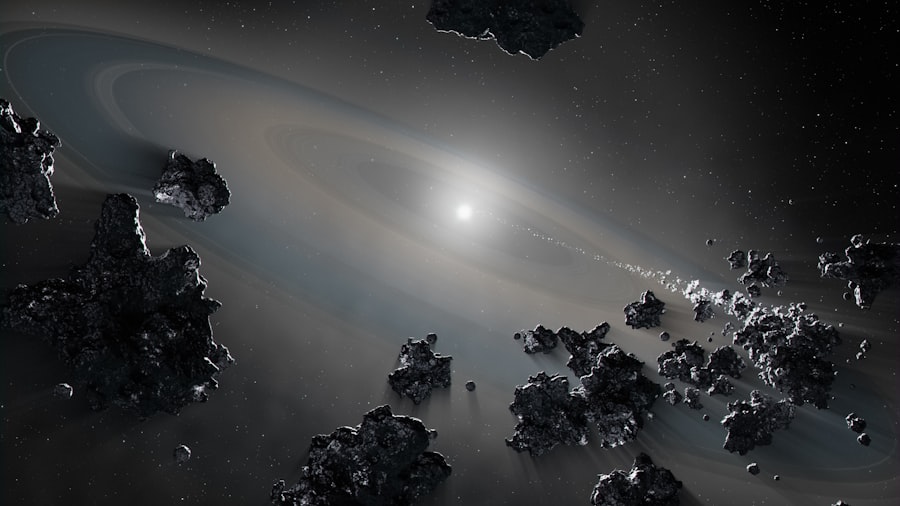
In recent years, researchers and scientists have begun to explore revolutionary propulsion technologies that could pave the way for interstellar travel. These innovations are not just theoretical; they represent tangible advancements in our understanding of physics and engineering. As you delve into this exciting field, you may find yourself captivated by concepts such as warp drives, which could theoretically bend space-time to allow for faster-than-light travel.
This idea, once relegated to the realm of science fiction, is now being taken seriously by physicists who are investigating its feasibility. Another promising avenue is the development of advanced ion propulsion systems. These systems utilize electric fields to accelerate ions, producing thrust with remarkable efficiency.
You might be intrigued to learn that ion propulsion has already been successfully employed in various space missions, demonstrating its potential for long-duration journeys. As these technologies continue to evolve, they could provide the necessary means to propel spacecraft across the vastness of space, bringing interstellar travel closer to reality.
Harnessing the Power of Solar Sails
One of the most intriguing concepts in the realm of interstellar propulsion is solar sails. Imagine a spacecraft equipped with large, reflective sails that harness the energy of sunlight to propel itself through space. This method relies on the pressure exerted by photons emitted from the sun, allowing a spacecraft to gradually accelerate over time.
As you visualize this elegant solution, you may appreciate its simplicity and efficiency compared to traditional propulsion methods.
They require no fuel in the conventional sense, relying instead on an abundant and renewable energy source—the sun.
This means that once launched, a solar sail spacecraft could continue its journey without the need for refueling or carrying heavy fuel supplies. You might find it fascinating that missions like the Planetary Society’s LightSail have already demonstrated the viability of this technology in low Earth orbit, paving the way for future interstellar missions that could harness solar energy for propulsion.
Riding the Wave of Magnetic Fields
| Metric | Value / Description |
|---|---|
| Concept | Interstellar travel without onboard fuel, relying on external propulsion methods |
| Primary Methods | Light sails, magnetic sails, gravitational assists, laser propulsion |
| Typical Speed | Up to 20% speed of light (0.2c) with advanced laser sail concepts |
| Distance to Nearest Star (Proxima Centauri) | 4.24 light years |
| Travel Time to Proxima Centauri | ~20 years at 0.2c |
| Energy Source | External lasers or stellar radiation pressure |
| Mass Limitations | Very low mass probes (grams to kilograms) preferred for effective acceleration |
| Challenges | Beam targeting over light years, sail material durability, communication delay |
| Potential Applications | Scientific probes, data relay, precursor missions for manned travel |
Another innovative approach to interstellar travel involves utilizing magnetic fields for propulsion. This concept revolves around the idea of creating a magnetic sail that interacts with the solar wind—a stream of charged particles emitted by the sun. As you consider this method, you may envision a spacecraft equipped with a large magnetic field generator that captures and harnesses this solar wind to propel itself forward.
The beauty of magnetic propulsion lies in its potential for continuous acceleration without the need for traditional fuel sources. By strategically positioning a spacecraft within the solar wind’s flow, it could gradually build up speed over time. You might find it exciting to think about how this technology could enable long-duration missions to distant star systems while minimizing resource consumption.
As researchers continue to explore this avenue, magnetic propulsion could become a key player in humanity’s quest for interstellar exploration.
Tapping into the Potential of Laser Propulsion

Laser propulsion represents another groundbreaking approach to achieving interstellar travel. Imagine a scenario where powerful ground-based lasers beam energy directly to a spacecraft equipped with a lightweight sail or other propulsion mechanism. This method could provide an efficient means of accelerating a spacecraft to significant speeds without relying on traditional fuel sources.
As you contemplate this innovative concept, you may recognize its potential to revolutionize space travel. The advantages of laser propulsion are compelling. By using lasers to deliver energy from Earth or orbiting satellites, you could significantly reduce the weight and complexity of spacecraft design.
This method allows for rapid acceleration and deceleration, making it possible to reach high velocities in relatively short periods. You might be intrigued by projects like Breakthrough Starshot, which aims to send tiny spacecraft to Alpha Centauri using laser propulsion technology. Such initiatives highlight how laser propulsion could be instrumental in making interstellar travel a reality.
Exploring the Possibilities of Antimatter Engines
Antimatter engines represent one of the most tantalizing possibilities for interstellar travel. Antimatter is a substance composed of antiparticles that annihilate upon contact with regular matter, releasing an enormous amount of energy in the process. As you delve into this concept, you may find yourself captivated by its potential for providing unprecedented thrust and efficiency for spacecraft.
The energy yield from antimatter reactions is staggering—far surpassing that of conventional fuels. Just a small amount of antimatter could theoretically propel a spacecraft across vast distances at incredible speeds. However, as you consider this exciting prospect, it’s essential to acknowledge the significant challenges associated with antimatter production and storage.
Currently, creating and containing antimatter is an incredibly complex and costly endeavor, but ongoing research may one day unlock its potential for practical use in interstellar travel.
Embracing the Potential of Nuclear Fusion Propulsion
Nuclear fusion propulsion is another promising avenue that could revolutionize interstellar travel. Fusion—the process that powers stars—has long been considered a potential source of nearly limitless energy if harnessed effectively. Imagine a spacecraft equipped with fusion reactors capable of generating thrust by fusing light atomic nuclei into heavier ones, releasing vast amounts of energy in the process.
As you explore this concept further, you may find yourself inspired by its potential applications in space exploration. The advantages of nuclear fusion propulsion are numerous. It offers a high energy-to-mass ratio, allowing spacecraft to achieve significant speeds while carrying relatively small amounts of fuel compared to traditional rockets.
Additionally, fusion reactions produce minimal waste compared to fission reactions used in current nuclear reactors. You might be excited by projects like NASA’s Innovative Advanced Concepts (NIAC) program, which is exploring fusion propulsion concepts that could one day enable humanity to embark on interstellar journeys.
Overcoming the Limitations of Traditional Rocket Propulsion
As you reflect on the various methods being explored for interstellar travel, it’s essential to recognize the limitations inherent in traditional rocket propulsion systems. While chemical rockets have served humanity well in launching payloads into space and conducting missions within our solar system, they are ill-suited for interstellar journeys due to their reliance on finite fuel supplies and limited thrust capabilities. The constraints imposed by traditional rocket technology become increasingly apparent when considering the vast distances between stars.
You may find yourself contemplating how these limitations hinder our ability to explore beyond our solar system effectively. To overcome these challenges, researchers are actively seeking alternative propulsion methods that can provide sustained acceleration over long periods while minimizing resource consumption.
The Future of Interstellar Travel: No Fuel Required
As you look toward the future of interstellar travel, it becomes clear that innovative technologies may allow humanity to embark on journeys without relying on traditional fuel sources at all. Concepts like solar sails, magnetic sails, laser propulsion, and even antimatter engines hold promise for enabling efficient and sustainable exploration beyond our solar system. Imagine a future where spacecraft can harness energy from their surroundings—whether from sunlight or cosmic phenomena—allowing them to traverse vast distances without depleting finite resources.
This vision represents not only a technological breakthrough but also a paradigm shift in how we approach space exploration as a species. You might find it exhilarating to think about how these advancements could redefine humanity’s relationship with space and our understanding of what is possible.
The Ethical and Environmental Implications of Revolutionary Interstellar Travel
As we stand on the brink of potentially revolutionary advancements in interstellar travel, it is crucial to consider the ethical and environmental implications associated with these technologies. While the prospect of exploring new worlds is undeniably exciting, it raises important questions about our responsibilities as stewards of both Earth and any new environments we may encounter. You may ponder how we can ensure that our pursuit of interstellar exploration does not come at the expense of our home planet or other celestial bodies we may visit.
The potential for contamination or exploitation must be carefully weighed against our desire for discovery and expansion. As we develop new technologies and embark on ambitious missions beyond our solar system, it is essential to foster an ethical framework that prioritizes sustainability and respect for all forms of life—both known and unknown. In conclusion, as you reflect on the promise and challenges associated with interstellar travel, it becomes evident that humanity stands at a pivotal moment in its quest for exploration beyond our solar system.
With innovative propulsion technologies emerging and ethical considerations guiding our path forward, you may feel inspired by the possibilities that lie ahead as we strive to unlock the secrets of the universe and expand our horizons as a species.
Interstellar travel has long been a topic of fascination, and recent discussions have explored the possibility of achieving it without the need for traditional fuel sources. One intriguing article that delves into this concept is available at com/sample-page/’>this link.
It examines innovative propulsion methods that could potentially allow spacecraft to traverse the vast distances between stars, opening up new frontiers for exploration and discovery.
WATCH THIS! 🚀✨ Can Laser Sails Take Us to Alpha Centauri in 20 Years?
FAQs
What is interstellar travel with no fuel?
Interstellar travel with no fuel refers to methods of traveling between stars without relying on traditional fuel sources like chemical rockets. Instead, it involves alternative propulsion techniques such as light sails, gravitational assists, or electromagnetic fields that do not require carrying onboard fuel.
How can spacecraft travel without fuel?
Spacecraft can travel without fuel by harnessing external forces. For example, solar sails use the pressure of sunlight to propel a spacecraft, while magnetic sails interact with the interstellar medium’s magnetic fields. These methods rely on continuous external energy sources rather than onboard fuel.
What are solar sails and how do they work?
Solar sails are large, reflective surfaces that capture momentum from photons emitted by the Sun or lasers. As photons strike the sail, they transfer momentum, pushing the spacecraft forward. This propulsion method requires no fuel and can theoretically accelerate a spacecraft to high speeds over time.
Are there any current projects or missions using fuel-less propulsion?
Yes, projects like the Planetary Society’s LightSail and Breakthrough Starshot are exploring solar sail technology. LightSail has successfully demonstrated solar sailing in Earth orbit, while Breakthrough Starshot aims to send tiny probes to nearby stars using powerful ground-based lasers to propel light sails.
What are the challenges of interstellar travel without fuel?
Challenges include the need for extremely large and lightweight sails, precise navigation over vast distances, slow acceleration rates, and the difficulty of decelerating upon reaching the destination. Additionally, interstellar space contains dust and radiation that can damage spacecraft over long durations.
Can gravitational assists be used for interstellar travel?
Gravitational assists, or slingshot maneuvers, can increase spacecraft speed by using the gravity of planets or stars. While useful within a solar system, their effectiveness diminishes for interstellar travel due to the vast distances and lack of suitable massive bodies along the route.
Is interstellar travel without fuel currently feasible?
Currently, interstellar travel without fuel remains theoretical and experimental. While concepts like solar sails have been tested in space, practical interstellar missions require significant technological advancements and long mission durations, making them a future goal rather than an immediate reality.
What advantages does fuel-less interstellar travel offer?
Fuel-less travel reduces the mass and complexity of spacecraft by eliminating the need to carry large amounts of propellant. It also allows for potentially continuous acceleration, enabling higher speeds over time, and reduces mission costs related to fuel production and storage.
How long would interstellar travel take using fuel-less methods?
Travel times depend on the propulsion method and target star. For example, Breakthrough Starshot aims to reach Alpha Centauri in about 20 years using laser-driven light sails. Other methods like solar sails propelled by sunlight alone would take much longer, potentially thousands of years.
What materials are used to build solar sails?
Solar sails are made from ultra-thin, lightweight, and highly reflective materials such as aluminized Mylar or Kapton. These materials must withstand the harsh conditions of space, including temperature extremes and micrometeoroid impacts, while maintaining structural integrity.