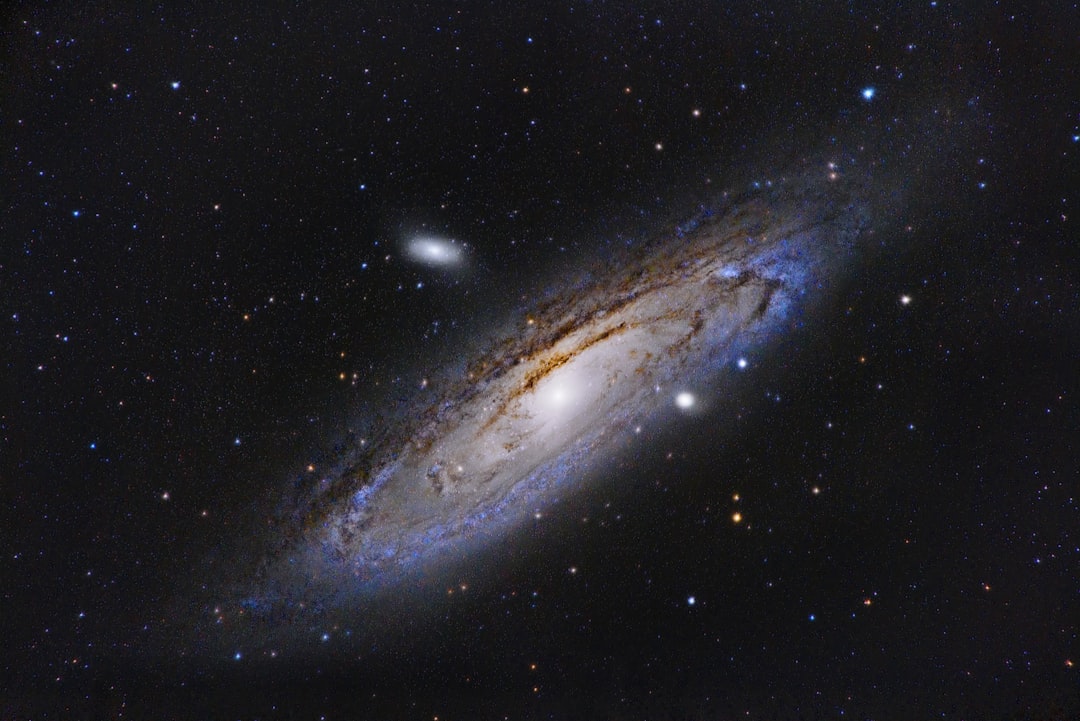
The universe operates according to principles of efficiency and resource conservation. Rather than possessing unlimited resources, the cosmos demonstrates a systematic approach to energy management, where matter and energy are utilized optimally. This understanding contrasts with earlier perceptions of an extravagant universe and instead reveals a system governed by fundamental laws that prioritize efficiency and sustainability.
Scientific investigation of cosmic phenomena has identified patterns consistent with this principle of efficiency. Researchers studying everything from stellar formation to quantum mechanics observe that natural processes minimize waste and maximize functional outcomes. These observations suggest that the universe’s structure and behavior reflect deeply embedded principles of economy.
This understanding of cosmic efficiency has practical applications for human society. The patterns observed in natural systems can inform approaches to resource management, environmental stewardship, and technological development. By studying how the universe conserves and allocates energy, scientists and engineers can develop more sustainable practices and efficient technologies that align with these fundamental natural principles.
Key Takeaways
- The universe operates on principles of frugality, efficiently conserving energy and resources through fundamental physical laws.
- Entropy and the laws of thermodynamics play key roles in maintaining the universe’s balance and resource management.
- Understanding the universe’s frugality offers valuable insights for advancing scientific research, technology, and sustainable practices.
- The concept has profound philosophical, ethical, and behavioral implications, influencing how humans relate to resource use and conservation.
- Ongoing research continues to reveal the significance of the universe’s frugality, deepening our comprehension of cosmic processes and sustainability.
The principles of physics that support the idea of a frugal universe
Several fundamental principles of physics underpin the concept of a frugal universe. One of the most significant is the law of conservation of energy, which states that energy cannot be created or destroyed but can only change forms. This principle implies that the total energy in a closed system remains constant, leading to a natural tendency for energy to be reused and recycled rather than wasted.
In this sense, the universe operates like a well-oiled machine, where every joule of energy is accounted for and utilized in various processes, from stellar formation to chemical reactions on Earth. Another principle that supports the idea of a frugal universe is the concept of symmetry in physics. Symmetry suggests that certain properties remain unchanged under specific transformations, leading to predictable outcomes in physical systems.
This predictability allows for efficient interactions between particles and forces, minimizing waste and maximizing utility. For instance, the symmetrical nature of atomic structures enables stable configurations that are essential for the formation of matter as we know it. Thus, the principles of conservation and symmetry work hand in hand to create a universe that is inherently frugal.
Examples of how the universe conserves energy and resources

The universe showcases its frugality through various phenomena that illustrate its ability to conserve energy and resources. One striking example is the process of stellar nucleosynthesis, where stars fuse hydrogen into helium and other heavier elements. During this process, a significant amount of energy is released in the form of light and heat, which not only powers the stars but also contributes to the energy balance of galaxies.
When stars exhaust their fuel, they often explode in supernovae, dispersing these elements across space. This recycling of materials ensures that new stars and planets can form from the remnants of their predecessors, demonstrating an efficient use of cosmic resources. Another compelling example lies in the behavior of black holes.
These enigmatic entities are known for their ability to consume vast amounts of matter and energy. However, they also exemplify the universe’s frugality through a process known as Hawking radiation. Proposed by physicist Stephen Hawking, this phenomenon suggests that black holes can emit radiation due to quantum effects near their event horizons.
As they lose mass over time, black holes ultimately evaporate, returning energy to the universe in a manner that aligns with its frugal nature. This interplay between consumption and emission highlights how even the most voracious entities in the cosmos adhere to principles of conservation.
The role of entropy in the frugality of the universe
Entropy, a fundamental concept in thermodynamics, plays a crucial role in understanding the frugality of the universe. It is often described as a measure of disorder or randomness within a system. According to the second law of thermodynamics, entropy tends to increase over time in an isolated system, leading to a natural progression toward equilibrium.
While this may seem counterintuitive to the idea of frugality, it actually underscores how systems evolve toward states that maximize efficiency and minimize wasted energy. In a frugal universe, entropy serves as a guiding principle for energy distribution and resource allocation. As systems evolve and interact, they tend to reach configurations that balance energy flows while minimizing losses.
For example, when heat is transferred from a hot object to a cold one, entropy increases as energy disperses more evenly throughout the system. This process exemplifies how the universe seeks to maintain equilibrium while adhering to its frugal nature. By understanding entropy’s role in cosmic processes, scientists can gain insights into everything from stellar evolution to climate dynamics on Earth.
How the laws of thermodynamics contribute to the frugality of the universe
| Metric | Value | Unit | Description |
|---|---|---|---|
| Vacuum Energy Density | 5.96 x 10^-10 | J/m³ | Energy density of empty space, indicating low energy cost of the universe |
| Cosmological Constant (Λ) | 1.11 x 10^-52 | m^-2 | Represents the energy density of space or dark energy |
| Planck Energy | 1.956 x 10^9 | J | Energy scale at which quantum effects of gravity become significant |
| Universe’s Total Mass-Energy | ~1.5 x 10^70 | J | Estimated total energy content of the observable universe |
| Dark Energy Percentage | 68 | % | Proportion of the universe’s energy density attributed to dark energy |
The laws of thermodynamics are foundational to understanding how the universe operates with frugality at its core. The first law, which states that energy cannot be created or destroyed, reinforces the idea that all energy must be accounted for within any given system. This law compels systems to find ways to utilize existing energy rather than seeking new sources, promoting efficiency in all processes—from chemical reactions to planetary motion.
The second law further emphasizes this frugality by introducing the concept of entropy. As previously mentioned, systems naturally evolve toward states of higher entropy, which often leads to more efficient energy distributions. This tendency toward equilibrium ensures that resources are not squandered but rather transformed and reused in various forms throughout the cosmos.
Together, these laws create a framework within which the universe operates efficiently, conserving energy and resources while allowing for complex interactions and phenomena.
The implications of the universe’s frugality for scientific research and technology

The understanding of a frugal universe has significant implications for scientific research and technological development. By recognizing that energy conservation is a fundamental principle governing cosmic processes, researchers can apply these insights to various fields, including engineering, materials science, and environmental studies. For instance, innovations in renewable energy technologies often draw inspiration from natural processes that exemplify efficiency—such as photosynthesis in plants or energy transfer in ecosystems.
Moreover, this understanding encourages scientists to develop technologies that align with nature’s principles rather than working against them. The pursuit of sustainable practices becomes paramount as humanity grapples with resource depletion and environmental degradation. By emulating the universe’s frugality, researchers can create solutions that minimize waste and maximize utility—ultimately leading to advancements that benefit both society and the planet.
The potential impact of understanding the universe’s frugality on sustainability and environmental conservation
The recognition of a frugal universe holds profound potential for enhancing sustainability and environmental conservation efforts on Earth.
By understanding how natural systems operate with minimal waste, societies can implement strategies that promote resource conservation and ecological balance.
For example, sustainable agriculture practices can be informed by observing natural ecosystems where energy flows are optimized through symbiotic relationships among species. Similarly, urban planning can benefit from insights into how cities can function more like ecosystems—where waste is minimized and resources are recycled effectively. By embracing these lessons from the universe’s frugality, humanity can work toward creating a more sustainable future that respects both natural limits and human needs.
The philosophical and ethical implications of the universe’s frugality
The concept of a frugal universe also raises important philosophical and ethical questions regarding humanity’s place within it. If the cosmos operates on principles of efficiency and conservation, what responsibilities do humans have toward their environment? This inquiry invites reflection on ethical stewardship—encouraging individuals and societies to consider their impact on natural systems and future generations.
Furthermore, recognizing the interconnectedness inherent in a frugal universe can foster a sense of humility among humans. It highlights that every action has consequences within a larger web of existence—prompting individuals to act with greater awareness and responsibility. This philosophical perspective encourages a shift away from exploitative practices toward more harmonious relationships with nature—ultimately leading to ethical frameworks that prioritize sustainability and respect for all forms of life.
The connection between the frugality of the universe and human behavior
The frugality observed in cosmic processes can serve as a mirror for human behavior and decision-making.
This connection emphasizes personal responsibility in resource management—encouraging people to make choices that reflect an understanding of sustainability.
For instance, individuals can draw inspiration from natural systems by embracing practices such as recycling, reducing waste, and conserving energy at home. By aligning their behaviors with the principles observed in nature, humans can contribute to a collective effort toward sustainability while fostering a deeper appreciation for their place within the cosmos.
The ongoing research and discoveries related to the frugality of the universe
Ongoing research continues to unveil new insights into the frugality of the universe, revealing intricate connections between cosmic phenomena and fundamental principles of physics. Scientists are exploring areas such as quantum mechanics, cosmology, and astrophysics to deepen their understanding of how energy is conserved across vast scales—from subatomic particles to galaxies. Recent discoveries related to dark matter and dark energy also highlight this theme of frugality within cosmic evolution.
As researchers investigate these elusive components of the universe, they seek to understand how they contribute to overall energy balance while adhering to principles of conservation. Such inquiries not only expand knowledge but also reinforce humanity’s quest for sustainable solutions on Earth.
Concluding thoughts on the significance of the universe’s frugality for our understanding of the cosmos
In conclusion, the concept of a frugal universe offers profound insights into both cosmic processes and human behavior. By recognizing that efficiency and conservation are fundamental principles governing existence at all scales—from subatomic interactions to galactic formations—individuals can cultivate a deeper appreciation for their place within this intricate web of life. The implications extend beyond scientific inquiry; they challenge humanity to rethink its relationship with nature while fostering ethical frameworks rooted in sustainability.
As ongoing research continues to illuminate these connections between cosmic phenomena and human actions, society stands at a pivotal moment—one where understanding the universe’s frugality could pave the way for a more harmonious future on Earth.
Recent discussions in the field of physics have led to intriguing revelations about the nature of our universe, with a related article confirming that the universe is, in fact, “cheap.” This concept challenges traditional views and opens up new avenues for exploration in cosmology. For more insights on this topic, you can read the full article [here](https://www.mycosmicventures.com/sample-page/).
FAQs
What does it mean that physics confirmed the universe is cheap?
The phrase “the universe is cheap” typically refers to the idea that the fundamental physical constants and laws allow the universe to operate with minimal energy or resources. Recent physics research may have provided evidence supporting this concept, indicating that the universe’s structure and behavior arise from simple, efficient principles.
Which area of physics studies the cost or efficiency of the universe?
This topic is often explored in theoretical physics, cosmology, and quantum mechanics. Researchers study the fundamental constants, energy scales, and entropy to understand how the universe’s laws govern its evolution efficiently.
What evidence supports the idea that the universe is “cheap”?
Evidence may include observations of the universe’s low entropy at the Big Bang, the simplicity of physical laws, and the minimal energy required for fundamental processes. These findings suggest that the universe operates under principles that minimize complexity and resource use.
How does this concept impact our understanding of cosmology?
If the universe is indeed “cheap,” it implies that the cosmos is governed by elegant, efficient laws, which could influence theories about its origin, evolution, and ultimate fate. It may also affect how scientists approach the search for a unified theory of physics.
Is the term “cheap” used literally in physics?
No, “cheap” is a metaphorical term used to describe the efficiency or minimal resource requirements of the universe’s physical laws. It does not refer to monetary cost but rather to the simplicity and economy of natural processes.
Does this discovery have practical applications?
While primarily theoretical, understanding the universe’s efficiency could inspire new technologies or approaches in energy use, computation, and materials science by mimicking nature’s economical principles.
Who conducted the research confirming this idea?
Specific details depend on the article’s source, but such research is typically conducted by physicists and cosmologists at universities or research institutions specializing in fundamental physics.
Where can I learn more about this topic?
To learn more, consult scientific journals, reputable science news websites, and educational resources on cosmology and theoretical physics. Books and lectures by experts in the field can also provide deeper insights.