
Renormalization group physics is a theoretical framework used to understand systems that exhibit scale invariance and critical behavior. This approach developed to address challenges in quantum field theory and statistical mechanics, where interactions operating at different scales produce distinct physical effects. By examining how physical systems behave when observed at different scales, renormalization group methods enable researchers to identify the fundamental principles underlying complex systems.
Renormalization group physics works by reducing analytical complexity through identification of essential system features while eliminating irrelevant details. This technique allows physicists to investigate phase transitions, critical points, and emergent behaviors across multiple fields, including condensed matter physics and cosmology. As research into complex systems advances, the renormalization group framework continues to develop, providing connections between different scientific disciplines and deepening understanding of fundamental physical laws.
Key Takeaways
- Renormalization Group (RG) physics provides a powerful framework for analyzing and understanding complex systems through scaling and hierarchical structures.
- RG theory helps reveal emergent phenomena by connecting microscopic interactions to macroscopic behaviors in complex systems.
- The concept of scaling is central to RG, enabling the study of how system properties change across different length or time scales.
- Applications of RG physics extend beyond physics to biology and ecology, offering insights into critical phenomena and system dynamics.
- The future of RG physics holds promise for deeper comprehension and innovative approaches to managing complexity in various scientific fields.
Understanding Complex Systems
Complex systems are characterized by their intricate interconnections and interactions, which often lead to emergent behaviors that cannot be easily predicted from the properties of individual components. These systems can be found in various domains, including biology, sociology, economics, and ecology. The study of complex systems involves examining how simple rules or interactions at a local level can give rise to sophisticated global patterns and behaviors.
This phenomenon is often referred to as emergence, where the whole exhibits properties that are not present in its parts. One of the key challenges in understanding complex systems is their non-linear nature. Small changes in initial conditions or local interactions can result in significant variations in outcomes, making predictions difficult.
Researchers employ various methodologies to analyze these systems, including network theory, agent-based modeling, and statistical mechanics. By exploring the relationships and feedback loops within complex systems, scientists aim to uncover the principles that govern their behavior and identify potential pathways for intervention or control.
The Role of Renormalization Group Physics in Unraveling Complexity

Renormalization group physics plays a pivotal role in unraveling the complexities inherent in various systems by providing a systematic approach to understanding how different scales interact. This framework allows researchers to identify relevant degrees of freedom and focus on the essential features that dictate the behavior of a system at a given scale. By integrating over short-range fluctuations, physicists can derive effective theories that capture the long-range behavior of complex systems, thereby simplifying their analysis.
In many cases, renormalization group techniques reveal universal behaviors that transcend specific details of a system. For instance, critical phenomena observed during phase transitions exhibit similar characteristics across diverse materials and contexts. This universality arises from the underlying symmetries and scaling laws that govern the interactions within the system.
By applying renormalization group methods, researchers can classify different phases of matter and predict how systems will behave under varying conditions, thus enhancing our understanding of complex phenomena.
The Concept of Scaling in Complex Systems
Scaling is a fundamental concept in the study of complex systems, referring to how certain properties change as one examines a system at different length or time scales. In many cases, scaling laws emerge that describe how quantities such as correlation length, order parameters, or response functions behave as one approaches critical points or phase transitions. These scaling relationships provide valuable insights into the underlying mechanisms driving complex behaviors and help researchers identify patterns that may not be immediately apparent.
The significance of scaling extends beyond theoretical considerations; it has practical implications across various fields. For example, in ecology, scaling laws can help explain how species distributions change with habitat size or how population dynamics evolve over time. In economics, scaling relationships can shed light on market behaviors and the distribution of wealth among individuals.
By recognizing and analyzing these scaling patterns, scientists can develop more accurate models and predictions for complex systems.
Renormalization Group Theory and Its Application to Complex Systems
| Metric | Description | Typical Values / Examples | Relevance in Renormalization Group Physics |
|---|---|---|---|
| Correlation Length (ξ) | Characteristic length scale over which fluctuations are correlated | Diverges near critical points, e.g., ξ → ∞ at phase transitions | Determines scale invariance and universality classes |
| Critical Exponent (ν) | Describes how correlation length diverges near criticality | Typical values: ν ≈ 0.63 (3D Ising model), ν = 1 (2D Ising model) | Key parameter in scaling laws and universality |
| Beta Function (β(g)) | Describes how coupling constants change with scale | Depends on model; e.g., β(g) = -bg² + … in perturbation theory | Determines fixed points and flow of parameters under RG transformations |
| Fixed Points | Values of parameters where RG flow is stationary | Gaussian fixed point, Wilson-Fisher fixed point | Classify phases and phase transitions |
| Scaling Dimension (Δ) | Dimension of operators under scale transformations | Example: Δφ ≈ 0.518 for 3D Ising spin operator | Determines relevance or irrelevance of operators in RG flow |
| Universality Class | Set of systems sharing critical exponents and scaling functions | 3D Ising, XY, Heisenberg universality classes | Allows classification of phase transitions independent of microscopic details |
Renormalization group theory serves as a cornerstone for understanding complex systems by providing a mathematical framework for analyzing how physical quantities change with scale. This theory involves a systematic process of “coarse-graining,” where one averages over short-range fluctuations to derive effective descriptions of a system at larger scales. By iterating this process, researchers can uncover fixed points that characterize different phases of matter and identify transitions between them.
The application of renormalization group theory extends beyond traditional physics into fields such as biology and social sciences. For instance, in epidemiology, researchers have utilized renormalization group techniques to model the spread of infectious diseases by examining how local interactions among individuals lead to global patterns of disease transmission. Similarly, in social dynamics, renormalization group methods have been employed to study opinion formation and consensus-building processes within populations.
These interdisciplinary applications highlight the versatility and power of renormalization group theory in addressing complex phenomena across diverse domains.
The Importance of Hierarchical Structures in Complex Systems
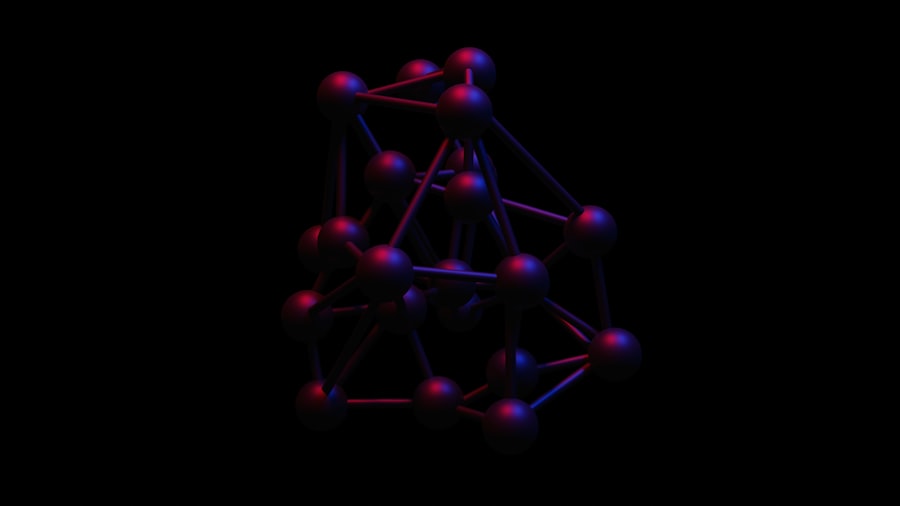
Hierarchical structures are prevalent in many complex systems, where components are organized at multiple levels of organization. These structures can be observed in biological organisms, social networks, and even economic systems. The presence of hierarchies often influences how information flows through a system and how interactions occur among its constituents.
Understanding these hierarchical arrangements is crucial for deciphering the dynamics of complex systems. Renormalization group physics provides valuable insights into hierarchical structures by allowing researchers to analyze how interactions at different levels contribute to emergent behaviors. For example, in ecological systems, hierarchical models can help explain how local species interactions influence community dynamics and biodiversity patterns.
Similarly, in social networks, hierarchical structures can shape the spread of information or influence social behavior. By employing renormalization group techniques to study these hierarchies, scientists can gain a deeper understanding of how complexity arises from simple rules governing interactions at multiple scales.
Renormalization Group Physics and Emergent Phenomena in Complex Systems
Emergent phenomena are hallmark characteristics of complex systems, arising from the collective behavior of individual components interacting with one another. Renormalization group physics plays a crucial role in elucidating these phenomena by providing a framework for understanding how local interactions lead to global patterns. Through the lens of renormalization group techniques, researchers can identify critical points where phase transitions occur and explore how emergent behaviors manifest across different scales.
One notable example of emergent phenomena is found in fluid dynamics, where collective behaviors such as turbulence arise from the interactions between fluid particles at various scales. Renormalization group methods have been instrumental in studying these phenomena by revealing scaling laws that govern turbulence and other complex fluid behaviors. Similarly, in social systems, emergent behaviors such as crowd dynamics or opinion formation can be analyzed using renormalization group techniques to uncover underlying patterns and predict future trends.
The Application of Renormalization Group Physics in Biology and Ecology
The application of renormalization group physics extends into biology and ecology, where it offers valuable insights into complex biological processes and ecosystems. In these fields, researchers have employed renormalization group techniques to study phenomena such as population dynamics, species interactions, and evolutionary processes. By analyzing how local interactions among organisms lead to global patterns within ecosystems, scientists can gain a deeper understanding of biodiversity and ecosystem stability.
For instance, renormalization group methods have been used to model predator-prey dynamics within ecological communities. By examining how fluctuations in population sizes affect overall community structure, researchers can identify critical thresholds that determine stability or collapse within ecosystems. Additionally, these techniques have been applied to study evolutionary processes by exploring how genetic variations propagate through populations over time.
Such applications highlight the versatility of renormalization group physics in addressing biological complexities and informing conservation strategies.
Renormalization Group Physics in Understanding Critical Phenomena in Complex Systems
Critical phenomena represent a fascinating aspect of complex systems characterized by abrupt changes in behavior as parameters are varied. Renormalization group physics provides a robust framework for understanding these phenomena by elucidating how systems behave near critical points where phase transitions occur. At these junctures, small fluctuations can lead to significant changes in macroscopic properties, making them a focal point for researchers studying complex systems.
By employing renormalization group techniques, scientists can derive scaling laws that describe how physical quantities behave near critical points. These laws often reveal universal characteristics shared across different systems, regardless of their specific details. For example, the behavior of magnets near their Curie point or fluids near their boiling point exhibits similar scaling properties that can be analyzed using renormalization group methods.
This universality underscores the power of renormalization group physics in providing insights into critical phenomena across diverse fields.
The Future of Renormalization Group Physics in Unraveling Complex Systems
As research continues to advance, the future of renormalization group physics holds great promise for unraveling the complexities inherent in various systems. With ongoing developments in computational techniques and interdisciplinary collaborations, researchers are poised to explore new frontiers within this framework. The integration of machine learning and data-driven approaches with renormalization group methods may yield novel insights into complex phenomena that were previously difficult to analyze.
Moreover, as scientists confront pressing global challenges such as climate change and public health crises, the application of renormalization group physics will likely play an increasingly vital role in informing policy decisions and intervention strategies. By providing a deeper understanding of complex systems’ dynamics and emergent behaviors, this framework can guide efforts toward sustainable solutions that account for intricate interdependencies within ecosystems and societies.
The Potential of Renormalization Group Physics in Tackling Complex Systems
In conclusion, renormalization group physics stands as a powerful tool for tackling the complexities inherent in various systems across multiple disciplines. By offering a systematic approach to understanding scale invariance and emergent behaviors, this framework has proven invaluable in elucidating critical phenomena and hierarchical structures within complex systems. As researchers continue to explore its applications in fields such as biology, ecology, and social sciences, the potential for renormalization group physics to inform our understanding of intricate interconnections remains vast.
The future promises exciting developments as interdisciplinary collaborations expand our knowledge base and computational techniques enhance our analytical capabilities. With its ability to reveal universal principles governing complex behaviors, renormalization group physics will undoubtedly play a crucial role in addressing some of the most pressing challenges facing humanity today. As scientists strive to unravel the mysteries of complexity, this framework will continue to illuminate pathways toward deeper insights and innovative solutions for an increasingly interconnected world.
Renormalization group (RG) techniques play a crucial role in understanding phase transitions and critical phenomena in statistical physics. For a deeper exploration of these concepts, you can refer to the article on RG methods and their applications in various physical systems. To read more about it, visit this article.
FAQs
What is renormalization group physics?
Renormalization group (RG) physics is a theoretical framework used to study systems with many length scales, particularly in statistical mechanics and quantum field theory. It analyzes how physical systems change as one views them at different scales, helping to understand phenomena like phase transitions and critical behavior.
Why is the renormalization group important in physics?
The renormalization group is important because it provides a systematic way to handle infinities and scale dependencies in physical theories. It explains how macroscopic properties emerge from microscopic interactions and allows physicists to classify different types of phase transitions and critical points.
What are fixed points in renormalization group theory?
Fixed points are specific values of parameters in a system where the system’s behavior remains unchanged under the renormalization group transformations. They correspond to scale-invariant states and often represent critical points or phases in physical systems.
How does the renormalization group relate to phase transitions?
The renormalization group explains phase transitions by showing how the effective interactions in a system evolve as the observation scale changes. Near critical points, the system exhibits scale invariance, and RG methods help calculate critical exponents and universal properties.
What is the difference between real-space and momentum-space renormalization group?
Real-space RG involves coarse-graining the system by integrating out short-distance degrees of freedom directly in position space. Momentum-space RG, often used in quantum field theory, integrates out high-momentum (short-wavelength) modes to study how coupling constants flow with scale.
Can renormalization group methods be applied outside physics?
Yes, renormalization group concepts have been applied in fields such as biology, economics, and computer science to study systems with hierarchical structures or scale-dependent behavior, although their primary development and use remain in physics.
What is the role of coupling constants in renormalization group physics?
Coupling constants represent interaction strengths in a physical theory. Under RG transformations, these constants “flow” or change with scale, and analyzing their flow helps determine the behavior of the system at different length scales, including identifying stable and unstable phases.
How does renormalization group help in quantum field theory?
In quantum field theory, the renormalization group addresses divergences by systematically absorbing infinities into redefined parameters. It also explains how physical quantities depend on energy scale, leading to concepts like running coupling constants and asymptotic freedom.
What is universality in the context of renormalization group?
Universality refers to the observation that systems with different microscopic details can exhibit the same critical behavior near phase transitions. The renormalization group explains universality by showing that different systems flow to the same fixed point under scale transformations.
Are there any limitations to renormalization group methods?
While powerful, renormalization group methods can be mathematically complex and sometimes require approximations. They may be less effective for systems with strong disorder, non-equilibrium dynamics, or where scale separation is not clear.