
The quantum vacuum, often referred to as the vacuum state, is a concept that transcends the classical notion of emptiness. In classical physics, a vacuum is simply a space devoid of matter. However, in the realm of quantum mechanics, the vacuum is a dynamic entity teeming with activity.
It is not an empty void but rather a complex field filled with fluctuating energy and virtual particles that pop in and out of existence. This phenomenon arises from the principles of quantum mechanics, where uncertainty and probabilistic behavior govern the behavior of particles at the subatomic level. At its core, the quantum vacuum represents the lowest energy state of a quantum field.
These fluctuations can give rise to various physical phenomena, influencing everything from particle interactions to the fundamental forces of nature. The quantum vacuum serves as a backdrop for all quantum processes, making it a crucial element in understanding the universe’s underlying structure.
Key Takeaways
- The quantum vacuum is the lowest energy state of a quantum field, containing fluctuating electromagnetic waves and virtual particles.
- Research on the quantum vacuum has a long history, dating back to the early 20th century with the development of quantum mechanics.
- Quantum vacuum fluctuations can have observable effects, such as the Casimir effect, where two uncharged metal plates are attracted to each other due to the reduction of vacuum energy between them.
- Quantum field theory provides a framework for understanding the quantum vacuum and its interactions with matter and forces.
- The potential applications of quantum vacuum energy include advanced propulsion systems and energy generation technologies.
The History of Quantum Vacuum Research
The exploration of the quantum vacuum has its roots in the early 20th century when physicists began to unravel the mysteries of quantum mechanics. Pioneers such as Max Planck and Albert Einstein laid the groundwork for understanding energy quantization and the behavior of light as both a particle and a wave. However, it was not until the mid-20th century that researchers began to delve deeper into the implications of a non-empty vacuum.
The development of quantum field theory (QFT) provided a framework for understanding how particles interact with fields, leading to a more profound comprehension of the vacuum’s role. In the 1940s and 1950s, significant advancements were made in quantum electrodynamics (QED), a theory that describes how light and matter interact. Richard Feynman and Julian Schwinger were instrumental in this development, introducing concepts such as virtual particles and vacuum polarization.
Their work revealed that even in a vacuum, particles could influence one another through these transient states. This marked a turning point in quantum vacuum research, as scientists began to appreciate the vacuum not merely as an absence of matter but as an active participant in physical processes.
Quantum Vacuum Fluctuations and their Effects
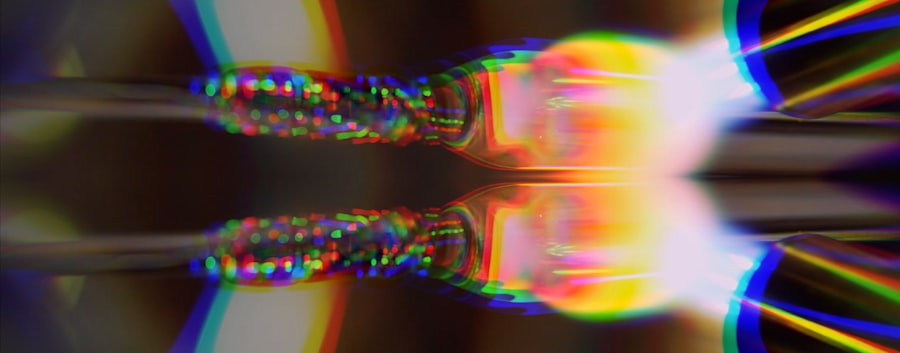
Quantum vacuum fluctuations are a fundamental aspect of the quantum vacuum, representing temporary changes in energy levels that occur spontaneously. These fluctuations can lead to the creation of virtual particles, which exist for an incredibly brief period before annihilating each other. This phenomenon has profound implications for various physical processes, including particle interactions and the behavior of forces at the quantum level.
For instance, these fluctuations contribute to the Casimir effect, where two uncharged plates placed in a vacuum experience an attractive force due to changes in vacuum energy between them. Moreover, quantum vacuum fluctuations play a crucial role in phenomena such as Hawking radiation, where black holes emit radiation due to particle-antiparticle pairs forming near their event horizons. This process illustrates how the vacuum can influence even the most extreme environments in the universe.
The implications of these fluctuations extend beyond theoretical physics; they have practical applications in fields such as quantum computing and nanotechnology, where understanding these transient states can lead to advancements in technology.
The Quantum Vacuum and Quantum Field Theory
| Concept | Description |
|---|---|
| Quantum Vacuum | The lowest energy state of a quantum field, containing no particles and exhibiting the uncertainty principle. |
| Quantum Field Theory | A theoretical framework that combines quantum mechanics and special relativity to describe the interactions of subatomic particles. |
| Vacuum Fluctuations | Temporary changes in the energy of the quantum vacuum, leading to the creation and annihilation of particle-antiparticle pairs. |
| Renormalization | A technique used to remove infinities from calculations in quantum field theory, allowing for meaningful physical predictions. |
Quantum field theory (QFT) serves as the theoretical framework that describes how particles interact with fields, including the quantum vacuum. In QFT, particles are viewed as excitations or disturbances within their respective fields. The vacuum state is considered the ground state of these fields, where no real particles are present but where fluctuations still occur.
This perspective allows physicists to analyze particle interactions more comprehensively, taking into account the contributions from virtual particles and vacuum fluctuations. One of the remarkable aspects of QFT is its ability to unify different forces of nature under a single framework. The electromagnetic force, weak nuclear force, and strong nuclear force can all be described using quantum fields.
The quantum vacuum plays a pivotal role in this unification by providing a common ground for these interactions to occur. As researchers continue to refine QFT, they gain deeper insights into how the vacuum influences particle behavior and contributes to our understanding of fundamental forces.
Quantum Vacuum Energy and its Potential Applications
Quantum vacuum energy refers to the energy density present in empty space due to quantum fluctuations. This energy has garnered significant interest from scientists and engineers alike due to its potential applications in various fields. One area where quantum vacuum energy could have transformative effects is in energy generation.
If harnessed effectively, this energy could provide a virtually limitless source of power, revolutionizing how society approaches energy consumption. Additionally, quantum vacuum energy has implications for advanced technologies such as propulsion systems for spacecraft. Concepts like the Alcubierre warp drive propose utilizing negative energy densities derived from quantum vacuum fluctuations to achieve faster-than-light travel.
While these ideas remain largely theoretical at present, they highlight the exciting possibilities that arise from understanding and manipulating quantum vacuum energy.
The Quantum Vacuum and the Casimir Effect

The Casimir effect is one of the most striking demonstrations of the influence of quantum vacuum fluctuations on macroscopic objects. When two uncharged conductive plates are placed very close together in a vacuum, they experience an attractive force due to changes in vacuum energy between them. This phenomenon arises because the presence of the plates restricts certain wavelengths of virtual particles from existing between them, leading to a lower energy density compared to outside the plates.
This effect has been experimentally confirmed and serves as a testament to the reality of quantum vacuum fluctuations. The Casimir effect not only provides insights into fundamental physics but also has potential applications in nanotechnology and microelectromechanical systems (MEMS). Understanding how to manipulate these forces could lead to innovations in device design and functionality at microscopic scales.
Quantum Vacuum and the Higgs Field
The Higgs field is another critical aspect of modern physics that intertwines with the concept of the quantum vacuum. This field is responsible for giving mass to elementary particles through their interaction with it. The existence of the Higgs boson was confirmed in 2012 at CERN’s Large Hadron Collider, marking a significant milestone in particle physics.
The Higgs field permeates all of space, including the quantum vacuum, influencing how particles acquire mass even when they are not actively interacting with other matter. The relationship between the Higgs field and the quantum vacuum raises intriguing questions about the nature of mass and energy in the universe. It suggests that even in what appears to be empty space, there are underlying mechanisms at play that govern fundamental properties of matter.
As researchers continue to explore this relationship, they may uncover new insights into both particle physics and cosmology.
Quantum Vacuum and the Zero-Point Energy
Zero-point energy refers to the lowest possible energy state that a quantum mechanical system can occupy, which is inherently tied to the concept of the quantum vacuum. Even at absolute zero temperature, systems retain this residual energy due to quantum fluctuations. This phenomenon has led scientists to consider zero-point energy as a potential resource for various applications, including energy generation and propulsion systems.
The idea of harnessing zero-point energy has captured the imagination of inventors and researchers alike. While practical methods for tapping into this energy remain elusive, ongoing research into its properties could pave the way for breakthroughs in technology and energy solutions. Understanding zero-point energy also deepens our comprehension of fundamental physics, challenging traditional notions about energy conservation and stability.
Quantum Vacuum and Quantum Entanglement
Quantum entanglement is another fascinating aspect of quantum mechanics that intersects with the concept of the quantum vacuum. When two or more particles become entangled, their states become correlated regardless of the distance separating them. This phenomenon suggests that information can be shared instantaneously between entangled particles, defying classical notions of locality.
The role of the quantum vacuum in entanglement is an area of active research. Some theories propose that entanglement may be influenced by fluctuations within the vacuum itself, providing a medium through which information can be transmitted between particles. Understanding this relationship could lead to advancements in quantum communication technologies and deepen our grasp of fundamental principles governing reality.
The Future of Quantum Vacuum Research
The future of quantum vacuum research holds immense promise as scientists continue to explore its complexities and implications across various fields. Ongoing advancements in experimental techniques and theoretical frameworks are likely to yield new insights into how quantum fluctuations influence physical phenomena. As researchers delve deeper into topics such as zero-point energy, entanglement, and vacuum polarization, they may uncover novel applications that could reshape technology and our understanding of fundamental physics.
Moreover, interdisciplinary collaboration will play a crucial role in advancing this field. By integrating knowledge from physics, engineering, and materials science, researchers can develop innovative approaches to harnessing quantum vacuum phenomena for practical applications. As interest in quantum technologies grows, so too will efforts to unlock the potential hidden within the quantum vacuum.
Ethical and Philosophical Implications of Quantum Vacuum Understanding
The exploration of the quantum vacuum raises profound ethical and philosophical questions about humanity’s relationship with nature and technology. As researchers seek to harness quantum phenomena for practical applications, considerations surrounding responsible use become paramount. The potential for breakthroughs in energy generation or communication technologies must be balanced with ethical considerations regarding environmental impact and societal implications.
Furthermore, understanding the nature of reality through concepts like quantum entanglement challenges traditional philosophical perspectives on causality and interconnectedness. As scientists uncover deeper truths about the universe’s fabric through their study of the quantum vacuum, society must grapple with these revelations’ implications on our worldview and ethical frameworks. In conclusion, research into the quantum vacuum represents a frontier at the intersection of physics, technology, ethics, and philosophy.
As scientists continue to unravel its mysteries, they not only advance our understanding of fundamental forces but also challenge humanity’s perceptions of reality itself.
In the fascinating realm of quantum physics, the concept of the quantum vacuum is a topic that continues to intrigue scientists and enthusiasts alike. The quantum vacuum, often described as a seething sea of virtual particles, challenges our understanding of nothingness and the very fabric of reality. For those interested in delving deeper into this enigmatic subject, a related article can be found on My Cosmic Ventures. This article explores the implications of quantum vacuum fluctuations and their potential impact on future technologies. To read more about this captivating topic, visit the article on My Cosmic Ventures.
WATCH THIS! How a Quantum Loophole Sparked Everything: The Universe Born From Nothing, Explained
FAQs
What is the Quantum Vacuum?
The quantum vacuum, also known as the vacuum state, is the lowest energy state of a quantum field. It is not empty, but rather filled with quantum fluctuations and virtual particles.
What are Quantum Fluctuations?
Quantum fluctuations are temporary changes in the amount of energy in a point in space, as described by Heisenberg’s uncertainty principle. These fluctuations are a fundamental aspect of quantum mechanics.
What are Virtual Particles?
Virtual particles are particles that exist temporarily as a result of quantum fluctuations in the vacuum. They cannot be directly observed, but their effects can be measured.
What is the Significance of the Quantum Vacuum?
The quantum vacuum plays a crucial role in quantum field theory and is responsible for various phenomena in quantum physics, such as the Casimir effect and the Lamb shift.
Can the Quantum Vacuum be Manipulated?
There is ongoing research into the potential manipulation of the quantum vacuum for various applications, such as quantum computing and energy generation. However, this is still a topic of active scientific investigation.