
The Cosmic Microwave Background (CMB) is the remnant radiation from the Big Bang that fills the entire universe and serves as key evidence supporting the Big Bang theory. This faint radiation is detectable across all directions of the sky and originates from approximately 380,000 years after the universe’s formation, when it was extremely hot and dense. As the universe expanded and cooled, protons and electrons combined to form neutral hydrogen atoms, which allowed photons to travel freely through space.
This process, known as decoupling, separated matter from radiation and produced the CMB we observe today. The CMB provides valuable information about the early universe beyond serving as background radiation. Its overall uniformity and subtle variations reveal conditions that existed shortly after the Big Bang.
The radiation maintains a remarkably consistent temperature of approximately 2.7 Kelvin throughout space, yet it also contains tiny temperature variations called anisotropies. These variations correspond to density differences in the early universe and are essential for understanding how matter accumulated to eventually form galaxies and other large-scale cosmic structures.
Key Takeaways
- The CMB Thermal Receipt Cosmos is a crucial cosmic microwave background phenomenon that provides insights into the early universe.
- Its discovery has significantly advanced cosmology by offering evidence about the universe’s origin and structure.
- Observations of the CMB Thermal Receipt Cosmos rely on advanced technology, enabling detailed study of cosmic conditions shortly after the Big Bang.
- This phenomenon plays a key role in exploring dark matter, dark energy, and challenging existing cosmological theories.
- Future research on the CMB Thermal Receipt Cosmos holds promise for both deepening our understanding of the universe and inspiring new technological innovations.
The significance of the CMB Thermal Receipt Cosmos in cosmology
The significance of the CMB Thermal Receipt Cosmos in cosmology cannot be overstated. It serves as a cornerstone for modern cosmological models, providing empirical evidence that supports the Big Bang theory over alternative models of cosmic evolution. The CMB’s existence confirms that the universe has expanded from an extremely hot and dense state, aligning with predictions made by theoretical physicists.
This radiation acts as a snapshot of the universe at a pivotal moment in its history, allowing scientists to glean information about its early conditions. Moreover, the CMB has enabled cosmologists to measure fundamental parameters of the universe, such as its age, composition, and rate of expansion. By analyzing the temperature fluctuations in the CMB, researchers can infer the density of ordinary matter, dark matter, and dark energy.
These measurements have led to a more comprehensive understanding of the universe’s structure and evolution, revealing that approximately 68% of the universe is composed of dark energy, 27% dark matter, and only about 5% ordinary matter.
Discovering the CMB Thermal Receipt Cosmos
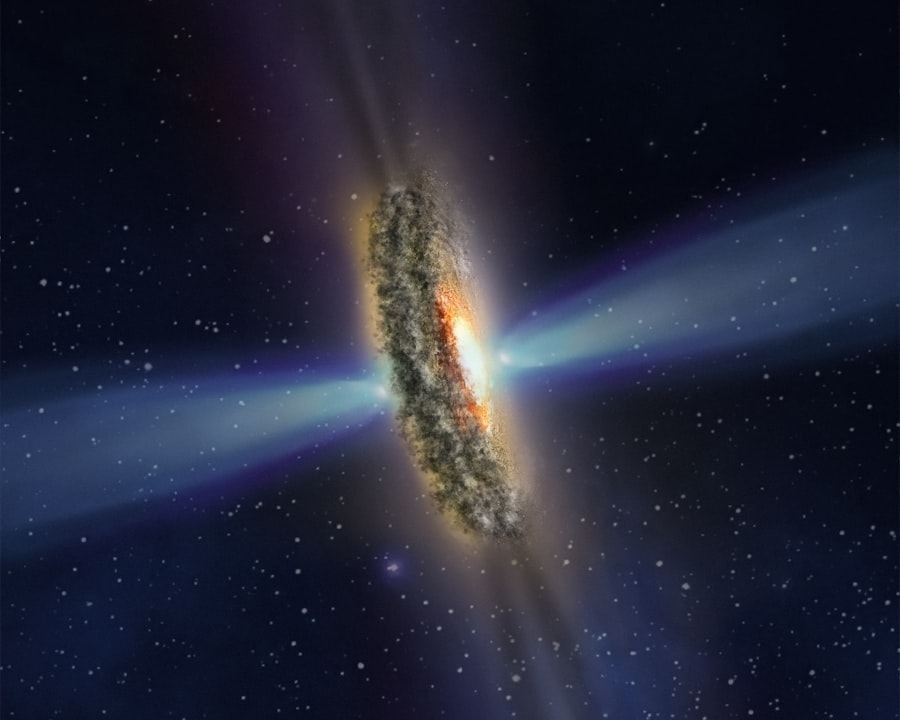
The discovery of the CMB Thermal Receipt Cosmos was a serendipitous event that transformed our understanding of the universe. In 1965, Arno Penzias and Robert Wilson stumbled upon this cosmic radiation while working on a radio antenna at Bell Labs. Initially, they believed they had encountered an experimental error or interference from pigeon droppings on their equipment.
However, after ruling out these possibilities, they realized they had detected the faint afterglow of the Big Bang. This groundbreaking discovery was met with excitement in the scientific community, as it provided tangible evidence for a theory that had been largely theoretical until then. The CMB’s existence was predicted by physicists like George Gamow and Ralph Alpher in the 1940s, but it took nearly two decades for observational evidence to confirm their predictions.
The work of Penzias and Wilson earned them the Nobel Prize in Physics in 1978 and opened new avenues for research in cosmology.
How the CMB Thermal Receipt Cosmos is helping us understand the early universe
The CMB Thermal Receipt Cosmos plays a pivotal role in enhancing our understanding of the early universe. By studying its temperature fluctuations, scientists can reconstruct a detailed picture of the conditions that existed shortly after the Big Bang. These fluctuations are indicative of density variations in the primordial plasma, which eventually led to the formation of galaxies and large-scale structures we observe today.
Furthermore, the CMB provides insights into fundamental processes such as inflation—a rapid expansion of space that occurred within fractions of a second after the Big Bang. The patterns observed in the CMB support inflationary models by showing how quantum fluctuations were stretched across vast distances during this period. This understanding helps explain why the universe appears so homogeneous on large scales while still exhibiting localized structures like galaxies and clusters.
The technology behind the observation of the CMB Thermal Receipt Cosmos
| Metric | Value | Unit | Description |
|---|---|---|---|
| Temperature of CMB | 2.725 | K | Average temperature of the Cosmic Microwave Background radiation |
| Peak Frequency | 160.2 | GHz | Frequency at which the CMB spectrum peaks |
| Redshift (z) | ~1100 | Dimensionless | Redshift corresponding to the surface of last scattering |
| Age of Universe at CMB emission | 380,000 | years | Time after Big Bang when CMB photons were released |
| Photon Density | 411 | photons/cm³ | Number density of CMB photons in the current universe |
| Energy Density | 0.260 | eV/cm³ | Energy density of the CMB radiation |
| Polarization Fraction | ~10 | μK | Typical amplitude of CMB polarization anisotropies |
Observing the CMB Thermal Receipt Cosmos requires sophisticated technology capable of detecting extremely faint signals amidst cosmic noise. Early observations were conducted using ground-based radio telescopes, but advancements in technology have led to more precise measurements from space-based observatories. Instruments like NASA’s Wilkinson Microwave Anisotropy Probe (WMAP) and the European Space Agency’s Planck satellite have revolutionized our ability to map the CMB with unprecedented accuracy.
These satellites are equipped with sensitive detectors that can measure minute temperature differences across the sky. By scanning different regions of space and compiling data over time, researchers can create detailed maps of the CMB’s anisotropies. The data collected from these missions has been instrumental in refining cosmological models and improving our understanding of fundamental parameters such as the Hubble constant and curvature of space.
The implications of the CMB Thermal Receipt Cosmos for our understanding of the universe
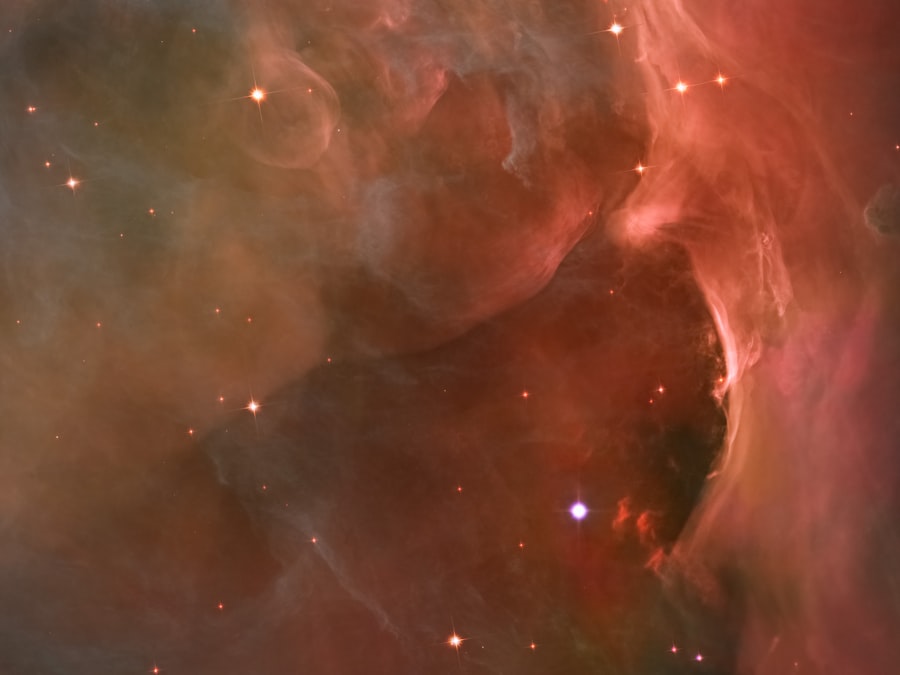
The implications of the CMB Thermal Receipt Cosmos extend far beyond confirming the Big Bang theory; they challenge and refine our understanding of fundamental aspects of cosmology. For instance, measurements from CMB observations have led to significant revelations about dark energy—a mysterious force driving the accelerated expansion of the universe. The precise mapping of temperature fluctuations has provided evidence for a flat universe, suggesting that it will continue to expand indefinitely.
Additionally, studying the CMB has implications for our understanding of cosmic inflation and its role in shaping large-scale structures. The patterns observed in CMB anisotropies offer clues about how quantum fluctuations during inflation seeded density variations that eventually led to galaxy formation. This connection between quantum physics and cosmology represents a significant step toward unifying these two realms of science.
The role of the CMB Thermal Receipt Cosmos in the study of dark matter and dark energy
The CMB Thermal Receipt Cosmos is instrumental in advancing our knowledge of dark matter and dark energy—two enigmatic components that constitute most of the universe’s mass-energy content. While dark matter interacts gravitationally with visible matter, it does not emit or absorb light, making it challenging to detect directly. However, its presence can be inferred through its gravitational effects on visible matter and radiation.
CMB observations have provided critical evidence for dark matter by revealing how its gravitational influence affects temperature fluctuations in the background radiation. These fluctuations correspond to regions where dark matter has clumped together, influencing galaxy formation and distribution. Similarly, studies of CMB anisotropies have shed light on dark energy’s role in cosmic expansion, helping scientists understand how this mysterious force counteracts gravity on large scales.
The future of research on the CMB Thermal Receipt Cosmos
As technology continues to advance, future research on the CMB Thermal Receipt Cosmos promises to yield even more profound insights into our universe’s origins and evolution. Upcoming missions like NASA’s upcoming Cosmic Microwave Background Stage 4 (CMB-S4) aim to enhance sensitivity and resolution further, allowing scientists to probe deeper into cosmic history than ever before. These missions will focus on measuring subtle polarization patterns in the CMB, which could provide additional information about inflationary processes and gravitational waves.
Moreover, interdisciplinary collaborations between cosmologists, particle physicists, and astronomers will likely lead to new discoveries regarding dark matter and dark energy. As researchers refine their models based on CMB data, they may uncover unexpected phenomena that challenge existing theories or lead to entirely new paradigms in cosmology.
How the CMB Thermal Receipt Cosmos is challenging current cosmological theories
While the CMB Thermal Receipt Cosmos has solidified many aspects of cosmological theory, it has also raised questions that challenge existing paradigms. For instance, discrepancies between measurements of the Hubble constant derived from CMB observations and those obtained from local distance ladder methods have sparked debates within the scientific community. These inconsistencies suggest that our understanding of cosmic expansion may need refinement or that new physics could be at play.
Additionally, anomalies observed in certain regions of the CMB map have led researchers to consider alternative models or modifications to current theories. Such challenges are essential for scientific progress; they encourage researchers to re-evaluate assumptions and explore new avenues for understanding fundamental questions about our universe.
The impact of the CMB Thermal Receipt Cosmos on our understanding of the Big Bang
The impact of the CMB Thermal Receipt Cosmos on our understanding of the Big Bang is profound and multifaceted. It provides direct evidence for an event that occurred approximately 13.8 billion years ago, offering a glimpse into a time when space itself was still forming. By analyzing temperature fluctuations within this cosmic relic, scientists can reconstruct conditions that prevailed during this formative period.
Furthermore, studying the CMB has allowed researchers to refine models describing how matter evolved from a hot plasma into stars and galaxies over billions of years. This understanding not only enhances knowledge about cosmic history but also informs theories regarding future cosmic evolution—how galaxies will continue to evolve as dark energy drives accelerated expansion.
The CMB Thermal Receipt Cosmos and its potential for future technological applications
Beyond its implications for cosmology, research on the CMB Thermal Receipt Cosmos holds potential for future technological applications across various fields. The techniques developed for observing this faint radiation have already influenced advancements in fields such as telecommunications and imaging technologies.
Moreover, as researchers continue to explore new ways to harness insights from CMB observations, there may be opportunities for innovative technologies that could benefit society at large—ranging from improved sensors to enhanced data analysis techniques applicable in diverse scientific disciplines. The ongoing exploration of this cosmic phenomenon exemplifies how fundamental research can lead to unexpected technological breakthroughs with far-reaching implications beyond cosmology itself.
The Cosmic Microwave Background (CMB) is a fascinating remnant of the early universe, providing crucial insights into its thermal history. For those interested in exploring more about the implications of CMB research and its connection to cosmic evolution, I recommend checking out this related article on cosmic ventures. You can read more about it [here](https://www.mycosmicventures.com/).
FAQs
What is the Cosmic Microwave Background (CMB)?
The Cosmic Microwave Background (CMB) is the thermal radiation left over from the Big Bang, filling the universe almost uniformly. It is a faint glow of light that can be detected in every direction and provides a snapshot of the early universe approximately 380,000 years after the Big Bang.
Why is the CMB referred to as a “thermal receipt” of the cosmos?
The CMB is often called a “thermal receipt” because it carries the thermal imprint of the early universe. Just as a receipt records a transaction, the CMB records the conditions of the universe at the time it was emitted, including temperature fluctuations and density variations that later led to the formation of galaxies and large-scale structures.
How was the CMB discovered?
The CMB was discovered accidentally in 1965 by Arno Penzias and Robert Wilson, who detected a persistent microwave signal coming from all directions in space. This discovery provided strong evidence for the Big Bang theory and earned them the Nobel Prize in Physics in 1978.
What information does the CMB provide about the universe?
The CMB provides critical information about the age, composition, and development of the universe. By studying its temperature fluctuations and polarization, scientists can infer the universe’s rate of expansion, the amount of dark matter and dark energy, and the initial conditions that led to the formation of cosmic structures.
How is the CMB measured?
The CMB is measured using sensitive microwave detectors on satellites, balloons, and ground-based observatories. Notable missions include the Cosmic Background Explorer (COBE), the Wilkinson Microwave Anisotropy Probe (WMAP), and the Planck satellite, which have progressively improved the precision of CMB measurements.
What role does the CMB play in cosmology?
The CMB is a cornerstone of modern cosmology. It serves as a primary observational evidence supporting the Big Bang model and helps refine cosmological parameters. Its detailed study allows scientists to test theories about the universe’s origin, composition, and ultimate fate.
Are there any anomalies or unexpected features in the CMB?
Yes, some anomalies have been observed in the CMB, such as the “cold spot” and slight asymmetries in temperature fluctuations. While these features are still under investigation, they may provide insights into new physics or the large-scale structure of the universe.
Can the CMB be seen with the naked eye?
No, the CMB cannot be seen with the naked eye because it is microwave radiation, which is outside the visible spectrum. Specialized instruments are required to detect and analyze this faint radiation.
How old is the CMB?
The CMB dates back to about 13.8 billion years ago, roughly 380,000 years after the Big Bang, when the universe cooled enough for photons to travel freely through space, creating the radiation we observe today.
What is the temperature of the CMB?
The CMB has an average temperature of approximately 2.725 Kelvin (-270.425 degrees Celsius), just above absolute zero. Tiny fluctuations in this temperature provide valuable information about the early universe.