
The Island Formula is a framework used to analyze the economic and social characteristics of island communities. It examines how geography, available resources, and human activities interact to shape these isolated regions. Policymakers and researchers use this framework to identify both the challenges and opportunities that island communities face.
Because islands typically have limited land area and finite resources, they require development strategies specifically designed for their circumstances. The Island Formula emphasizes the importance of finding innovative approaches that build on local advantages while managing inherent constraints. A key element of the Island Formula is the Page Curve, which demonstrates the relationship between population density and economic output.
This curve reflects actual conditions in island economies and helps communities determine how to use their resources most effectively. By analyzing the Page Curve, decision-makers can develop strategies that strengthen economic stability and improve living standards. Island communities currently face multiple pressures, including climate change impacts, increased tourism, and limited natural resources.
These challenges make the Island Formula and its analytical tools increasingly valuable for understanding and addressing island development issues.
Key Takeaways
- The Page Curve is a crucial concept in island formulas, influencing economic and developmental strategies.
- Understanding the components and history of the Page Curve helps in applying it effectively to island economies.
- Technology plays a significant role in shaping and optimizing the Page Curve for better outcomes.
- Despite its benefits, the Page Curve presents challenges and limitations that must be addressed for sustainable use.
- Successful case studies demonstrate the potential of the Page Curve to drive sustainable development on islands.
The History and Development of the Page Curve
The Page Curve has its roots in economic theory, evolving from early models that sought to explain the relationship between population density and economic output. Initially, researchers focused on mainland economies, but as interest in island studies grew, scholars began to adapt these models to better fit the unique circumstances of island communities. The development of the Page Curve was marked by a recognition that islands operate under different constraints compared to continental regions, necessitating a distinct analytical approach.
Over time, the Page Curve has been refined through empirical research and case studies from various islands around the world. Scholars have examined how factors such as geographic isolation, limited resources, and demographic trends influence economic performance. This historical evolution has led to a more nuanced understanding of the Page Curve, allowing it to serve as a valuable tool for policymakers seeking to enhance economic development in island settings.
The ongoing dialogue among researchers continues to shape the curve’s application, ensuring it remains relevant in an ever-changing global landscape.
Understanding the Components of the Page Curve

The Page Curve is composed of several key components that together illustrate the relationship between population density and economic productivity. At its core, the curve posits that as population density increases, so too does economic output—up to a certain point. Beyond this threshold, however, diminishing returns may set in, leading to challenges such as overcrowding, resource depletion, and increased competition for limited opportunities.
Understanding these dynamics is crucial for island communities striving for sustainable growth. One of the primary components of the Page Curve is the concept of agglomeration economies. In densely populated areas, businesses benefit from proximity to one another, leading to increased efficiency and innovation.
This phenomenon is particularly relevant in island contexts where space is at a premium. Additionally, human capital plays a significant role; a well-educated workforce can drive productivity and creativity, further enhancing economic outcomes. By analyzing these components within the framework of the Page Curve, stakeholders can identify strategies to maximize their island’s potential while mitigating risks associated with overpopulation and resource strain.
The Importance of the Page Curve in Island Formulas
The significance of the Page Curve within the broader context of the Island Formula cannot be overstated. It serves as a foundational element that informs various aspects of economic planning and development in island communities. By providing a clear visual representation of how population density correlates with economic productivity, the Page Curve enables policymakers to make data-driven decisions that align with their community’s unique characteristics.
Moreover, the Page Curve highlights the importance of balancing growth with sustainability. As islands face increasing pressures from tourism and external economic forces, understanding where they fall on the curve can help leaders implement strategies that promote long-term viability. For instance, recognizing when population density is approaching critical limits allows for proactive measures to be taken—such as investing in infrastructure or diversifying the economy—to ensure that growth does not come at the expense of quality of life or environmental health.
How the Page Curve Impacts Island Economies
| Metric | Description | Typical Value | Unit |
|---|---|---|---|
| Initial Production Rate (IP) | Starting production rate of the well | 500 | STB/day |
| Decline Rate (D) | Rate at which production declines over time | 0.05 | 1/day |
| Hyperbolic Exponent (b) | Shape factor of the decline curve | 0.7 | Dimensionless |
| Time (t) | Elapsed time since production start | 30 | days |
| Production Rate at Time t (q(t)) | Production rate calculated using island formula | 320 | STB/day |
| Cumulative Production (Np) | Total production up to time t | 8000 | STB |
The implications of the Page Curve extend deeply into the fabric of island economies. As communities navigate their growth trajectories, understanding their position on the curve can inform critical decisions regarding resource allocation and investment priorities. For instance, islands that find themselves on the upward slope of the curve may prioritize infrastructure development and workforce training to capitalize on their growing economic potential.
Conversely, those nearing or exceeding the curve’s peak may need to adopt more cautious approaches. This could involve implementing policies aimed at managing population growth or enhancing sustainability practices to mitigate environmental impacts.
The Role of Technology in Shaping the Page Curve
Technology plays an increasingly vital role in shaping the dynamics represented by the Page Curve. Advances in communication, transportation, and information technology have transformed how island communities interact with one another and with external markets. These innovations can enhance productivity by facilitating access to resources and information, thereby allowing islands to better position themselves on the curve.
For example, digital platforms can enable local businesses to reach broader markets beyond their geographic confines, fostering economic diversification and resilience. Additionally, technology can improve resource management practices, helping islands optimize their limited assets while minimizing waste. As technology continues to evolve, its integration into island economies will be crucial for maximizing potential along the Page Curve and ensuring sustainable development.
Challenges and Limitations of the Page Curve
Despite its utility, the Page Curve is not without challenges and limitations. One significant concern is its reliance on quantitative data that may not fully capture qualitative aspects of island life. Factors such as cultural heritage, social cohesion, and environmental sustainability are often difficult to quantify yet play critical roles in shaping community well-being.
As such, policymakers must be cautious not to rely solely on numerical indicators when making decisions based on the Page Curve. Furthermore, islands face unique challenges that may not be adequately addressed by traditional economic models. Issues such as climate change vulnerability, dependence on tourism, and limited access to external markets can complicate the relationship between population density and economic productivity.
Recognizing these limitations is essential for developing comprehensive strategies that account for both quantitative metrics and qualitative factors in island development.
Case Studies: Successful Implementation of the Page Curve
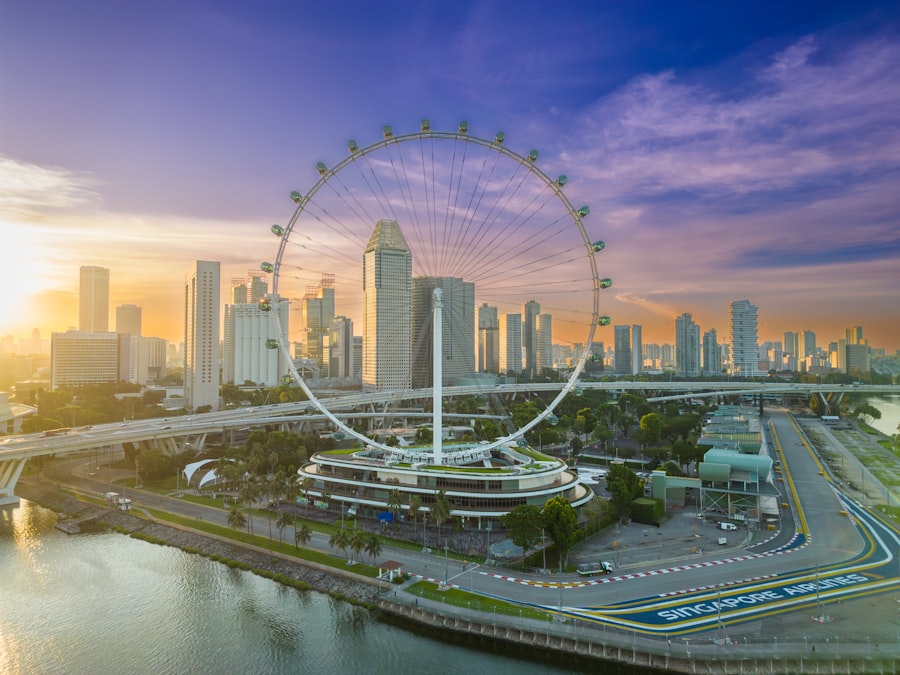
Examining case studies of successful implementation of the Page Curve can provide valuable insights for other island communities seeking to enhance their economic resilience. One notable example is Singapore, which has effectively leveraged its limited land area through strategic urban planning and investment in technology. By optimizing land use and fostering innovation, Singapore has positioned itself favorably on the Page Curve while maintaining high standards of living for its residents.
Another compelling case is that of Iceland, which has harnessed its unique geothermal resources to develop a sustainable energy sector. By focusing on renewable energy production and diversifying its economy beyond traditional fishing industries, Iceland has successfully navigated challenges associated with population density while promoting environmental sustainability. These examples illustrate how tailored strategies informed by an understanding of the Page Curve can lead to successful outcomes for island economies.
The Future of the Page Curve in Island Formulas
Looking ahead, the future of the Page Curve within Island Formulas appears promising yet complex. As global challenges such as climate change and economic inequality continue to evolve, island communities will need to adapt their strategies accordingly. The Page Curve will likely remain a vital tool for understanding these dynamics; however, it may require further refinement to incorporate emerging trends such as remote work and digital economies.
By sharing best practices and lessons learned from their experiences with the Page Curve, island communities can foster innovation and resilience collectively. This collaborative approach could lead to new frameworks that enhance understanding of how islands can thrive in an interconnected world while remaining true to their unique identities.
Recommendations for Utilizing the Page Curve Effectively
To effectively utilize the Page Curve in island development strategies, several recommendations emerge from current research and case studies. First and foremost, stakeholders should prioritize data collection that encompasses both quantitative metrics and qualitative insights into community life. This holistic approach will enable more informed decision-making that reflects the complexities of island economies.
Furthermore, fostering collaboration among local businesses, government agencies, and community organizations is essential for maximizing potential along the Page Curve. By creating platforms for dialogue and partnership, stakeholders can identify shared goals and develop coordinated strategies that address common challenges while leveraging local strengths. Lastly, investing in education and workforce development will be crucial for ensuring that island communities remain competitive in an increasingly globalized economy.
By equipping residents with skills relevant to emerging industries—such as technology or sustainable tourism—islands can enhance their position on the Page Curve while promoting long-term economic resilience.
Embracing the Page Curve for Sustainable Island Development
In conclusion, embracing the Page Curve as part of the Island Formula offers a pathway toward sustainable development for island communities worldwide. By understanding its components and implications, stakeholders can make informed decisions that balance growth with environmental stewardship and social well-being. The historical evolution of the Page Curve underscores its relevance in addressing contemporary challenges faced by islands today.
As technology continues to reshape economic landscapes and global dynamics shift, island communities must remain adaptable while leveraging their unique characteristics. Through collaboration, innovation, and a commitment to sustainability, they can navigate their trajectories along the Page Curve effectively—ensuring vibrant futures for generations to come. Ultimately, recognizing and harnessing this powerful framework will be essential for fostering resilience in an ever-changing world.
For those interested in the mathematical intricacies of the island formula and its applications, you may find the article on My Cosmic Ventures particularly enlightening. This resource delves into various mathematical concepts and their real-world implications, providing a broader context for understanding the significance of the island formula in relation to page curves and other geometric phenomena.
FAQs
What is the island formula in the context of black hole physics?
The island formula is a theoretical tool used to calculate the entropy of Hawking radiation emitted by black holes. It incorporates contributions from certain regions called “islands” inside or near the black hole, which helps resolve the black hole information paradox by producing a Page curve consistent with unitary evolution.
What does the Page curve represent?
The Page curve is a graph that shows the time evolution of the entanglement entropy of Hawking radiation emitted by a black hole. Initially, the entropy increases as radiation is emitted, but after the Page time, it decreases, indicating that information is preserved and eventually released, consistent with quantum mechanics.
How does the island formula reproduce the Page curve?
By including the contribution of island regions in the entropy calculation, the island formula modifies the entropy of radiation such that it initially grows but then saturates and decreases after the Page time. This matches the expected Page curve, resolving the apparent contradiction between Hawking radiation and information conservation.
What is the significance of the island formula in resolving the black hole information paradox?
The island formula provides a semi-classical method to compute the entropy of radiation that aligns with unitary quantum evolution. It shows that information is not lost but encoded in subtle correlations involving the island regions, thus offering a potential resolution to the black hole information paradox.
In which theoretical frameworks is the island formula typically applied?
The island formula is primarily studied within the context of quantum gravity and holography, especially in lower-dimensional models like the Jackiw-Teitelboim (JT) gravity and in the AdS/CFT correspondence framework.
Does the island formula have experimental verification?
Currently, the island formula is a theoretical construct without direct experimental verification. It is based on advances in theoretical physics and quantum gravity and serves as a conceptual tool to understand black hole entropy and information.
What role does entanglement entropy play in the island formula?
Entanglement entropy measures the quantum correlations between the black hole and its radiation. The island formula calculates the generalized entropy, including contributions from island regions, to determine the entanglement entropy of the radiation accurately.
Is the island formula applicable to all types of black holes?
The island formula has been primarily studied in simplified or idealized black hole models, such as two-dimensional black holes or those in anti-de Sitter (AdS) space. Extending it to realistic astrophysical black holes remains an area of ongoing research.