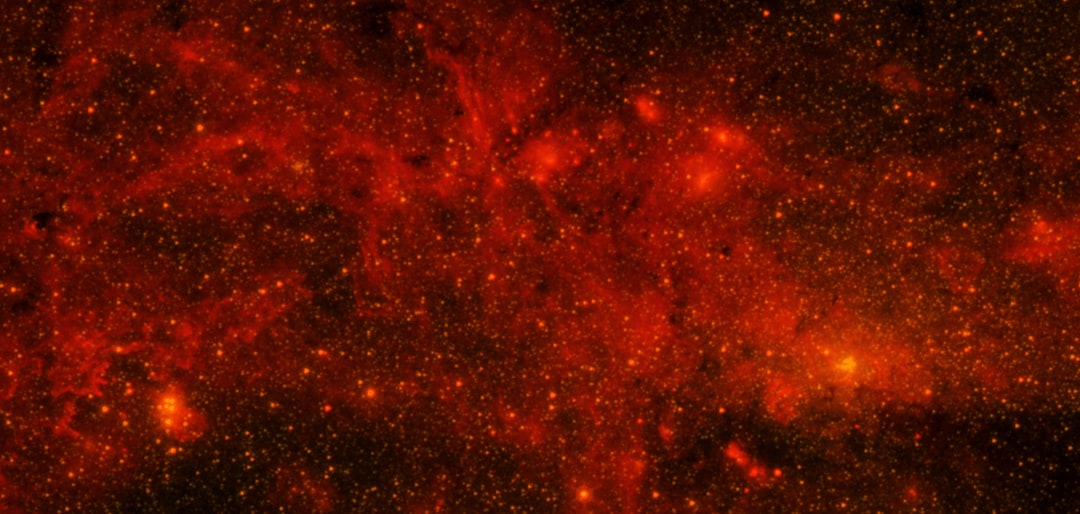
Early galaxies formed approximately 13.8 billion years ago, shortly after the Big Bang, representing the universe’s first large-scale structures. These primordial formations serve as fundamental components for understanding cosmic evolution and the development of modern galactic structures. Research indicates that early galaxies functioned as the foundational elements from which contemporary galaxies, stellar systems, and planetary bodies emerged.
The investigation of early galaxies requires sophisticated observational technology and analytical methodologies that enable astronomers to examine the universe’s earliest epochs. This field of study extends beyond theoretical interest, providing critical data for understanding cosmic history and the physical laws governing universal development. Analysis of these ancient structures contributes essential knowledge about the processes that shaped the current cosmic landscape and the mechanisms underlying galactic formation and evolution.
Explore the fascinating connection between consciousness and the universe in this [near death experience quantum physics](https://youtu.be/GxviZGzusMQ) video.
Key Takeaways
- Redshift is a crucial tool for studying the earliest galaxies and understanding the universe’s expansion.
- The James Webb Space Telescope (JWST) enables unprecedented observation of distant, early galaxies through redshift measurements.
- JWST’s data helps reveal the formation, evolution, and structure of the first stars and galaxies.
- Insights from JWST contribute to unraveling cosmic mysteries like dark matter, dark energy, and the origins of cosmic structures.
- JWST redshift research holds promise for advancing cosmology, astrophysics, and the search for habitable planets beyond Earth.
Understanding Redshift and its Importance
To comprehend early galaxies, you must first grasp the concept of redshift. Redshift refers to the phenomenon where light from distant objects shifts toward longer wavelengths as they move away from us. This effect is a direct consequence of the expanding universe, a discovery that revolutionized our understanding of cosmology.
When you observe light from a galaxy that is receding, its wavelengths stretch, causing it to appear redder than it would if it were stationary. This shift provides crucial information about the galaxy’s distance and velocity, allowing astronomers to map the universe’s expansion. Redshift is not just a measurement; it is a window into the past.
The greater the redshift, the further away and older the galaxy is. By analyzing redshift data, you can piece together a timeline of cosmic history, revealing how galaxies formed and evolved over billions of years. This understanding is vital for constructing models of galaxy formation and for answering fundamental questions about the universe’s origins.
As you explore this topic further, you’ll see how redshift serves as a cornerstone in the study of early galaxies, illuminating their characteristics and behaviors.
The James Webb Space Telescope (JWST)
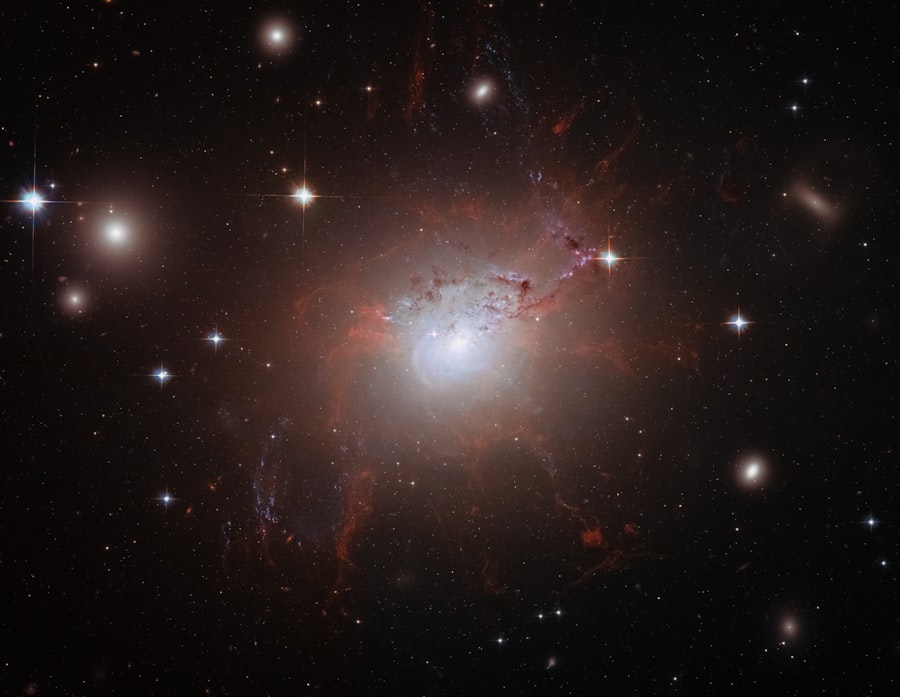
The James Webb Space Telescope (JWST) represents a monumental leap in our ability to observe the universe. Launched in December 2021, JWST is designed to capture infrared light, allowing it to peer through cosmic dust and gas that often obscure our view of distant objects.
As you learn about JWST’s advanced technology, you’ll appreciate how it enhances our understanding of the cosmos.
Its ability to detect light from the earliest galaxies enables astronomers to study their formation and evolution in ways that were previously unimaginable.
The telescope’s location at the second Lagrange point (L2), approximately 1.5 million kilometers from Earth, provides a stable environment for observations free from atmospheric interference. As you explore JWST’s capabilities, you’ll see how it is poised to revolutionize our understanding of early galaxies and their role in cosmic history.
How JWST Redshift Unveils Early Galaxies
With its advanced technology, JWST is uniquely equipped to measure redshift in distant galaxies, providing invaluable insights into their properties and behaviors. By capturing infrared light, JWST can detect galaxies that formed just a few hundred million years after the Big Bang. As you delve into this aspect of JWST’s mission, you’ll discover how astronomers use spectroscopic techniques to analyze light from these distant objects, determining their redshift values with remarkable precision.
The data collected by JWST allows researchers to construct detailed maps of early galaxies, revealing their sizes, shapes, and compositions. By understanding redshift in conjunction with other observational data, you can gain insights into how these galaxies interacted with their surroundings and evolved over time. This information is crucial for piecing together the puzzle of cosmic history, as it helps scientists understand not only when galaxies formed but also how they contributed to the larger structure of the universe.
Exploring the Formation and Evolution of Early Galaxies
| Galaxy Name | Redshift (z) | Estimated Age (Billion Years) | Stellar Mass (Solar Masses) | Star Formation Rate (Solar Masses/Year) | Observation Instrument |
|---|---|---|---|---|---|
| GLASS-z13 | 13.1 | 0.32 | 1.5 x 10⁸ | 5.0 | NIRCam |
| CEERS-93316 | 16.7 | 0.23 | 8.0 x 10⁷ | 3.2 | NIRSpec |
| JADES-GS-z12-0 | 12.0 | 0.37 | 2.0 x 10⁸ | 4.5 | NIRCam |
| SMACS-z11 | 11.4 | 0.42 | 1.2 x 10⁸ | 2.8 | NIRSpec |
| GN-z10-3 | 10.6 | 0.48 | 1.0 x 10⁸ | 3.0 | NIRCam |
The formation and evolution of early galaxies are complex processes influenced by various factors, including dark matter, gas dynamics, and star formation rates. As you explore this topic, you’ll learn that early galaxies likely formed from small clumps of matter that gradually merged over time to create larger structures. This hierarchical model of galaxy formation suggests that understanding early galaxies is essential for comprehending how modern galaxies came to be.
JWST’s observations provide critical data on star formation rates in these early galaxies, shedding light on how quickly stars were born in different environments. By analyzing this data, you can begin to understand the conditions that led to the formation of stars and planets within these ancient structures. The evolution of early galaxies is not just a story of growth; it also involves interactions with other galaxies and cosmic phenomena that shaped their development over billions of years.
Observing the First Stars and Galaxies in the Universe
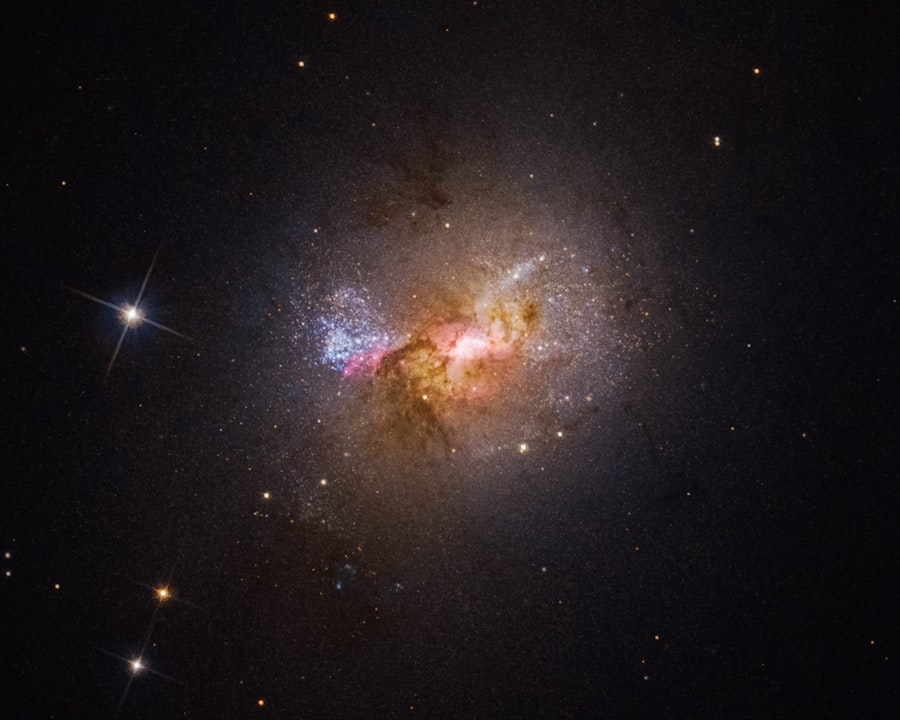
One of the most exciting aspects of JWST’s mission is its ability to observe some of the first stars and galaxies that emerged in the universe. These ancient celestial bodies are believed to have formed from primordial gas shortly after the Big Bang, marking a significant milestone in cosmic history. As you delve into this subject, you’ll discover how astronomers use JWST to identify these early stars and galaxies by analyzing their light signatures.
The light from these first stars provides crucial information about their composition and temperature, helping scientists understand the conditions that prevailed in the early universe. By studying these ancient objects, you can gain insights into how they influenced their surroundings and contributed to the reionization of the universe—a process that transformed it from a dark, opaque state into one filled with light. Observing these first stars and galaxies allows you to connect with the very origins of cosmic history.
Discovering the Origins of Cosmic Structures
The study of early galaxies also plays a pivotal role in uncovering the origins of cosmic structures such as galaxy clusters and superclusters. As you explore this topic further, you’ll learn that early galaxies were not isolated entities; they existed within a web-like structure known as the cosmic web. This intricate network consists of filaments of dark matter and gas that connect galaxies across vast distances.
JWST’s observations enable astronomers to map out these structures more accurately than ever before. By analyzing how early galaxies are distributed within this cosmic web, you can gain insights into how gravity influenced their formation and clustering over time. Understanding these origins is essential for constructing models that explain how large-scale structures developed in the universe and how they continue to evolve today.
Unraveling the Mystery of Dark Matter and Dark Energy
Dark matter and dark energy are two of the most enigmatic components of our universe, making up approximately 95% of its total mass-energy content. As you delve into this topic, you’ll discover how studying early galaxies can provide clues about these mysterious forces. Dark matter is thought to play a crucial role in galaxy formation by providing the gravitational scaffolding necessary for matter to clump together.
JWST’s observations can help scientists understand how dark matter influenced the formation and evolution of early galaxies by revealing their distribution and dynamics. Additionally, studying redshift data from these ancient structures can shed light on dark energy—the force driving the accelerated expansion of the universe. By unraveling these mysteries through JWST’s findings, you can contribute to a deeper understanding of fundamental cosmological questions.
Implications for Cosmology and Astrophysics
The implications of studying early galaxies extend far beyond mere curiosity; they have profound consequences for cosmology and astrophysics as a whole. As you explore this field further, you’ll find that understanding early galaxies helps refine our models of cosmic evolution and provides insights into fundamental questions about the nature of space and time. By examining how early galaxies formed and evolved, scientists can test existing theories about gravity, dark matter, and dark energy.
This research has far-reaching implications for our understanding of fundamental physics and could lead to new discoveries that challenge or reinforce current paradigms. As you engage with this topic, you’ll appreciate how studying early galaxies contributes to our broader quest for knowledge about the universe.
Potential for Finding Habitable Planets and Life Beyond Earth
As you contemplate early galaxies, it’s natural to wonder about the potential for finding habitable planets and life beyond Earth. The study of these ancient structures provides valuable insights into the conditions necessary for planet formation and habitability. By examining star formation rates in early galaxies, you can gain an understanding of how many stars may have hosted planetary systems capable of supporting life.
JWST’s ability to analyze exoplanet atmospheres also opens up exciting possibilities for discovering signs of life beyond our solar system. By studying planets orbiting stars in early galaxies, scientists may uncover evidence of habitable conditions or even biosignatures—chemical indicators of life. This research could reshape our understanding of life’s prevalence in the universe and inspire new explorations beyond our own planet.
Future Prospects for JWST Redshift Research
As you look ahead to future research involving JWST’s redshift capabilities, you’ll find that exciting possibilities abound. The telescope’s ongoing observations will continue to unveil new discoveries about early galaxies and their role in cosmic history. With each new dataset collected by JWST, astronomers will refine their models and deepen their understanding of galaxy formation and evolution.
Moreover, as technology advances and new observational techniques are developed, JWST will remain at the forefront of astronomical research for years to come. The potential for groundbreaking discoveries related to redshift measurements will undoubtedly shape our understanding of the universe in ways we cannot yet imagine. As you engage with this field, you’ll be part of an exciting journey that seeks to unravel the mysteries of our cosmos—one observation at a time.
Recent observations from the James Webb Space Telescope (JWST) have provided groundbreaking insights into the formation of early galaxies, particularly those at high redshift. These findings suggest that galaxies formed much earlier than previously thought, reshaping our understanding of cosmic evolution. For a deeper dive into the implications of these discoveries, you can read more in this related article on cosmic ventures: Exploring Early Galaxies and Their Redshift.
FAQs
What is the JWST?
The James Webb Space Telescope (JWST) is a space-based observatory launched to study the universe in infrared wavelengths. It is designed to observe distant galaxies, stars, and other celestial objects with unprecedented sensitivity and resolution.
What does “early galaxies” mean in the context of JWST observations?
“Early galaxies” refer to galaxies that formed in the very early universe, typically within the first few hundred million years after the Big Bang. JWST aims to study these galaxies to understand their formation and evolution.
What is redshift and why is it important for studying early galaxies?
Redshift is the phenomenon where light from distant objects is stretched to longer, redder wavelengths due to the expansion of the universe. Measuring the redshift of early galaxies helps astronomers determine their distance and age, providing insights into the timeline of cosmic history.
How does JWST measure the redshift of early galaxies?
JWST measures redshift by analyzing the spectra of galaxies, identifying characteristic emission or absorption lines that have shifted toward longer wavelengths. This spectral data allows precise calculation of the galaxy’s redshift.
Why is JWST better suited than previous telescopes for studying early galaxies?
JWST’s advanced infrared instruments can detect faint, highly redshifted light from the earliest galaxies that are invisible to optical telescopes. Its large mirror and sensitive detectors enable detailed observations of these distant objects.
What have been some key findings about early galaxies from JWST so far?
Early JWST observations have revealed galaxies at higher redshifts than previously known, indicating they formed earlier in cosmic history. These findings challenge existing models of galaxy formation and suggest rapid growth of structures in the early universe.
How does studying early galaxies help us understand the universe?
Studying early galaxies provides critical information about the conditions of the early universe, the formation of the first stars and galaxies, and the processes that shaped the large-scale structure of the cosmos.
Can JWST detect galaxies beyond the early universe?
Yes, JWST can observe galaxies across a wide range of distances and epochs, from the nearby universe to the earliest times, enabling comprehensive studies of galaxy evolution over billions of years.
What challenges exist in interpreting JWST data on early galaxies?
Challenges include distinguishing genuine high-redshift galaxies from closer objects, accounting for dust and other effects that can alter observed light, and integrating observations with theoretical models to accurately understand galaxy formation.
Where can I find more information about JWST and its discoveries?
More information is available on NASA’s JWST website, scientific publications, and astronomy news outlets that regularly report on the latest findings from the telescope.