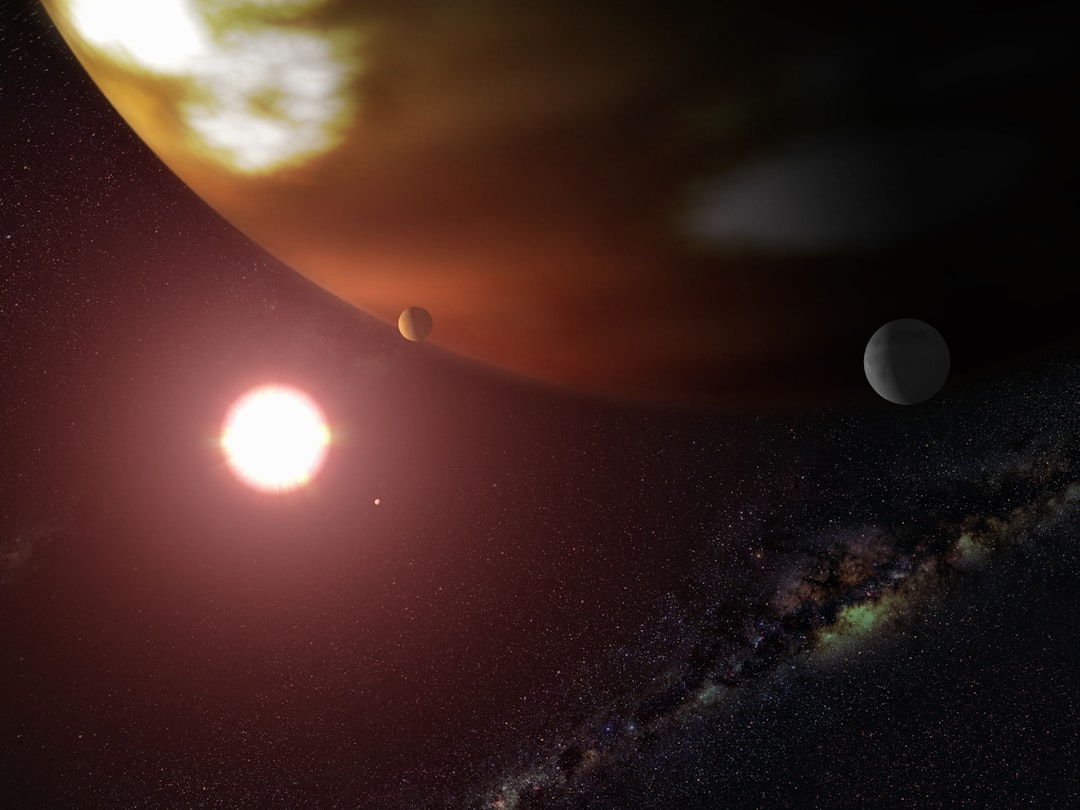
Exoplanets are planets that orbit stars outside our solar system. The first confirmed exoplanet discovery occurred in 1992, and astronomers have since identified over 5,000 confirmed exoplanets using various detection methods.
Exoplanets exhibit diverse characteristics in terms of size, mass, composition, and orbital properties. Classifications include gas giants comparable to Jupiter and Saturn, rocky terrestrial planets similar to Earth and Mars, and intermediate-sized planets called super-Earths and mini-Neptunes that have no equivalent in our solar system. Some exoplanets orbit extremely close to their host stars with orbital periods of less than one day, while others maintain distances hundreds of times greater than Earth’s distance from the Sun.
Detection methods for exoplanets include the transit method, which measures the dimming of starlight when a planet passes in front of its star, and the radial velocity method, which detects the gravitational wobble a planet induces in its host star. Space-based telescopes such as Kepler, TESS, and the James Webb Space Telescope have significantly advanced exoplanet detection capabilities and atmospheric analysis. Ground-based observatories also contribute through direct imaging and spectroscopic studies of exoplanet atmospheres, providing data on atmospheric composition, temperature, and potential habitability indicators.
Key Takeaways
- Exoplanets are planets outside our solar system detected using various advanced methods.
- Radial velocity and transit methods are the most common techniques for discovering exoplanets.
- Direct imaging and gravitational microlensing provide alternative ways to observe exoplanets.
- Atmospheric characterization helps understand exoplanet composition and potential habitability.
- Future prospects include improved detection technologies and deeper study of exoplanet environments.
Radial Velocity Method
The radial velocity method, also known as the Doppler method, is one of the earliest and most successful techniques used to detect exoplanets. This method relies on observing the gravitational influence that a planet exerts on its host star. As a planet orbits a star, it causes the star to wobble slightly due to their mutual gravitational attraction.
This wobble results in changes in the star’s velocity along the line of sight from Earth, which can be detected as shifts in the star’s spectral lines. By measuring these shifts in wavelength, astronomers can determine the presence of an orbiting planet and infer its mass and orbital period. The radial velocity method has been instrumental in discovering many exoplanets, particularly those that are relatively close to their stars.
However, it has its limitations; for instance, it is more sensitive to larger planets that are closer to their stars, making it challenging to detect smaller, Earth-like planets using this technique alone. Despite these challenges, the radial velocity method remains a cornerstone of exoplanet research and continues to yield valuable data about distant worlds.
Transit Method
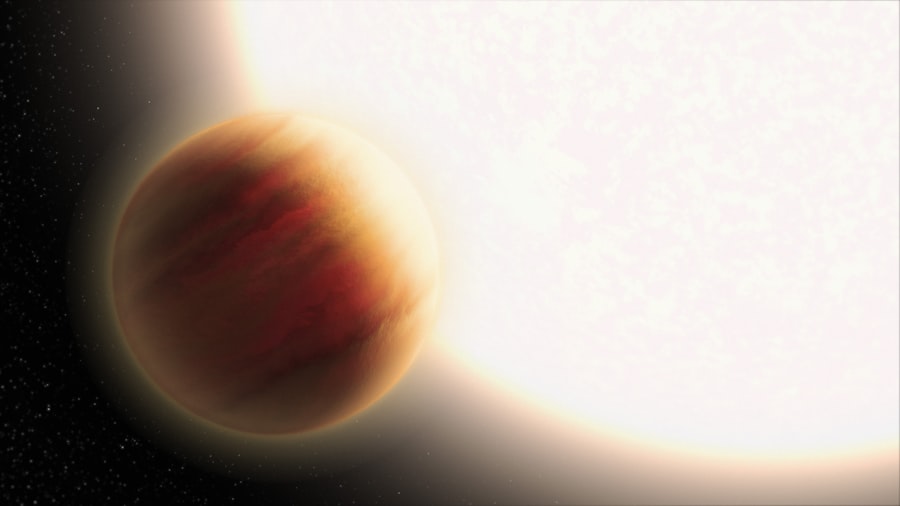
The transit method is another widely used technique for detecting exoplanets, and it has gained significant popularity due to its effectiveness in identifying smaller planets. This method involves monitoring the brightness of a star over time. When a planet passes in front of its host star from our perspective on Earth, it temporarily blocks a portion of the star’s light, resulting in a measurable dip in brightness known as a transit.
The depth and duration of this dip provide crucial information about the planet’s size and orbital period. By analyzing multiple transits, astronomers can also determine the planet’s density and composition. The transit method has been particularly successful in identifying a large number of exoplanets, especially through missions like NASA’s Kepler Space Telescope, which has discovered thousands of candidates since its launch in 2009.
This technique not only aids in finding new planets but also allows for follow-up studies that can reveal important details about their atmospheres and potential habitability.
Direct Imaging
Direct imaging is a challenging yet rewarding method for studying exoplanets. Unlike other techniques that infer a planet’s presence through indirect means, direct imaging aims to capture actual images of exoplanets by blocking out the overwhelming light from their host stars. This method is particularly useful for observing large planets that are far from their stars, where the contrast between the planet’s light and the star’s glare is more manageable.
To achieve this, astronomers employ advanced instruments such as coronagraphs or starshades that can effectively block starlight while allowing light from nearby planets to pass through. Direct imaging not only confirms the existence of exoplanets but also provides valuable information about their atmospheres and surface conditions. Although this technique has been successful in imaging a handful of exoplanets, it remains technically demanding and is limited primarily to young, massive planets that emit their own light or reflect significant amounts from their stars.
Gravitational Microlensing
| Detection Method | Description | Key Metrics | Advantages | Limitations | Notable Discoveries |
|---|---|---|---|---|---|
| Transit Method | Measures the dimming of a star as a planet passes in front of it. |
|
|
|
Kepler-22b, TRAPPIST-1 system |
| Radial Velocity (Doppler) Method | Detects star’s wobble due to gravitational pull of orbiting planet. |
|
|
|
51 Pegasi b, Proxima Centauri b |
| Direct Imaging | Captures images of planets by blocking star’s light. |
|
|
|
HR 8799 system, Beta Pictoris b |
| Gravitational Microlensing | Detects planets by light bending from a background star. |
|
|
|
OGLE-2005-BLG-390Lb |
| Astrometry | Measures precise star position changes due to orbiting planets. |
|
|
|
Gaia mission expected discoveries |
Gravitational microlensing is a fascinating phenomenon that occurs when a massive object, such as a star or planet, passes in front of a more distant background star. The gravitational field of the foreground object acts like a lens, bending and magnifying the light from the background star. This effect can reveal the presence of planets orbiting the foreground object by producing characteristic light curves that indicate additional mass.
This method has proven particularly effective for detecting planets that are far from their host stars or even those that are not easily observable through other techniques. Gravitational microlensing has led to the discovery of numerous exoplanets, including some that are located in regions where traditional methods might struggle to identify them. However, one of the challenges with this technique is that it relies on rare alignments between stars, making it less predictable than other detection methods.
Astrometry
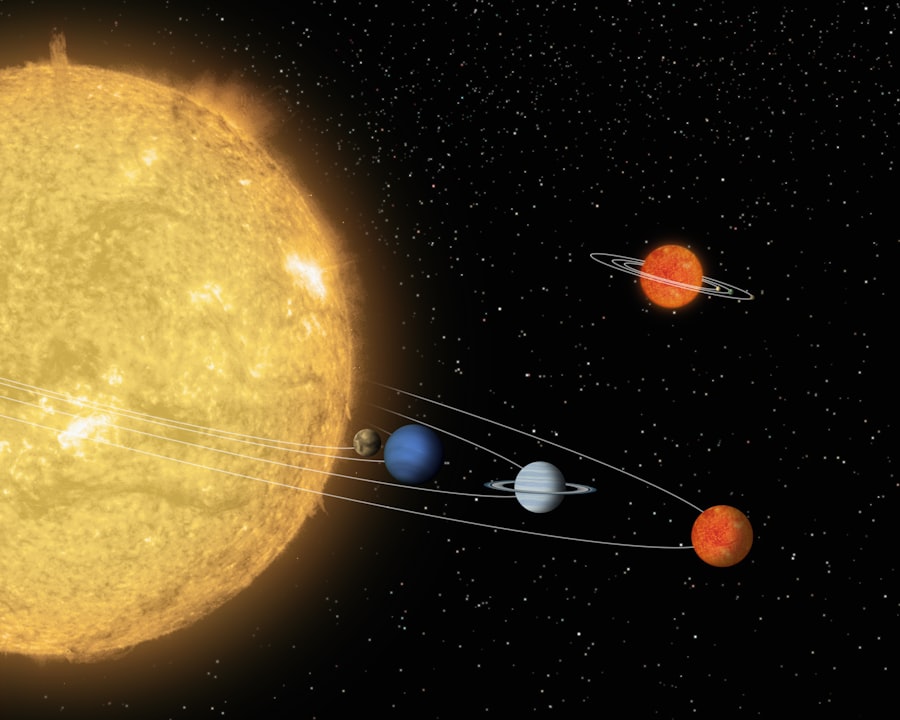
Astrometry is one of the oldest techniques used in astronomy and involves precisely measuring the positions and movements of celestial objects over time. In the context of exoplanet detection, astrometry focuses on observing the slight shifts in a star’s position caused by the gravitational pull of an orbiting planet. These shifts can be incredibly small—often just a fraction of an arcsecond—but they can provide critical information about the presence and mass of an exoplanet.
By tracking these positional changes over time, astronomers can infer details about the planet’s orbit and characteristics.
However, advancements in technology have made it increasingly viable for detecting exoplanets, particularly those that are farther away from their stars or have longer orbital periods.
Doppler Spectroscopy
Doppler spectroscopy is closely related to the radial velocity method but focuses more on analyzing changes in spectral lines rather than measuring shifts in velocity directly. This technique involves studying how the wavelengths of light emitted by a star change as it moves toward or away from Earth due to the gravitational influence of an orbiting planet. As a planet pulls on its host star, it causes periodic shifts in the star’s spectral lines—an effect known as Doppler shift.
By examining these shifts with high precision spectrographs, astronomers can gather information about the planet’s mass and orbital characteristics. Doppler spectroscopy has been instrumental in confirming many exoplanet discoveries made through other methods and continues to be a valuable tool for characterizing known planets. Its ability to provide insights into planetary atmospheres and compositions further enhances its significance in exoplanet research.
Transit Timing Variations
Transit timing variations (TTV) offer another layer of insight into exoplanet systems by analyzing deviations in the timing of transits over time. While transits provide valuable information about a planet’s size and orbital period, variations in transit timing can indicate gravitational interactions with other planets in the system. If multiple planets are present, their gravitational influences can cause slight changes in each other’s orbits, leading to variations in when transits occur.
By studying these timing variations, astronomers can infer details about additional planets within a system that may not be detectable through direct observation or other methods. TTV has proven particularly useful for identifying smaller planets or those located further from their host stars. This technique enhances our understanding of planetary dynamics and helps researchers build more comprehensive models of planetary systems.
Reflection/Emitted Light
The study of reflection and emitted light from exoplanets provides valuable insights into their atmospheres and surface conditions. When light from a host star strikes an exoplanet, some of it is reflected back into space while some is absorbed and re-emitted as thermal radiation. By analyzing both reflected starlight and emitted thermal infrared light, astronomers can gather information about a planet’s composition, temperature, and atmospheric properties.
This method is particularly effective for studying larger gas giants or hot Jupiters that are close to their stars since they tend to have significant thermal emissions. Observations made using space-based telescopes equipped with infrared capabilities allow researchers to detect these emissions and analyze them for signs of atmospheric constituents such as water vapor or methane. Understanding how light interacts with exoplanetary atmospheres is crucial for assessing their potential habitability and identifying biosignatures.
Atmospheric Characterization
Atmospheric characterization involves studying the composition and properties of exoplanet atmospheres to gain insights into their potential for supporting life. By employing various observational techniques—such as transmission spectroscopy during transits—astronomers can analyze how starlight filters through an exoplanet’s atmosphere when it passes in front of its host star. This process reveals absorption features corresponding to different molecules present in the atmosphere.
The ability to characterize atmospheres is essential for identifying potentially habitable worlds beyond our solar system. For instance, detecting gases like oxygen or methane could indicate biological processes at work on an exoplanet’s surface. As technology continues to advance, future missions aim to enhance atmospheric characterization capabilities further, allowing scientists to explore more distant worlds with greater precision.
Conclusion and Future Prospects
The exploration of exoplanets represents one of the most exciting frontiers in modern astronomy. With numerous detection methods at their disposal—each with its strengths and limitations—scientists are continually refining their approaches to uncover new worlds and understand their characteristics better. As technology advances, future telescopes and missions promise even greater capabilities for detecting smaller planets and characterizing their atmospheres.
The ongoing search for exoplanets not only expands humanity’s knowledge of planetary systems but also raises profound questions about life’s existence beyond Earth. As researchers continue to analyze data from various detection methods, they remain hopeful that they will uncover signs of life or habitable conditions on distant worlds. The future holds immense potential for discoveries that could reshape our understanding of life in the universe and humanity’s place within it.
One of the most fascinating aspects of modern astronomy is the detection of exoplanets, which has been revolutionized by various innovative methods. For a deeper understanding of these techniques, you can explore the article on mycosmicventures that discusses the latest advancements in exoplanet detection methods. This resource provides valuable insights into how astronomers are identifying planets beyond our solar system. To read more, visit this article.
FAQs
What are exoplanets?
Exoplanets are planets that orbit stars outside our solar system. They vary widely in size, composition, and orbital characteristics.
What are the main methods used to detect exoplanets?
The primary methods for detecting exoplanets include the transit method, radial velocity method, direct imaging, gravitational microlensing, and astrometry.
How does the transit method work?
The transit method detects exoplanets by measuring the slight dimming of a star’s light when a planet passes in front of it, blocking a portion of the light.
What is the radial velocity method?
The radial velocity method detects exoplanets by observing the wobble in a star’s motion caused by the gravitational pull of an orbiting planet, which affects the star’s spectral lines.
Can exoplanets be directly imaged?
Yes, direct imaging involves capturing pictures of exoplanets by blocking out the star’s light, but it is challenging and typically only works for large planets far from their stars.
What is gravitational microlensing in exoplanet detection?
Gravitational microlensing occurs when a massive object, like a star with planets, passes in front of a more distant star, magnifying its light and revealing the presence of planets through characteristic light curves.
What role does astrometry play in detecting exoplanets?
Astrometry measures the precise movements of stars in the sky to detect the slight shifts caused by orbiting planets, helping to determine their presence and properties.
Which exoplanet detection method is the most successful?
The transit method has been the most successful in discovering exoplanets, especially with space telescopes like Kepler and TESS, due to its ability to monitor thousands of stars simultaneously.
Are there limitations to exoplanet detection methods?
Yes, each method has limitations, such as sensitivity to planet size, orbital distance, and star type, which can affect the ability to detect certain types of exoplanets.
How do scientists confirm exoplanet discoveries?
Scientists often use multiple detection methods and follow-up observations to confirm exoplanet candidates and rule out false positives.