
The development of space signal detection began in the early 20th century with advances in radio wave technology. Scientists Nikola Tesla and Guglielmo Marconi established the foundations of wireless communication, creating the technological basis for later space signal research. Radio astronomy emerged in the 1930s when researchers discovered that celestial objects emit radio waves, enabling scientists to study the universe through electromagnetic radiation beyond visible light.
The space age significantly accelerated interest in extraterrestrial signals. The Soviet Union’s launch of Sputnik in 1957 represented the first artificial satellite to orbit Earth, initiating the space race and increasing focus on signal detection from space. Subsequently, the establishment of NASA and the Search for Extraterrestrial Intelligence (SETI) Institute formalized efforts to explore space communications.
Technological improvements in signal capture and analysis methods have led to significant astronomical discoveries that have expanded scientific understanding of the universe.
Key Takeaways
- Space signals have a rich history tied to the search for extraterrestrial intelligence using radio telescopes.
- Decoding space signals, like the famous Wow! Signal, remains a major challenge due to their mysterious and complex nature.
- Identifying patterns in space signals is crucial for distinguishing potential messages from cosmic noise.
- Interpreting and responding to extraterrestrial signals raises important ethical questions about contact and communication.
- Advances in technology and research promise a future with improved detection and understanding of space signals.
The Search for Extraterrestrial Intelligence
The search for extraterrestrial intelligence (SETI) represents one of humanity’s most ambitious endeavors, driven by the profound question: Are we alone in the universe? This quest began in earnest during the 1960s when scientists like Frank Drake initiated projects aimed at detecting signals from intelligent civilizations beyond Earth. The Drake Equation, formulated by Drake himself, sought to estimate the number of communicative civilizations in our galaxy, providing a framework for understanding the vastness of potential extraterrestrial life.
This equation considers factors such as the rate of star formation and the likelihood of planets supporting life, igniting discussions that continue to this day. As technology advanced, so did the methods employed in the search for extraterrestrial intelligence. The use of powerful radio telescopes allowed researchers to scan vast regions of space for signals that might indicate intelligent life.
Projects like Project Ozma and later initiatives by the SETI Institute focused on specific star systems believed to have conditions conducive to life. The excitement surrounding these efforts was palpable, as each new discovery brought humanity one step closer to answering the age-old question of whether we are alone in the cosmos. Despite decades of searching, however, definitive evidence of extraterrestrial intelligence remains elusive, fueling both skepticism and hope among scientists and enthusiasts alike.
Decoding Space Signals
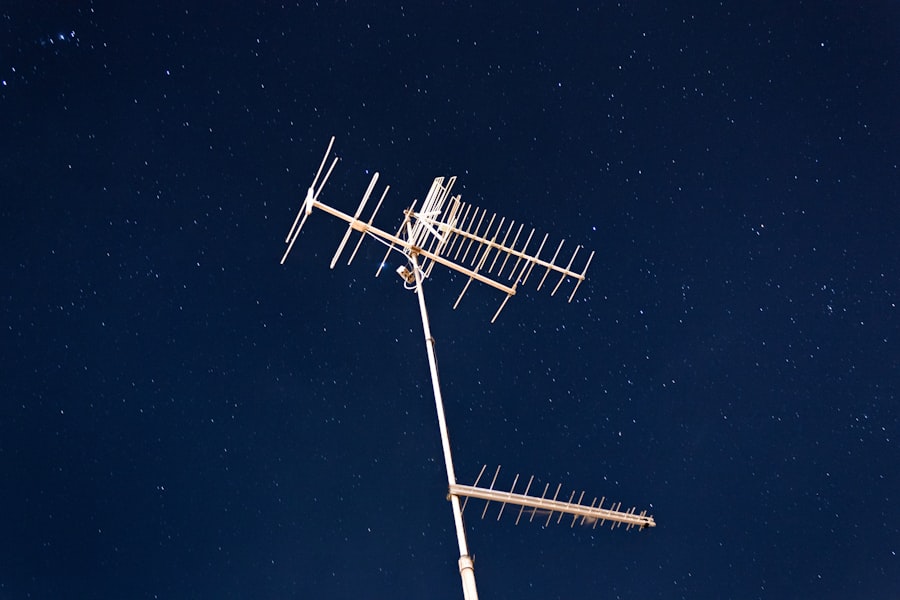
Decoding space signals is a complex and intricate process that requires advanced technology and a deep understanding of both physics and mathematics. When radio waves from space reach Earth, they often carry a wealth of information encoded within them.
The challenge lies not only in distinguishing between natural cosmic phenomena and potential extraterrestrial communications but also in interpreting the data once it has been identified. One of the primary methods used in decoding space signals involves Fourier analysis, which breaks down complex waveforms into their constituent frequencies. This technique allows researchers to identify anomalies or unusual patterns that could signify an artificial source.
Additionally, machine learning algorithms have become increasingly important in this field, enabling computers to sift through vast amounts of data more efficiently than human analysts ever could.
The Wow! Signal: A Mysterious Space Message
Among the many intriguing phenomena encountered in the search for extraterrestrial intelligence, the Wow! Signal stands out as one of the most enigmatic. Detected on August 15, 1977, by astronomer Jerry R.
Ehman while working on a SETI project at Ohio State University, this strong narrowband radio signal lasted for 72 seconds and appeared to come from the direction of the Sagittarius constellation. The intensity and specificity of the signal led Ehman to scribble “Wow!” in red ink on the printout, giving it its now-famous name. Despite extensive follow-up observations and attempts to locate the source of the Wow!
Signal, it has never been detected again. This has led to a myriad of theories regarding its origin, ranging from natural astrophysical phenomena to potential communications from an extraterrestrial civilization. The mystery surrounding this signal has captivated both scientists and amateur astronomers alike, serving as a reminder of how much remains unknown about our universe.
The Wow! Signal continues to be a focal point in discussions about SETI and has inspired countless investigations into similar unexplained phenomena.
The Role of Radio Telescopes in Detecting Space Signals
| Metric | Description | Example Value | Unit |
|---|---|---|---|
| Signal Frequency | Frequency at which the space signal is received | 1420 | MHz |
| Signal-to-Noise Ratio (SNR) | Ratio of signal power to background noise power | 25 | dB |
| Message Length | Length of the decoded hidden message | 256 | bits |
| Encoding Type | Method used to encode the hidden message | Binary Phase Shift Keying (BPSK) | N/A |
| Detection Confidence | Probability that the hidden message is not random noise | 0.95 | Probability |
| Time of Detection | Timestamp when the hidden message was detected | 2024-06-15 03:45:00 | UTC |
| Source Coordinates | Celestial coordinates of the signal source | RA: 19h 50m, Dec: +08° 52′ | Equatorial Coordinates |
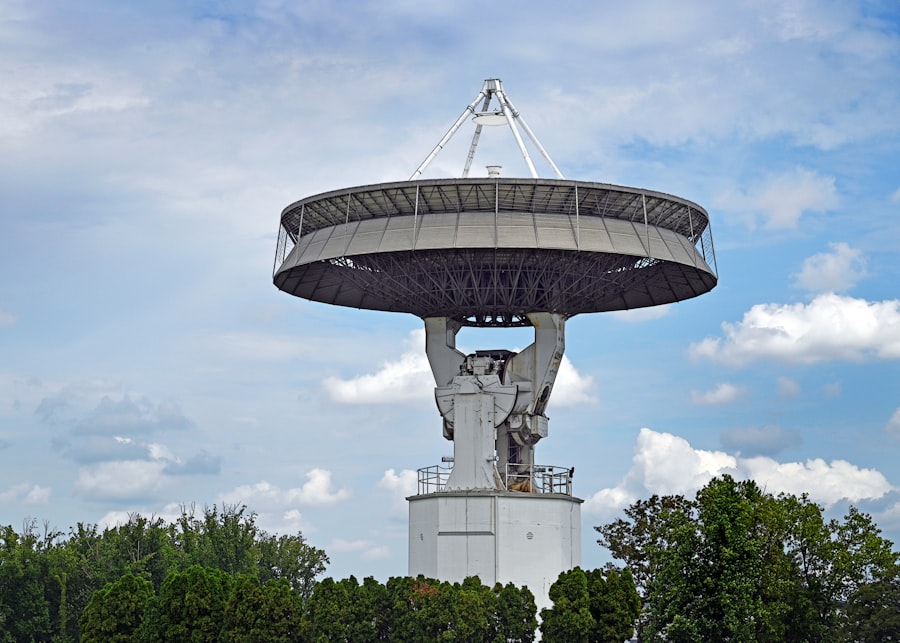
Radio telescopes play a pivotal role in detecting space signals, serving as the primary instruments through which astronomers listen to the cosmos. These large parabolic dishes are designed to capture radio waves emitted by celestial objects, converting them into electrical signals that can be analyzed and interpreted. The sensitivity and precision of modern radio telescopes have significantly enhanced humanity’s ability to explore deep space, allowing researchers to detect faint signals that would have gone unnoticed with earlier technology.
One notable example is the Arecibo Observatory in Puerto Rico, which was operational until its collapse in 2020. For decades, Arecibo was one of the most powerful radio telescopes in the world, contributing significantly to both astronomical research and SETI efforts. Its ability to scan large areas of the sky made it an invaluable tool for detecting potential extraterrestrial signals.
Similarly, newer facilities like the Square Kilometre Array (SKA), currently under construction in Australia and South Africa, promise to revolutionize our understanding of radio astronomy by providing unprecedented sensitivity and resolution. As these technologies continue to advance, they will undoubtedly play a crucial role in humanity’s ongoing quest to decode messages from beyond our planet.
The Potential Implications of Deciphering Space Messages
The implications of successfully deciphering messages from space are profound and far-reaching. If humanity were to receive a clear signal from an extraterrestrial civilization, it would fundamentally alter our understanding of our place in the universe. Such a discovery could challenge long-held beliefs about life on Earth and prompt a reevaluation of philosophical and theological perspectives regarding existence itself.
The knowledge that intelligent life exists elsewhere could foster a sense of unity among humanity as we collectively grapple with this monumental revelation. Moreover, deciphering space messages could lead to significant advancements in science and technology. If an extraterrestrial civilization were capable of sending signals across vast distances, it might possess knowledge or technologies far beyond our current understanding.
This could inspire new scientific inquiries and innovations on Earth, potentially leading to breakthroughs in fields such as physics, engineering, and biology. The prospect of learning from an advanced civilization raises exciting possibilities for collaboration and exchange that could benefit all of humanity.
The Challenges of Interpreting Space Signals
Interpreting space signals presents numerous challenges that researchers must navigate in their quest for understanding. One significant hurdle is distinguishing between natural cosmic phenomena and artificial signals generated by intelligent life forms. The universe is filled with various sources of radio emissions, including pulsars, quasars, and cosmic microwave background radiation.
These natural signals can often mimic or obscure potential extraterrestrial communications, making it difficult for scientists to identify genuine messages. Additionally, even when a signal is detected and deemed worthy of further investigation, interpreting its content poses another layer of complexity. Unlike human languages, which are based on shared cultural contexts and experiences, any potential extraterrestrial communication may be entirely foreign and devoid of recognizable patterns or meanings.
Researchers must grapple with questions about how such a civilization might encode information and what forms their communication might take. This uncertainty adds an element of intrigue but also complicates efforts to decode any messages that may be received.
The Hunt for Patterns in Space Signals
The hunt for patterns in space signals is a critical aspect of SETI research, as scientists seek to identify anomalies that could indicate intelligent origin. Patterns can manifest in various forms—repetitive sequences, specific frequencies, or unique modulations—that stand out against the backdrop of natural cosmic noise. By employing statistical analysis and machine learning techniques, researchers can sift through vast datasets generated by radio telescopes in search of these telltale signs.
One approach involves using algorithms designed to detect periodic signals that may suggest artificiality. For instance, if a signal were found to repeat at regular intervals or exhibit specific characteristics not typically associated with natural sources, it would warrant further investigation. This method has been instrumental in identifying potential candidates for extraterrestrial communication while also refining our understanding of what constitutes a “normal” cosmic signal.
As technology continues to advance, so too will the sophistication of these pattern-detection techniques, enhancing humanity’s ability to discern meaningful messages from the noise of space.
The Connection Between Space Signals and Astronomy
The connection between space signals and astronomy is deeply intertwined, as both fields rely on similar principles and methodologies to explore the universe. Radio astronomy has revolutionized our understanding of celestial phenomena by allowing scientists to observe objects that are invisible or difficult to detect using optical telescopes alone. This has led to groundbreaking discoveries about pulsars, black holes, and cosmic microwave background radiation—each contributing valuable insights into the nature of our universe.
Moreover, studying space signals has implications beyond just searching for extraterrestrial intelligence; it also enhances our understanding of fundamental astrophysical processes. For example, analyzing radio emissions from distant galaxies can provide clues about their composition and behavior over time. Similarly, monitoring cosmic signals can help astronomers track changes in celestial objects and phenomena, leading to new discoveries about their evolution and interactions within the cosmos.
Thus, space signals serve as both a tool for exploration and a means of deepening humanity’s understanding of its place within the vast universe.
The Ethical Considerations of Contacting Extraterrestrial Life
The prospect of contacting extraterrestrial life raises significant ethical considerations that must be carefully weighed by scientists and policymakers alike. One primary concern revolves around the potential consequences of making contact with an advanced civilization. Would such an encounter lead to mutual benefit or conflict?
The historical context of human interactions with other cultures suggests that contact with an advanced civilization could have unpredictable outcomes—ranging from beneficial exchanges to catastrophic consequences. Additionally, there are ethical questions surrounding how humanity should approach communication with extraterrestrial beings if contact is made. Should we send messages into space proactively?
If so, what information should be included? These decisions carry weighty implications for how humanity is perceived by other civilizations and what legacy it leaves behind in its quest for knowledge beyond Earth. As discussions about SETI continue to evolve, addressing these ethical considerations will be crucial in shaping responsible approaches toward potential contact with extraterrestrial life.
The Future of Space Signal Research
The future of space signal research holds immense promise as technological advancements continue to reshape our understanding of the cosmos. With new telescopes being developed and existing facilities being upgraded, researchers are poised to explore deeper into space than ever before. Initiatives like the James Webb Space Telescope aim not only to observe distant galaxies but also to analyze atmospheres around exoplanets—potentially identifying conditions suitable for life.
Moreover, interdisciplinary collaboration between astronomers, computer scientists, and engineers will likely play a pivotal role in advancing SETI efforts. As machine learning algorithms become increasingly sophisticated, they will enhance researchers’ ability to analyze vast datasets generated by radio telescopes more efficiently than ever before. This synergy between disciplines promises exciting developments in both our understanding of cosmic phenomena and our search for extraterrestrial intelligence.
In conclusion, as humanity continues its quest for knowledge beyond Earth through space signal research, each discovery brings with it new questions and challenges that will shape future explorations into the unknown depths of our universe.
Recent research into hidden messages in space signals has sparked intrigue among scientists and enthusiasts alike. One particularly interesting article discusses the potential for extraterrestrial communication and the methods used to decode these signals. For more insights on this topic, you can read the article on cosmic exploration at