The quest for extraterrestrial communication has captivated humanity for centuries, igniting imaginations and inspiring scientific inquiry. The idea that intelligent life exists beyond Earth raises profound questions about our place in the universe and the potential for interaction with other civilizations. As humanity advances technologically, the methods and frameworks for seeking out and understanding extraterrestrial signals have evolved significantly.
This exploration is not merely a scientific endeavor; it is a reflection of humanity’s innate curiosity and desire to connect with the unknown. Extraterrestrial communication encompasses a wide range of possibilities, from deciphering radio signals to interpreting potential messages embedded in cosmic phenomena. The search for these signals is driven by the belief that if intelligent life exists elsewhere, they may be attempting to reach out or communicate in ways that are yet to be understood.
This pursuit is not only about finding answers but also about fostering a sense of unity among humans as they collectively seek to understand their cosmic neighbors.
Key Takeaways
- Efforts to communicate with extraterrestrial life have evolved from early attempts to advanced technological methods.
- Detecting and interpreting signals from space involves significant scientific and linguistic challenges.
- Interstellar communication requires overcoming vast distances and potential cultural differences.
- Ethical considerations play a crucial role in deciding how and whether to contact extraterrestrial civilizations.
- Future advancements in technology and theoretical understanding may unlock new possibilities for meaningful extraterrestrial communication.
Historical Attempts at Extraterrestrial Communication
The history of attempts to communicate with extraterrestrial life is rich and varied, dating back to ancient civilizations that gazed at the stars and pondered the existence of other worlds. Early astronomers, such as Galileo and Kepler, speculated about the possibility of life beyond Earth, laying the groundwork for future inquiries. However, it was not until the 20th century that organized efforts began to take shape, particularly with the advent of radio technology.
The first significant attempt to reach out to potential extraterrestrial civilizations occurred in 1974 when scientists transmitted a binary-coded message from the Arecibo Observatory in Puerto Rico. This message, designed by Frank Drake and his team, contained information about humanity and our solar system, aimed at any intelligent beings that might intercept it. In addition to active attempts at communication, there have been numerous passive efforts to listen for signals from space.
The Search for Extraterrestrial Intelligence (SETI) has been at the forefront of this endeavor since its inception in the 1960s. Utilizing powerful radio telescopes, SETI researchers have scanned the cosmos for signals that deviate from natural cosmic noise, hoping to find evidence of intelligent life. These historical attempts reflect humanity’s enduring fascination with the cosmos and its relentless pursuit of knowledge about what lies beyond our planet.
Current Methods for Detecting Extraterrestrial Signals

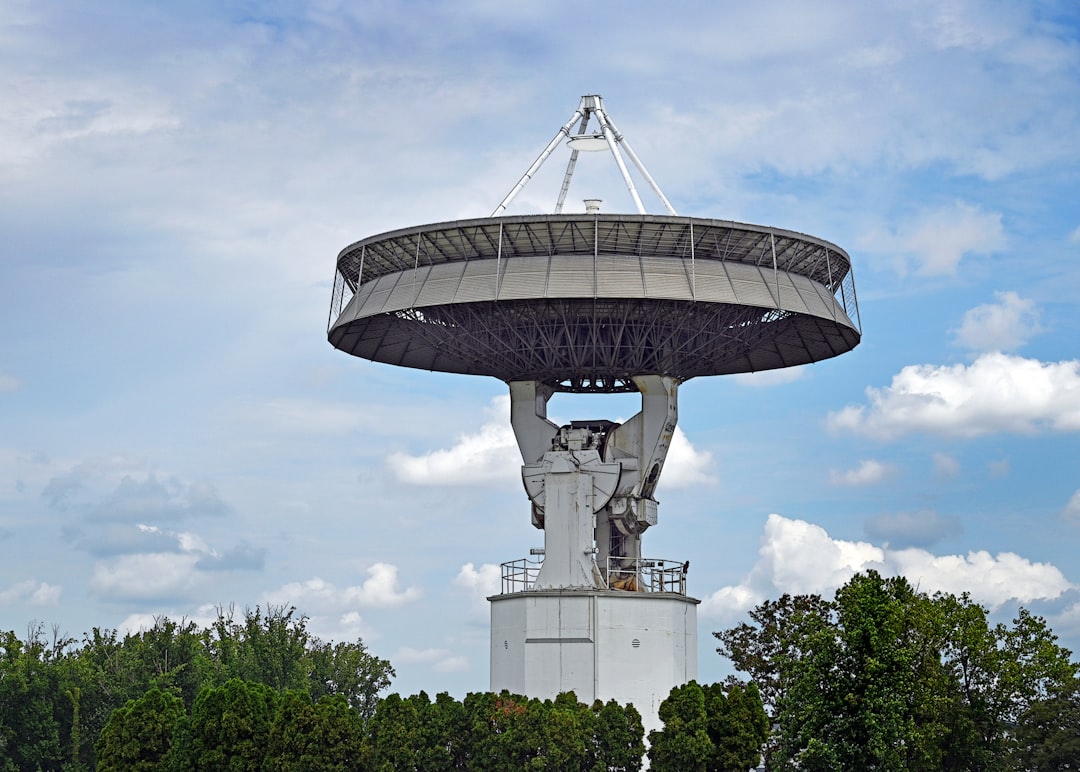
Today, the methods employed to detect extraterrestrial signals have become increasingly sophisticated, leveraging advancements in technology and data analysis. One of the primary techniques involves the use of radio telescopes, which can capture electromagnetic waves emitted by celestial bodies. These telescopes are often arrayed in large networks, allowing for enhanced sensitivity and resolution.
The use of machine learning algorithms has also revolutionized data analysis, enabling researchers to sift through vast amounts of information more efficiently than ever before.
Optical SETI, for instance, focuses on detecting laser signals that could be used for interstellar communication.
This method capitalizes on the fact that lasers can transmit information over vast distances with minimal interference. Furthermore, researchers are investigating the potential for detecting technosignatures—indicators of advanced technology—such as pollution or artificial light patterns on distant exoplanets. These current methods reflect a multi-faceted approach to understanding the universe and the potential for communication with other intelligent beings.
Challenges in Interpreting Extraterrestrial Communication
Interpreting potential extraterrestrial communication presents a myriad of challenges that extend beyond mere signal detection. One significant hurdle is distinguishing between natural cosmic phenomena and artificial signals generated by intelligent life. The universe is filled with a cacophony of sounds and signals, from pulsars to quasars, making it difficult to identify what constitutes a genuine message from an extraterrestrial source.
Researchers must develop robust criteria to differentiate between these natural occurrences and potential signs of intelligence. Moreover, even if a signal is identified as artificial, understanding its content poses another layer of complexity. The vast differences in culture, language, and cognitive frameworks between humans and extraterrestrial beings could render any received message nearly incomprehensible.
Without a shared context or common ground for interpretation, the risk of miscommunication looms large. This challenge underscores the importance of interdisciplinary collaboration among linguists, anthropologists, and scientists as they work together to develop frameworks for understanding potential extraterrestrial messages.
Possibilities for Interstellar Communication
| Communication Method | Description | Frequency Range | Data Rate | Advantages | Challenges |
|---|---|---|---|---|---|
| Radio Waves | Electromagnetic waves used for long-distance communication. | 3 kHz to 300 GHz | Up to several Mbps | Well-understood, can travel vast distances in space. | Signal attenuation, interference, and noise. |
| Laser Communication | Use of coherent light beams for data transmission. | Infrared to visible spectrum (approx. 400–1600 nm) | Gbps range | High data rates, narrow beam reduces interference. | Requires precise alignment, affected by dust and obstacles. |
| Neutrino Communication | Using neutrinos to send signals through matter. | Not frequency-based; particle-based | Very low data rates currently | Can penetrate planets and obstacles without attenuation. | Extremely difficult to generate and detect neutrinos. |
| Optical SETI | Search for pulsed laser signals from extraterrestrial sources. | Visible to near-infrared light | Depends on pulse duration and repetition | Potential for detecting intentional signals with high energy. | Requires sensitive detectors and filtering of background noise. |
| Gravitational Wave Communication | Hypothetical use of gravitational waves for communication. | Very low frequency (Hz to kHz) | Currently theoretical, no practical data rate | Can pass through matter without attenuation. | Technology to generate and detect is not yet developed. |
The possibilities for interstellar communication are as diverse as they are intriguing. While radio waves and lasers are currently the most explored mediums, other forms of communication may exist that humanity has yet to conceive. For instance, some theorists propose that advanced civilizations might utilize quantum entanglement or other principles of quantum mechanics to transmit information instantaneously across vast distances.
Such methods could revolutionize our understanding of communication and challenge existing paradigms about speed and distance. Additionally, the concept of using physical artifacts as messages has gained traction in recent years. The Voyager Golden Record, launched aboard Voyager 1 in 1977, serves as an example of this approach.
It contains sounds and images intended to portray the diversity of life and culture on Earth. Future missions could build upon this idea by sending more sophisticated representations of humanity or even creating interstellar beacons designed specifically for attracting attention from other civilizations. These possibilities highlight the creative potential inherent in humanity’s quest to communicate across the cosmos.
The Search for Intelligent Life in the Universe

The search for intelligent life in the universe is a multifaceted endeavor that encompasses various scientific disciplines and methodologies. Astrobiology plays a crucial role in this quest by examining the conditions necessary for life to thrive beyond Earth. Researchers study extreme environments on our planet—such as hydrothermal vents and acidic lakes—to understand how life might exist in similar conditions elsewhere in the universe.
This research informs the search for exoplanets located within habitable zones around their stars, where conditions may be conducive to life. Moreover, advancements in technology have enabled astronomers to detect exoplanets with increasing precision. The Kepler Space Telescope and its successors have identified thousands of potential candidates for hosting life.
As telescopes become more powerful, scientists can analyze the atmospheres of these distant worlds for biosignatures—chemical indicators that suggest biological activity. This ongoing search not only aims to find intelligent life but also seeks to answer fundamental questions about life’s origins and evolution throughout the cosmos.
The Role of Technology in Extraterrestrial Communication
Technology plays an indispensable role in both the search for extraterrestrial communication and the potential establishment of contact with intelligent life forms. The evolution of radio telescopes has allowed astronomers to scan vast regions of space with unprecedented sensitivity, enabling them to detect faint signals that may indicate extraterrestrial intelligence. Additionally, advancements in computational power have facilitated complex data analysis, allowing researchers to process enormous datasets generated by ongoing observations.
Emerging technologies such as artificial intelligence (AI) are also transforming how scientists approach this field. AI algorithms can identify patterns within data that may elude human researchers, enhancing the likelihood of discovering meaningful signals amidst cosmic noise. Furthermore, innovations in communication technology could pave the way for more effective methods of sending messages across interstellar distances.
As technology continues to advance, it holds the promise of unlocking new avenues for understanding and potentially communicating with extraterrestrial civilizations.
Ethical Considerations in Contacting Extraterrestrial Life
The prospect of contacting extraterrestrial life raises profound ethical considerations that must be carefully navigated. One primary concern revolves around the potential consequences of making contact with an advanced civilization. There is a fear that such an encounter could lead to exploitation or harm—similar to historical encounters between different human cultures where one side held significantly more power than the other.
This concern emphasizes the need for a thoughtful approach when considering how humanity might initiate contact. Moreover, ethical questions arise regarding how information about extraterrestrial life should be shared within society. Should governments or organizations keep such discoveries secret?
Or should they be made public immediately? The implications of these decisions could shape public perception and influence future interactions with any discovered civilizations. As humanity stands on the brink of potentially monumental discoveries, it is essential to engage in open discussions about these ethical dilemmas.
Cultural and Linguistic Challenges in Interstellar Communication
Cultural and linguistic challenges present significant obstacles in any attempt at interstellar communication. The vast differences between human languages highlight how complex communication can be even among ourselves; thus, imagining how an entirely alien civilization might communicate adds layers of difficulty. Without a shared linguistic framework or cultural context, interpreting messages from extraterrestrial beings could prove nearly impossible.
Furthermore, cultural biases may influence how humans perceive potential messages from other civilizations. The tendency to project human experiences onto alien communications could lead to misunderstandings or misinterpretations. To address these challenges, researchers must adopt interdisciplinary approaches that incorporate insights from linguistics, anthropology, and cognitive science—fields that can provide valuable perspectives on how meaning is constructed across different cultures.
Theoretical Frameworks for Understanding Extraterrestrial Communication
Theoretical frameworks play a crucial role in shaping how scientists conceptualize extraterrestrial communication and its implications for humanity’s understanding of itself within the cosmos. One prominent framework is the Drake Equation, which estimates the number of active extraterrestrial civilizations in our galaxy based on various factors such as star formation rates and planetary habitability. This equation serves as a foundation for discussions about the likelihood of encountering intelligent life.
Another important theoretical approach involves examining concepts such as the Fermi Paradox—the apparent contradiction between high estimates of extraterrestrial civilizations’ existence and the lack of evidence for contact with them. Various hypotheses have been proposed to explain this paradox, ranging from technological limitations to self-destruction among advanced civilizations. These frameworks not only guide scientific inquiry but also provoke philosophical discussions about humanity’s future and its role within a potentially populated universe.
Future Prospects for Unlocking Extraterrestrial Communication
As humanity continues its quest for understanding extraterrestrial communication, future prospects appear promising yet fraught with uncertainty. Ongoing advancements in technology will likely enhance our ability to detect signals from distant civilizations while also refining our methods for interpreting them. Initiatives such as the James Webb Space Telescope aim to explore exoplanet atmospheres further, potentially revealing biosignatures that could indicate life beyond Earth.
Moreover, collaborative efforts among nations and organizations dedicated to astrobiology and SETI research will foster a more comprehensive approach toward unlocking extraterrestrial communication. By pooling resources and expertise, scientists can tackle complex challenges more effectively than ever before. As humanity stands on this precipice of discovery, it remains essential to maintain an open mind while grappling with ethical considerations surrounding contact with intelligent life forms—an endeavor that could redefine humanity’s understanding of itself within an expansive universe filled with possibilities yet untold.
In exploring the fascinating topic of extraterrestrial communication methods, one can gain valuable insights from the article available on My Cosmic Ventures. This resource delves into various theoretical approaches and technologies that could potentially facilitate contact with intelligent life beyond our planet. For more information, you can read the article [here](https://www.mycosmicventures.com/).
FAQs
What are extraterrestrial communication methods?
Extraterrestrial communication methods refer to the various techniques and technologies that could be used to send and receive messages between humans and potential intelligent life forms beyond Earth.
What types of signals are used in extraterrestrial communication?
Commonly considered signals include radio waves, laser pulses, and electromagnetic signals across different frequencies. Radio waves, especially in the microwave range, are often favored due to their ability to travel long distances through space.
Why is radio communication often preferred for contacting extraterrestrial life?
Radio waves can travel vast distances with relatively low energy loss and can penetrate cosmic dust and gas. They are also a well-understood technology on Earth, making them a practical choice for both sending and detecting signals.
What is the SETI program?
SETI (Search for Extraterrestrial Intelligence) is a scientific effort that uses radio telescopes and other instruments to listen for signals from intelligent extraterrestrial sources.
Are there any active attempts to send messages to extraterrestrial civilizations?
Yes, projects like METI (Messaging to Extraterrestrial Intelligence) actively send encoded messages into space, hoping to reach intelligent life forms.
What challenges exist in extraterrestrial communication?
Challenges include vast interstellar distances causing significant signal delay, the unknown nature of alien languages or codes, signal degradation, and the difficulty in distinguishing artificial signals from natural cosmic noise.
Could extraterrestrial communication use methods other than electromagnetic signals?
While electromagnetic signals are the most studied, some theories suggest the possibility of using neutrinos, gravitational waves, or other exotic particles, but these methods are currently speculative and technologically challenging.
How do scientists encode messages for extraterrestrial communication?
Messages are often encoded using universal concepts such as mathematics, physics constants, or pictorial representations, aiming to create a common ground that any intelligent civilization might understand.
Has any confirmed extraterrestrial communication been received?
As of now, no confirmed communication from extraterrestrial intelligence has been detected.
What role do international collaborations play in extraterrestrial communication efforts?
International collaborations pool resources, expertise, and data from multiple observatories and research institutions worldwide, enhancing the chances of detecting or sending extraterrestrial communications.