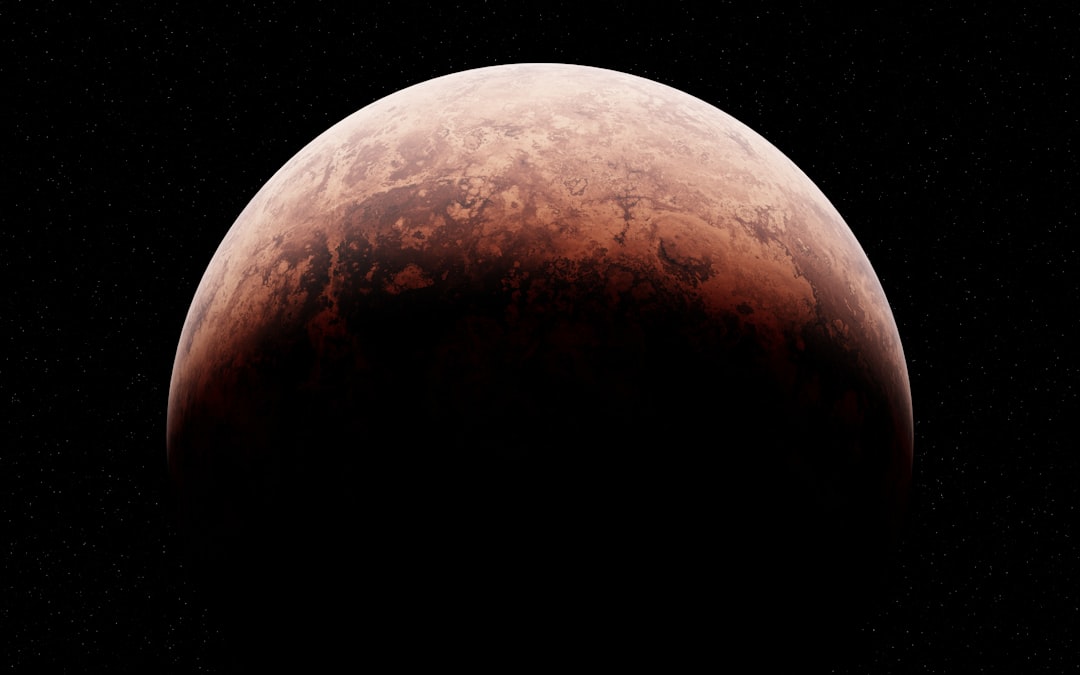
Space science is an interdisciplinary field that studies the universe beyond Earth’s atmosphere through the integration of astronomy, astrophysics, planetary science, and cosmology. This scientific domain investigates celestial objects, cosmic phenomena, and the physical laws that govern the universe. The field has experienced significant expansion since the mid-20th century, facilitated by advances in telescope technology, spacecraft design, and computational methods.
Space science research addresses fundamental questions about the universe’s structure, evolution, and composition. Scientists in this field examine the formation and development of stars, planets, galaxies, and other cosmic structures to understand the processes that shaped the current universe. Through observations and theoretical modeling, researchers investigate topics ranging from planetary atmospheres and magnetic fields to black holes and dark matter.
The practical applications of space science extend to multiple areas of human knowledge and technology. Research findings contribute to our understanding of Earth’s climate systems, natural resource distribution, and potential hazards from space-based phenomena such as solar flares and asteroid impacts. Additionally, space science research drives technological innovation in areas including materials science, communications, and navigation systems, with many developments finding applications in terrestrial industries.
Key Takeaways
- Space science explores the universe, from our solar system to distant galaxies.
- Human space exploration has evolved from early missions to advanced space telescopes.
- Black holes remain one of the most intriguing and mysterious phenomena in space physics.
- The search for extraterrestrial life drives much of modern space research and technology.
- Innovations in space technology are crucial for future space travel and scientific discovery.
The History of Space Exploration
The history of space exploration is a tale of human ingenuity and ambition, marked by significant milestones that have expanded our understanding of the universe. It began in earnest during the mid-20th century with the launch of Sputnik 1 by the Soviet Union in 1957, which marked humanity’s first foray into space. This event ignited a fierce competition known as the Space Race, primarily between the United States and the Soviet Union, leading to remarkable achievements such as Yuri Gagarin’s historic orbit around Earth in 1961 and the Apollo 11 mission that landed humans on the Moon in 1969.
As the decades progressed, space exploration evolved from government-led initiatives to include private enterprises and international collaborations. The establishment of space agencies like NASA, ESA (European Space Agency), and others facilitated a more structured approach to exploring outer space. The launch of space probes such as Voyager 1 and Voyager 2 in the late 1970s provided humanity with its first detailed images of distant planets and their moons, while the Hubble Space Telescope revolutionized our understanding of the universe by capturing breathtaking images of galaxies, nebulae, and other celestial phenomena.
The Solar System and Beyond

The solar system serves as humanity’s immediate cosmic neighborhood, comprising eight planets, their moons, dwarf planets, asteroids, and comets. Each celestial body offers unique insights into the processes that shaped our planetary system. For instance, Mars has been a focal point for exploration due to its similarities to Earth and the tantalizing possibility that it may have harbored life in its distant past.
Beyond the solar system lies an expansive universe filled with billions of galaxies, each containing countless stars and planets. The study of exoplanets—planets orbiting stars outside our solar system—has gained momentum in recent years, with thousands confirmed through missions like Kepler and TESS (Transiting Exoplanet Survey Satellite).
These discoveries have opened up new avenues for understanding planetary formation and habitability, raising questions about whether life exists elsewhere in the universe.
The Physics of Space
The physics of space is a complex tapestry woven from various scientific principles that govern celestial bodies and their interactions. Fundamental concepts such as gravity, electromagnetism, and thermodynamics play critical roles in shaping the behavior of objects in space. For instance, gravity not only governs the orbits of planets around stars but also influences the formation of galaxies and clusters.
Understanding these forces allows scientists to predict celestial events and phenomena with remarkable accuracy. Moreover, theories such as Einstein’s general relativity have revolutionized our comprehension of space-time and its curvature due to mass. This understanding has profound implications for everything from black holes to gravitational waves.
As researchers continue to probe deeper into the fabric of space-time, they uncover new layers of complexity that challenge existing paradigms and inspire further inquiry into the nature of reality itself.
The Mystery of Black Holes
| Topic | Description | Key Metric | Unit |
|---|---|---|---|
| Distance to the Moon | Average distance from Earth to the Moon | 384,400 | km |
| Speed of Light | Speed at which light travels in vacuum | 299,792 | km/s |
| Age of the Universe | Estimated time since the Big Bang | 13.8 | billion years |
| Mass of the Sun | Total mass of the Sun | 1.989 × 10^30 | kg |
| Orbital Period of Earth | Time Earth takes to orbit the Sun once | 365.25 | days |
| Temperature of the Sun’s Surface | Average temperature of the Sun’s photosphere | 5,778 | K |
| Number of Known Exoplanets | Confirmed planets outside our solar system | 5,500+ | planets |
| Distance to Proxima Centauri | Nearest star to the Sun | 4.24 | light years |
Black holes represent one of the most enigmatic phenomena in astrophysics, captivating scientists and laypeople alike with their mysterious nature. Formed from the remnants of massive stars that have undergone gravitational collapse, black holes possess gravitational fields so strong that nothing—not even light—can escape their grasp. This characteristic makes them invisible to traditional observational methods, leading scientists to infer their existence through indirect means such as observing the behavior of nearby stars or gas clouds.
The study of black holes has profound implications for our understanding of fundamental physics. They challenge existing theories about gravity and quantum mechanics, prompting researchers to explore concepts like Hawking radiation and information paradoxes. As scientists continue to investigate these cosmic giants, they hope to unlock secrets about the origins of the universe and the fundamental laws that govern it.
The Search for Extraterrestrial Life
The quest for extraterrestrial life is one of humanity’s most profound endeavors, driven by an innate curiosity about whether we are alone in the universe. Scientists employ various methods to search for signs of life beyond Earth, ranging from analyzing atmospheric compositions on exoplanets to sending robotic missions to Mars and icy moons like Europa and Enceladus. These missions aim to uncover evidence of past or present microbial life by studying surface conditions and subsurface oceans.
Astrobiology has emerged as a multidisciplinary field dedicated to understanding life’s potential in diverse environments across the cosmos. Researchers explore extreme conditions on Earth—such as deep-sea hydrothermal vents or acidic lakes—to gain insights into how life might adapt to similar environments elsewhere. The discovery of extremophiles on Earth has expanded the possibilities for life beyond our planet, suggesting that life could exist in places previously deemed inhospitable.
Space Telescopes and Observatories
Space telescopes have revolutionized our ability to observe celestial phenomena without the interference of Earth’s atmosphere. Instruments like the Hubble Space Telescope have provided breathtaking images and invaluable data that have reshaped our understanding of galaxies, star formation, and cosmic evolution. Launched in 1990, Hubble has captured stunning views of distant galaxies and nebulae, allowing scientists to study their composition and behavior over time.
Looking ahead, upcoming missions such as the James Webb Space Telescope promise to push the boundaries of astronomical observation even further. With its advanced infrared capabilities, Webb aims to explore the early universe, study exoplanet atmospheres, and investigate star formation in unprecedented detail. These observatories not only enhance scientific knowledge but also inspire public interest in space science by revealing the beauty and complexity of the cosmos.
The Future of Space Travel
The future of space travel holds immense promise as technological advancements pave the way for new possibilities in exploration and habitation beyond Earth. With private companies like SpaceX leading the charge in developing reusable rocket technology, space travel is becoming more accessible than ever before. Initiatives such as NASA’s Artemis program aim to return humans to the Moon by 2024, laying the groundwork for future missions to Mars and beyond.
As humanity contemplates long-duration space missions, challenges such as radiation exposure, life support systems, and psychological well-being must be addressed. Research into sustainable habitats on other planets is crucial for ensuring human survival during extended stays in space. The vision of establishing a human presence on Mars or even venturing beyond our solar system is no longer confined to science fiction; it is becoming an achievable goal within this century.
Space Technology and Innovation
Space technology has driven innovation across various sectors on Earth, leading to advancements that benefit everyday life. Technologies developed for space missions have found applications in telecommunications, medicine, environmental monitoring, and more. For instance, satellite technology has revolutionized global communication systems while also providing critical data for weather forecasting and disaster management.
Moreover, research conducted in microgravity environments aboard the International Space Station (ISS) has yielded breakthroughs in materials science, pharmaceuticals, and biological research. These innovations not only enhance our understanding of fundamental science but also contribute to solving pressing challenges on Earth. As investment in space technology continues to grow, it promises to yield even more transformative solutions for humanity’s future.
The Importance of Space Science
Space science plays a vital role in expanding human knowledge and addressing global challenges. By studying celestial phenomena and understanding fundamental physical laws, scientists can develop technologies that improve life on Earth while also preparing for potential future scenarios involving climate change or resource scarcity. The insights gained from space exploration inform policy decisions related to environmental conservation and sustainable development.
Furthermore, space science fosters international collaboration by bringing together researchers from diverse backgrounds to tackle complex questions about our universe. This spirit of cooperation transcends borders and promotes peaceful relations among nations while inspiring future generations to pursue careers in science, technology, engineering, and mathematics (STEM). The importance of space science extends far beyond academia; it shapes humanity’s collective future.
Resources for Further Exploration
For those interested in delving deeper into space science and exploration, numerous resources are available to facilitate learning and engagement. Websites such as NASA’s official site offer a wealth of information on current missions, educational materials, and interactive tools for enthusiasts of all ages. Additionally, organizations like the Planetary Society provide opportunities for individuals to get involved in advocacy for space exploration.
Books authored by prominent scientists can also provide valuable insights into various aspects of space science. Titles such as “Astrophysics for People in a Hurry” by Neil deGrasse Tyson or “Cosmos” by Carl Sagan offer accessible introductions to complex topics while igniting curiosity about the universe. Online courses offered by universities or platforms like Coursera can further enhance understanding through structured learning experiences.
In conclusion, space science represents a frontier filled with endless possibilities for discovery and innovation. As humanity continues its quest to explore the cosmos, each new finding brings us closer to answering fundamental questions about existence while inspiring future generations to reach for the stars.
For those interested in delving deeper into the fascinating world of space science, a related article can be found on My Cosmic Ventures. This resource offers a wealth of information on various topics, including the latest discoveries and theories in astrophysics. You can explore more by visiting their site at My Cosmic Ventures.
FAQs
What is space science?
Space science is the study of everything in outer space, including planets, stars, galaxies, and the overall structure of the universe. It encompasses various fields such as astronomy, astrophysics, planetary science, and cosmology.
What tools do scientists use to study space?
Scientists use telescopes (both ground-based and space-based), satellites, space probes, and spectrometers to observe and analyze celestial objects and phenomena.
What is the difference between astronomy and astrophysics?
Astronomy primarily focuses on observing and cataloging celestial objects, while astrophysics seeks to understand the physical properties and underlying processes of those objects and phenomena.
How do space missions contribute to space science?
Space missions provide direct data from space environments, allowing scientists to study planets, moons, asteroids, and cosmic phenomena up close, which enhances our understanding of the universe.
What is the significance of studying space science?
Studying space science helps us understand the origins and evolution of the universe, the potential for life beyond Earth, and the fundamental laws of physics. It also drives technological advancements and inspires innovation.
Can space science help predict cosmic events?
Yes, space science enables the prediction of events such as solar flares, asteroid flybys, and eclipses, which can be important for protecting satellites, power grids, and communication systems on Earth.
What role does space science play in understanding Earth’s environment?
Space science helps monitor Earth’s climate, weather patterns, and natural disasters through satellite observations, contributing to environmental protection and disaster management.
How do scientists study objects that are very far away in space?
Scientists use powerful telescopes and instruments that detect various forms of electromagnetic radiation (such as visible light, radio waves, and X-rays) emitted or reflected by distant objects to study them remotely.
What is the importance of space telescopes like the Hubble Space Telescope?
Space telescopes avoid atmospheric distortion, providing clearer and more detailed images of distant celestial objects, which has led to many important discoveries in space science.
How does space science impact everyday life?
Technologies developed for space exploration, such as GPS, satellite communications, and medical imaging, have practical applications that benefit daily life on Earth.