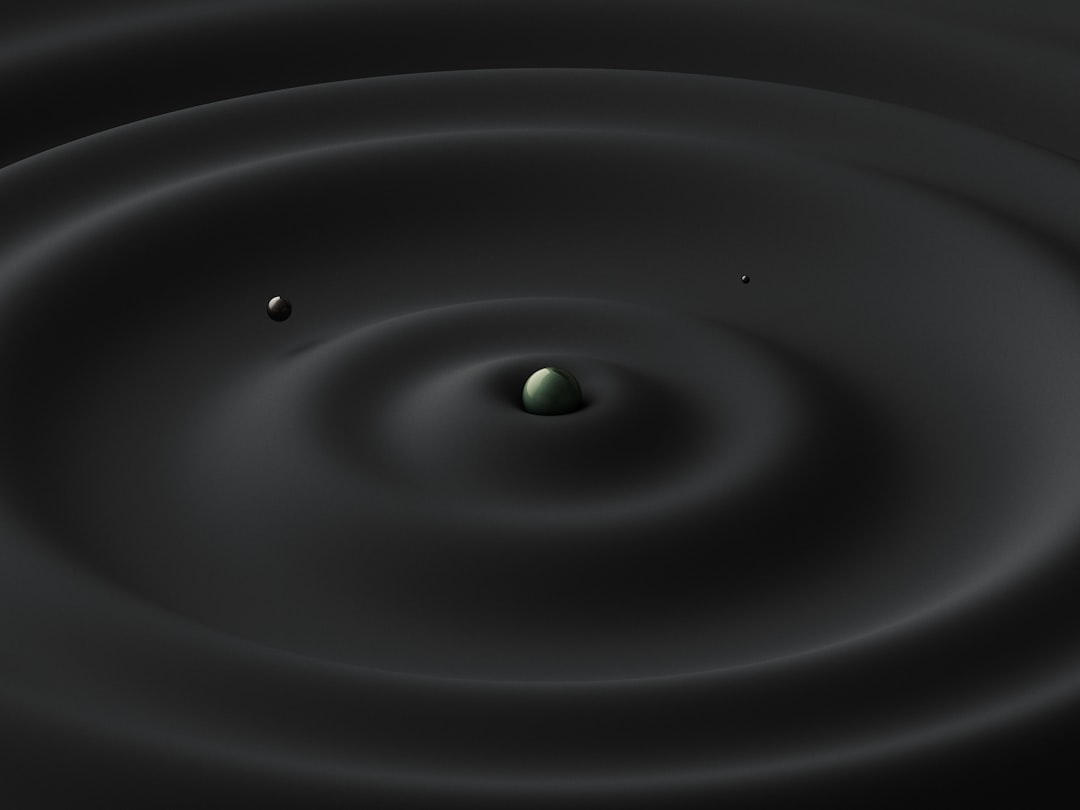
Black holes, once thought to be the ultimate cosmic vacuum cleaners, have captivated the imagination of scientists and the public alike. These enigmatic entities, formed from the remnants of massive stars that have undergone gravitational collapse, possess gravitational fields so intense that nothing, not even light, can escape their grasp. However, the concept of black hole evaporation introduces a fascinating twist to this narrative.
Proposed by physicist Stephen Hawking in the 1970s, black hole evaporation suggests that black holes are not eternal; instead, they can gradually lose mass and energy over time through a process known as Hawking radiation. This phenomenon raises profound questions about the nature of black holes and their ultimate fate in the universe. The implications of black hole evaporation extend far beyond the confines of astrophysics.
They touch upon fundamental principles of quantum mechanics and thermodynamics, challenging long-held beliefs about information conservation in the universe. As researchers delve deeper into the intricacies of black hole evaporation, they confront a myriad of theoretical and observational challenges. The journey into understanding this process not only illuminates the life cycle of black holes but also offers insights into the very fabric of reality itself.
Key Takeaways
- Black hole evaporation, driven by Hawking radiation, leads to gradual loss of black hole mass over time.
- The Page curve addresses the black hole information paradox by describing how information might be preserved during evaporation.
- Quantum mechanics plays a crucial role in understanding how information escapes black holes despite classical predictions.
- Recent theoretical and observational advances are refining models of black hole evaporation and its impact on entropy.
- Ongoing research explores the cosmological implications and seeks to resolve controversies surrounding black hole information loss.
The Page Curve and Information Paradox
At the heart of the discourse surrounding black hole evaporation lies the Page curve, a theoretical construct that attempts to reconcile the apparent contradictions between quantum mechanics and general relativity. The Page curve illustrates how information is expected to be preserved in a quantum system, even as it undergoes transformations. In the context of black holes, this curve suggests that information swallowed by a black hole should eventually be recoverable as the black hole evaporates.
However, this notion leads to the infamous information paradox: if a black hole can evaporate completely, what happens to the information contained within it? The implications of the Page curve are profound. If information is truly lost when a black hole evaporates, it would violate one of the fundamental tenets of quantum mechanics—the principle of unitarity, which asserts that information cannot be destroyed.
This paradox has sparked intense debate among physicists, leading to various interpretations and proposed solutions. Some theorists argue that information may be encoded in the Hawking radiation emitted by black holes, while others suggest that it could be stored on the event horizon itself. The quest to resolve this paradox continues to drive research in theoretical physics, as scientists seek to understand how these seemingly contradictory principles can coexist.
Hawking Radiation and Black Hole Evaporation

Hawking radiation is a cornerstone of the theory of black hole evaporation. This phenomenon arises from quantum fluctuations near the event horizon of a black hole, where virtual particle-antiparticle pairs spontaneously form. In certain circumstances, one of these particles may fall into the black hole while the other escapes into space.
The escaping particle is perceived as radiation emitted by the black hole, leading to a gradual loss of mass and energy over time. This process ultimately results in the slow evaporation of the black hole itself. The implications of Hawking radiation are staggering.
It suggests that black holes are not entirely black; they emit radiation and can eventually evaporate completely. This challenges traditional views of black holes as permanent fixtures in the universe. As they lose mass through Hawking radiation, they become smaller and hotter, accelerating their evaporation process until they vanish entirely.
This raises intriguing questions about what happens to the information contained within a black hole during this process and whether it can ever be recovered.
Quantum Mechanics and Black Hole Information
The intersection of quantum mechanics and black hole physics presents a rich tapestry of inquiry that has captivated physicists for decades. Quantum mechanics posits that information is fundamentally preserved in closed systems, leading to significant tension with the idea that information could be lost in a black hole’s evaporation process. This tension has led to various interpretations and theories aimed at reconciling these two seemingly incompatible frameworks.
One prominent approach involves the concept of “black hole complementarity,” which suggests that different observers may perceive different realities regarding information retention and loss. According to this view, an observer falling into a black hole would experience information preservation differently than an outside observer who witnesses the black hole’s evaporation. This idea has sparked further debate about the nature of reality itself and how it is influenced by observation.
As researchers continue to explore these concepts, they are not only seeking answers about black holes but also delving into fundamental questions about the nature of information and its role in shaping our understanding of the universe.
Theoretical Approaches to Black Hole Evaporation
| Metric | Description | Typical Value / Behavior | Significance in Page Curve |
|---|---|---|---|
| Black Hole Entropy (SBH) | Entropy proportional to the area of the event horizon | Increases initially, then decreases after Page time | Represents the information content of the black hole |
| Radiation Entropy (Srad) | Entropy of Hawking radiation emitted by the black hole | Increases over time, peaks at Page time, then decreases | Tracks information released during evaporation |
| Page Time (tPage) | Time when radiation entropy reaches maximum | Approximately half the black hole evaporation time | Marks transition from information loss to recovery |
| Evaporation Time (tevap) | Total time for black hole to evaporate completely | Proportional to M3 (mass cubed) | Sets scale for the entire Page curve |
| Mutual Information (I) | Information shared between black hole and radiation | Zero initially, increases after Page time | Indicates correlations and information recovery |
Theoretical physicists have proposed various models and frameworks to better understand black hole evaporation and its implications for information theory. One such approach is string theory, which posits that fundamental particles are not point-like but rather one-dimensional strings vibrating at different frequencies. String theory offers potential insights into how information might be preserved during a black hole’s evaporation process by suggesting that it could be encoded in higher-dimensional structures.
Another theoretical avenue involves loop quantum gravity, which seeks to merge general relativity with quantum mechanics by quantizing spacetime itself. This framework suggests that spacetime has a discrete structure at its most fundamental level, potentially providing new insights into how information is retained or lost during black hole evaporation.
Observational Evidence for Black Hole Evaporation

While much of the discourse surrounding black hole evaporation has been rooted in theoretical frameworks, there is an increasing push for observational evidence to support these ideas.
If these primordial black holes exist, they could have evaporated over time, leaving behind detectable signatures in cosmic background radiation or other astrophysical phenomena.
Additionally, advancements in observational technology have enabled astronomers to study supermassive black holes at the centers of galaxies more closely. By analyzing their emissions and interactions with surrounding matter, researchers hope to glean insights into their behavior and potential evaporation processes. While direct evidence for Hawking radiation remains elusive, ongoing observations may eventually provide crucial data to support or refute existing theories about black hole evaporation.
The Role of Entropy in Black Hole Evaporation
Entropy plays a pivotal role in understanding black hole evaporation and its implications for thermodynamics and information theory. In thermodynamics, entropy is often associated with disorder or randomness within a system; however, in the context of black holes, it takes on a more nuanced meaning. The Bekenstein-Hawking entropy formula suggests that a black hole’s entropy is proportional to its surface area rather than its volume, indicating that black holes possess an immense amount of entropy.
As a black hole evaporates through Hawking radiation, its entropy decreases over time. This raises questions about how entropy behaves in relation to information loss during evaporation. If information is lost when a black hole evaporates, it would imply a decrease in overall entropy—a violation of the second law of thermodynamics, which states that entropy should never decrease in an isolated system.
This paradox has led researchers to explore various avenues for reconciling these concepts, including theories suggesting that information may be encoded in Hawking radiation or stored on the event horizon itself.
Recent Developments in Understanding Black Hole Evaporation
Recent advancements in theoretical physics have shed new light on the complexities surrounding black hole evaporation and its implications for our understanding of reality. Researchers have made strides in developing models that incorporate both quantum mechanics and general relativity, leading to new insights into how information might be preserved during a black hole’s life cycle. These developments have sparked renewed interest in exploring potential connections between gravity and quantum mechanics.
Moreover, collaborations between theoretical physicists and observational astronomers have led to innovative approaches for testing hypotheses related to black hole evaporation. By combining theoretical predictions with observational data from telescopes and other instruments, scientists are working towards building a more comprehensive understanding of how black holes behave over time and what this means for our broader understanding of cosmology.
Challenges and Controversies in Black Hole Evaporation Research
Despite significant progress in understanding black hole evaporation, numerous challenges and controversies persist within the field. One major challenge lies in reconciling different theoretical frameworks—such as string theory and loop quantum gravity—with observational evidence. Each approach offers unique insights but also faces limitations when it comes to making definitive predictions about black hole behavior.
Additionally, debates surrounding the information paradox continue to fuel controversy among physicists. While some researchers advocate for solutions that preserve unitarity and information conservation, others propose radical ideas that challenge conventional notions of reality. These ongoing discussions highlight the dynamic nature of research in this area and underscore the need for continued exploration as scientists strive to unravel one of the universe’s most profound mysteries.
Implications of Black Hole Evaporation for Cosmology
The implications of black hole evaporation extend far beyond individual cosmic entities; they resonate throughout cosmology as a whole. Understanding how black holes evolve over time can provide crucial insights into the formation and evolution of galaxies, as well as the overall dynamics of cosmic structures. As researchers continue to explore these connections, they may uncover new pathways for understanding dark matter, dark energy, and other fundamental aspects of our universe.
Moreover, insights gained from studying black hole evaporation could inform theories about the ultimate fate of our universe itself. If black holes can evaporate completely over vast timescales, this raises questions about what remains after their disappearance and how this might influence cosmic evolution in the distant future.
Future Directions in Black Hole Evaporation Research
As research into black hole evaporation continues to evolve, several promising directions are emerging on the horizon. One key area involves further exploration of quantum gravity theories that seek to unify general relativity with quantum mechanics. By developing more comprehensive models that account for both frameworks, physicists hope to gain deeper insights into how information behaves during a black hole’s life cycle.
Additionally, advancements in observational technology will likely play a crucial role in shaping future research directions. As telescopes become more sophisticated and capable of probing deeper into cosmic phenomena, researchers may uncover new evidence related to Hawking radiation or other aspects of black hole behavior. In conclusion, while significant challenges remain in understanding black hole evaporation and its implications for cosmology and fundamental physics, ongoing research promises to illuminate one of nature’s most profound mysteries.
As scientists continue their quest for knowledge about these enigmatic entities, they inch closer to unraveling the intricate tapestry woven by gravity, quantum mechanics, and information theory—ultimately reshaping humanity’s understanding of reality itself.
The phenomenon of black hole evaporation, particularly in the context of the Page curve, has garnered significant attention in recent years. For a deeper understanding of this topic, you can explore the related article on cosmic ventures, which discusses the implications of black hole thermodynamics and information paradoxes. Check it out here: Black Hole Thermodynamics and the Page Curve.
FAQs
What is the Page curve in the context of black hole evaporation?
The Page curve is a theoretical graph that represents the entanglement entropy of Hawking radiation emitted by a black hole over time. It initially rises as the black hole emits radiation and becomes more entangled with it, then eventually decreases, indicating that information is being released as the black hole evaporates.
Who proposed the concept of the Page curve?
The concept of the Page curve was proposed by physicist Don Page in the early 1990s as part of his work on black hole information and entropy.
Why is the Page curve important for understanding black hole evaporation?
The Page curve is important because it provides a way to reconcile the principles of quantum mechanics with black hole evaporation. It suggests that information is not lost but rather encoded in the radiation, addressing the black hole information paradox.
What does the rising part of the Page curve represent?
The rising part of the Page curve represents the increase in entanglement entropy as the black hole emits Hawking radiation, which is initially entangled with the black hole’s internal states.
What does the decreasing part of the Page curve signify?
The decreasing part of the Page curve signifies that the entanglement entropy reduces as the black hole loses mass and information begins to be released in the radiation, implying that the radiation carries away information about the black hole’s initial state.
How does the Page curve relate to the black hole information paradox?
The Page curve provides a potential resolution to the black hole information paradox by showing that information can be preserved and recovered from the Hawking radiation, rather than being lost when the black hole evaporates completely.
What role does quantum entanglement play in the Page curve?
Quantum entanglement is central to the Page curve, as it measures the degree of entanglement between the black hole and the emitted radiation, which changes over time during the evaporation process.
Has the Page curve been confirmed experimentally?
Direct experimental confirmation of the Page curve is currently not possible due to the difficulty of observing black hole evaporation. However, theoretical models and analog systems in laboratories have provided supporting evidence.
What recent developments have been made regarding the Page curve?
Recent developments include advances in holographic theories and quantum gravity, such as the use of replica wormholes in the AdS/CFT correspondence, which have provided theoretical calculations consistent with the Page curve and the preservation of information.
Why is understanding the Page curve significant for physics?
Understanding the Page curve is significant because it helps bridge the gap between general relativity and quantum mechanics, offering insights into the fundamental nature of gravity, information, and the quantum structure of spacetime.