The James Webb Space Telescope (JWST) is an advanced space-based observatory that launched on December 25, 2021. The telescope operates primarily in the infrared spectrum, enabling it to observe through cosmic dust and gas that obscure visible light observations. JWST’s scientific objectives include investigating star and galaxy formation, analyzing exoplanet atmospheres, and studying black holes.
The telescope’s primary mission involves observing light from the earliest galaxies that formed following the Big Bang to examine the development of cosmic structures. JWST’s instrumentation can detect weak electromagnetic signals from distant astronomical objects, allowing scientists to determine their chemical composition, temperature, and velocity. The observatory’s infrared capabilities and sensitivity position it to advance research in astrophysics, including the study of black holes and their properties.
Key Takeaways
- JWST’s advanced technology enables unprecedented study of black holes, revealing new insights into their nature and behavior.
- Recent JWST discoveries have deepened understanding of black holes’ roles in galaxy formation and evolution.
- Findings from JWST are influencing broader astrophysical research, including the study of cosmic structures and dark matter.
- Despite challenges in observing black holes, JWST’s capabilities overcome many limitations, pushing the boundaries of black hole science.
- Future JWST missions aim to further unravel black hole mysteries, potentially transforming our knowledge of the universe.
The significance of black holes in astrophysics
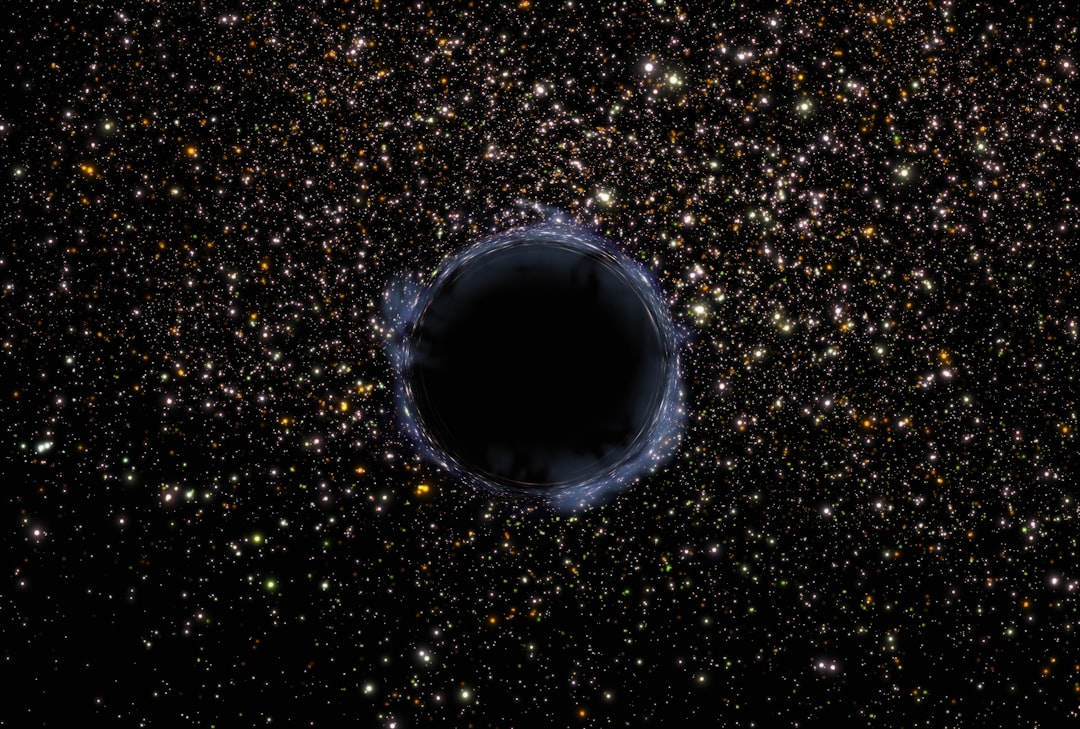
Black holes are pivotal to the field of astrophysics due to their profound implications for our understanding of gravity, space-time, and the evolution of galaxies. These regions of space exhibit gravitational forces so intense that nothing, not even light, can escape their grasp. The existence of black holes challenges conventional notions of physics and invites scientists to explore the boundaries of our understanding of the universe.
They serve as natural laboratories for testing theories of general relativity and quantum mechanics, making them essential for advancing theoretical physics. Moreover, black holes play a crucial role in the lifecycle of galaxies. They are believed to reside at the centers of most galaxies, including our own Milky Way.
The interaction between supermassive black holes and their host galaxies can influence star formation rates and the overall dynamics of galactic evolution. Understanding black holes is therefore not just about studying isolated phenomena; it is about unraveling the intricate web of cosmic relationships that govern the universe’s structure and behavior.
How JWST is able to study black holes

The JWST is equipped with an array of advanced instruments that enable it to study black holes in ways that were previously impossible. Its primary mirror, measuring 6.5 meters in diameter, is designed to collect more light than any previous space telescope. This capability allows JWST to observe distant black holes and their surrounding environments with remarkable clarity.
The telescope’s infrared technology is particularly advantageous because it can penetrate dust clouds that often obscure visible light, revealing hidden structures and processes associated with black holes. One of JWST’s key instruments, the Near Infrared Camera (NIRCam), is adept at capturing images of distant galaxies and their central black holes. By analyzing the light emitted from these regions, astronomers can infer the presence and properties of black holes.
Additionally, JWST’s Mid-Infrared Instrument (MIRI) provides further insights into the thermal emissions from dust and gas around black holes, allowing scientists to study their accretion disks and jets. This combination of observational power positions JWST as a transformative tool for exploring the mysteries surrounding black holes.
Recent discoveries made by JWST in relation to black holes
Since its launch, JWST has already begun to yield remarkable discoveries related to black holes. One significant finding involves the observation of a distant galaxy with an exceptionally massive black hole at its center. This discovery has provided new insights into how supermassive black holes can grow over time and their relationship with their host galaxies.
By studying the light emitted from this galaxy, astronomers have been able to estimate the mass of the black hole and understand its influence on star formation within the galaxy.
These AGN emit enormous amounts of energy across various wavelengths, making them some of the brightest objects in the universe.
JWST’s ability to observe these phenomena in detail has allowed scientists to investigate how black holes interact with their environments and contribute to cosmic evolution. Such findings are reshaping our understanding of how black holes influence galaxy formation and growth.
The impact of JWST’s findings on our understanding of black holes
| Discovery | Date | Black Hole Type | Mass (Solar Masses) | Distance from Earth (Million Light Years) | Significance |
|---|---|---|---|---|---|
| Supermassive Black Hole in Galaxy NGC 7319 | 2023-07 | Supermassive | 1.5 billion | 300 | First detailed infrared spectrum of accretion disk |
| Intermediate-mass Black Hole in Globular Cluster | 2023-11 | Intermediate-mass | 50,000 | 13 | Confirmed existence of intermediate-mass black holes |
| Black Hole Merger Remnant Detection | 2024-02 | Stellar-mass | 80 | 1.2 billion | Observed post-merger accretion activity |
| Quasar Host Galaxy Black Hole | 2024-04 | Supermassive | 2.3 billion | 12.9 billion | Studied early universe black hole growth |
The discoveries made by JWST are poised to have a profound impact on our understanding of black holes and their role in the universe. By providing detailed observations of distant black holes and their environments, JWST is helping to refine existing theories about their formation and growth. For instance, insights into how supermassive black holes acquire mass through accretion processes are shedding light on their evolution over cosmic time scales.
Furthermore, JWST’s findings challenge previous assumptions about the relationship between black holes and their host galaxies. The intricate interplay between these entities suggests that supermassive black holes may play a more active role in shaping galactic structures than previously thought. As astronomers analyze data from JWST, they are beginning to piece together a more comprehensive picture of how black holes influence star formation rates and galactic dynamics, ultimately leading to a deeper understanding of cosmic evolution.
The role of black holes in the formation and evolution of galaxies
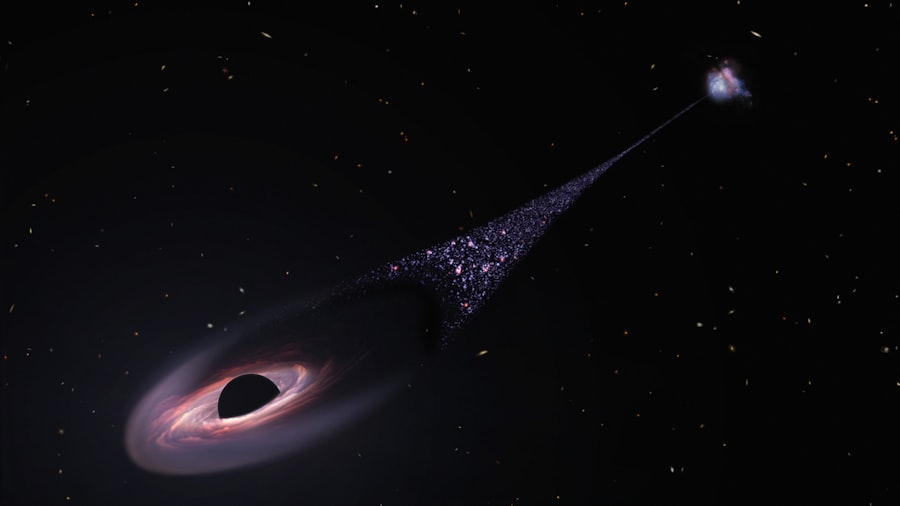
Black holes are not merely passive observers in the cosmic landscape; they actively shape the formation and evolution of galaxies. The presence of a supermassive black hole at a galaxy’s center can significantly affect its dynamics and structure. For instance, as matter falls into a black hole, it releases vast amounts of energy in the form of radiation, which can heat surrounding gas and inhibit star formation.
This feedback mechanism plays a crucial role in regulating galaxy growth and evolution. Moreover, recent studies suggest that there may be a correlation between the mass of supermassive black holes and various properties of their host galaxies, such as bulge size and stellar velocity dispersion. This relationship implies that black hole growth is intricately linked to galaxy formation processes.
As JWST continues to unveil new data about these connections, it may provide critical insights into how galaxies evolve over billions of years and how they are influenced by their central black holes.
The potential applications of JWST’s findings in other areas of astrophysics
The implications of JWST’s findings extend beyond the study of black holes; they have potential applications across various fields within astrophysics. For example, insights gained from observing supermassive black holes can inform theories about dark matter and dark energy—two enigmatic components that constitute much of the universe’s mass-energy content. Understanding how black holes interact with their surroundings may provide clues about the nature of these elusive phenomena.
Additionally, JWST’s observations can enhance our knowledge of stellar evolution and nucleosynthesis—the processes by which stars produce elements through nuclear fusion. By studying how black holes influence star formation rates within galaxies, astronomers can gain a better understanding of how elements are distributed throughout the universe. This interconnectedness highlights how advancements in one area of astrophysics can lead to breakthroughs in others.
The challenges and limitations of studying black holes with JWST
Despite its advanced capabilities, studying black holes with JWST is not without challenges. One significant limitation is related to distance; many supermassive black holes are located billions of light-years away, making them faint and difficult to observe directly. While JWST’s sensitivity allows it to detect these distant objects, distinguishing between different types of emissions can be complex.
Astronomers must carefully analyze data to differentiate between signals from black holes and other cosmic phenomena. Another challenge lies in interpreting the data collected by JWST. The intricate processes surrounding black holes often involve complex physics that requires sophisticated modeling techniques for accurate analysis.
As researchers sift through vast amounts of data generated by JWST observations, they must navigate uncertainties inherent in astrophysical modeling while striving for clarity in their conclusions.
The future implications of JWST’s research on black holes
The future implications of JWST’s research on black holes are vast and promising. As more data becomes available, astronomers will be able to refine existing models and theories regarding black hole formation and growth mechanisms. This could lead to new insights into how supermassive black holes influence galaxy evolution over cosmic time scales.
Moreover, as JWST continues its mission over the coming years, it will likely uncover previously hidden populations of black holes—both stellar-mass and supermassive—across different epochs in cosmic history. These discoveries could revolutionize our understanding of how these enigmatic objects have shaped the universe we observe today.
How JWST’s discoveries may contribute to the broader field of astronomy
The discoveries made by JWST will undoubtedly contribute significantly to the broader field of astronomy.
The telescope’s ability to observe distant galaxies will also shed light on various astronomical phenomena beyond just black holes—such as star formation rates, galaxy mergers, and chemical enrichment processes.
Furthermore, as astronomers share their findings with the global scientific community, collaborative efforts will likely emerge across disciplines within astronomy. This interconnectedness will foster new research avenues that build upon JWST’s discoveries while addressing other pressing questions about our universe.
The next steps for JWST in unraveling the mysteries of black holes
As JWST embarks on its mission to unravel the mysteries surrounding black holes, several next steps lie ahead for researchers utilizing this powerful observatory. Continued observations will focus on characterizing known supermassive black holes while searching for new candidates across different epochs in cosmic history. By mapping out these objects’ distributions and properties, scientists hope to gain insights into their formation mechanisms.
Additionally, collaborative efforts among astronomers will be crucial for maximizing JWST’s potential impact on our understanding of black holes. By sharing data and expertise across institutions worldwide, researchers can collectively analyze findings and develop comprehensive models that account for various factors influencing black hole behavior. In conclusion, as JWST continues its groundbreaking work in astrophysics—particularly concerning black holes—it stands poised to reshape humanity’s understanding of these enigmatic entities while illuminating broader questions about our universe’s origins and evolution.
Recent discoveries made by the James Webb Space Telescope (JWST) have shed new light on the formation and evolution of black holes in the universe. These findings not only enhance our understanding of cosmic phenomena but also raise intriguing questions about the nature of dark matter and the early universe. For a deeper dive into the implications of these discoveries, you can read more in our related article on cosmic exploration here.
FAQs
What is the JWST?
The James Webb Space Telescope (JWST) is a space-based observatory launched in December 2021 designed to observe the universe in infrared wavelengths. It is the most powerful telescope of its kind and aims to study the formation of stars, galaxies, and other cosmic phenomena.
How does JWST help in black hole discoveries?
JWST’s advanced infrared capabilities allow it to peer through dust clouds and observe regions of space that are difficult to see with other telescopes. This enables astronomers to detect and study black holes, including those in the early universe, by observing their effects on surrounding matter and light.
What types of black holes can JWST detect?
JWST can detect various types of black holes, including stellar-mass black holes formed from collapsing stars, intermediate-mass black holes, and supermassive black holes located at the centers of galaxies. Its sensitivity helps identify black holes by observing their interactions with nearby gas, stars, and dust.
Has JWST discovered any new black holes?
Since its launch, JWST has contributed to the discovery and detailed study of black holes, particularly by providing new data on black holes in distant galaxies and the early universe. These discoveries help scientists understand black hole formation and growth over cosmic time.
Why is studying black holes important?
Studying black holes is crucial for understanding fundamental physics, galaxy evolution, and the behavior of matter under extreme conditions. Black holes influence their surroundings and play a key role in shaping galaxies, making their study essential for a comprehensive picture of the universe.
How does JWST compare to other telescopes in black hole research?
JWST’s infrared sensitivity and high resolution surpass many previous telescopes, allowing it to observe black holes obscured by dust and at greater distances. This complements observations from X-ray and radio telescopes, providing a more complete understanding of black hole properties and environments.
Can JWST observe the event horizon of a black hole?
JWST is not designed to directly image the event horizon of black holes, which requires extremely high angular resolution at radio wavelengths, as achieved by the Event Horizon Telescope. However, JWST can study the regions around black holes and their effects on nearby matter.
What future black hole research is planned with JWST?
Future JWST observations aim to study black hole growth in the early universe, the relationship between black holes and their host galaxies, and the environments around black holes. These studies will enhance our understanding of black hole formation and their role in cosmic evolution.