
The allure of the cosmos has captivated humanity for millennia, igniting a profound curiosity that transcends generations. From the earliest stargazers who marveled at the twinkling lights in the night sky to modern scientists launching sophisticated spacecraft, the desire to explore the unknown is deeply ingrained in the human spirit. This intrinsic motivation stems from a combination of wonder, the quest for knowledge, and the innate drive to understand one’s place in the universe.
The vastness of space, with its myriad celestial bodies and enigmatic phenomena, beckons explorers to venture beyond the confines of Earth, seeking answers to questions that have lingered since time immemorial. Moreover, the exploration of the cosmos serves as a mirror reflecting humanity’s aspirations and fears. It challenges individuals to confront their limitations while simultaneously inspiring them to reach for the stars.
The mysteries of the universe evoke a sense of humility, reminding humanity of its smallness in the grand scheme of existence. This duality—of feeling both insignificant and empowered—fuels the relentless pursuit of knowledge and discovery. As explorers gaze into the depths of space, they are not merely searching for new worlds; they are also seeking to understand themselves and their connection to the cosmos.
Key Takeaways
- The Call of the Cosmos: Humans are drawn to explore the unknown and seek answers to the mysteries of the universe.
- The Challenges of Space Travel: Overcoming the limitations of distance and time is a major obstacle in cosmic exploration.
- The Tools of the Trade: Technology and innovation play a crucial role in advancing cosmic exploration.
- The Search for Extraterrestrial Life: Scientists are actively seeking signs of life beyond Earth to unravel the possibility of extraterrestrial existence.
- The Future of Space Exploration: Plans for missions to Mars, the Moon, and beyond are shaping the next phase of cosmic ventures.
The History of Cosmic Exploration: From Ancient Observations to Modern Missions
The journey of cosmic exploration is rich with history, tracing back to ancient civilizations that looked up at the night sky with wonder and curiosity. Early astronomers, such as the Babylonians and Greeks, meticulously recorded celestial events, laying the groundwork for future scientific inquiry. They developed rudimentary models of the universe, attempting to explain the movements of planets and stars.
These early observations were not just scientific endeavors; they were deeply intertwined with mythology and philosophy, reflecting humanity’s quest for meaning in a seemingly chaotic universe. As time progressed, advancements in technology propelled cosmic exploration into new realms. The invention of the telescope in the 17th century marked a significant turning point, allowing astronomers like Galileo Galilei to observe celestial bodies with unprecedented clarity.
This era ushered in a wave of discoveries that challenged existing beliefs and expanded humanity’s understanding of the universe. The 20th century saw a dramatic shift with the advent of space travel, culminating in landmark events such as the launch of Sputnik in 1957 and the Apollo moon landings in the late 1960s. These missions not only showcased human ingenuity but also ignited a global fascination with space exploration that continues to this day.
The Challenges of Space Travel: Overcoming the Limitations of Distance and Time
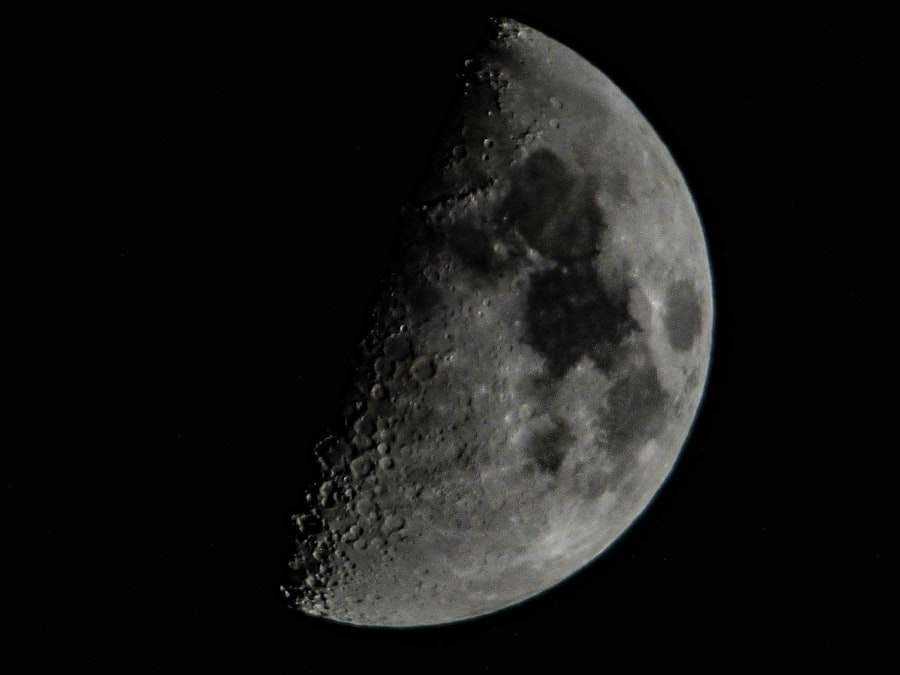
Space travel presents formidable challenges that test the limits of human ingenuity and resilience. One of the most significant obstacles is the vast distances that separate celestial bodies. The nearest star system, Alpha Centauri, is over four light-years away, a distance that current technology cannot traverse within a human lifetime.
This reality necessitates innovative solutions to reduce travel time and enhance spacecraft capabilities. Concepts such as warp drives and wormholes have emerged from theoretical physics, offering tantalizing possibilities for future exploration, yet they remain firmly in the realm of speculation. In addition to distance, time itself poses unique challenges for space travelers.
Prolonged exposure to microgravity can have detrimental effects on human health, including muscle atrophy and bone density loss. Furthermore, psychological factors come into play during extended missions, as isolation and confinement can lead to mental health issues among crew members. Addressing these challenges requires not only technological advancements but also a deep understanding of human physiology and psychology.
As scientists and engineers work collaboratively to develop solutions, they are paving the way for a new era of space exploration that prioritizes both safety and well-being.
The Tools of the Trade: Technology and Innovation in Cosmic Exploration
| Technology | Innovation | Impact |
|---|---|---|
| Robotic Rovers | Autonomous navigation | Exploration of distant planets |
| Telescopes | Adaptive optics | Sharper images of celestial objects |
| Space Probes | Ion propulsion | Faster travel to outer planets |
The tools employed in cosmic exploration are a testament to human creativity and innovation. From powerful telescopes that peer into distant galaxies to sophisticated rovers that traverse alien landscapes, technology plays a pivotal role in expanding our understanding of the universe. The Hubble Space Telescope, launched in 1990, has provided breathtaking images and invaluable data about celestial phenomena, revolutionizing astronomy and deepening our appreciation for the cosmos.
Moreover, advancements in robotics have transformed how scientists explore other planets. Rovers like Curiosity and Perseverance have been instrumental in conducting experiments on Mars, analyzing soil samples, and searching for signs of past life. These robotic explorers are equipped with cutting-edge technology that allows them to operate autonomously in harsh environments, providing insights that would be impossible for humans to obtain directly.
As technology continues to evolve, it opens new frontiers for exploration, enabling humanity to venture further into space than ever before.
The Search for Extraterrestrial Life: How Scientists are Seeking Signs of Life Beyond Earth
The quest for extraterrestrial life is one of the most tantalizing aspects of cosmic exploration. Scientists are driven by an insatiable curiosity about whether life exists beyond Earth and what forms it might take.
Astrobiology has emerged as a multidisciplinary field dedicated to understanding life’s potential beyond our planet. Missions like NASA’s Kepler Space Telescope have identified thousands of exoplanets within habitable zones where liquid water could exist—a crucial ingredient for life as we know it. Additionally, missions to Mars aim to uncover evidence of past microbial life by examining ancient riverbeds and polar ice caps.
As scientists continue to refine their methods and technologies, they remain hopeful that one day they will uncover definitive signs of life beyond Earth, fundamentally altering humanity’s understanding of its place in the universe.
The Mysteries of the Universe: Unraveling the Secrets of Black Holes, Dark Matter, and Dark Energy

The universe is filled with enigmas that challenge our understanding of physics and cosmology. Among these mysteries are black holes—regions of spacetime where gravity is so strong that nothing can escape their pull. The study of black holes has revealed profound insights into the nature of gravity and spacetime itself.
Recent advancements in observational technology have allowed scientists to capture images of black holes’ event horizons, providing tangible evidence for theories that were once purely theoretical. Equally perplexing are dark matter and dark energy, which together constitute approximately 95% of the universe’s total mass-energy content yet remain largely invisible and undetectable by conventional means. Dark matter is believed to exert gravitational forces on visible matter, influencing galaxy formation and structure.
Dark energy, on the other hand, is thought to drive the accelerated expansion of the universe. Understanding these phenomena is crucial for unraveling the fundamental workings of the cosmos and may hold keys to answering some of humanity’s most profound questions about existence.
The Future of Space Exploration: Plans for Missions to Mars, the Moon, and Beyond
As humanity looks toward the future, ambitious plans for space exploration are taking shape. NASA’s Artemis program aims to return humans to the Moon by 2024, establishing a sustainable presence that could serve as a stepping stone for future missions to Mars. This lunar initiative seeks not only to explore but also to utilize lunar resources for long-duration missions beyond Earth’s orbit.
Mars has become a focal point for exploration efforts due to its potential for past or present life and its suitability for human colonization. NASA’s Perseverance rover is currently conducting groundbreaking research on Martian soil while preparing for future human missions. Private companies like SpaceX are also making strides toward interplanetary travel with their Starship program, envisioning a future where humans can establish colonies on Mars.
As these plans unfold, they represent not just technological advancements but also a collective aspiration to expand humanity’s horizons beyond Earth.
The Impact of Cosmic Ventures on Society: How Space Exploration Shapes Our Worldview
The impact of cosmic exploration extends far beyond scientific discovery; it profoundly shapes society’s worldview and cultural narratives. The images captured by space telescopes and missions evoke awe and wonder, reminding humanity of its shared existence on a fragile planet within an expansive universe. This perspective fosters a sense of unity among people as they contemplate their place in the cosmos.
Moreover, space exploration has practical implications that resonate with everyday life on Earth. Technologies developed for space missions have led to innovations in various fields, including telecommunications, medicine, and environmental monitoring. The pursuit of knowledge about our universe often translates into advancements that improve life on Earth, highlighting the interconnectedness between cosmic ventures and societal progress.
The Ethics of Space Exploration: Balancing the Quest for Knowledge with Environmental and Social Concerns
As humanity embarks on ambitious space exploration endeavors, ethical considerations come to the forefront. The quest for knowledge must be balanced with environmental stewardship and social responsibility. Concerns about planetary protection arise as missions target celestial bodies like Mars or Europa—places where microbial life may exist or where contamination could compromise future scientific investigations.
Additionally, as private companies enter the realm of space exploration, questions about ownership rights and resource utilization become increasingly relevant. The Outer Space Treaty established principles governing international space law; however, evolving technologies challenge existing frameworks. Striking a balance between exploration and ethical considerations is essential to ensure that humanity’s ventures into space are conducted responsibly and sustainably.
The Role of Private Companies in Cosmic Ventures: How Commercial Space Travel is Changing the Game
The emergence of private companies in cosmic ventures has revolutionized space exploration by introducing competition and innovation into an arena once dominated by government agencies. Companies like SpaceX, Blue Origin, and Virgin Galactic are pioneering commercial space travel, making it more accessible than ever before. This shift not only reduces costs but also accelerates technological advancements as private enterprises push boundaries previously thought unattainable.
Commercial space travel holds promise for expanding opportunities beyond traditional scientific missions. Space tourism is becoming a reality as companies develop spacecraft designed for civilian passengers seeking adventure beyond Earth’s atmosphere. This democratization of space travel could inspire a new generation to engage with science and exploration while fostering public interest in cosmic endeavors.
The Human Experience in Space: What It Means to Venture Beyond Earth’s Boundaries
Venturing into space represents one of humanity’s most profound experiences—a journey that transcends physical boundaries and challenges perceptions of existence itself. Astronauts who have traveled beyond Earth’s atmosphere often describe transformative experiences characterized by awe and introspection. The sight of Earth from space—a fragile blue marble suspended against an infinite backdrop—evokes deep emotional responses that reshape their understanding of humanity’s interconnectedness.
The human experience in space also raises questions about identity and purpose. As individuals leave behind familiar surroundings and embark on journeys into the unknown, they confront existential dilemmas that resonate with broader philosophical inquiries about life’s meaning. These experiences not only enrich personal narratives but also contribute to collective knowledge about what it means to be human in an ever-expanding universe.
In conclusion, cosmic exploration embodies humanity’s relentless pursuit of knowledge and understanding—a journey fueled by curiosity, innovation, and an innate desire to connect with something greater than oneself. As we navigate challenges and embrace opportunities presented by technological advancements, society stands at a crossroads where ethical considerations must guide our ventures into space. Ultimately, this quest reflects not only our aspirations but also our responsibility as stewards of both Earth and the cosmos beyond.
Cosmic Ventures is making waves in the space exploration industry with its innovative approaches and groundbreaking projects.
This article provides in-depth insights into the company’s mission and recent achievements. To explore further, visit their