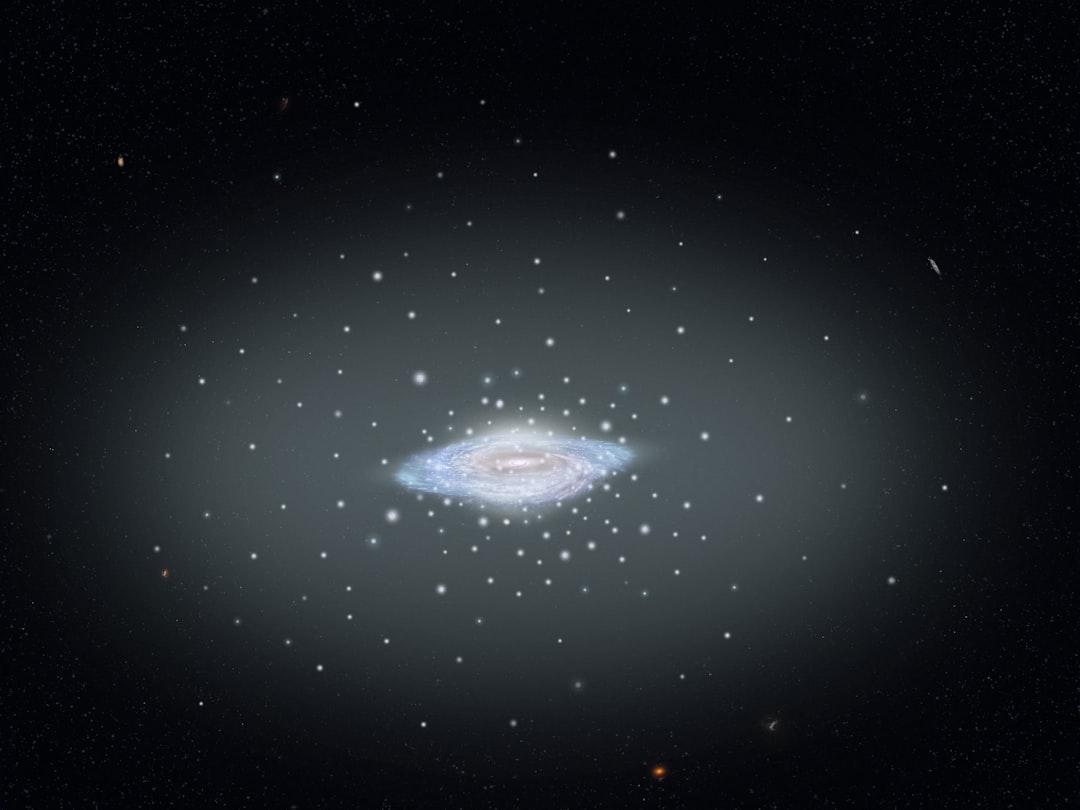
The Anthropic Principle is a concept in cosmology and philosophy that addresses the relationship between the universe’s physical properties and the existence of life. The principle observes that the fundamental constants and conditions of the universe appear to fall within narrow ranges that permit the formation of matter, stars, planets, and ultimately life as we know it. The principle exists in two primary formulations.
The Weak Anthropic Principle states that observations of the universe must be compatible with the conscious life that observes it, essentially noting that we can only observe a universe capable of producing observers. The Strong Anthropic Principle suggests that the universe must have properties that allow life to develop within it at some stage of its history. Scientists have identified numerous physical constants and conditions that appear finely tuned for life’s existence.
These include the strength of fundamental forces, the mass ratios of particles, the rate of cosmic expansion, and the formation of elements necessary for biological processes. Small variations in these parameters could theoretically result in a universe where stars, planets, or complex chemistry cannot form. The Anthropic Principle has generated various interpretations within scientific and philosophical communities.
Some researchers propose the multiverse hypothesis, suggesting that multiple universes exist with different physical properties, making our life-permitting universe one among many possibilities. Others examine whether apparent fine-tuning reflects deeper physical principles or selection effects in our observations. The principle continues to influence discussions in cosmology, physics, and philosophy regarding the nature of physical laws and the conditions necessary for life.
Key Takeaways
- The Anthropic Principle explains why the universe’s conditions appear finely tuned to support life, distinguishing between strong and weak interpretations.
- Fine-tuning highlights the precise physical constants necessary for life, leading to discussions about the universe’s unlikely features and “anthropic coincidences.”
- The principle influences cosmology by shaping theories about the universe’s origin, structure, and the possibility of multiple universes (multiverse theory).
- It informs the search for extraterrestrial life by identifying the specific conditions required for life to exist elsewhere in the cosmos.
- Despite its insights, the Anthropic Principle faces criticism and debate regarding its scientific validity and philosophical implications for existence and meaning.
The Strong Anthropic Principle: A Universe Designed for Life
The Strong Anthropic Principle posits that the universe must have properties that allow life to develop at some stage in its history. This interpretation suggests that the universe is not just conducive to life; rather, it is specifically designed for it. Proponents of this view argue that the laws of physics and the constants of nature are not arbitrary but are instead set in such a way that they facilitate the emergence of life.
This perspective raises profound implications about the nature of existence and the potential for a creator or guiding force behind the universe. Supporters of the Strong Anthropic Principle often point to the remarkable coincidences in physical constants, such as the gravitational constant or the electromagnetic force, which appear to be finely tuned for life. If these constants were even slightly different, the universe might be inhospitable to life as we know it.
Such a viewpoint invites further exploration into the philosophical implications of design versus chance, igniting debates about the existence of a higher power or intelligence behind the cosmos.
The Weak Anthropic Principle: Observing the Universe from a Human Perspective
In contrast to its stronger counterpart, the Weak Anthropic Principle emphasizes that observations of the universe must be compatible with the conscious life that observes it. This principle suggests that while the universe may not be specifically designed for life, it is nonetheless structured in such a way that allows for observers like humans to exist. The Weak Anthropic Principle serves as a reminder that any observations made about the universe are inherently limited by human perspective and experience.
This perspective encourages a more pragmatic approach to understanding cosmic phenomena. It implies that while certain conditions may seem improbable, they are not necessarily indicative of design; rather, they reflect the specific circumstances under which conscious beings can arise. The Weak Anthropic Principle thus provides a framework for interpreting scientific data without invoking notions of purpose or design.
It highlights the importance of context in understanding cosmic events and phenomena, suggesting that human existence is merely one possible outcome in an expansive universe.
Fine-Tuning and the Anthropic Principle: Exploring the Parameters of the Universe
Fine-tuning refers to the precise values of various physical constants and parameters that govern the behavior of matter and energy in the universe. The Anthropic Principle is often invoked in discussions about fine-tuning, as it raises questions about why these constants are set at values conducive to life. For instance, if the strong nuclear force were slightly weaker, stars would not burn long enough to support life; conversely, if it were slightly stronger, stars would burn out too quickly.
Such delicate balances suggest an extraordinary level of precision in the universe’s design. The implications of fine-tuning extend beyond mere curiosity; they challenge scientists to explore whether these parameters are unique to our universe or if they could vary in other contexts.
As scientists delve deeper into these questions, they confront fundamental issues regarding causality, existence, and the nature of reality itself.
The Anthropic Coincidences: Uncovering the Unlikely Features of the Universe
| Metric | Description | Value/Range | Relevance to Anthropic Principle |
|---|---|---|---|
| Cosmological Constant (Λ) | Energy density of empty space causing accelerated expansion | ~1.1 x 10⁻⁵² m⁻² | Fine-tuned to allow galaxy formation and life |
| Density Parameter (Ω) | Ratio of actual density to critical density of the universe | Approximately 1 (flat universe) | Critical for stable universe conducive to life |
| Ratio of Electromagnetic to Gravitational Force | Strength comparison between fundamental forces | ~10³⁶ | Allows stable atoms and stars, essential for life |
| Carbon Resonance Energy Level | Energy level in carbon nucleus enabling carbon synthesis | ~7.65 MeV | Enables carbon-based life through stellar nucleosynthesis |
| Age of the Universe | Time since Big Bang | ~13.8 billion years | Allows sufficient time for star and planet formation |
| Amplitude of Primordial Density Fluctuations (Q) | Initial density variations leading to structure formation | ~2 x 10⁻⁵ | Balanced to form galaxies without collapsing too early |
Anthropic coincidences refer to specific features or conditions in the universe that appear remarkably suited for life. These coincidences often provoke wonder and curiosity about their origins and significance. For example, Earth’s distance from the sun is perfectly calibrated to allow for liquid water—a crucial ingredient for life—while other planets in our solar system either lack water or exist in extreme conditions inhospitable to life.
Such observations lead many to ponder whether these coincidences are mere accidents or indicative of deeper truths about the universe. The exploration of anthropic coincidences has sparked numerous debates among scientists and philosophers alike. Some argue that these coincidences are simply statistical anomalies within an immense cosmos, while others contend that they point toward an underlying order or design.
The discussion surrounding anthropic coincidences encourages individuals to reflect on their understanding of chance versus necessity in cosmic events. As researchers continue to uncover more about these remarkable features, they contribute to an ongoing dialogue about humanity’s place within an intricately woven tapestry of existence.
Cosmological Implications of the Anthropic Principle: How it Shapes Our Understanding of the Universe
The Anthropic Principle has far-reaching cosmological implications that shape humanity’s understanding of its place in the universe. By suggesting that certain conditions must be met for observers to exist, this principle compels scientists to reconsider traditional models of cosmology. It challenges them to account for not only how the universe operates but also why it operates in such a way that allows for conscious beings to emerge.
This shift in perspective has led to new avenues of research and inquiry within cosmology. Scientists are increasingly exploring concepts such as cosmic inflation and multiverse theories as potential explanations for fine-tuning and anthropic coincidences. By examining these ideas through the lens of the Anthropic Principle, researchers can better understand how various parameters interact and influence one another within a broader cosmic context.
Ultimately, this principle serves as a catalyst for deeper exploration into fundamental questions about existence, reality, and humanity’s role within an ever-expanding universe.
Multiverse Theory and the Anthropic Principle: Exploring the Possibility of Other Universes
Multiverse theory posits that our universe is just one among many possible universes, each with its own set of physical laws and constants. This idea has gained traction in recent years as scientists grapple with questions surrounding fine-tuning and anthropic coincidences. The connection between multiverse theory and the Anthropic Principle lies in their shared implications regarding existence; if multiple universes exist with varying parameters, it becomes more plausible that at least one would be conducive to life.
The multiverse concept offers a potential resolution to some of the challenges posed by fine-tuning. If there are countless universes with different physical laws, then it stands to reason that some would naturally support life while others would not. This perspective shifts focus from viewing our universe as uniquely designed for life to considering it as one possibility among many within a vast cosmic landscape.
As researchers continue to explore multiverse theories, they open new avenues for understanding not only our own universe but also what it means for life to exist within such an expansive framework.
The Anthropic Principle and the Search for Extraterrestrial Life: Considering the Conditions for Life in the Universe
The search for extraterrestrial life has long captivated human imagination, prompting scientists to explore what conditions are necessary for life beyond Earth. The Anthropic Principle plays a significant role in this quest by framing discussions around habitability and environmental factors conducive to life. By examining what makes Earth uniquely suited for life—such as its atmosphere, temperature range, and availability of water—scientists can better identify potential candidates for extraterrestrial habitats.
In light of anthropic considerations, researchers have begun expanding their search criteria beyond Earth-like planets. They now consider a broader range of environments where life might thrive, including extreme conditions previously thought inhospitable. This shift reflects an understanding that while Earth provides a model for habitability, other forms of life may exist under different circumstances.
The Anthropic Principle thus serves as both a guide and a challenge in humanity’s ongoing exploration of life’s possibilities across the cosmos.
Criticisms of the Anthropic Principle: Examining the Controversies and Debates Surrounding its Validity
Despite its intriguing implications, the Anthropic Principle has faced significant criticism from various quarters within both scientific and philosophical communities. Detractors argue that invoking anthropic reasoning can lead to circular logic; if one assumes that conditions must be suitable for observers like humans, it risks overlooking alternative explanations for fine-tuning or anthropic coincidences. Critics contend that this principle may inadvertently stifle scientific inquiry by suggesting that certain questions are beyond reach or comprehension.
Moreover, some scientists question whether anthropic reasoning can provide meaningful insights into fundamental physics or cosmology. They argue that while it may offer interesting perspectives on existence, it does not necessarily yield testable predictions or advance empirical understanding. As debates surrounding its validity continue, proponents and critics alike engage in ongoing discussions about how best to interpret observations within an ever-evolving framework of knowledge.
The Anthropic Principle in Philosophy and Theology: Its Implications for Existence and Meaning
The Anthropic Principle extends beyond scientific inquiry into realms of philosophy and theology, where it raises profound questions about existence and meaning. Philosophers grapple with implications surrounding purpose—if humans exist because conditions are finely tuned for life, what does this say about their significance within a broader cosmic context? Such inquiries invite reflections on free will, determinism, and humanity’s role in shaping its destiny.
In theological discussions, proponents may interpret anthropic reasoning as evidence supporting notions of divine design or purpose behind creation. Conversely, skeptics may argue against attributing meaning solely based on human observation or experience. This interplay between science, philosophy, and theology enriches dialogues surrounding existence while challenging individuals to confront their beliefs about reality’s nature.
The Future of the Anthropic Principle: How it Continues to Shape Cosmological Research and Understanding
As humanity advances its understanding of cosmology and fundamental physics, the Anthropic Principle remains a pivotal framework guiding research efforts across disciplines. Its implications continue to inspire inquiry into questions surrounding fine-tuning, multiverse theories, and extraterrestrial life—each contributing valuable insights into our understanding of existence itself. Looking ahead, researchers will likely explore new avenues informed by anthropic reasoning while remaining open to alternative explanations for observed phenomena.
As scientific knowledge evolves alongside philosophical discourse surrounding existence and meaning, individuals will find themselves continually challenged by profound questions about their place within an intricate cosmos—a journey fueled by curiosity and wonder at life’s possibilities amidst an expansive universe.
The anthropic principle in cosmology suggests that the universe’s fundamental parameters are finely tuned to allow for the existence of life. This intriguing concept is explored in greater detail in a related article on cosmic exploration, which can be found at My Cosmic Ventures. This resource delves into the implications of the anthropic principle and its significance in understanding our place in the universe.
FAQs
What is the anthropic principle in cosmology?
The anthropic principle is the idea that the universe’s fundamental parameters and laws appear fine-tuned to allow for the existence of life, particularly human life. It suggests that the universe must have properties that permit observers like us to exist.
Are there different types of anthropic principles?
Yes, there are generally two main types: the Weak Anthropic Principle (WAP), which states that the observed values of physical constants are restricted by the requirement that life exists, and the Strong Anthropic Principle (SAP), which posits that the universe must have properties that inevitably lead to the emergence of life.
How does the anthropic principle relate to cosmology?
In cosmology, the anthropic principle is used to explain why the physical constants and initial conditions of the universe fall within the narrow range that allows life to exist. It is often discussed in the context of the fine-tuning problem and the multiverse hypothesis.
Is the anthropic principle a scientific theory?
The anthropic principle is more of a philosophical or interpretative framework rather than a testable scientific theory. It provides a way to understand why certain physical constants have the values they do but does not predict new phenomena.
What is the fine-tuning problem in cosmology?
The fine-tuning problem refers to the observation that certain fundamental physical constants and conditions in the universe appear to be precisely set to allow the existence of life. Small changes in these values could make life impossible.
How does the multiverse theory connect with the anthropic principle?
The multiverse theory suggests that there are many universes with different physical constants. The anthropic principle is used to explain that we observe our universe’s life-permitting constants because only in such universes can observers exist.
Can the anthropic principle be used to predict new scientific discoveries?
While the anthropic principle helps explain why certain constants have life-permitting values, it does not generally provide predictive power for new scientific discoveries. It is more of a selection effect explanation.
Who first proposed the anthropic principle?
The anthropic principle was first articulated by physicist Brandon Carter in 1973 during a conference on cosmology and philosophy.
What are some criticisms of the anthropic principle?
Critics argue that the anthropic principle is tautological, lacks predictive power, and can be used to avoid deeper scientific explanations. Some also see it as a philosophical rather than scientific concept.
Is the anthropic principle widely accepted in the scientific community?
The anthropic principle is accepted as a useful philosophical tool by many cosmologists but remains controversial. Its acceptance varies depending on how it is applied and interpreted within cosmology and physics.