
Primordial black holes (PBHs) are theoretical black holes that differ fundamentally from stellar black holes in their formation mechanism and timing. While conventional black holes form from the gravitational collapse of massive stars at the end of their lifecycle, primordial black holes are hypothesized to have formed during the early universe, within the first fraction of a second after the Big Bang. Their formation would have resulted from extremely dense regions in the primordial universe where matter density exceeded critical thresholds, causing gravitational collapse before the universe had expanded and cooled sufficiently to prevent such events.
The theoretical framework for primordial black holes emerged from studies of density perturbations in the early universe. During the radiation-dominated era, regions with density contrasts above approximately 30-50% of the background density could have collapsed to form black holes with masses ranging from microscopic scales to thousands of solar masses, depending on the cosmic epoch of their formation. Research into primordial black holes addresses several significant areas in cosmology and astrophysics.
These objects serve as potential candidates for dark matter, particularly in specific mass ranges where other detection methods have yielded limited results. Additionally, PBH studies contribute to our understanding of cosmic inflation models and the spectrum of primordial density fluctuations. The detection or constraint of primordial black hole populations provides observational tests for early universe physics and helps refine models of structure formation and cosmic evolution.
Key Takeaways
- Primordial black holes (PBHs) are hypothesized to have formed shortly after the Big Bang and possess unique characteristics distinct from stellar black holes.
- Various theoretical models predict the existence of PBHs, suggesting they could contribute to dark matter and influence cosmic evolution.
- Observational evidence for PBHs remains inconclusive, but ongoing research aims to detect their signatures through gravitational waves and lensing effects.
- PBHs pose a potential extinction risk if they interact catastrophically with Earth or the solar system, prompting studies on mitigation strategies.
- Ethical and societal considerations are crucial in PBH research, emphasizing responsible exploration and the development of future management approaches.
Formation and Characteristics of Primordial Black Holes
The formation of primordial black holes is theorized to occur during the high-energy conditions present in the early universe. In the moments following the Big Bang, the universe was a hot, dense soup of particles and radiation.
If these regions reached a critical density threshold, they would collapse under their own gravitational pull, leading to the formation of black holes. This process is distinct from stellar black hole formation, which requires a massive star to exhaust its nuclear fuel and undergo gravitational collapse. Primordial black holes are characterized by a wide range of masses, potentially spanning from very small sizes—much smaller than stellar black holes—to those comparable to larger celestial bodies.
Their mass distribution is a subject of ongoing research, with some models suggesting that they could account for a significant portion of dark matter in the universe. Additionally, PBHs are expected to have unique properties, such as a lack of an accretion disk and potentially emitting Hawking radiation, which could make them detectable through indirect means.
Theoretical Models Predicting the Existence of Primordial Black Holes
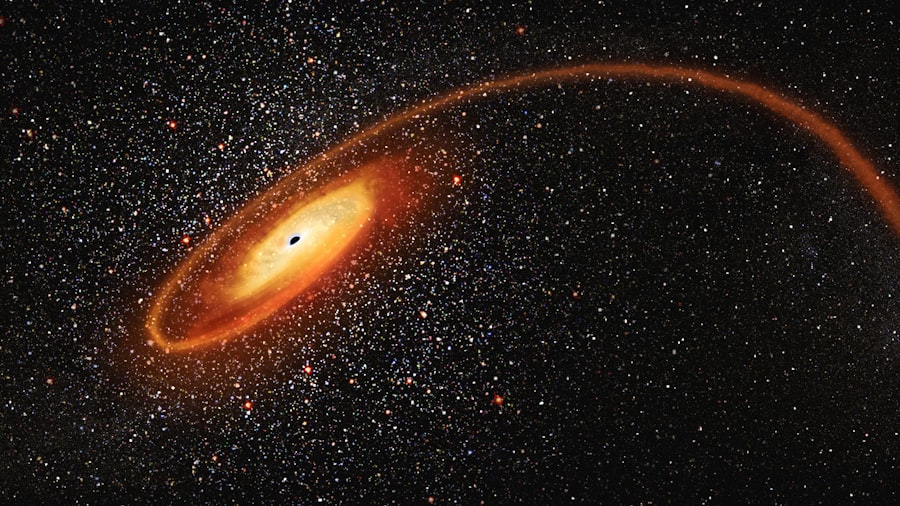
Several theoretical models have been proposed to explain the existence and formation mechanisms of primordial black holes. One prominent model involves the concept of inflation, a rapid expansion of space that occurred just after the Big Bang. During this inflationary period, quantum fluctuations could have been stretched to cosmic scales, leading to density variations that might result in PBH formation.
This model suggests that PBHs could be distributed throughout the universe in a manner influenced by these early density fluctuations. Another approach involves examining phase transitions in the early universe, such as those associated with symmetry breaking. These transitions could create regions of high energy density that collapse into black holes.
Additionally, some theories propose that PBHs could form from cosmic strings—hypothetical one-dimensional defects in spacetime that may have formed during phase transitions. Each of these models contributes to a growing body of evidence supporting the plausibility of primordial black holes as a significant component of cosmic evolution.
Observational Evidence for Primordial Black Holes
While primordial black holes remain largely theoretical, researchers have sought observational evidence to support their existence. One avenue of investigation involves gravitational wave detections. The merger events of black holes detected by observatories like LIGO and Virgo may provide clues about their origins.
If some of these black holes are indeed primordial in nature, their mass distribution and merger rates could differ from those formed through stellar processes. Another promising line of inquiry focuses on the effects of primordial black holes on cosmic microwave background (CMB) radiation. The presence of PBHs could influence the CMB’s temperature fluctuations and polarization patterns.
By analyzing data from missions like the Planck satellite, scientists hope to identify signatures that could indicate the presence of primordial black holes in the early universe. These observational efforts are crucial for bridging the gap between theory and empirical evidence in understanding these elusive cosmic entities.
The Extinction Risk of Primordial Black Holes
| Metric | Value | Unit | Description |
|---|---|---|---|
| Estimated Number of Primordial Black Holes (PBHs) in Milky Way | 10^15 | count | Hypothetical number of PBHs based on dark matter models |
| Mass Range of PBHs | 10^15 – 10^23 | grams | Estimated mass range for PBHs that could contribute to extinction risk |
| Probability of Earth Encounter with PBH (per million years) | ~10^-8 | probability | Estimated chance of a PBH passing close enough to Earth to cause significant damage |
| Potential Impact Energy | 10^23 – 10^26 | joules | Energy released if a PBH were to collide with Earth, causing catastrophic effects |
| Extinction Risk Level | Very Low | N/A | Current scientific consensus on the risk posed by PBHs to Earth’s biosphere |
| Detection Capability | Limited | N/A | Current ability to detect PBHs before potential Earth impact |
The potential extinction risk posed by primordial black holes is a topic that has garnered attention within both scientific and public discourse. While most primordial black holes are expected to be harmless due to their small size and vast distribution throughout space, there exists a theoretical concern regarding larger PBHs. If a sufficiently massive primordial black hole were to pass through or near our solar system, it could disrupt planetary orbits or even lead to catastrophic gravitational effects.
The likelihood of such an event occurring is extremely low; however, it raises important questions about our understanding of cosmic hazards. Researchers emphasize the need for continued monitoring and modeling to assess potential risks associated with primordial black holes. By developing a comprehensive understanding of their distribution and behavior, scientists can better evaluate any potential threats they may pose to Earth and other celestial bodies.
Potential Impact of Primordial Black Holes on Earth and the Solar System
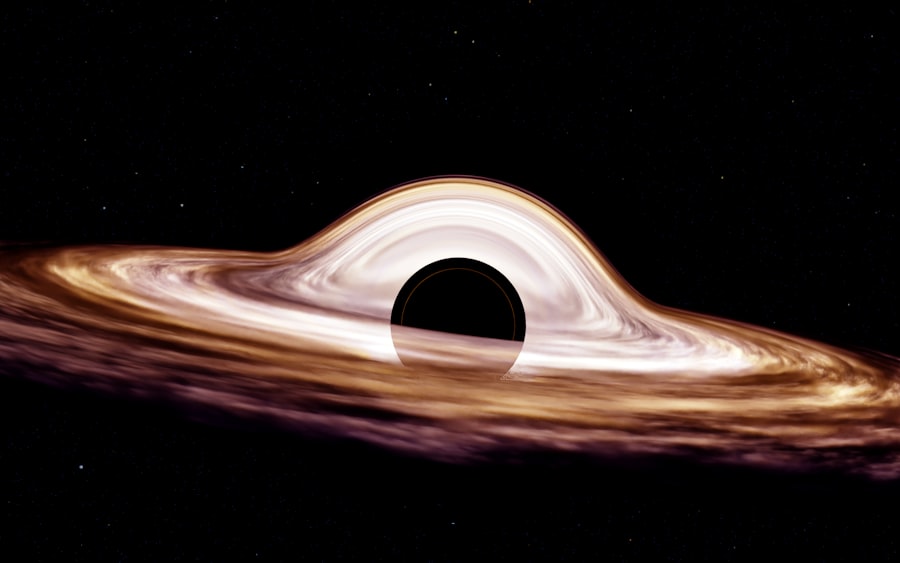
The potential impact of primordial black holes on Earth and the solar system is a subject that invites both curiosity and caution. If a primordial black hole were to enter our solar system, its gravitational influence could have profound effects on planetary orbits and stability. For instance, it could perturb the orbits of planets or even lead to collisions between celestial bodies if it were massive enough.
Moreover, if a primordial black hole were to pass close enough to Earth, it could create tidal forces that might disrupt geological structures or even affect life on our planet. While such scenarios remain speculative due to the low probability of encountering a PBH, they underscore the importance of understanding these cosmic phenomena. By studying their potential impacts, scientists can better prepare for any unforeseen consequences that may arise from interactions with primordial black holes.
Current Research and Studies on Primordial Black Holes
Current research on primordial black holes encompasses a diverse range of approaches and methodologies aimed at unraveling their mysteries. Theoretical physicists continue to refine models that describe their formation mechanisms and properties, while observational astronomers seek empirical evidence through various means. Collaborative efforts between different scientific disciplines are essential for advancing knowledge in this field.
One notable area of research involves simulations that model the behavior and distribution of primordial black holes in the universe. These simulations help scientists understand how PBHs might interact with other cosmic structures and influence phenomena such as galaxy formation. Additionally, researchers are exploring potential connections between PBHs and dark matter, as understanding their role in cosmic evolution could shed light on one of the most significant mysteries in modern astrophysics.
Mitigation Strategies for the Extinction Risk of Primordial Black Holes
Given the theoretical risks associated with primordial black holes, researchers are exploring mitigation strategies to address potential extinction scenarios. While the likelihood of encountering a dangerous PBH is exceedingly low, developing contingency plans can enhance preparedness for unforeseen cosmic events. One approach involves improving our monitoring capabilities for celestial objects that may pose risks to Earth.
Advancements in astronomical observation technologies can aid in detecting any anomalous gravitational influences within our solar system. By establishing early warning systems capable of identifying unusual trajectories or mass distributions, scientists can better assess potential threats posed by primordial black holes or other celestial bodies. Furthermore, interdisciplinary collaboration among astrophysicists, planetary scientists, and engineers can foster innovative solutions for mitigating risks associated with cosmic hazards.
Ethical and Societal Considerations of Primordial Black Hole Research
The exploration of primordial black holes raises important ethical and societal considerations that warrant careful examination. As researchers delve into topics related to cosmic hazards and extinction risks, it becomes essential to communicate findings transparently to the public. Misinformation or sensationalism surrounding potential threats can lead to unnecessary fear or anxiety among communities.
Moreover, ethical considerations extend beyond public communication; they also encompass responsible research practices. Scientists must navigate the balance between advancing knowledge and ensuring that their work does not inadvertently contribute to harmful narratives or misconceptions about cosmic phenomena. Engaging with diverse stakeholders—including ethicists, policymakers, and educators—can foster a more holistic approach to addressing societal concerns related to primordial black hole research.
Future Prospects for Understanding and Managing Primordial Black Holes
The future prospects for understanding and managing primordial black holes are promising yet complex. As technology continues to advance, researchers will gain access to more sophisticated observational tools capable of probing deeper into cosmic mysteries. Upcoming missions aimed at studying gravitational waves, cosmic microwave background radiation, and high-energy astrophysical phenomena will likely yield new insights into primordial black holes.
Furthermore, interdisciplinary collaboration will play a crucial role in shaping future research directions. By integrating knowledge from fields such as cosmology, particle physics, and computational modeling, scientists can develop comprehensive frameworks for understanding PBHs’ formation mechanisms and implications for cosmic evolution. As our understanding deepens, so too will our ability to assess potential risks associated with these enigmatic entities.
Conclusion and Recommendations for Further Exploration of Primordial Black Holes
In conclusion, primordial black holes represent a captivating frontier in astrophysics that intertwines theoretical exploration with observational inquiry. Their unique formation mechanisms and potential implications for dark matter and cosmic evolution make them an essential area of study within modern cosmology. While challenges remain in confirming their existence through empirical evidence, ongoing research efforts continue to shed light on these ancient cosmic entities.
To further explore primordial black holes, researchers should prioritize interdisciplinary collaboration and public engagement initiatives aimed at fostering understanding among diverse audiences. Continued investment in observational technologies will enhance our ability to detect signatures associated with PBHs while refining theoretical models will deepen our comprehension of their properties and behaviors. Ultimately, as humanity seeks to unravel the mysteries of the universe, primordial black holes stand as both a challenge and an opportunity for scientific discovery—a testament to our enduring quest for knowledge amidst the cosmos’ vast expanse.
Recent discussions surrounding the extinction risk posed by primordial black holes have gained traction in the scientific community. A related article that delves into the implications of these ancient cosmic entities can be found on My Cosmic Ventures. For a deeper understanding of the potential threats and the ongoing research in this area, you can read more in the article here.
FAQs
What are primordial black holes?
Primordial black holes are hypothetical black holes that are thought to have formed in the early universe, shortly after the Big Bang, due to high-density fluctuations. Unlike black holes formed from collapsing stars, primordial black holes could have a wide range of masses, including very small ones.
How do primordial black holes differ from regular black holes?
Primordial black holes differ primarily in their origin and potential size. While regular black holes form from the gravitational collapse of massive stars, primordial black holes are believed to have formed from density variations in the early universe. They can be much smaller or larger than stellar black holes.
Is there evidence that primordial black holes exist?
As of now, there is no direct observational evidence confirming the existence of primordial black holes. However, they remain a subject of active research, and scientists are investigating their possible role in dark matter and cosmic phenomena.
Can primordial black holes pose an extinction risk to Earth?
Theoretical studies suggest that primordial black holes could pose an extinction risk if one were to pass close enough to Earth or the solar system, potentially causing gravitational disturbances. However, the likelihood of such an event is considered extremely low based on current understanding.
How could a primordial black hole cause extinction-level events?
If a primordial black hole were to collide with or pass near Earth, its intense gravitational field could cause catastrophic geological or atmospheric effects, such as massive earthquakes or disruptions to the planet’s orbit, potentially leading to extinction-level events.
Are primordial black holes considered a significant threat by scientists?
Most scientists consider primordial black holes to be a very low-probability threat. While theoretically possible, the chances of a primordial black hole impacting Earth or causing significant harm are minimal compared to other natural risks.
What research is being done to understand primordial black holes better?
Researchers use astronomical observations, gravitational wave detectors, and cosmic microwave background studies to search for signs of primordial black holes. They also develop theoretical models to understand their formation, properties, and potential effects on the universe.
Could primordial black holes explain dark matter?
Some theories propose that primordial black holes could make up a portion or all of dark matter, the unseen mass that influences the universe’s structure. However, this hypothesis remains unproven and is actively debated within the scientific community.
How can we detect primordial black holes?
Detection methods include observing gravitational lensing effects, searching for gravitational waves from black hole mergers, and studying cosmic radiation signatures. These approaches aim to identify the presence of primordial black holes indirectly.
What should the public know about primordial black holes and extinction risks?
While primordial black holes are an intriguing scientific topic, the risk they pose to Earth is currently considered negligible. Ongoing research helps improve our understanding, but there is no immediate cause for concern regarding extinction-level events from primordial black holes.