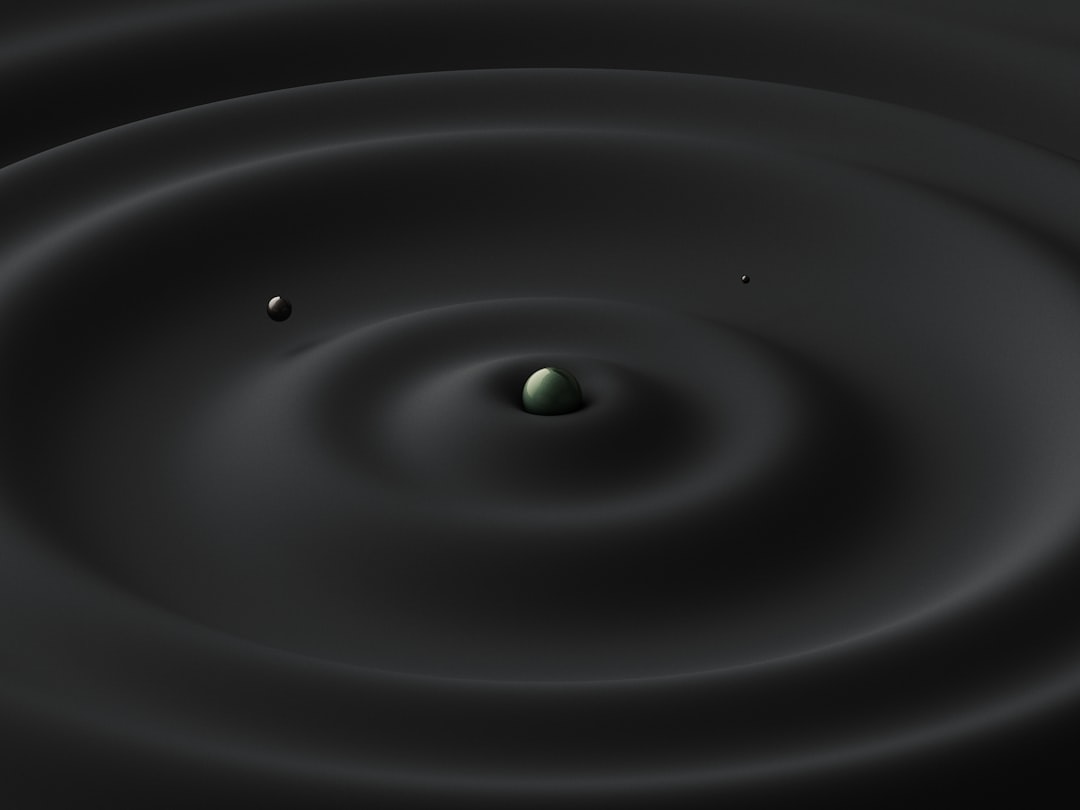
Vacuum metastability describes a theoretical state where the quantum vacuum—the lowest energy configuration of quantum fields—exists in a locally stable but not globally stable condition. In this scenario, the vacuum occupies what physicists term a “false vacuum” state, which represents a local minimum in the energy landscape rather than the absolute minimum. While this state can persist for extended periods, quantum tunneling effects could theoretically trigger a transition to the true vacuum state of lower energy.
This concept emerges from quantum field theory and the Standard Model of particle physics, particularly through calculations involving the Higgs field potential. Current measurements of the Higgs boson mass and top quark mass suggest that our universe may indeed exist in such a metastable vacuum state. The transition probability depends on various factors including field fluctuations, temperature, and the presence of high-energy processes that could nucleate vacuum decay.
A vacuum decay event would propagate at the speed of light as an expanding bubble, fundamentally altering the physical constants and particle interactions within the affected region. This process would be undetectable until the bubble boundary reached any given location, at which point the changed physics would likely preclude the existence of matter as currently understood. Current theoretical estimates suggest that if such a transition occurs naturally, the timescales involved would far exceed the current age of the universe, though these calculations remain subject to uncertainties in particle physics parameters.
Key Takeaways
- Vacuum metastability refers to a state where the universe’s vacuum is stable but could transition to a lower energy state, potentially causing catastrophic changes.
- Theoretical physics, particularly particle physics, provides the framework to understand and predict vacuum metastability.
- Detecting signs of vacuum metastability is challenging, and current scientific debate centers on its likelihood and potential timing.
- Collaborative global research efforts are crucial to study vacuum metastability and explore possible mitigation strategies.
- Public awareness and understanding of vacuum metastability remain limited, highlighting the need for effective science communication.
Theoretical Basis for Vacuum Metastability
The theoretical framework surrounding vacuum metastability is rooted in quantum field theory, which describes how particles interact and how fields permeate space. In this context, the vacuum is not an empty void but rather a dynamic entity filled with fluctuating energy. The concept of vacuum metastability arises from the idea that there can be multiple vacuum states, each with different energy levels.
The current vacuum state of our universe may be one of these metastable states, existing in a local minimum of energy rather than the absolute minimum. One of the key elements in understanding this phenomenon is the concept of potential energy landscapes. In these landscapes, different configurations of fields correspond to different energy levels.
A metastable vacuum state is akin to a ball resting in a valley; it is stable as long as it remains in that valley but can roll down to a lower valley if perturbed sufficiently. This analogy helps illustrate how our universe could transition from its current state to a more stable configuration, potentially leading to dramatic changes in physical laws and constants.
Potential Implications for the Universe

The potential implications of vacuum metastability are staggering and could reshape our understanding of the universe. If a transition were to occur, it could result in a catastrophic event known as a “vacuum decay.” This decay would propagate at the speed of light, altering the fundamental forces and particles that constitute matter as we know it. Such an event could lead to the destruction of all structures in the universe, from galaxies to atoms, effectively erasing everything in its path.
Moreover, the consequences of vacuum decay extend beyond mere destruction; they could also give rise to entirely new physical phenomena. The laws governing particle interactions might change, leading to a universe that operates under different principles.
Scientific Debate on Vacuum Metastability
The topic of vacuum metastability has sparked considerable debate among physicists and cosmologists. Some researchers argue that the current vacuum state is indeed metastable but stable enough to last for an extraordinarily long time, potentially outlasting the lifespan of stars and galaxies. Others contend that even if it is metastable, the likelihood of a transition occurring within a relevant timeframe is exceedingly low, making it more of a theoretical curiosity than an imminent threat.
This scientific discourse highlights the complexities involved in studying vacuum states and their stability. Theoretical models often rely on intricate calculations and assumptions about fundamental constants and interactions. As new data emerges from particle accelerators and cosmological observations, scientists continue to refine their understanding of vacuum metastability, leading to ongoing discussions about its implications for both theoretical physics and cosmology.
Detecting Signs of Vacuum Metastability
| Metric | Value | Unit | Description |
|---|---|---|---|
| Vacuum Energy Density | ~10^-47 | GeV^4 | Estimated energy density of the current vacuum state |
| Higgs Field Vacuum Expectation Value (VEV) | 246 | GeV | Value of the Higgs field in the electroweak vacuum |
| Top Quark Mass | 172.76 ± 0.30 | GeV/c² | Mass of the top quark, important for vacuum stability calculations |
| Higgs Boson Mass | 125.10 ± 0.14 | GeV/c² | Mass of the Higgs boson, critical for vacuum metastability analysis |
| Vacuum Lifetime Estimate | 10^600 | years | Estimated lifetime of the metastable vacuum state before decay |
| Critical Energy Scale for Instability | 10^10 – 10^12 | GeV | Energy scale at which the Higgs potential may become unstable |
| Probability of Vacuum Decay (per year) | ~10^-600 | 1/year | Extremely low probability of vacuum decay occurring in any given year |
Detecting signs of vacuum metastability poses significant challenges due to the subtlety of quantum phenomena. Researchers are exploring various avenues to identify potential indicators that might suggest our universe is on the brink of a phase transition. One approach involves studying high-energy particle collisions in accelerators like the Large Hadron Collider (LHC).
By examining the behavior of particles at extreme energies, scientists hope to glean insights into the stability of the vacuum state. Additionally, cosmological observations provide another avenue for investigation. The cosmic microwave background radiation, remnants from the early universe, carries information about its initial conditions and subsequent evolution.
Anomalies or unexpected patterns in this radiation could hint at underlying changes in vacuum stability or even signal impending transitions. However, interpreting these signals requires careful analysis and a robust theoretical framework to distinguish between noise and genuine indicators of vacuum metastability.
Mitigating the Potential Catastrophe
While the prospect of vacuum decay may seem daunting, scientists are actively exploring ways to mitigate its potential consequences. One approach involves advancing our understanding of quantum field theory and developing more accurate models that can predict the behavior of vacuum states under various conditions. By refining these models, researchers hope to identify thresholds or conditions that might trigger a transition, allowing for better preparedness.
Moreover, interdisciplinary collaboration between physicists, cosmologists, and mathematicians is essential in addressing this complex issue. By pooling expertise from various fields, scientists can develop comprehensive strategies for studying vacuum metastability and its implications. This collaborative effort may lead to innovative solutions or even new theoretical frameworks that enhance our understanding of fundamental physics.
The Role of Particle Physics in Understanding Vacuum Metastability
Particle physics plays a crucial role in unraveling the mysteries surrounding vacuum metastability. The interactions between fundamental particles and their associated fields provide insights into how vacuums behave under different conditions. High-energy experiments conducted at particle accelerators allow researchers to probe these interactions and test theoretical predictions regarding vacuum stability.
Furthermore, advancements in particle physics have led to discoveries that challenge existing paradigms and open new avenues for exploration. For instance, findings related to the Higgs boson have implications for our understanding of vacuum states and their stability. As scientists continue to investigate these connections, they may uncover new phenomena that shed light on the nature of vacuum metastability and its potential consequences for the universe.
Cosmic Consequences of Vacuum Metastability
The cosmic consequences of vacuum metastability extend far beyond theoretical musings; they touch upon fundamental questions about existence itself. If our universe were to undergo a phase transition due to vacuum decay, it could lead to a radically different cosmic landscape. Structures such as galaxies, stars, and planets might cease to exist or transform into entirely new forms governed by different physical laws.
Moreover, such an event could have profound implications for life as we know it. The delicate balance of forces that allows for the existence of matter and life could be disrupted, rendering our current understanding of biology obsolete. This raises philosophical questions about the nature of existence and whether life can thrive in alternate physical realities shaped by different vacuum states.
The Uncertainty of Predicting Vacuum Metastability
Despite advancements in theoretical physics and experimental techniques, predicting vacuum metastability remains fraught with uncertainty. The complexity of quantum field theories and the myriad factors influencing vacuum stability make it challenging to arrive at definitive conclusions. Researchers grapple with questions about how long our current vacuum state might persist and what specific conditions could trigger a transition.
This uncertainty underscores the importance of continued research and exploration in this field. As scientists gather more data and refine their models, they may gradually unveil clearer insights into vacuum metastability and its implications for our understanding of the universe. However, until then, much remains speculative, highlighting both the excitement and challenges inherent in cutting-edge scientific inquiry.
Public Awareness and Understanding of Vacuum Metastability
Public awareness and understanding of vacuum metastability are crucial for fostering interest in fundamental physics and cosmology. While this topic may seem esoteric to many, it has far-reaching implications that resonate with broader questions about existence and the nature of reality. Engaging with the public through educational initiatives can help demystify complex concepts and inspire curiosity about the universe.
By using analogies and relatable examples, scientists can bridge the gap between complex theories and everyday understanding. This outreach not only promotes scientific literacy but also encourages future generations to explore careers in science and contribute to ongoing research efforts.
Collaborative Efforts to Study and Address Vacuum Metastability
The study of vacuum metastability necessitates collaborative efforts across disciplines and institutions. Physicists, cosmologists, mathematicians, and engineers must work together to tackle this multifaceted problem effectively. Collaborative research initiatives can pool resources, expertise, and diverse perspectives, leading to innovative approaches that advance our understanding of vacuum states.
International collaborations also play a vital role in addressing global challenges associated with vacuum metastability. By sharing data, methodologies, and theoretical insights across borders, researchers can accelerate progress in this field. Such cooperative endeavors not only enhance scientific knowledge but also foster a sense of unity among scientists dedicated to unraveling one of nature’s most profound mysteries.
In conclusion, vacuum metastability represents a fascinating intersection between theoretical physics and cosmology with profound implications for our understanding of existence itself. As researchers continue to explore this enigmatic phenomenon through collaborative efforts and innovative approaches, they inch closer to unraveling its mysteries while inspiring curiosity about the universe’s fundamental nature.
The concept of a vacuum metastability universe raises intriguing questions about the stability of our universe and the potential for catastrophic phase transitions. For a deeper exploration of related topics, you can read more in this article on cosmic phenomena and their implications for our understanding of the universe. Check it out here: Cosmic Ventures.
FAQs
What is vacuum metastability in the context of the universe?
Vacuum metastability refers to the idea that the current vacuum state of the universe, which determines the laws of physics and the energy level of empty space, might not be the absolute lowest energy state. Instead, it could be a “false vacuum” that is stable for now but could potentially transition to a lower-energy “true vacuum” state.
Why is vacuum metastability important in cosmology?
Vacuum metastability is important because if the universe is in a metastable vacuum, a transition to a true vacuum could have dramatic consequences, potentially altering fundamental constants and the structure of matter, which might lead to the destruction of the universe as we know it.
What causes vacuum metastability?
Vacuum metastability arises from the shape of the potential energy landscape of quantum fields, such as the Higgs field. If the potential has multiple minima, the universe might be trapped in a local minimum (false vacuum) rather than the global minimum (true vacuum).
How does the Higgs boson relate to vacuum metastability?
The mass and properties of the Higgs boson influence the shape of the Higgs potential. Current measurements suggest that the Higgs potential might allow for a metastable vacuum, meaning the universe could be in a false vacuum state that is stable on cosmological timescales but not absolutely stable.
Is vacuum metastability a cause for immediate concern?
No, vacuum metastability is not an immediate threat. If the universe is metastable, the transition to a true vacuum would likely take an extremely long time, far exceeding the current age of the universe, making it a theoretical rather than practical concern.
What would happen if the universe transitioned to a true vacuum?
A transition to a true vacuum would create a bubble of lower-energy vacuum that expands at the speed of light, fundamentally changing the laws of physics inside it. This would destroy existing structures, including atoms and molecules, effectively ending the universe as we know it.
Can vacuum metastability be tested or observed?
Vacuum metastability cannot be directly observed, but it can be studied through precise measurements of particle properties, especially the Higgs boson and top quark masses, and through theoretical calculations in particle physics and cosmology.
Does vacuum metastability have implications for the fate of the universe?
Yes, vacuum metastability is one of several theoretical scenarios that could influence the ultimate fate of the universe, alongside others like heat death, big rip, or big crunch. However, current evidence suggests that if vacuum decay is possible, it is unlikely to occur anytime soon.