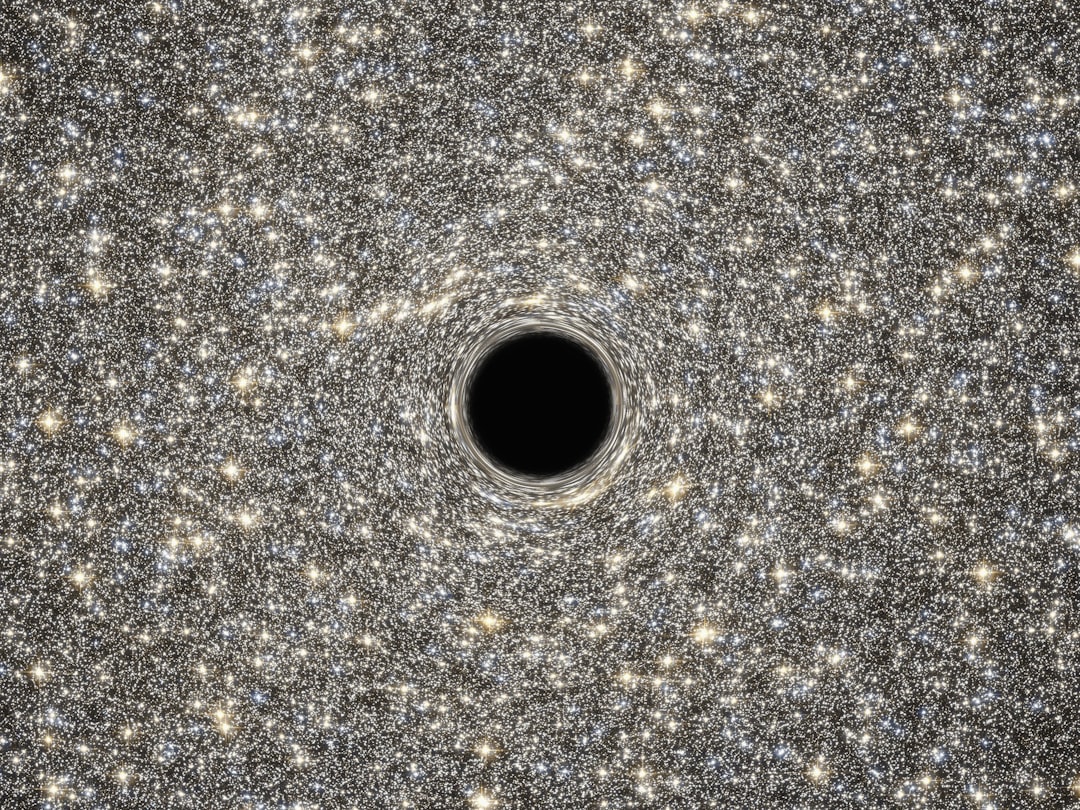
Primordial black holes (PBHs) are theoretical objects that could have formed during the early universe, within the first second after the Big Bang. Unlike stellar black holes that result from the collapse of massive stars at the end of their lifecycles, primordial black holes would have originated from extremely dense regions created by quantum fluctuations during cosmic inflation. During the inflationary epoch, density fluctuations in the primordial universe could have produced areas where matter concentration exceeded critical thresholds necessary for gravitational collapse.
When these overdense regions collapsed under their own gravity, they would have formed black holes with masses potentially ranging from subatomic scales to thousands of solar masses, depending on the conditions present at the time of formation.
Scientists investigate whether PBHs could constitute part or all of dark matter, which comprises approximately 27% of the universe’s total mass-energy content but remains undetected through electromagnetic radiation.
Additionally, PBH studies provide insights into the physics of the early universe, including the nature of cosmic inflation and the behavior of matter under extreme conditions. Current observational constraints limit the abundance of primordial black holes across different mass ranges through various detection methods, including gravitational wave observations, microlensing surveys, and measurements of cosmic microwave background radiation. These investigations continue to refine theoretical models and observational strategies for detecting or ruling out primordial black holes as significant contributors to cosmic structure and dark matter.
Key Takeaways
- Primordial black holes (PBHs) formed in the early universe have unique characteristics influenced by their formation conditions.
- Various cosmic phenomena, including cosmic microwave background radiation and Hawking radiation, affect the survival and detectability of PBHs.
- Observational constraints from gravitational lensing, gamma-ray bursts, cosmic rays, and neutrino data limit the possible abundance and mass range of PBHs.
- Anisotropies in the cosmic microwave background provide additional stringent constraints on the presence of PBHs.
- Understanding these survival constraints is crucial for future research into the role of PBHs in cosmology and dark matter studies.
Formation and Characteristics of Primordial Black Holes
The formation of primordial black holes is theorized to occur during the high-energy conditions present in the early universe. As the universe expanded and cooled, quantum fluctuations in density could have led to regions where matter was concentrated enough to collapse under its own gravity. This process is distinct from stellar black hole formation, as it does not rely on the lifecycle of massive stars but rather on the dynamics of the universe itself during its infancy.
Primordial black holes can vary significantly in mass, ranging from tiny black holes with masses less than that of an asteroid to supermassive ones that could rival or exceed stellar masses. Their characteristics are influenced by the conditions present at the time of their formation, including the rate of expansion and the energy density of the universe. This diversity in mass and size makes PBHs a unique subject of study, as they could potentially provide insights into various cosmic phenomena and contribute to our understanding of dark matter.
Survival Constraints in the Early Universe
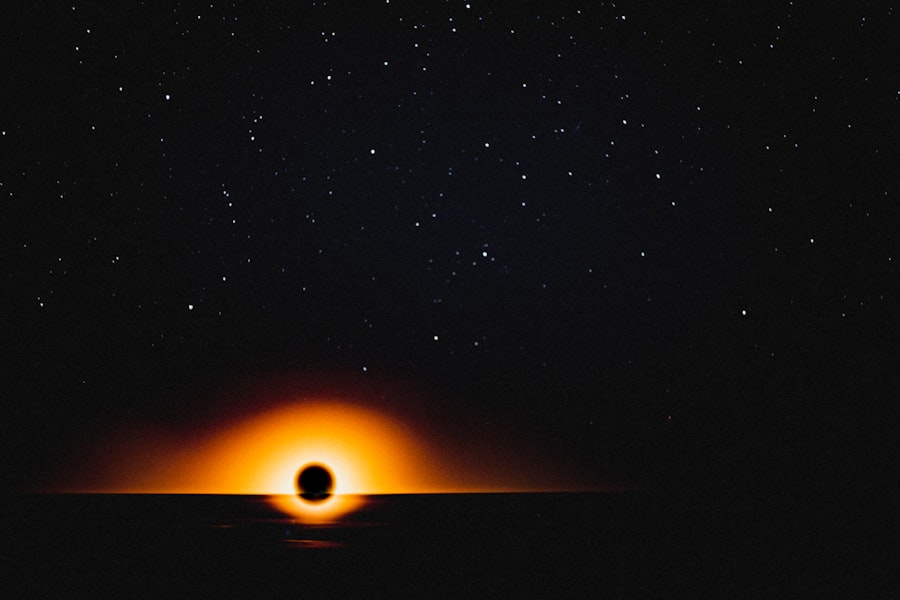
The survival of primordial black holes through cosmic history is a topic of considerable interest among astrophysicists. The early universe was a tumultuous environment, characterized by extreme temperatures and densities. As such, not all primordial black holes would have survived to the present day.
Various processes, including Hawking radiation and interactions with surrounding matter, could have led to their evaporation or destruction. The conditions necessary for a primordial black hole to endure are complex and multifaceted. For instance, smaller black holes are more susceptible to evaporation due to Hawking radiation, while larger ones may have a greater chance of surviving through cosmic epochs.
Understanding these survival constraints is crucial for determining how many primordial black holes might still exist today and what role they could play in the current cosmic landscape.
Impact of Cosmic Microwave Background Radiation on Primordial Black Holes
The Cosmic Microwave Background (CMB) radiation serves as a relic from the early universe, providing a snapshot of its state approximately 380,000 years after the Big Bang. This radiation carries vital information about the density fluctuations that occurred during that time, which are directly linked to the formation of primordial black holes. The interaction between PBHs and CMB radiation can yield significant insights into their properties and abundance.
As primordial black holes interact with CMB photons, they can influence the temperature fluctuations observed in the CMThese interactions can lead to observable effects that researchers can measure, allowing them to place constraints on the mass and abundance of PBHs. By analyzing CMB anisotropies, scientists can infer whether PBHs exist in sufficient quantities to impact cosmic evolution and structure formation.
Hawking Radiation and its Effect on Primordial Black Holes
| Constraint Type | Mass Range (kg) | Survival Limit | Observational Method | Reference |
|---|---|---|---|---|
| Hawking Radiation Evaporation | Less than 10^12 kg | Do not survive to present day | Gamma-ray background measurements | Page & Hawking (1976) |
| Microlensing Constraints | 10^23 to 10^30 kg | Fraction of dark matter < 10% | Microlensing surveys (e.g., MACHO, EROS) | Alcock et al. (2001) |
| Cosmic Microwave Background (CMB) | 10^15 to 10^17 kg | Strong limits on abundance due to accretion effects | CMB anisotropy measurements | Ricotti et al. (2008) |
| Gravitational Wave Observations | 10^30 to 10^35 kg | Constraints on merger rates and abundance | LIGO/Virgo detections | Abbott et al. (2016) |
| Big Bang Nucleosynthesis (BBN) | Less than 10^9 kg | Limits from altered light element abundances | Primordial element abundance measurements | Kohri & Yokoyama (2000) |
Hawking radiation is a theoretical prediction made by physicist Stephen Hawking, suggesting that black holes can emit radiation due to quantum effects near their event horizons. This phenomenon has profound implications for primordial black holes, particularly regarding their longevity. Smaller PBHs are expected to emit Hawking radiation at a higher rate than larger ones, leading to their potential evaporation over time.
The implications of Hawking radiation extend beyond mere evaporation; they also influence how primordial black holes might interact with their surroundings. As they lose mass through this radiation, their gravitational influence diminishes, which could affect their role in cosmic structure formation. Understanding Hawking radiation’s effects on PBHs is essential for developing a comprehensive picture of their evolution and potential contributions to dark matter.
Constraints on Primordial Black Holes from Gravitational Lensing
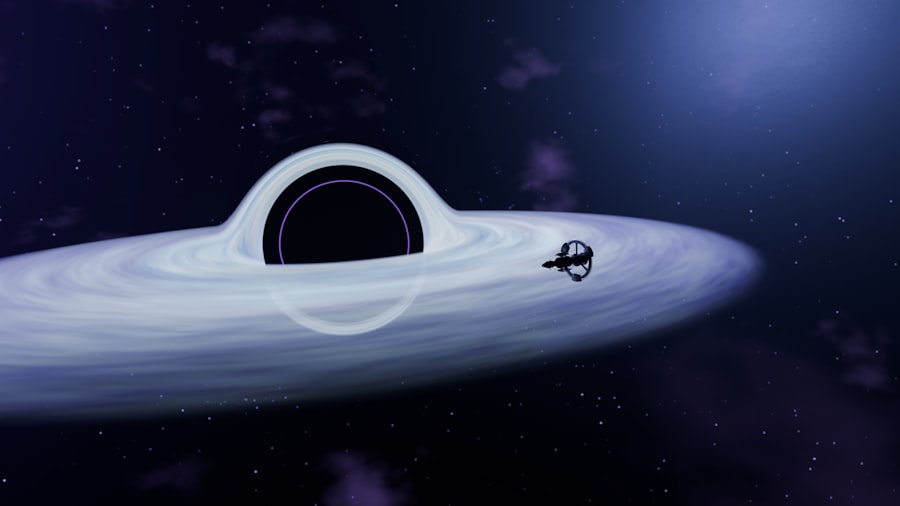
Gravitational lensing occurs when massive objects bend light from more distant sources due to their gravitational field. This phenomenon can be used as a powerful tool for studying primordial black holes. If PBHs exist in sufficient numbers and masses, they could act as gravitational lenses, distorting and magnifying the light from background objects such as galaxies or quasars.
By observing gravitational lensing events, astronomers can place constraints on the abundance and mass distribution of primordial black holes. The absence of significant lensing effects in certain regions of space can indicate limits on how many PBHs can exist within those areas. This method provides a unique observational avenue for testing theories surrounding primordial black holes and their potential role in cosmic evolution.
Constraints on Primordial Black Holes from Gamma-Ray Bursts
Gamma-ray bursts (GRBs) are among the most energetic events in the universe, often associated with catastrophic stellar explosions or mergers involving compact objects like neutron stars or black holes. Interestingly, primordial black holes could also play a role in these phenomena. If PBHs were to collide or interact with other massive objects, they could potentially trigger gamma-ray bursts.
The study of GRBs offers another avenue for constraining primordial black holes. By analyzing the frequency and characteristics of gamma-ray bursts, researchers can infer information about potential interactions involving PBHs. If certain patterns or anomalies are observed in GRB data that cannot be explained by known astrophysical processes, it may suggest the presence or influence of primordial black holes in those events.
Constraints on Primordial Black Holes from Cosmic Rays
Cosmic rays are high-energy particles that travel through space at nearly the speed of light. They originate from various sources, including supernovae, active galactic nuclei, and potentially even primordial black holes. The interactions between cosmic rays and PBHs could provide valuable insights into their properties and abundance.
If primordial black holes exist and interact with cosmic rays, they could produce secondary particles or radiation detectable by ground-based or space-based observatories. By studying cosmic ray data and looking for signatures indicative of PBH interactions, researchers can place constraints on their mass and abundance in the universe. This approach adds another layer to our understanding of how primordial black holes might influence cosmic phenomena.
Constraints on Primordial Black Holes from Neutrino Observations
Neutrinos are elusive particles that interact only weakly with matter, making them challenging to detect but incredibly informative when observed. The study of neutrinos can provide insights into various astrophysical processes, including those involving primordial black holes. If PBHs exist and interact with other particles or fields in ways that produce neutrinos, these interactions could leave detectable signatures.
Observations from neutrino observatories can help constrain the properties of primordial black holes by identifying excess neutrino events that cannot be accounted for by known sources.
The interplay between neutrinos and primordial black holes represents an exciting frontier in astrophysical research.
Constraints on Primordial Black Holes from Cosmic Microwave Background Anisotropies
The Cosmic Microwave Background anisotropies offer another critical tool for understanding primordial black holes. These anisotropies reflect variations in temperature across the CMB map and are influenced by various factors, including density fluctuations in the early universe. If primordial black holes were abundant during this epoch, they would leave an imprint on these anisotropies.
By analyzing CMB anisotropies with precision measurements from missions like Planck or future observatories, researchers can derive constraints on the mass spectrum and abundance of primordial black holes. The relationship between PBHs and CMB anisotropies provides a unique opportunity to test theoretical models against observational data, potentially leading to breakthroughs in our understanding of both PBHs and cosmic evolution.
Conclusion and Future Prospects for Understanding Survival Constraints for Primordial Black Holes
In conclusion, primordial black holes represent a captivating area of research within cosmology and astrophysics. Their potential existence raises profound questions about dark matter, cosmic evolution, and fundamental physics. As scientists continue to explore various observational avenues—ranging from gravitational lensing to cosmic ray studies—they inch closer to unraveling the mysteries surrounding these enigmatic entities.
Future prospects for understanding primordial black holes hinge on advancements in observational technology and theoretical modeling. As new telescopes come online and existing ones improve their sensitivity, researchers will be better equipped to detect signatures associated with PBHs. Additionally, ongoing theoretical work will refine models predicting their formation mechanisms and survival constraints in an evolving universe.
Ultimately, unraveling the nature of primordial black holes may not only illuminate aspects of dark matter but also provide deeper insights into the very fabric of our universe’s history.
Recent studies on primordial black holes (PBHs) have raised intriguing questions about their survival constraints in the universe. For a deeper understanding of this topic, you can explore the article on cosmic phenomena at My Cosmic Ventures, which discusses various aspects of black holes and their implications for cosmology. This resource provides valuable insights into the conditions that may allow PBHs to persist and their potential impact on the formation of structures in the universe.
FAQs
What are primordial black holes?
Primordial black holes (PBHs) are hypothetical black holes that are thought to have formed in the early universe, shortly after the Big Bang, due to high-density fluctuations. Unlike black holes formed from collapsing stars, PBHs could have a wide range of masses, including very small ones.
Why is the survival of primordial black holes important?
The survival of primordial black holes is important because it affects their potential role in cosmology, including their contribution to dark matter, their impact on cosmic evolution, and their detectability through various astrophysical observations.
What factors influence the survival of primordial black holes?
The survival of primordial black holes depends on factors such as their initial mass, Hawking radiation evaporation rates, interactions with surrounding matter and radiation, and gravitational effects over cosmic time scales.
What are the main constraints on primordial black hole survival?
Constraints on primordial black hole survival come from observations such as the cosmic microwave background, gravitational lensing surveys, gamma-ray background measurements, and the absence of expected Hawking radiation signatures. These constraints limit the possible mass ranges and abundance of surviving PBHs.
How does Hawking radiation affect primordial black holes?
Hawking radiation causes black holes to lose mass over time by emitting particles. For small primordial black holes, this evaporation can lead to complete disappearance within the age of the universe, placing limits on the minimum mass of PBHs that could still exist today.
Can primordial black holes make up dark matter?
Primordial black holes are considered a candidate for dark matter, but survival constraints and observational limits restrict the mass ranges and abundance in which they could account for all or part of dark matter.
What observational methods are used to detect or constrain primordial black holes?
Observational methods include gravitational lensing surveys, searches for Hawking radiation signatures, analysis of cosmic microwave background anisotropies, gravitational wave detections from black hole mergers, and gamma-ray background studies.
Are there any recent developments in primordial black hole survival research?
Recent research continues to refine constraints on primordial black hole populations using improved observational data and theoretical models, enhancing our understanding of their possible survival and role in the universe.