
Rooted cosmology examines the interconnectedness of the universe through cultural narratives and traditional knowledge systems. This field studies how different societies have developed distinct interpretations of cosmic phenomena based on their historical, geographical, and spiritual contexts. While modern scientific cosmology focuses on empirical observation and mathematical models, rooted cosmology acknowledges the value of indigenous knowledge, oral traditions, and cultural frameworks in understanding humanity’s relationship with the cosmos.
Various civilizations throughout history have developed comprehensive cosmological systems that explain celestial movements, natural phenomena, and humanity’s place in the universe. These systems often integrate astronomical observations with cultural values and spiritual beliefs. The study of rooted cosmology provides insights into how diverse human communities have organized their understanding of existence and transmitted this knowledge across generations.
Examining multiple cosmological traditions reveals both commonalities and differences in how cultures conceptualize space, time, and cosmic order. This comparative approach enriches our understanding of human cognition and highlights the diverse methodologies humans have employed to comprehend the universe throughout history.
Key Takeaways
- Rooted cosmology integrates ancient, indigenous, and modern scientific views to understand the universe.
- Traditional mythologies provide foundational cosmological beliefs that influence contemporary scientific inquiry.
- The Big Bang theory revolutionized cosmology, offering a scientific explanation for the universe’s origin.
- Bridging Western science with indigenous knowledge enriches cosmological research and broadens perspectives.
- Embracing diverse cosmological views fosters a holistic understanding of the universe, blending science and spirituality.
Ancient Mythologies and Cosmological Beliefs
Ancient mythologies serve as a window into the cosmological beliefs of early civilizations, revealing how they understood their world and its origins. These narratives often feature gods, celestial beings, and creation stories that explain the formation of the universe and humanity’s role within it. As you explore these mythologies, you may find that they are not merely fanciful tales but rather profound reflections of the societies that created them.
They encapsulate the values, fears, and aspirations of people who sought to make sense of their existence in a vast and often mysterious universe. For instance, in many Indigenous cultures, creation stories are deeply intertwined with the land and natural elements. These narratives often emphasize the interconnectedness of all living beings and the importance of maintaining harmony with nature.
By examining these ancient beliefs, you can gain insight into how they shaped social structures, rituals, and ethical frameworks within those communities. This exploration can also lead you to recognize the enduring relevance of these stories in contemporary discussions about environmental stewardship and sustainability.
The Birth of Modern Cosmology
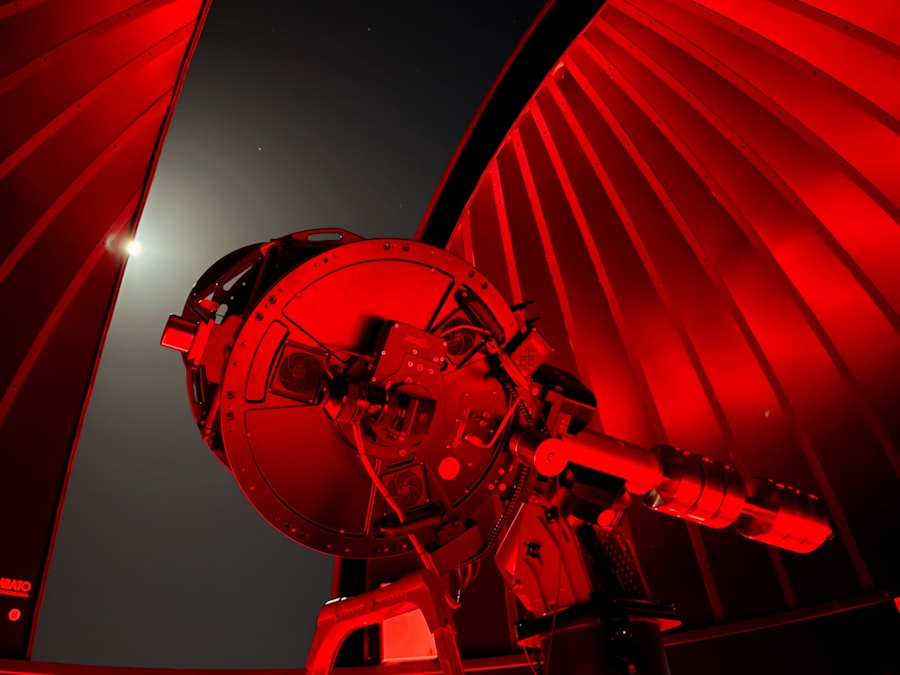
The birth of modern cosmology marks a significant turning point in humanity’s quest to understand the universe.
You may find it intriguing how these pioneers laid the groundwork for a new way of thinking that prioritized observation, experimentation, and mathematical reasoning.
This shift not only transformed our understanding of celestial bodies but also set the stage for future advancements in cosmological theories. As modern cosmology evolved, it became increasingly focused on uncovering the fundamental laws governing the universe. The development of telescopes and other observational tools allowed scientists to peer deeper into space than ever before.
You might appreciate how this technological progress led to groundbreaking discoveries, such as the realization that the universe is expanding and that galaxies are moving away from each other. This new understanding prompted questions about the origins of the universe itself, paving the way for theories that would reshape our comprehension of existence.
The Big Bang Theory and its Impact on Cosmological Understanding
The Big Bang Theory stands as one of the most influential concepts in modern cosmology, fundamentally altering your understanding of how the universe began. Proposed in the early 20th century, this theory posits that the universe originated from an incredibly hot and dense state approximately 13.8 billion years ago. As you delve into this idea, you may find it remarkable how it provides a framework for explaining not only the formation of galaxies but also the distribution of cosmic background radiation that permeates space.
The impact of the Big Bang Theory extends beyond mere scientific explanation; it has also sparked philosophical inquiries about existence itself. You might ponder questions such as: What existed before the Big Bang? What does it mean for something to come from nothing?
These inquiries challenge you to confront your own beliefs about creation and existence while considering how this theory has reshaped humanity’s narrative about its place in the cosmos. The Big Bang Theory serves as a bridge between science and philosophy, inviting you to explore profound questions about life and reality.
Rooted Cosmology and its Connection to Indigenous Knowledge
| Metric | Description | Value/Range | Significance in Evidence-Rooted Cosmology |
|---|---|---|---|
| Cosmic Microwave Background (CMB) Temperature | Average temperature of the CMB radiation | 2.725 K | Supports Big Bang model and provides evidence for early universe conditions |
| Redshift (z) | Measure of how much the wavelength of light is stretched by the expansion of the universe | 0 to >10 (observable range) | Used to determine the rate of expansion and age of the universe |
| Hubble Constant (H₀) | Rate of expansion of the universe | 67.4 – 74 km/s/Mpc (varies by measurement method) | Key parameter for cosmological models and age estimation |
| Dark Matter Density Parameter (ΩDM) | Fraction of total energy density contributed by dark matter | ~0.27 | Explains gravitational effects not accounted for by visible matter |
| Dark Energy Density Parameter (ΩΛ) | Fraction of total energy density contributed by dark energy | ~0.68 | Accounts for accelerated expansion of the universe |
| Age of the Universe | Time elapsed since the Big Bang | ~13.8 billion years | Sets timeline for cosmic evolution and structure formation |
| Baryon Acoustic Oscillations (BAO) Scale | Characteristic scale imprinted in the distribution of galaxies | ~150 Mpc | Serves as a “standard ruler” for measuring cosmic distances |
| Primordial Helium Abundance (Yp) | Fraction of helium produced during Big Bang nucleosynthesis | ~0.24 by mass | Validates predictions of early universe nucleosynthesis |
Rooted cosmology finds a rich connection with Indigenous knowledge systems, which often emphasize a deep relationship with nature and a holistic understanding of existence. As you explore this connection, you may discover that Indigenous cosmologies are not merely mythological but are grounded in lived experiences and observations of the natural world. These perspectives offer valuable insights into sustainable practices and ecological stewardship that have been honed over millennia.
Indigenous knowledge systems often prioritize oral traditions, storytelling, and communal wisdom as means of transmitting cosmological understanding. You might find it enlightening to consider how these narratives encapsulate complex relationships between humans, animals, plants, and celestial bodies. By engaging with rooted cosmology through an Indigenous lens, you can appreciate how these worldviews challenge dominant scientific paradigms and offer alternative ways of knowing that are deeply attuned to local environments and ecosystems.
Exploring the Origins of the Universe through Rooted Cosmology

Exploring the origins of the universe through rooted cosmology invites you to consider how different cultures have approached this profound question throughout history. You may find it fascinating that many Indigenous cultures possess creation stories that describe not only how the universe came into being but also how humans are intricately woven into its fabric. These narratives often emphasize themes of reciprocity, balance, and interconnectedness—concepts that resonate with contemporary ecological concerns.
As you delve deeper into these stories, you might uncover parallels between ancient cosmologies and modern scientific theories. For instance, some Indigenous narratives describe cyclical patterns of creation and destruction that echo contemporary understandings of cosmic evolution. This exploration encourages you to reflect on how diverse cultural perspectives can enrich your understanding of universal origins while fostering a sense of humility in recognizing that no single narrative holds all the answers.
The Role of Traditional Cosmologies in Shaping Scientific Inquiry
Traditional cosmologies play a crucial role in shaping scientific inquiry by providing alternative frameworks for understanding complex phenomena. As you engage with these traditional narratives, you may find that they offer insights into questions that modern science has yet to fully address. For example, many Indigenous cosmologies emphasize relationships between humans and their environment, highlighting ethical considerations that are often overlooked in conventional scientific discourse.
By integrating traditional cosmologies into scientific inquiry, you can cultivate a more comprehensive approach to understanding the universe. This integration encourages interdisciplinary collaboration between scientists and Indigenous knowledge holders, fostering dialogue that respects both empirical evidence and cultural wisdom. You might appreciate how this collaborative approach can lead to innovative solutions for pressing global challenges such as climate change and biodiversity loss.
Bridging the Gap Between Western Science and Indigenous Perspectives
Bridging the gap between Western science and Indigenous perspectives is essential for fostering mutual respect and understanding in contemporary discussions about cosmology. As you navigate this complex terrain, you may encounter challenges related to differing epistemologies and methodologies. However, embracing these differences can lead to richer dialogues that honor both scientific rigor and cultural significance.
You might find it inspiring to explore initiatives aimed at fostering collaboration between scientists and Indigenous communities. These partnerships often involve co-creating research projects that respect traditional knowledge while addressing contemporary issues. By engaging with these collaborative efforts, you can witness firsthand how bridging these worlds can lead to innovative solutions that benefit both scientific advancement and Indigenous sovereignty.
The Interplay of Science, Spirituality, and Cosmology
The interplay between science, spirituality, and cosmology invites you to reflect on how these domains intersect in your own life. While science seeks to explain natural phenomena through empirical evidence, spirituality often addresses questions of meaning and purpose that transcend material explanations. As you contemplate this interplay, you may find yourself considering how your own beliefs shape your understanding of existence.
In many cultures, spirituality is deeply intertwined with cosmological beliefs, providing a framework for understanding one’s place in the universe. You might appreciate how this intersection can lead to profound insights about interconnectedness and responsibility toward others—both human and non-human alike. By exploring this interplay further, you can cultivate a more nuanced perspective on existence that honors both scientific inquiry and spiritual exploration.
Rooted Cosmology and its Relevance in Contemporary Cosmological Research
Rooted cosmology remains highly relevant in contemporary cosmological research as scientists increasingly recognize the value of diverse perspectives in understanding complex phenomena. As you engage with current research initiatives, you may find that scholars are beginning to incorporate Indigenous knowledge systems into their work, acknowledging that these perspectives can offer unique insights into questions about sustainability, climate change, and ecological resilience. By embracing rooted cosmology within contemporary research frameworks, scientists can foster interdisciplinary collaboration that enriches their understanding of both natural systems and human experiences.
You might be inspired by examples where traditional ecological knowledge has informed conservation efforts or climate adaptation strategies—demonstrating how rooted cosmology can contribute meaningfully to pressing global challenges.
Embracing Diversity in Cosmological Perspectives
Embracing diversity in cosmological perspectives is essential for fostering a more inclusive understanding of existence. As you reflect on this idea, consider how different cultures have developed unique narratives about creation, existence, and humanity’s place within the cosmos. By valuing these diverse perspectives, you can cultivate a richer appreciation for the complexity of human experience while recognizing that no single narrative holds absolute truth.
In a world increasingly characterized by globalization and interconnectedness, embracing diverse cosmological perspectives can lead to greater empathy and understanding among individuals from different backgrounds. You might find it empowering to engage with others’ stories—whether through literature, art, or personal conversations—as a means of broadening your own worldview. Ultimately, by celebrating diversity in cosmological thought, you contribute to a more harmonious coexistence among all beings on this planet we call home.
In exploring the concept of evidence rooted cosmology, one can gain valuable insights from the article available on My Cosmic Ventures. This article delves into the foundational principles that support our understanding of the universe, emphasizing the importance of empirical evidence in shaping cosmological theories. For more information, you can read the full article [here](https://www.mycosmicventures.com/sample-page/).
FAQs
What is evidence-rooted cosmology?
Evidence-rooted cosmology is the study of the universe’s origin, structure, evolution, and eventual fate based strictly on empirical data and observations rather than purely theoretical models or speculative ideas.
How does evidence-rooted cosmology differ from theoretical cosmology?
While theoretical cosmology often involves mathematical models and hypotheses that may not yet be testable, evidence-rooted cosmology prioritizes conclusions drawn directly from observational data such as cosmic microwave background measurements, galaxy surveys, and supernova observations.
What types of evidence are used in evidence-rooted cosmology?
Key types of evidence include cosmic microwave background radiation, redshift data from distant galaxies, large-scale structure of the universe, gravitational lensing, and observations of dark matter and dark energy effects.
Why is evidence important in cosmology?
Evidence is crucial because it validates or refutes cosmological theories, ensuring that our understanding of the universe is based on measurable and reproducible phenomena rather than speculation.
Can evidence-rooted cosmology explain dark matter and dark energy?
Evidence-rooted cosmology provides observational support for the existence of dark matter and dark energy through gravitational effects and the accelerated expansion of the universe, although their exact nature remains an active area of research.
What role do telescopes and satellites play in evidence-rooted cosmology?
Telescopes and satellites collect critical data across various wavelengths (optical, radio, microwave, X-ray) that allow scientists to observe distant cosmic phenomena, enabling evidence-based conclusions about the universe.
Is evidence-rooted cosmology constantly evolving?
Yes, as new observations and technologies emerge, evidence-rooted cosmology continuously updates and refines our understanding of the universe, sometimes leading to revisions of previously accepted models.
How does evidence-rooted cosmology impact our understanding of the Big Bang?
Evidence-rooted cosmology supports the Big Bang theory through observations like the cosmic microwave background radiation and the abundance of light elements, providing a strong empirical foundation for this model of the universe’s origin.
Are there limitations to evidence-rooted cosmology?
Yes, limitations include observational constraints, the vast scales involved, and the difficulty in directly detecting certain phenomena, which means some aspects of cosmology remain theoretical until further evidence is available.
Where can I learn more about evidence-rooted cosmology?
Reliable sources include scientific journals, university courses in astrophysics and cosmology, reputable science websites, and publications from organizations like NASA and the European Space Agency.