The Holographic Universe Boundary Theory proposes that our three-dimensional universe can be represented as a two-dimensional information structure that encodes all observable physical phenomena. According to this theory, the universe functions similarly to a hologram, where information stored on a two-dimensional surface manifests as three-dimensional reality. This suggests that space and time are not fundamentally solid but rather projections of information stored at a boundary, comparable to how a holographic film projects three-dimensional images from a two-dimensional medium.
This theoretical framework challenges conventional understanding of physical reality, suggesting that what we perceive as tangible may be emergent from more fundamental information structures. The theory has significant implications across physics and cosmology, raising fundamental questions about the nature of reality, perception, and existence. Ongoing research into this theory continues to reveal complexities that may transform our understanding of the universe’s fundamental structure and operations.
Key Takeaways
- The Holographic Universe Boundary Theory suggests our universe is a hologram encoded on a distant boundary.
- It integrates principles of holography and quantum mechanics to explain the nature of reality.
- Evidence from black hole physics and quantum experiments supports the theory’s validity.
- The theory has significant implications for science, technology, and our philosophical understanding of existence.
- Ongoing debates and research aim to clarify its accuracy and explore its broader impacts on reality and consciousness.
The Origins of the Holographic Universe Boundary Theory
The roots of the Holographic Universe Boundary Theory can be traced back to advancements in theoretical physics during the late 20th century.
Their work suggested that the information contained within a black hole is not lost but rather encoded on its event horizon, leading to the idea that the universe itself might operate under similar principles.
As these ideas gained traction, they were further developed through the lens of string theory and quantum gravity. The realization that gravity could be reconciled with quantum mechanics opened new avenues for understanding the universe’s structure. The holographic principle emerged as a compelling framework, suggesting that all physical laws and phenomena could be described by information residing on a lower-dimensional boundary.
This revolutionary perspective has since sparked extensive research and debate within the scientific community, as physicists seek to unravel the implications of this groundbreaking theory.
Understanding the Principles of Holography
At its core, holography is a technique that captures light patterns to create three-dimensional images from two-dimensional surfaces. This principle serves as a metaphor for understanding the Holographic Universe Boundary Theory. In holography, each part of a hologram contains information about the whole image, meaning that even if a piece of the hologram is cut away, it still retains some information about the entire picture.
This concept parallels the idea that every point in our universe may contain information about the whole cosmos. The implications of this principle are profound. If the universe is indeed a hologram, then every particle and every event could be interconnected in ways that transcend conventional understanding.
This interconnectedness suggests that reality is not merely a collection of isolated events but rather a complex web of relationships and interactions. As researchers continue to explore these principles, they are uncovering new insights into how information shapes reality and how consciousness might play a role in this intricate tapestry.
The Role of Quantum Mechanics in the Holographic Universe Boundary Theory
Quantum mechanics plays a pivotal role in the Holographic Universe Boundary Theory, providing a framework for understanding how information is encoded and transmitted within the universe. At the quantum level, particles exhibit behaviors that defy classical physics, such as superposition and entanglement. These phenomena suggest that particles are not merely discrete entities but are instead part of a larger interconnected system where information flows freely across boundaries.
The relationship between quantum mechanics and holography becomes particularly evident when considering black holes. According to quantum theory, information cannot be destroyed; thus, when matter falls into a black hole, it must somehow be preserved. This led to the realization that black holes could serve as models for understanding how information is stored at the boundaries of our universe.
The implications of this relationship extend beyond black holes, suggesting that quantum mechanics may provide insights into the fundamental nature of reality itself.
Exploring the Evidence for the Holographic Universe Boundary Theory
| Metric | Description | Value / Range | Unit | Notes |
|---|---|---|---|---|
| Boundary Entropy | Measure of degrees of freedom on the boundary | Varies | Dimensionless | Related to the holographic principle’s encoding of bulk information |
| AdS Radius (L) | Radius of Anti-de Sitter space in holographic models | 10^(-35) to 10^3 | meters | Depends on the specific model and scale |
| Central Charge (c) | Conformal field theory parameter related to degrees of freedom | 10^2 to 10^6 | Dimensionless | Higher values correspond to more complex boundary theories |
| Bulk-Boundary Correspondence | Relation between bulk gravitational theory and boundary field theory | Exact (in idealized models) | Conceptual | Core of holographic universe boundary theory |
| Entanglement Entropy | Entropy associated with quantum entanglement across boundary | Proportional to area of boundary surface | Bits or nats | Supports holographic encoding of information |
| Holographic Screen Area | Area of the boundary surface encoding bulk information | Varies by system | Square meters | Determines maximum entropy via Bekenstein bound |
While the Holographic Universe Boundary Theory remains largely theoretical, several lines of evidence support its validity. One significant piece of evidence comes from studies of black holes and their entropy. The entropy of a black hole is proportional to its surface area rather than its volume, aligning with the holographic principle’s assertion that information is stored on boundaries rather than within three-dimensional space.
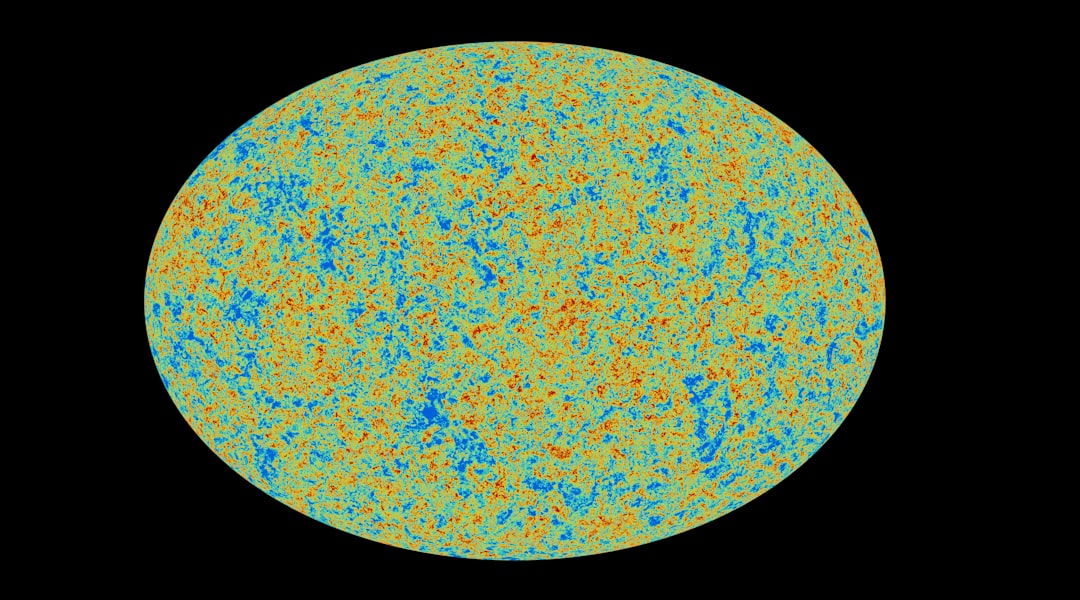
Additionally, recent advancements in cosmology have provided further support for this theory. Observations of cosmic microwave background radiation and large-scale structures in the universe suggest patterns that align with holographic models. These findings indicate that our understanding of space and time may need to be reevaluated in light of this emerging perspective.
As researchers continue to gather data and refine their models, they are uncovering more evidence that could solidify the Holographic Universe Boundary Theory as a cornerstone of modern physics.
The Implications of the Holographic Universe Boundary Theory

The implications of the Holographic Universe Boundary Theory extend far beyond theoretical physics; they touch upon fundamental questions about existence, consciousness, and reality itself. If reality is indeed a projection from a two-dimensional surface, it raises profound questions about the nature of perception and experience. Individuals may begin to wonder whether their experiences are merely interpretations of underlying information rather than direct interactions with an objective reality.
Moreover, this theory challenges traditional views on causality and determinism. If everything is interconnected through information encoded at boundaries, then events may not unfold in linear sequences but rather as part of a complex web of relationships. This perspective invites new ways of thinking about free will, choice, and the nature of existence itself.
As researchers explore these implications, they are likely to uncover new philosophical frameworks that could reshape humanity’s understanding of its place in the cosmos.
Applications of the Holographic Universe Boundary Theory in Science and Technology
The potential applications of the Holographic Universe Boundary Theory extend into various fields of science and technology. In theoretical physics, it offers new avenues for exploring quantum gravity and unifying general relativity with quantum mechanics. By understanding how information is encoded at boundaries, physicists may develop more comprehensive models that explain fundamental forces and particles.
Beyond theoretical applications, insights from this theory could influence advancements in technology as well. For instance, concepts derived from holography have already found applications in data storage and imaging technologies. As researchers continue to explore these connections, they may uncover innovative ways to harness holographic principles for practical applications in computing, telecommunications, and even artificial intelligence.
Criticisms and Debates Surrounding the Holographic Universe Boundary Theory
Despite its intriguing possibilities, the Holographic Universe Boundary Theory has faced criticism and skepticism from various quarters within the scientific community. Some physicists argue that while the theory offers compelling insights into black holes and quantum mechanics, it lacks empirical evidence to support its broader claims about the nature of reality. Critics contend that without concrete experimental validation, it remains speculative at best.
Additionally, debates surrounding interpretations of quantum mechanics complicate discussions about holography. Different schools of thought within quantum physics offer varying perspectives on issues such as entanglement and superposition, leading to divergent views on how these phenomena relate to holography.
The Future of Research in the Holographic Universe Boundary Theory
The future of research in the Holographic Universe Boundary Theory appears promising as scientists continue to explore its implications across various disciplines. Ongoing advancements in technology enable researchers to conduct experiments that test predictions derived from holographic models. As observational techniques improve, scientists may gather more data to support or challenge existing theories.
Moreover, interdisciplinary collaboration will likely play a crucial role in advancing research in this area. Physicists, mathematicians, philosophers, and computer scientists can work together to develop new frameworks for understanding holography and its implications for reality. As these collaborations flourish, they may lead to breakthroughs that deepen humanity’s understanding of existence itself.
How the Holographic Universe Boundary Theory is Changing Our Understanding of Reality
The Holographic Universe Boundary Theory is fundamentally altering humanity’s understanding of reality by challenging long-held assumptions about space, time, and existence. By proposing that our three-dimensional experiences are projections from a two-dimensional surface, it invites individuals to reconsider their perceptions of reality itself. This shift in perspective encourages exploration into how consciousness interacts with information and shapes experiences.
As researchers delve deeper into this theory, they are uncovering new insights into fundamental questions about existence and perception. The notion that reality may be an intricate tapestry woven from interconnected information prompts individuals to reflect on their place within this cosmic web. This evolving understanding has profound implications for philosophy, spirituality, and science alike.
Exploring the Philosophical and Spiritual Implications of the Holographic Universe Boundary Theory
The philosophical and spiritual implications of the Holographic Universe Boundary Theory are vast and thought-provoking. If reality is indeed a projection from an underlying informational structure, it raises questions about consciousness and its role in shaping experiences. This perspective aligns with various spiritual traditions that emphasize interconnectedness and unity among all beings.
Furthermore, this theory invites individuals to contemplate their relationship with existence itself. If everything is interconnected through information encoded at boundaries, it suggests that individual actions resonate throughout the cosmos in ways previously unimagined. This realization can inspire a sense of responsibility toward oneself and others while fostering a deeper appreciation for life’s complexities.
In conclusion, as humanity grapples with these profound questions raised by the Holographic Universe Boundary Theory, it stands at the precipice of a new understanding—one that transcends traditional boundaries between science and spirituality while inviting exploration into the very nature of existence itself.
The holographic universe boundary theory posits that our three-dimensional reality may be a projection of information encoded on a two-dimensional surface. This intriguing concept has sparked numerous discussions in the realms of physics and philosophy. For further exploration of related ideas, you can read more in this article on cosmic theories at My Cosmic Ventures.
FAQs
What is the holographic universe theory?
The holographic universe theory suggests that all the information contained within a volume of space can be represented as encoded data on the boundary of that space. In other words, our three-dimensional universe might be described by information existing on a two-dimensional surface.
What is boundary theory in the context of the holographic universe?
Boundary theory refers to the idea that the physics inside a volume of space can be fully described by a theory defined on the boundary of that space. This concept is central to the holographic principle, where the boundary encodes all the information about the bulk.
How does the holographic principle relate to black holes?
The holographic principle was inspired by studies of black hole thermodynamics, which showed that the entropy (information content) of a black hole is proportional to the area of its event horizon, not its volume. This suggests that information about the black hole’s interior is encoded on its two-dimensional surface.
What is the AdS/CFT correspondence?
The AdS/CFT correspondence is a concrete realization of the holographic principle. It proposes a duality between a gravitational theory in a higher-dimensional Anti-de Sitter (AdS) space and a conformal field theory (CFT) defined on the lower-dimensional boundary of that space.
Why is the holographic universe theory important in physics?
The holographic universe theory provides a framework to unify quantum mechanics and gravity, potentially resolving paradoxes such as the black hole information paradox. It also offers new insights into the nature of space, time, and information.
Is the holographic universe theory experimentally proven?
As of now, the holographic universe theory remains a theoretical framework. While it is supported by mathematical consistency and indirect evidence, direct experimental proof is still lacking.
Can the holographic principle be applied to our actual universe?
The holographic principle is well-established in certain theoretical models, especially those involving AdS spaces. Applying it to our real universe, which is not an AdS space, is an ongoing area of research with no definitive conclusions yet.
Who developed the holographic principle?
The holographic principle was first proposed by physicists Gerard ’t Hooft and Leonard Susskind in the 1990s, building on earlier work related to black hole thermodynamics by Jacob Bekenstein and Stephen Hawking.
What are the implications of the holographic universe for our understanding of reality?
If the holographic universe theory is correct, it implies that the three-dimensional world we experience might be a projection of information encoded on a distant two-dimensional surface, challenging traditional notions of space and reality.
Where can I learn more about the holographic universe and boundary theory?
To learn more, consider reading scientific papers on the holographic principle, textbooks on quantum gravity and string theory, and popular science books by physicists like Leonard Susskind. Online lectures and courses on theoretical physics also provide valuable insights.