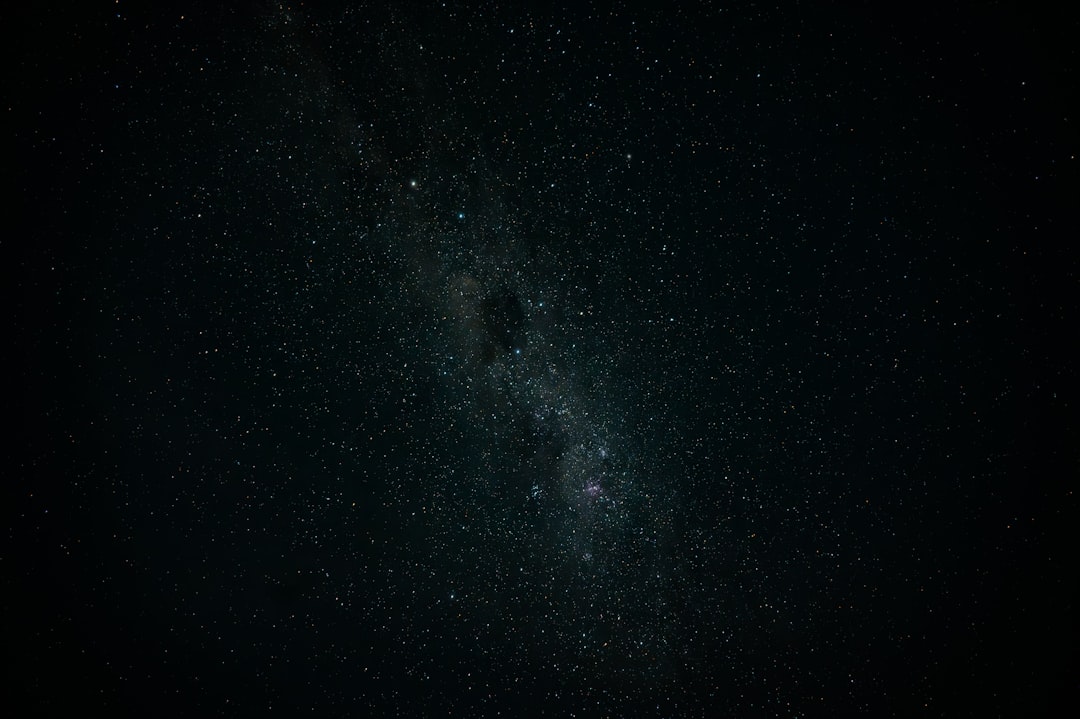
As you delve into the cosmos, you may find yourself captivated by the enigma of dark matter. This elusive substance, which constitutes about 27% of the universe, remains one of the most profound mysteries in modern astrophysics. Unlike ordinary matter, which makes up stars, planets, and even you, dark matter does not emit, absorb, or reflect light, making it invisible and detectable only through its gravitational effects.
The very fabric of the universe is woven with this mysterious material, yet its true nature eludes even the most brilliant minds in science. The quest to understand dark matter is not merely an academic exercise; it has profound implications for our understanding of the universe. You might wonder how something that cannot be seen can have such a significant impact on the cosmos.
The answer lies in the gravitational influence dark matter exerts on visible matter. Galaxies spin at such speeds that, without the additional mass provided by dark matter, they would tear themselves apart. This paradox raises questions about the fundamental laws of physics and challenges your perception of reality itself.
Key Takeaways
- Dark matter is a mysterious substance that makes up about 27% of the universe, but its nature remains unknown.
- Theoretical explanations for dark matter include weakly interacting massive particles (WIMPs) and axions, among others.
- Observational evidence for dark matter includes the rotation curves of galaxies, gravitational lensing, and the cosmic microwave background.
- The search for dark matter particles involves experiments such as the Large Underground Xenon (LUX) and the Cryogenic Dark Matter Search (CDMS).
- Dark matter plays a crucial role in the universe by influencing the formation and evolution of galaxies and large-scale structure.
Theoretical Explanations for Dark Matter
In your exploration of dark matter, you will encounter various theoretical frameworks that attempt to explain its existence. One of the most widely accepted theories posits that dark matter is composed of Weakly Interacting Massive Particles (WIMPs). These hypothetical particles are predicted to interact only through gravity and the weak nuclear force, making them incredibly difficult to detect.
If WIMPs exist, they could provide a bridge between particle physics and cosmology, offering insights into both the micro and macro scales of the universe. Another intriguing possibility is that dark matter could be made up of axions, extremely light particles that arise from certain theories in particle physics. Axions are appealing because they could solve not only the dark matter problem but also the strong CP problem in quantum chromodynamics.
As you ponder these theories, you may find yourself drawn to the idea that dark matter could be a manifestation of new physics beyond the Standard Model, hinting at a richer tapestry of reality than we currently comprehend.
Observational Evidence for Dark Matter

Your journey into the realm of dark matter is bolstered by a wealth of observational evidence that supports its existence. One of the most compelling pieces of evidence comes from galaxy rotation curves. When astronomers measure the speed at which galaxies rotate, they find that the outer regions spin much faster than expected based on visible matter alone.
This discrepancy suggests that an unseen mass—dark matter—must be present to account for the additional gravitational pull. Furthermore, observations of galaxy clusters provide another layer of evidence. When you look at clusters like the Bullet Cluster, you see a collision between two massive groups of galaxies.
The visible matter—composed of gas and galaxies—interacts and slows down during the collision, but the gravitational effects indicate that a significant amount of mass is present in a form that does not interact with light. This separation between visible and invisible mass reinforces the notion that dark matter is a fundamental component of our universe.
The Search for Dark Matter Particles
| Experiment | Location | Year | Results |
|---|---|---|---|
| LUX | South Dakota, USA | 2013 | No evidence of dark matter particles |
| XENON1T | Gran Sasso, Italy | 2017 | No evidence of dark matter particles |
| PandaX-II | China Jinping Underground Laboratory | 2016 | No evidence of dark matter particles |
As you navigate through the scientific landscape, you will discover that researchers are actively searching for dark matter particles using a variety of innovative methods. One approach involves underground laboratories designed to shield sensitive detectors from cosmic rays and other background noise.
In addition to underground experiments, you may also encounter efforts to detect dark matter through high-energy particle collisions in accelerators like the Large Hadron Collider (LHC). By smashing protons together at unprecedented energies, scientists hope to create conditions where dark matter particles could be produced. If successful, these experiments could unveil new physics and deepen your understanding of the universe’s composition.
The Role of Dark Matter in the Universe
Dark matter plays a crucial role in shaping the structure and evolution of the universe as you know it. It acts as a scaffolding upon which galaxies form and evolve. Without dark matter’s gravitational influence, galaxies would not have coalesced into their current forms; instead, they would remain dispersed and isolated.
This cosmic web of dark matter filaments connects galaxies and clusters, creating a vast network that underpins the large-scale structure of the universe. Moreover, dark matter influences cosmic phenomena such as gravitational lensing. When light from distant galaxies passes near massive objects like galaxy clusters, it bends due to gravity—a phenomenon you can observe as distorted images or multiple images of the same galaxy.
This effect not only provides evidence for dark matter but also allows astronomers to map its distribution across vast distances, revealing insights into how it shapes cosmic evolution.
Challenges in Detecting Dark Matter
Despite significant progress in understanding dark matter, you will find that detecting it remains an arduous challenge. The primary difficulty lies in its non-interaction with electromagnetic forces; since dark matter does not emit or absorb light, traditional observational techniques fall short. This invisibility necessitates indirect methods for detection, which can lead to ambiguous interpretations and uncertainties.
Additionally, there is an ongoing debate within the scientific community regarding the nature of dark matter itself. Some researchers argue for alternative explanations that do not require dark matter, such as modified gravity theories. These competing ideas complicate your quest for clarity and highlight the need for rigorous testing and validation of all hypotheses surrounding this cosmic mystery.
Current Experiments and Observatories
As you immerse yourself in current research efforts, you’ll discover a plethora of experiments and observatories dedicated to unraveling the secrets of dark matter.
These experiments utilize advanced technologies to minimize background noise and enhance sensitivity to potential dark matter interactions.
In addition to underground laboratories, space-based observatories like the European Space Agency’s Euclid mission aim to map the distribution of dark matter across vast cosmic scales. By studying how dark matter influences galaxy formation and clustering, these missions will provide invaluable data that could either confirm or challenge existing theories about this enigmatic substance.
The Debate over Modified Gravity Theories
As you delve deeper into the discourse surrounding dark matter, you’ll encounter a significant debate over modified gravity theories as alternatives to dark matter explanations. Proponents of these theories argue that adjustments to our understanding of gravity could account for observed phenomena without invoking unseen mass. One prominent example is Modified Newtonian Dynamics (MOND), which suggests that gravity behaves differently at low accelerations than predicted by Newton’s laws.
While these theories offer intriguing possibilities, they also face scrutiny from those who advocate for the existence of dark matter. You may find yourself weighing the merits of each perspective as researchers continue to explore both avenues in search of a comprehensive understanding of cosmic dynamics.
The Impact of Dark Matter on Cosmology
Dark matter’s influence extends far beyond individual galaxies; it plays a pivotal role in cosmology as a whole. The presence of dark matter affects models of cosmic evolution and structure formation, shaping our understanding of how the universe has developed over billions of years. As you consider these implications, you’ll realize that any comprehensive theory of cosmology must account for dark matter’s contributions.
Moreover, dark matter is intricately linked to other fundamental aspects of cosmology, such as cosmic inflation and the cosmic microwave background radiation (CMB). Your exploration may lead you to appreciate how these interconnected phenomena provide a more holistic view of our universe’s history and structure.
Potential Solutions to the Dark Matter Crisis
As researchers grapple with the complexities surrounding dark matter, various potential solutions have emerged to address what some refer to as the “dark matter crisis.” One promising avenue involves exploring alternative particle candidates beyond WIMPs and axions. For instance, sterile neutrinos—hypothetical particles that do not interact via any known forces except gravity—have garnered interest as potential dark matter candidates. Additionally, advancements in technology may pave new paths toward detection and understanding.
Innovations in detector sensitivity and data analysis techniques could enhance your ability to uncover elusive signals from dark matter interactions or provide insights into its properties through indirect observations.
The Future of Dark Matter Research
Looking ahead, you can anticipate an exciting future for dark matter research filled with potential breakthroughs and discoveries. As new experiments come online and existing facilities continue their work, your understanding of this cosmic mystery will evolve. The collaboration between theoretical physicists and experimentalists will be crucial in refining models and testing predictions against observational data.
Moreover, advancements in computational techniques will enable more sophisticated simulations of cosmic structures influenced by dark matter. As you engage with this ongoing research, you’ll find yourself partaking in a grand narrative—a quest not only to understand dark matter but also to unravel fundamental questions about existence itself and our place within this vast universe.
In recent years, the scientific community has been abuzz with discussions surrounding the Dark Matter crisis, a pivotal topic in astrophysics that challenges our understanding of the universe. A related article that delves into this intriguing subject can be found on My Cosmic Ventures. This article explores the latest theories and observations that are reshaping our comprehension of dark matter and its role in the cosmos. For a deeper insight into these groundbreaking developments, you can read more about it on their website by visiting My Cosmic Ventures.
FAQs
What is dark matter?
Dark matter is a hypothetical form of matter that is thought to make up about 27% of the universe’s mass and energy. It does not emit, absorb, or reflect light, making it invisible and undetectable by current scientific instruments.
What is the Dark Matter crisis?
The Dark Matter crisis refers to the discrepancy between the amount of dark matter predicted by theoretical models of the universe and the amount observed through astronomical observations. This has led to a crisis in our understanding of the fundamental nature of the universe.
How is dark matter detected?
Dark matter is detected indirectly through its gravitational effects on visible matter, such as stars and galaxies. Scientists also use techniques such as gravitational lensing and the study of cosmic microwave background radiation to infer the presence of dark matter.
What are some proposed explanations for the Dark Matter crisis?
Some proposed explanations for the Dark Matter crisis include the possibility that our understanding of gravity is incomplete, or that dark matter interacts with ordinary matter in ways that are not yet understood. Other theories suggest the existence of new particles or modifications to the laws of physics.
What are the implications of the Dark Matter crisis?
The Dark Matter crisis has significant implications for our understanding of the universe, as well as for the development of theories in particle physics and cosmology. It also highlights the need for further research and exploration in order to resolve the mystery of dark matter.