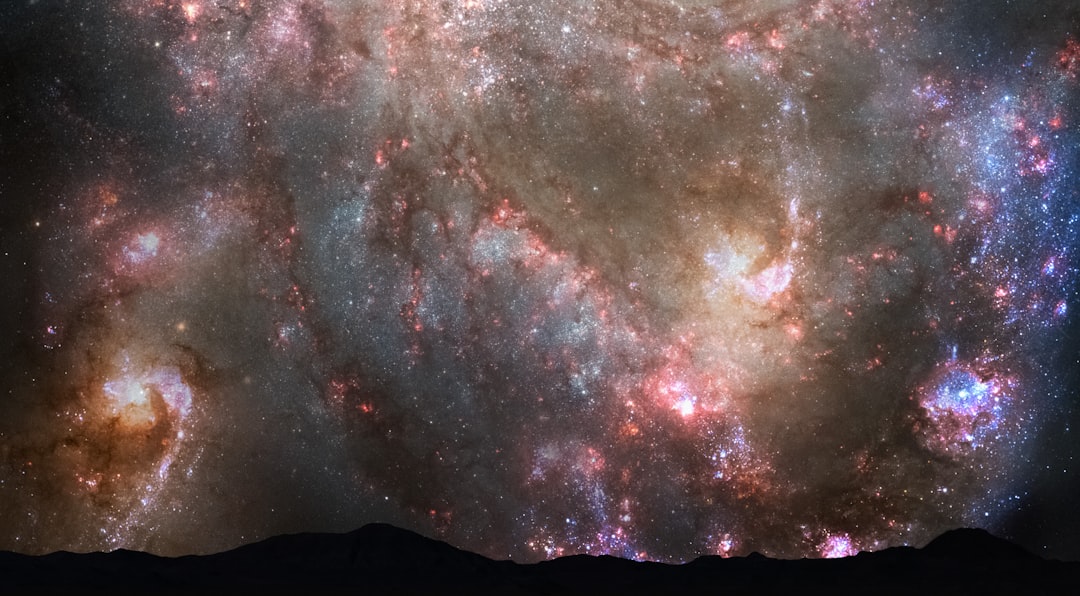
As you delve into the vastness of the universe, one of the most fascinating phenomena you encounter is the Cosmic Microwave Background (CMB). This relic radiation, a remnant of the early universe, serves as a crucial piece of evidence for understanding the cosmos. The CMB is not just a faint glow in the sky; it is a snapshot of the universe when it was merely 380,000 years old, providing insights into its origins and evolution.
By studying this background radiation, you can unlock secrets about the formation of galaxies, the distribution of matter, and even the fundamental laws of physics.
However, it is much more than that; it is a cosmic tapestry woven from the threads of time and space.
As you explore this topic, you will discover how the CMB has shaped our understanding of cosmology and why it remains a focal point for scientists seeking to unravel the mysteries of existence. The journey through the CMB will take you from its theoretical underpinnings to its practical implications, revealing how this ancient light continues to illuminate our path through the cosmos.
Key Takeaways
- The Cosmic Microwave Background (CMB) is the afterglow of the Big Bang, a faint radiation that fills the universe.
- The CMB provides crucial evidence for the Big Bang theory, supporting the idea that the universe began as a hot, dense state and has been expanding and cooling ever since.
- The CMB was accidentally discovered in 1965 by Arno Penzias and Robert Wilson, and has since been observed and studied in detail using advanced technology and space missions.
- Mapping the CMB has provided scientists with valuable insights into the composition, age, and geometry of the universe, leading to a better understanding of its evolution.
- The CMB continues to be a key tool in cosmological research, offering a window into the early universe and helping to address fundamental questions about its origins and evolution.
The Big Bang Theory and the CMB
To fully appreciate the significance of the CMB, you must first understand the Big Bang theory, which posits that the universe began as an infinitely small point approximately 13.8 billion years ago. This theory suggests that the universe has been expanding ever since, cooling and evolving into the vast cosmos we observe today. The CMB is a direct consequence of this expansion; as the universe cooled, protons and electrons combined to form neutral hydrogen atoms, allowing photons to travel freely through space for the first time.
This moment, known as “recombination,” marks the birth of the CMB. As you consider the implications of the Big Bang theory, you will find that it provides a framework for understanding not only the CMB but also the large-scale structure of the universe. The uniformity and isotropy of the CMB across the sky support the idea that the universe was once in a hot, dense state.
However, slight fluctuations in temperature reveal regions of varying density, which eventually led to the formation of galaxies and clusters. Thus, by studying these fluctuations in the CMB, you can trace back the history of cosmic evolution and gain insights into how matter coalesced to form the structures we see today.
Discovery and Observation of the CMB
The discovery of the CMB was a serendipitous event that transformed our understanding of cosmology. In 1965, Arno Penzias and Robert Wilson stumbled upon this faint radiation while conducting experiments with a radio telescope at Bell Labs. Initially, they were puzzled by a persistent noise that interfered with their measurements.
After ruling out various sources of interference, they realized they had detected a cosmic signal—an echo from the early universe. Their groundbreaking work earned them the Nobel Prize in Physics in 1978 and marked a pivotal moment in astrophysics. As you explore further into this discovery, you will find that it was not merely an isolated event but rather a culmination of theoretical predictions made by scientists like George Gamow and Ralph Alpher in the 1940s.
They had anticipated that if the Big Bang occurred, there would be residual radiation permeating space. The subsequent confirmation of this radiation provided strong support for the Big Bang theory and opened new avenues for research. The CMB became a cornerstone for cosmologists seeking to understand not only the origins of our universe but also its ultimate fate.
Understanding the CMB’s Significance
| Metrics | Data |
|---|---|
| Age of the Universe | 13.8 billion years |
| Temperature of the CMB | 2.725 Kelvin |
| Discovery Year | 1965 |
| Uniformity of the CMB | 99.97% |
The significance of the CMB extends far beyond its role as evidence for the Big Bang; it serves as a cosmic messenger carrying information about the early universe. By analyzing its properties, you can glean insights into fundamental questions about cosmology, such as the rate of expansion of the universe and its overall geometry. The uniformity of the CMB across different regions suggests that our universe is flat on large scales, while tiny fluctuations provide clues about how matter was distributed in those early moments.
Moreover, studying the CMB allows you to probe into dark matter and dark energy—two enigmatic components that make up most of our universe yet remain poorly understood. The patterns observed in the CMB can help constrain models of these elusive substances, guiding researchers toward a more comprehensive understanding of cosmic evolution. As you engage with this topic, you will appreciate how each piece of data collected from the CMB contributes to a larger puzzle that seeks to explain not just how our universe began but also how it continues to evolve.
Mapping the CMB: WMAP and Planck missions
The quest to map and understand the CMB has led to several ambitious missions, with NASA’s Wilkinson Microwave Anisotropy Probe (WMAP) and ESA’s Planck satellite being among the most significant. Launched in 2001, WMAP provided a detailed map of temperature fluctuations in the CMB across the sky. Its findings were groundbreaking; WMAP’s data allowed scientists to refine estimates of key cosmological parameters such as the age of the universe and its composition.
Following WMAP’s success, Planck was launched in 2009 with even greater sensitivity and resolution. As you explore Planck’s contributions, you’ll discover that it provided an unprecedented view of the CMB, revealing intricate details about its anisotropies—tiny variations in temperature that hold vital information about cosmic structure formation. The data collected by Planck has been instrumental in confirming many aspects of cosmological models while also challenging existing theories.
Together, these missions have revolutionized our understanding of cosmic history and have set new standards for precision cosmology.
The CMB’s Role in Cosmology

The role of the CMB in cosmology cannot be overstated; it serves as a foundational pillar upon which modern cosmological theories are built. By providing a snapshot of the universe at a critical juncture in its history, it allows you to test various models against observational data. The CMB acts as a cosmic laboratory where theories about inflation, dark matter, and dark energy can be scrutinized and refined.
As you engage with this topic further, you’ll find that cosmologists use CMB data to address some of their most pressing questions. For instance, they can investigate how fluctuations in density led to galaxy formation or explore whether there are any signs of physics beyond our current understanding. The CMB thus serves as both a historical record and a tool for future exploration, guiding researchers toward new discoveries about our universe’s past and its potential future.
Anisotropies and Polarization in the CMB
One of the most intriguing aspects of the CMB is its anisotropies—minute temperature variations that provide clues about cosmic structure formation. These anisotropies arise from quantum fluctuations during inflation, which were stretched across space as the universe expanded rapidly. As you study these fluctuations, you’ll learn how they correlate with large-scale structures like galaxies and clusters today.
In addition to temperature anisotropies, polarization is another critical feature of the CMB that offers valuable insights into early cosmic events. The polarization patterns can reveal information about gravitational waves produced during inflation or provide evidence for processes like recombination. By analyzing both temperature fluctuations and polarization data, you can gain a more comprehensive understanding of how our universe evolved from a hot plasma into the complex structure we observe today.
Studying the Early Universe through the CMB
The CMB serves as a time capsule that allows you to study conditions in the early universe with remarkable precision. By examining its properties, you can infer details about fundamental processes such as nucleosynthesis—the formation of light elements like hydrogen and helium shortly after the Big Bang. This understanding helps you piece together how matter was distributed in those formative moments.
Moreover, studying variations in the CMB can shed light on cosmic inflation—a rapid expansion thought to have occurred just after the Big Bang. As you explore this concept further, you’ll find that inflationary models predict specific patterns in anisotropies that researchers can test against observational data from missions like Planck and WMAP. This interplay between theory and observation allows you to refine your understanding of both inflation and its implications for cosmic evolution.
Challenges and Controversies in CMB Research
Despite its successes, research on the CMB is not without challenges and controversies. One significant issue is distinguishing between genuine cosmic signals and foreground contamination from our galaxy or other astrophysical sources. As you delve into this topic, you’ll discover how researchers employ sophisticated techniques to separate these signals while grappling with uncertainties inherent in their measurements.
Additionally, debates persist regarding interpretations of certain anomalies observed in CMB data—such as unexpected patterns or discrepancies between different datasets. These anomalies can prompt discussions about potential new physics or alternative cosmological models. Engaging with these controversies will deepen your appreciation for how science evolves through rigorous debate and inquiry.
Future Prospects and Missions in CMB Studies
Looking ahead, several exciting missions are poised to advance our understanding of the CMB even further. Projects like NASA’s upcoming SPHEREx mission aim to map infrared emissions across vast regions of space while also contributing valuable data on cosmic background radiation. Similarly, ground-based observatories like the Simons Observatory are set to provide high-resolution measurements that could refine our understanding of polarization patterns.
As you consider these future prospects, you’ll realize that advancements in technology will continue to enhance our ability to probe deeper into cosmic mysteries. Each new mission promises to unveil fresh insights into fundamental questions about dark matter, dark energy, and even potential signs of new physics beyond our current models.
The CMB and its Impact on our Understanding of the Universe
In conclusion, your exploration of the Cosmic Microwave Background reveals its profound impact on our understanding of the universe. From providing evidence for the Big Bang theory to serving as a tool for investigating fundamental questions about cosmic evolution, the CMB has reshaped modern cosmology in ways previously unimaginable. As you reflect on this journey through time and space, you’ll appreciate how each discovery related to the CMB contributes to an ever-expanding tapestry of knowledge about our cosmos.
The study of the CMB is not merely an academic pursuit; it connects us all to our origins and invites us to ponder our place within this vast universe. As researchers continue to unravel its mysteries through innovative missions and advanced technologies, you can look forward to witnessing new revelations that will further illuminate humanity’s quest for understanding—an endeavor that transcends time and space itself.
The Cosmic Microwave Background (CMB) is a critical piece of evidence supporting the Big Bang theory, providing a snapshot of the universe when it was just 380,000 years old. This relic radiation offers insights into the early universe’s conditions and has been instrumental in shaping our understanding of cosmology. For those interested in exploring more about the CMB and its implications on modern astrophysics, a related article can be found on My Cosmic Ventures. This resource delves into the significance of the CMB and its role in unraveling the mysteries of the cosmos.
FAQs
What is the cosmic microwave background (CMB)?
The cosmic microwave background (CMB) is the afterglow of the Big Bang, which is the residual radiation left over from the early universe.
How was the cosmic microwave background discovered?
The CMB was first discovered in 1965 by Arno Penzias and Robert Wilson, who were awarded the Nobel Prize in Physics for their discovery in 1978.
What does the cosmic microwave background tell us about the universe?
The CMB provides important information about the early universe, including its age, composition, and the initial conditions for the formation of galaxies and large-scale structure.
What is the temperature of the cosmic microwave background?
The temperature of the CMB is approximately 2.7 Kelvin, which is equivalent to about -270.45 degrees Celsius or -454.81 degrees Fahrenheit.
How is the cosmic microwave background studied?
Scientists study the CMB using telescopes and satellites that can detect and measure the faint radiation. They analyze the temperature fluctuations in the CMB to learn about the structure and evolution of the universe.